
Gypsy by Fleetwood Mac is one of the most personal and enduring recordings in the band’s catalogue.
It reached number one on the US Billboard Hot 100 and became the defining song of the Mirage era.
Affiliate Disclosure: I am an Amazon affiliate and if you purchase through any amazon links on this site i may earn a small commission at no extra charge to you.
Written by Stevie Nicks, Gypsy was released as a single from Mirage in 1982.
It went to number one and became the most commercially successful track on the album.
Produced by Lindsey Buckingham, Richard Dashut, and Ken Caillat, Mirage reached number one on the US Billboard 200.
It sold over four million copies in the United States.
| Song Title | Gypsy |
| Artist | Fleetwood Mac |
| Album | Mirage (1982) |
| Released | 1982 (single) |
| Written By | Stevie Nicks |
| Producer | Lindsey Buckingham, Richard Dashut, Ken Caillat |
| Label | Warner Bros. Records |
| Chart Peak | #1 US Billboard Hot 100 |
Table of Contents
- What Is Gypsy About?
- The Vibe: Genre, Mood, and Search Intent
- Behind the Lyrics: The Story of Gypsy
- Technical Corner: Instruments and Production
- Legacy and Charts: Why This Classic Still Matters
- Listener’s Note: A Personal Take
- Watch: Gypsy by Fleetwood Mac
- Collector’s Corner: Own a Piece of Rock History
- Frequently Asked Questions About Gypsy
- You Might Also Like
What Is Gypsy About?
It is Stevie Nicks’s reflection on her life before fame.
She wrote it about a room she had in San Francisco when she and Lindsey Buckingham were young and poor.
The lyric looks back at that time with something between nostalgia and longing.
She describes the lightning that struck when they first met and the life she had before commercial success changed everything.
The phrase “lightning strikes, maybe once, maybe twice” captures the central feeling of the song.
It is about the unpredictability of fate and the irreversibility of time.
Nicks has said she wanted to preserve a memory that would otherwise be lost to distance and circumstance.
The song does not romanticise poverty or difficulty.
It simply honours the emotional truth of a life lived before everything was decided.
The result is one of the most autobiographical lyrics Nicks ever committed to record.
The Vibe: Genre, Mood, and Search Intent
The opening guitar figure of Gypsy sets a tone of wistful reflection that the whole song sustains.
- Genre: Soft Rock, Pop Rock, AOR
- Mood: Nostalgic, Wistful, Emotionally Rich
- Tempo: Midtempo (~120 BPM)
- Best For: 1980s rock playlists, Fleetwood Mac essentials, late-night listening
- Similar To: Fleetwood Mac “The Chain”, Stevie Nicks “Edge of Seventeen”, Journey “Don’t Stop Believin'”
- Fans Also Search: Fleetwood Mac discography, Mirage album, Stevie Nicks vocals, 1980s soft rock
Behind the Lyrics: The Story of Gypsy
Stevie Nicks wrote this song in the early stages of the Mirage sessions.
Fleetwood Mac had taken an extended break after the Tusk era.
The members had pursued solo careers and the band’s future had been uncertain at various points.
Mirage was a deliberate return to the more commercial sound of Rumours.
Nicks brought the lyric from her personal life.
The room she describes in the song was in the Haight-Ashbury district of San Francisco.
She and Buckingham had lived there before Fleetwood Mac changed their lives.
It was chosen as the lead single from Mirage.
The music video, directed by Russell Mulcahy, was one of the highest-budget productions in MTV’s early history.
It was screened as MTV’s first ever “World Premiere Video” in 1982.
The song reached number one on the US Billboard Hot 100.
Gypsy gave Fleetwood Mac their biggest commercial success since the Rumours era.
Technical Corner: Instruments and Production
Lindsey Buckingham plays the guitar figure that opens the recording.
His playing is restrained and melodic, built around arpeggiated chords rather than power chords or riffs.
Christine McVie’s keyboard work sits underneath the guitar and vocal throughout.
It provides harmonic depth without competing for the foreground.
John McVie’s bass is steady and supportive.
Mick Fleetwood’s drumming enters gradually and builds the arrangement without overwhelming it.
Nicks’s vocal is central throughout.
She sings in a register that is warm without being over-emotive.
The production by Lindsey Buckingham, Richard Dashut, and Ken Caillat is clean and detailed.
It gives the recording a clarity that suits the emotional directness of the lyric.
The result is a recording that sounds intimate at low volume and powerful at high volume.
Legacy and Charts: Why This Classic Still Matters
This tune reached number one on the US Billboard Hot 100 in 1982.
The Mirage album reached number one on the Billboard 200 in the same year.
The music video was a landmark in the early history of MTV.
Its production values set a new standard for what a music video could be.
The song established Stevie Nicks as the dominant creative voice on Mirage.
It is now understood as one of the defining recordings of her career.
It endures because the lyric connects with anyone who has looked back at an earlier version of themselves.
That quality gives the recording a universality that transcends its specific autobiographical content.
It belongs to a small group of recordings that grow more meaningful as the listener ages.
Listener’s Note: A Personal Take
The guitar opening creates an atmosphere of reflection before a single word is sung.
Nicks’s entry is unhurried and confident.
She does not reach for emotional effect.
The lyric carries the emotion on its own, and she trusts it to do so.
The result is a performance of remarkable restraint in a decade not known for restraint.
Watch: Gypsy by Fleetwood Mac
Collector’s Corner: Own a Piece of Rock History
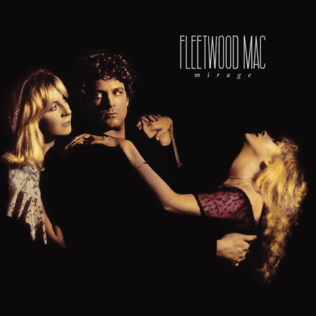
Fleetwood Mac: Mirage (1982)
Own the album that gave the world Gypsy.
Original Warner Bros. Records pressings and remastered editions available.
Frequently Asked Questions About Gypsy
Who wrote Gypsy?
It was written by Stevie Nicks.
Nicks wrote the lyric from personal memory, drawing on her time living in San Francisco with Lindsey Buckingham before Fleetwood Mac.
What is Gypsy about?
The song reflects on Stevie Nicks’s life before fame, specifically a period of her early adulthood in San Francisco.
It is about the emotional texture of a time that success made irretrievable.
How high did Gypsy chart?
It reached number one on the US Billboard Hot 100 in 1982.
The Mirage album also went to number one on the Billboard 200 in the same year.
What album is it on?
The song appears on Mirage, Fleetwood Mac’s eleventh studio album.
Released in 1982 on Warner Bros. Records, Mirage reached number one in the United States.
Who produced it?
It was produced by Lindsey Buckingham, Richard Dashut, and Ken Caillat.
The same production team had worked on Rumours and Tusk and brought a consistent standard of craft to the Mirage sessions.
What was significant about the music video?
The video was directed by Russell Mulcahy and was one of the most expensive music videos produced to that point.
MTV chose it as their first ever “World Premiere Video,” confirming the band’s central position in the new visual medium.
What does the lyric reference in San Francisco?
Nicks has described a room she lived in in the Haight-Ashbury district of San Francisco during her early relationship with Buckingham.
The room represents the simplicity and freedom of a life lived before commercial success determined everything.
Is it still performed live?
Yes.
The song has been performed at virtually every Fleetwood Mac concert since 1982 and is one of the most emotional moments in their live performances.
You Might Also Like
Fleetwood Mac: The Chain (1977)
The Rumours-era classic that captured the emotional turbulence within the band and turned it into one of the most powerful recordings in their history.
The Chain and Mirage together show Fleetwood Mac’s range across two very different periods of their career.
Journey: Don’t Stop Believin’ (1981)
The fellow arena rock classic that found its own language for hope and forward motion without sentimentality.
Both recordings show that the early 1980s produced pop rock of genuine emotional depth alongside all its commercial energy.
The Police: Every Breath You Take (1983)
The other number one recording of the same era that demonstrated how a lyric could mean something different from what it appeared to say.
Both songs show the decade’s best rock operating with deceptive simplicity.
Decades on, Gypsy by Fleetwood Mac endures as one of the greatest songs in classic rock history, a recording that has outlasted trends and generations to remain as vital and nostalgic as the day it was made.