

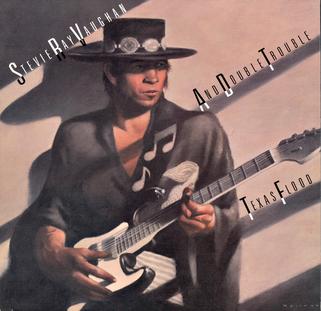
Pride and Joy by Stevie Ray Vaughan and Double Trouble is one of the standout tracks from their 1983 debut album Texas Flood, a recording that announced Vaughan as the most significant blues guitarist to emerge in a generation.
Written by Vaughan and driven by a rolling, medium-tempo shuffle groove, the song showcases the physical directness and emotional depth of his playing in a format that was immediately accessible without sacrificing any of the craft that made him exceptional.
Affiliate Disclosure: As an Amazon Associate I earn from qualifying purchases. This helps support the site at no extra cost to you.
Texas Flood was produced by John Hammond and Gregg Geller and recorded live in the studio over two days, a method that preserved the energy and spontaneity of the band’s live performances rather than replacing them with studio construction.
The album and the single established Vaughan as a guitarist who could stand alongside the blues masters he had learned from, a position that his premature death in 1990 transformed into a permanent place in the history of the form.
| Detail | Info |
|---|---|
| Artist | Stevie Ray Vaughan and Double Trouble |
| Song | Pride and Joy |
| Year | 1983 |
| Written by | Stevie Ray Vaughan |
| Produced by | John Hammond, Gregg Geller |
| Lead Vocals and Guitar | Stevie Ray Vaughan |
| Album | Texas Flood |
| Genre | Blues Rock, Texas Blues |
Table of Contents
What Is “Pride and Joy” About?
The song is a declaration of love, written from the perspective of someone who regards their partner as a source of personal pride and the centre of their emotional world.
The lyric is direct and warm, uninterested in complication or ambiguity, and it sits in the tradition of blues love songs that celebrate rather than lament.
Vaughan used the phrase “sweet little thing” and similar expressions common to the Texas blues tradition, grounding the song in a specific regional and musical heritage while keeping the sentiment universal enough to connect with any listener.
The vocal performance matches the lyric’s directness: Vaughan sang as he played, without reserve or affectation, and the result is a recording that sounds completely honest.
The Road to Texas Flood
Stevie Ray Vaughan was born in Dallas, Texas in 1954 and began playing guitar as a child, learning from his older brother Jimmie, who would go on to lead the Fabulous Thunderbirds.
By his early twenties, Vaughan had developed a style that drew on the Texas blues tradition of Freddie King and Albert King, the Chicago blues of Muddy Waters and Otis Rush, and the rock and soul influences of Jimi Hendrix.
His band Double Trouble, formed with bassist Tommy Shannon and drummer Chris Layton, became one of the tightest rhythm sections in Texas, giving Vaughan the foundation his playing required.
By 1982, the band had built a devoted following in Austin and across Texas but had not yet made a national recording.
The Montreux Performance and the Record Deal
In July 1982, Stevie Ray Vaughan and Double Trouble performed at the Montreux Jazz Festival at the invitation of producer Claude Nobs, playing a set that divided the festival audience but left a significant impression on several key figures in the music industry who were present.
Jackson Browne was sufficiently impressed to offer the band free studio time at his own facility, which produced the recordings that would eventually become Texas Flood.
David Bowie, also in attendance, offered Vaughan a slot as lead guitarist on his Let’s Dance album, which Vaughan accepted and which brought him national exposure before Texas Flood was released.
John Hammond, who had signed Bob Dylan, Bruce Springsteen, and Billie Holiday among others during his career, heard Vaughan and brought him to Epic Records, where Texas Flood was made.
Double Trouble: Tommy Shannon and Chris Layton
Tommy Shannon had played bass with Johnny Winter before joining Vaughan, and brought a melodic, deeply grooving approach to the low end that suited Vaughan’s guitar style perfectly.
Chris Layton’s drumming was the rhythmic anchor on which everything else depended, a combination of restraint and authority that gave Vaughan room to move without ever losing the pulse.
The three musicians had developed a level of intuitive communication through years of live performance that no studio technique could manufacture, and Texas Flood preserves that quality in its most direct form.
On “Pride and Joy,” the rhythm section’s shuffle feel is so natural and unhurried that it creates the impression of a band playing for its own pleasure rather than for a record, which is exactly the right quality for the song.
John Hammond Produces Texas Flood
John Hammond’s production philosophy was one of minimal intervention: record the band playing live in the studio, keep the engineering clean, and trust the musicians to deliver what they had developed over years of performance.
Texas Flood was recorded at Jackson Browne’s Down Town Studio in Los Angeles over two days, with the band playing live to two-inch tape with very little overdubbing.
The approach suited the material precisely: Vaughan’s blues playing was a live art, developed in front of audiences rather than in isolation, and the live recording method preserved that quality in a way that more processed studio approaches would have lost.
“Pride and Joy” in particular benefits from this method, sounding as though the band had been playing it for years in bars across Texas, which of course they had.
Watch the Official Video
Guitar Playing and Technique
Vaughan played a 1959 Fender Stratocaster, which he called Number One, strung with heavy gauge strings that he tuned down a half step to allow for more aggressive bending without breaking strings.
On “Pride and Joy,” his playing demonstrates the combination of physical power and harmonic sophistication that defined his approach: the rhythm guitar work is percussive and driving, while the lead lines are melodic and precise.
His vibrato, which he had developed to an unusual degree of expressiveness, gives even the simpler phrases an emotional weight that playing the same notes more mechanically would not produce.
The tone he achieved from the Stratocaster through a Dumble amplifier and various other vintage pieces of equipment was distinctly his own, immediately recognisable within a few notes, which is the mark of a guitarist who has truly found a personal voice on the instrument.
Critical Reception and Legacy
Texas Flood was received as a revelation by critics who had feared that authentic blues guitar was disappearing from popular music, and “Pride and Joy” was consistently singled out as one of its strongest moments.
The album received Grammy nominations for Best Traditional Blues Recording and Best Rock Performance by a Duo or Group, establishing Vaughan immediately at the top level of the form.
In subsequent decades, Vaughan has been ranked among the greatest guitarists of all time by virtually every major poll in which the question has been asked, and “Pride and Joy” is consistently cited among his defining performances.
Why “Pride and Joy” Still Matters
The song matters because it captures a guitarist at the moment of his arrival: fully formed, technically extraordinary, and emotionally present in a way that the blues demands and few can consistently deliver.
Vaughan died in a helicopter crash in August 1990 at the age of thirty-five, having made only five studio albums, and the relative brevity of his recorded output gives each track a weight it might not otherwise carry.
“Pride and Joy” was one of the first things the world heard him play on a major label record, and it remains, forty years later, as clear a statement of exceptional talent as anything in the blues rock catalogue.
Frequently Asked Questions
Who wrote “Pride and Joy”?
Stevie Ray Vaughan wrote the song. It appears on his debut album Texas Flood, recorded in 1982 and released in 1983.
What album is “Pride and Joy” on?
It appears on Texas Flood (1983), produced by John Hammond and Gregg Geller.
What guitar did Vaughan play on Texas Flood?
Vaughan played a 1959 Fender Stratocaster, known as Number One, throughout most of the Texas Flood sessions.
Who are Double Trouble?
Double Trouble is the name of Vaughan’s backing band, consisting of bassist Tommy Shannon and drummer Chris Layton.
Why is the video from Montreux 1982?
The Montreux 1982 performance was recorded before Texas Flood was released and captures the band at the live performance that led directly to their record deal. It is one of the earliest high-quality video recordings of Vaughan performing the song.
You Might Also Like


More than forty years after its recording, Pride and Joy by Stevie Ray Vaughan endures as one of the finest introductions any guitarist has given themselves on a debut record, a performance that announced an exceptional talent to the world and has not diminished with time.