

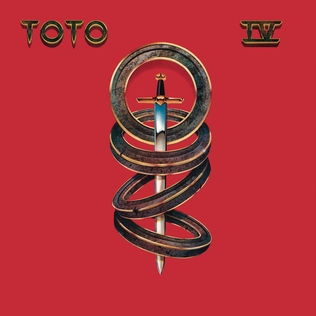
Toto released Africa in 1982 as a single from their Grammy-winning album Toto IV, creating one of the most atmospheric and enduring pop-rock songs of the decade.
Written by keyboardist David Paich and drummer Jeff Porcaro, the track reached number one on the Billboard Hot 100 and has since grown into one of the most streamed and covered songs in rock history.
Affiliate Disclosure: As an Amazon Associate I earn from qualifying purchases. This helps support the site at no extra cost to you.
| Song | Africa |
| Artist | Toto |
| Album | Toto IV (1982) |
| Written by | David Paich and Jeff Porcaro |
| Produced by | Toto |
| Released | 1982 |
| Genre | Pop Rock, Soft Rock, Art Rock |
| Record Label | Columbia Records |
| Chart Peak | #1 US Billboard Hot 100 |
Table of Contents
Background and Meaning
This tune was written by David Paich, who has described the song as an impressionistic portrait of the African continent as filtered through the imagination of someone who had never been there.
Paich drew on images from television documentaries, books, and photographs to construct a lyric that evokes the landscape, mystery, and vastness of Africa through a series of vivid but deliberately poetic images rather than literal description.
Jeff Porcaro contributed the song’s rhythmic concept, including the distinctive drum pattern that opens the track, which he described as a “half-time shuffle” designed to evoke the feel of African rhythmic traditions within a Western pop framework.
The lyric centers on a man far away from home, sensing that something or someone he loves is waiting for him on another continent, giving this classic a romantic and slightly melancholy dimension beneath its lush, exotic surface.
Paich has acknowledged that the song is more about the idea of Africa than about the continent itself, an impressionistic piece that captures a feeling rather than attempting any kind of documentary accuracy.
Musical Composition
The song opens with one of the most distinctive rhythmic introductions in 1980s pop, Porcaro’s layered percussion pattern establishing a hypnotic groove beneath cascading keyboard figures from Paich before the full band enters.
The band members of Toto were among the most accomplished session musicians in Los Angeles at the time, and the production reflects that technical mastery, layering sounds with a precision and richness unusual even by the standards of mid-period Toto.
Vocalist Joseph Williams delivers the lead vocal with a warmth and longing that perfectly matches the lyric’s blend of wonder and wistfulness.
The chorus rises into one of the era’s great melodic moments, the title word landing with a combination of grandeur and tenderness that has made it one of the most sung-along lines in classic rock radio history.
Guitarist Steve Lukather provides the song’s signature guitar figures, which move between chiming rhythm playing and brief melodic fills that enhance the song’s atmospheric quality without dominating the arrangement.
Chart Success and Legacy
The song reached number one on the US Billboard Hot 100 in February 1983 and spent two weeks at the top position, becoming Toto’s only number-one single in the United States.
The Toto IV album won six Grammy Awards at the 1983 ceremony, including Album of the Year, making it one of the most decorated rock albums of the decade.
The song also won the Grammy Award for Record of the Year, cementing its status as one of the defining recordings of 1982 across all genres, not just rock.
In the decades following its release, it became a fixture of classic rock radio and earned a permanent place in popular culture through its use in film, television, and advertising.
Internet Rediscovery
The track experienced an extraordinary cultural second life in the 2010s, driven by internet culture and a wave of affectionate ironic appreciation that introduced the song to entirely new generations.
A viral campaign in 2018 successfully persuaded Toto to re-record the song in response to a fan’s request, drawing global media attention and driving the original back onto streaming charts more than three decades after its initial release.
The song’s streaming numbers have consistently grown year after year, making it one of the rare 1980s tracks to genuinely expand its audience in the streaming era rather than simply maintain its existing fanbase.
Weezer released a widely successful cover in 2018 that further amplified the song’s cultural presence, introducing it to audiences who had grown up entirely after the original charted.
Watch the Official Video
Frequently Asked Questions
FAQ
- Who wrote the song?
It was written by David Paich and Jeff Porcaro, with Paich constructing the impressionistic lyric about the African continent and Porcaro developing the song’s distinctive rhythmic concept.
- Did Toto ever visit Africa before writing the song?
No. David Paich has confirmed that he wrote the lyric based entirely on images from documentaries, books, and photographs, describing it as he imagined, rather than as he had experienced it.
- Did the song reach number one?
Yes, it reached number one on the US Billboard Hot 100 in February 1983 and spent two weeks at the top position, becoming Toto’s only number-one US single.
- How many Grammys did Toto IV win?
The Toto IV album won six Grammy Awards at the 1983 ceremony, including Album of the Year, with this song winning the Grammy for Record of the Year.
- Why did the song become popular again in the 2010s?
A combination of internet nostalgia culture and a viral campaign that persuaded Toto to re-record the song in 2018 drove enormous renewed interest, with streaming numbers growing every year alongside a widely played Weezer cover version.
You Might Also Like
From its opening percussion pattern to its soaring chorus, Africa by Toto remains one of the most perfectly constructed pop-rock songs of the 1980s, a track so good that the internet collectively decided four decades later that the world needed more of it.