

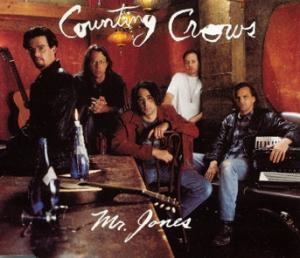
Mr. Jones by Counting Crows reached number five on the Billboard Mainstream Rock chart in 1994 and helped drive their debut album August and Everything After to over seven million copies sold in the United States alone.
Written by vocalist Adam Duritz and guitarist David Bryson, the song describes a night out with Duritz’s real-life friend Marty Jones and the shared fantasy of fame and recognition that would never quite arrive in the way either of them imagined.
Affiliate Disclosure: As an Amazon Associate I earn from qualifying purchases. This helps support the site at no extra cost to you.
| Song | Mr. Jones |
| Artist | Counting Crows |
| Album | August and Everything After (1993) |
| Written by | Adam Duritz, David Bryson |
| Produced by | T Bone Burnett |
| Released | 1994 |
| Genre | Alternative Rock, Jangle Pop |
| Chart Peak | #5 Billboard Mainstream Rock, #27 UK Singles Chart |
Table of Contents
Background and History
Counting Crows formed in Berkeley, California in 1991, built around Adam Duritz’s distinctive vocal style and the songwriting partnership he developed with guitarist David Bryson.
The band signed to Geffen Records after being seen by DGC A&R representatives at San Francisco area club shows, where Duritz’s emotionally raw performance style had already built a regional following.
Producer T Bone Burnett, known primarily for his work in Americana and roots rock, was brought in to produce August and Everything After, a choice that gave the album a warmth and organic quality that contrasted with the more compressed alternative rock production common to the period.
The album was recorded at Sunset Sound in Hollywood and released in September 1993, with Mr. Jones emerging as the track most likely to connect with radio audiences.
Mr. Jones and the Real Marty Jones
The “Mr. Jones” of the title is Marty Jones, a real person who played bass in a band with Adam Duritz before Counting Crows formed.
Duritz has described the song as capturing a specific evening he spent with Jones at a bar in San Francisco, watching a woman dance while both of them discussed their ambitions and the kind of fame they imagined for themselves.
The lyric “When everybody loves me, I will never be lonely” is understood as the central irony of the song: the fantasy of fame as a solution to loneliness that fame itself tends not to solve.
Duritz wrote the song before Counting Crows achieved any success, making the fantasy it describes prospective rather than retrospective.
By the time the song became a genuine hit, the irony of the lyric had become personal in a way Duritz has said he did not fully anticipate.
Mr. Jones and the Recording Story
The song opens with an acoustic guitar figure and Duritz’s vocal entering immediately, establishing the conversational tone that defines the entire track.
T Bone Burnett’s production keeps the band’s arrangement loose and present, with enough space around each instrument that the recording sounds live without sacrificing clarity.
Duritz’s vocal delivery, mixing sung melody with spoken asides and emotional outbursts, was not the standard approach to alternative rock singing in 1993 and stood distinctly apart from the more aggressive styles of Nirvana and Green Day.
The song’s structure avoids a traditional chorus, instead building through refrains that return to the title phrase with different emotional weight each time.
That structural choice, prioritizing narrative accumulation over hook repetition, reflected Burnett’s influence and the band’s roots in storytelling-oriented rock rather than grunge’s more visceral approach.
Mr. Jones and the Charts
This classic tune reached number five on the Billboard Mainstream Rock Tracks chart and number twenty-seven on the UK Singles Chart.
August and Everything After debuted at number four on the Billboard 200 and was certified seven times platinum in the United States, eventually selling more than twelve million copies worldwide.
The album’s commercial success placed Counting Crows in the same wave of early 1990s alternative rock breakthroughs as Collective Soul and Foo Fighters, though their sound occupied a distinctly different corner of the genre.
MTV airplay of the video built the song’s audience beyond rock radio, introducing Duritz’s visual presence to viewers who connected with the emotional directness of his performance.
The album stayed on the Billboard 200 for over two years, a sustained commercial performance that reflected the depth of the catalog rather than dependence on a single hit.
Lasting Legacy of Mr. Jones
Mr. Jones is the Counting Crows song most immediately recognized by listeners who encountered the band through rock radio in the mid-1990s.
Its themes of longing for recognition and the gap between imagined and actual success connected with listeners in a way that transcended the specific personal narrative Duritz was describing.
Duritz has expressed complicated feelings about the song across his career, noting that its success created exactly the kind of fame the lyric treats with skepticism.
The irony of a song about wanting to be famous becoming the hit that made the singer famous is not lost on Duritz in any interview he has given about it.
Counting Crows have continued recording and touring for more than three decades, and Mr. Jones remains the anchor of their live sets and the song that most listeners use to place them in the landscape of 1990s rock.
Watch the Official Video
Frequently Asked Questions
FAQ
- Who is Mr. Jones?
- The Mr. Jones of the title is Marty Jones, a real person who played bass in a band with Adam Duritz before Counting Crows formed. Duritz has said the song captures a specific evening he spent with Jones at a San Francisco bar, watching a woman dance while they talked about their ambitions and the kind of fame they imagined for themselves.
- What album is Mr. Jones from?
- The song appears on August and Everything After, Counting Crows’ debut album, produced by T Bone Burnett and released in September 1993. The album debuted at number four on the Billboard 200 and was certified seven times platinum in the United States.
- Who produced the album?
- T Bone Burnett produced August and Everything After. Burnett’s background in Americana and roots rock gave the album a warmer, more organic quality than the compressed production common to alternative rock in 1993, which contributed to the band’s distinctive sound.
- Why does Adam Duritz have mixed feelings about the song?
- Duritz has noted that the song’s lyric treats the desire for fame with skepticism, and that becoming famous through the song created exactly the irony the lyric describes. He has said in interviews that the personal complexity of a song about wanting recognition becoming the hit that brought recognition is something he has never fully resolved.
- Where is Counting Crows from?
- Counting Crows formed in Berkeley, California in 1991. Their San Francisco Bay Area roots influenced the band’s acoustic and roots-oriented approach to alternative rock, which set them apart from both the Seattle grunge scene and the punk-influenced pop-punk emerging from the same region in the same period.
You Might Also Like

Written about a real friend and a real evening before fame arrived, then made famous in a way that confirmed the lyric’s own skepticism about what fame actually delivers, Mr. Jones stands as the Counting Crows recording that best captures the gap between the life you imagine and the one you actually get.