

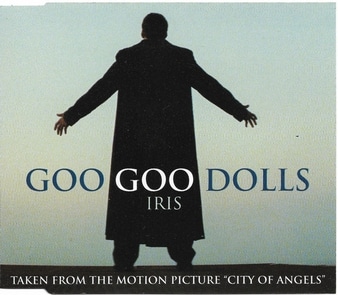
Iris by Goo Goo Dolls held the number one position on the Billboard Hot 100 Airplay chart for eighteen consecutive weeks in 1998, a record at the time, and was written by John Rzeznik specifically for the film City of Angels.
Produced by Rob Cavallo and built on an unconventional open guitar tuning, Iris became the song most associated with the band’s catalog and one of the most widely heard ballads of the late 1990s despite never being released as a commercial single in the United States.
Affiliate Disclosure: As an Amazon Associate I earn from qualifying purchases. This helps support the site at no extra cost to you.
| Song | Iris |
| Artist | Goo Goo Dolls |
| Album | Dizzy Up the Girl (1998) |
| Written by | John Rzeznik |
| Produced by | Rob Cavallo |
| Released | 1998 |
| Genre | Alternative Rock, Power Pop |
| Chart Peak | #9 US Billboard Hot 100; #1 Billboard Hot 100 Airplay (18 weeks) |
Table of Contents
Background and History
Goo Goo Dolls formed in Buffalo, New York in 1986, originally as a punk-influenced rock band that gradually shifted toward a more melodic pop-rock direction across several albums through the late 1980s and early 1990s.
John Rzeznik and bassist Robby Takac were the band’s primary songwriters, with Rzeznik increasingly leading the melodic direction that would define their commercial breakthrough period.
The band’s 1995 album A Boy Named Goo produced the hit “Name” and established Rzeznik as a writer capable of connecting emotionally with a wide pop audience.
Warner Bros. approached the band about contributing a song to the soundtrack of City of Angels, the 1998 Nicolas Cage and Meg Ryan romantic fantasy film directed by Brad Silberling.
Rzeznik wrote the song specifically for the film, drawing on its story of an angel who gives up immortality for a human woman as the emotional framework for the lyric.
Iris and the City of Angels Connection
City of Angels is a Hollywood adaptation of Wim Wenders’s 1987 German film Wings of Desire, relocated to Los Angeles and restructured as a conventional love story.
The film placed Iris in a pivotal scene, using the song’s lyric about wanting to be known completely by another person as a direct expression of the angel’s longing.
The placement in a widely seen theatrical release gave the song an audience of tens of millions before it reached radio, creating the same kind of commercial momentum that had driven Eric Clapton’s Tears in Heaven earlier in the decade through film and television exposure.
The film’s commercial success, earning over a hundred million dollars worldwide, ensured that Iris had near-constant exposure through the spring and summer of 1998.
The connection between the song’s lyric and the film’s central theme of sacrifice for human connection gave the track a specific emotional context that amplified its impact beyond what a standalone single release could have achieved.
Iris and the Guitar Tuning
John Rzeznik wrote it in an unconventional open guitar tuning, using all six strings tuned to variations of B and D, which creates the droning, resonant quality that runs through the entire arrangement.
That tuning makes the song essentially impossible to play in standard guitar tuning while maintaining the correct harmonic character, which is why live performances require either retuned guitars or a dedicated instrument.
Rob Cavallo’s production builds the arrangement around the guitar’s open-string resonance, layering strings and additional instruments without obscuring the fundamental quality that Rzeznik’s tuning choice established.
The approach gave Iris a sound that could not be easily replicated by other artists, even those who attempted covers, because the tuning itself creates harmonic overtones that become inseparable from the song’s emotional effect.
Cavallo had previously produced Green Day’s Basket Case and brought a similar attention to sonic detail, finding ways to preserve the track’s essential character while making it fully accessible to pop radio formats.
Iris and the Charts
Iris was released only to radio in the United States, making it ineligible for the Billboard Hot 100 commercial chart under the rules then in effect for airplay-only tracks.
Despite that restriction, the song reached number nine on the Hot 100 through sales in markets where it was commercially released and held the Hot 100 Airplay chart at number one for eighteen consecutive weeks, a record at the time.
The song reached number nine on the UK Singles Chart and performed strongly across European and Australian markets where commercial release supported full chart eligibility.
Dizzy Up the Girl, the album that contained Iris, was certified four times platinum in the United States and became the best-selling album of the Goo Goo Dolls’ career.
The eighteen-week airplay record reflected the unusual depth of radio support the track received across multiple formats simultaneously, from alternative rock to adult contemporary.
Lasting Legacy of Iris
Iris is the Goo Goo Dolls song most immediately recognized by listeners across all age groups and the track that most completely defines the band’s commercial identity.
Its lyric, addressing the desire to be fully known by another person and to shed the protective distance of self-consciousness, connected with audiences well beyond the alternative rock core that had followed the band since the early 1990s.
The song has been covered extensively, used in films and television consistently since 1998, and appears on virtually every 1990s pop-rock compilation released in the decades that followed.
Rzeznik has described writing it quickly once he had the film’s emotional premise clearly in mind, which aligns with the directness of the lyric and the lack of ironic distance that distinguishes it from more guarded writing of the period.
More than twenty-five years after its release, Iris is played regularly across adult contemporary and classic rock formats and remains the definitive example of what Goo Goo Dolls were capable of when Rzeznik found the right emotional subject.
Watch the Official Video
Frequently Asked Questions
FAQ
- What film was Iris written for?
- John Rzeznik wrote the song for City of Angels, the 1998 Nicolas Cage and Meg Ryan film directed by Brad Silberling. The film is an American adaptation of Wim Wenders’s Wings of Desire and tells the story of an angel who gives up immortality for a human woman. Rzeznik drew on that premise as the emotional framework for the lyric.
- Why did Iris not reach number one on the Hot 100?
- Under the Billboard chart rules in effect in 1998, songs released only to radio without a commercial single available for purchase were ineligible to chart at the top of the Hot 100. Iris held the airplay-based Hot 100 Airplay chart at number one for eighteen consecutive weeks, a record at the time, but peaked at number nine on the commercial chart.
- What guitar tuning does John Rzeznik use on Iris?
- Rzeznik wrote and recorded the song in an open tuning with all six strings tuned to variations of B and D, creating a droning, resonant harmonic quality that is inseparable from the song’s sound. This tuning makes the song difficult to replicate accurately in standard tuning and requires dedicated instruments for live performance.
- Who produced Iris?
- Rob Cavallo produced the track and the Dizzy Up the Girl album. Cavallo had previously worked with Green Day and brought the same attention to sonic clarity that made their recordings connect with wide radio audiences while preserving the essential character of the song.
- Where are Goo Goo Dolls from?
- Goo Goo Dolls formed in Buffalo, New York in 1986. The band began as a punk-influenced rock act and gradually shifted toward the melodic pop-rock direction that produced their commercial breakthrough with Name in 1995 and Iris in 1998.
You Might Also Like
Written for a film about sacrifice, built on a guitar tuning that makes it unlike anything else in the rock catalog, and held at airplay number one for eighteen weeks without ever being commercially available, Iris stands as the Goo Goo Dolls recording that defied the normal rules of how hit songs work and connected with audiences in ways that outlasted every chart record it set.