

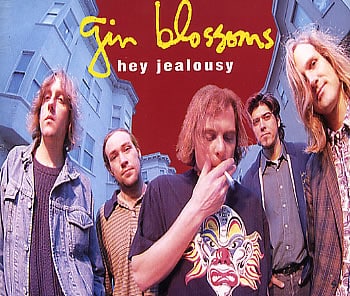
Hey Jealousy by Gin Blossoms reached number one on the US Mainstream Rock chart in 1993 and became the defining single from New Miserable Experience, written by guitarist Doug Hopkins before his alcoholism led to his firing from the band he helped found.
Hopkins wrote the song from a place of personal regret and longing, and the commercial success of Hey Jealousy arrived after Hopkins had already been removed from the Tempe, Arizona band, giving the song a biographical weight that deepened when Hopkins died by suicide in December 1993.
Affiliate Disclosure: As an Amazon Associate I earn from qualifying purchases. This helps support the site at no extra cost to you.
| Song | Hey Jealousy |
| Artist | Gin Blossoms |
| Album | New Miserable Experience (1992) |
| Written by | Doug Hopkins |
| Produced by | John Hampton |
| Released | 1992 |
| Genre | Alternative Rock, Power Pop |
| Chart Peak | #1 US Mainstream Rock, #9 US Billboard Hot 100 |
Table of Contents
Background and History
Gin Blossoms formed in Tempe, Arizona in 1987, built around vocalist Robin Wilson, guitarists Doug Hopkins and Jesse Valenzuela, bassist Bill Leen, and drummer Phillip Rhodes.
The band built a following in the Phoenix area and signed with A&M Records, recording New Miserable Experience with producer John Hampton.
Hopkins was the band’s primary songwriter and responsible for much of the melodic foundation that made their recordings distinctive.
His alcoholism had become a serious problem by the time the album was being completed, and the band made the difficult decision to remove him from the lineup before New Miserable Experience was released.
Hey Jealousy and Doug Hopkins
Doug Hopkins wrote the song from a place of personal regret, addressing an old relationship and the wish to return to a simpler time before things fell apart.
The lyric’s honesty about failure and longing, its direct acknowledgment that the speaker has made mistakes they cannot undo, gave the song an emotional credibility that more optimistic writing about the same themes could not match.
Hopkins was fired from the band in 1992 because of his alcoholism, receiving songwriting credits and royalties but not the recognition that came with performing the songs live.
He watched his song build into a commercial success while no longer being part of the band that recorded it, a painful circumstance that compounded the personal struggles already reflected in the lyric.
Hopkins died by suicide on December 5, 1993, at the age of thirty-two, before the song reached its full commercial peak.
His death gave Hey Jealousy a biographical context that listeners who learned the story brought to subsequent hearings of the song, though the recording had already connected on its own emotional terms before Hopkins’s death became widely known.
Hey Jealousy and the Recording Story
This tune opens with a jangly guitar figure that established the song’s melodic character immediately, locating it in the alternative power pop tradition rather than the harder grunge sound that defined most rock radio in the same period.
John Hampton’s production kept the arrangement clean and radio-accessible while preserving the emotional directness of Hopkins’s lyric and Wilson’s vocal performance.
Wilson’s delivery on the track is warm and conversational, which suited the song’s confessional register and gave it an intimacy that made the lyric feel personal rather than performed.
The song’s guitar-driven melodic approach connected to a tradition of American alternative pop that differed from the Seattle grunge sound of Nirvana while drawing on the same alternative radio formats that had made those bands commercially viable.
The combination of jangly guitars, strong melody, and emotionally direct writing gave it a sound that aged better than most grunge recordings of the period, remaining radio-friendly across formats that shifted considerably in the following years.
Hey Jealousy and the Charts
Hey Jealousy reached number one on the US Mainstream Rock chart and peaked at number nine on the Billboard Hot 100, the highest pop chart position of the Gin Blossoms’ career.
New Miserable Experience was certified double platinum in the United States, a strong commercial performance for an album that had been completed under difficult circumstances.
The song’s chart performance demonstrated that melody-driven alternative rock with emotionally direct lyrics could compete commercially with the harder sounds that defined the post-grunge landscape.
Its crossover into the pop top ten placed the Gin Blossoms alongside Counting Crows and Hootie & the Blowfish as bands finding mainstream audiences for accessible, song-centered alternative rock in the mid-1990s.
Lasting Legacy of Hey Jealousy
Hey Jealousy is the Gin Blossoms recording most immediately recognized by listeners and the song that best demonstrates Hopkins’s ability to write melody-driven rock with biographical weight.
The song’s story, a great pop song written by a man whose alcoholism cost him his place in the band before the song became famous, and who died before its commercial peak, became one of the more discussed biographical narratives in 1990s alternative rock.
The Gin Blossoms reunited in 2002 and have continued performing, with this tune remaining the centerpiece of their live sets and the track that most listeners use to locate the band in the landscape of 1990s rock.
Hopkins’s contribution to the song and to the band’s catalog has been consistently acknowledged by the remaining members, and the royalties from it’s sustained commercial performance continued going to his estate after his death.
More than thirty years on, Hey Jealousy endures as a song whose emotional honesty and melodic quality outlasted both the era that produced it and the tragic circumstances that surrounded its creation.
Watch the Official Video
Frequently Asked Questions
FAQ
- Who wrote Hey Jealousy?
- Doug Hopkins wrote the song. Hopkins was Gin Blossoms’ primary songwriter and responsible for much of the melodic foundation that made their recordings distinctive, but his alcoholism led to his removal from the band before New Miserable Experience was released. He received songwriting credits and royalties but was not part of the band during the song’s commercial success.
- What happened to Doug Hopkins?
- Hopkins was fired from Gin Blossoms in 1992 because of his alcoholism. He died by suicide on December 5, 1993, at the age of thirty-two, before Hey Jealousy reached its full commercial peak. His death gave the song a biographical context that listeners who learned the story brought to subsequent hearings of the recording.
- What album is the song from?
- The song appears on New Miserable Experience, Gin Blossoms’ A&M Records debut, produced by John Hampton and released in 1992. The album was certified double platinum in the United States and sustained its commercial performance through multiple singles over 1993 and 1994.
- Where are Gin Blossoms from?
- Gin Blossoms formed in Tempe, Arizona in 1987. Their Arizona origins placed them in the Southwest college rock scene rather than the Pacific Northwest grunge movement or the California industry center, and their jangly, melody-driven alternative pop reflected a different set of influences than the bands who dominated rock radio in the same period.
- Are Gin Blossoms still together?
- The band reunited in 2002 after dissolving in 1997 and have continued performing and recording. Hey Jealousy remains the centerpiece of their live sets, and the band has consistently acknowledged Hopkins’s contribution to their catalog and his songwriting legacy.
You Might Also Like
Written by a man whose alcoholism had already cost him his place in the band before the song became famous, and whose death preceded its commercial peak, Hey Jealousy stands as one of the more painful origin stories in 1990s rock and the recording that proves Doug Hopkins could write melody and emotional truth in equal measure.