

Ever wondered what happened to the members of Tears for Fears after their legendary run from 1981 to today?
The story of Tears for Fears members reads like a classic rock odyssey filled with creative tension, artistic breakthroughs, and personal struggles that would ultimately define one of the most influential synth-pop acts of the 1980s.
Whether you are curious about the original lineup that created timeless hits like “Mad World” and “Everybody Wants to Rule the World,” the member changes that shaped their evolving sound, or where these classic rock artists ended up after decades in the music industry, this complete guide reveals the full story behind one of music’s most enduring partnerships.
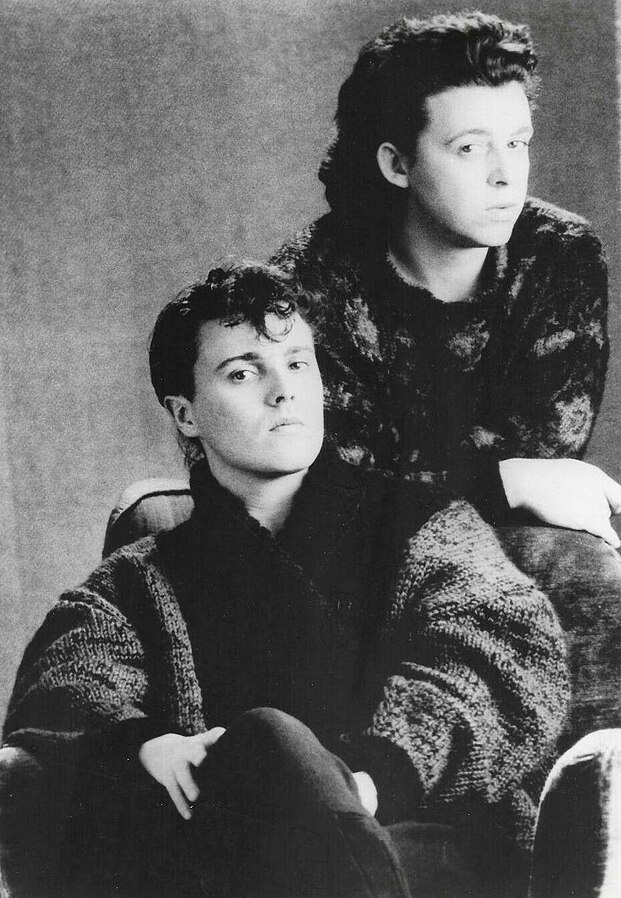
Image: Tears for Fears members Roland Orzabal and Curt Smith, 1985 Polygram Records publicity photo via Wikimedia Commons
From their humble beginnings in Bath, England, through their global domination and eventual split, to their triumphant reunion and continued success in 2026, the members of Tears for Fears have left an indelible mark on popular music.
📋 Table of Contents [+]
The Original Tears for Fears Members
The core members of Tears for Fears emerged from the ashes of Graduate, a mod revival band that failed to achieve commercial success in the early 1980s.
Roland Orzabal (born Roland Jaime Orzabal De La Quintana on August 22, 1961) and Curt Smith (born June 24, 1961) had been friends since their teenage years in Bath, Somerset, England.
The two bonded over their shared love of music and a similar sense of humor.
When Graduate disbanded in 1981, Orzabal and Smith briefly became session musicians for the band Neon, where they first encountered future drummer Manny Elias (born February 21, 1953).
The duo initially adopted the name “History of Headaches” before settling on Tears for Fears.
The name was inspired by primal therapy developed by American psychologist Arthur Janov.
Their eventual sound would be shaped significantly by their encounter with local musician Ian Stanley (born February 28, 1957), who offered them free use of his home 8-track studio.
Stanley would become their keyboardist and a crucial creative partner during their most commercially successful years.
Orzabal and Smith’s Role in Formation
Roland Orzabal emerged as the primary songwriter and creative visionary of Tears for Fears members, bringing his deep interest in psychology and emotional therapy to the band’s conceptual foundation.
Born in Portsmouth to a father of Argentinian and Basque roots, Orzabal had been writing songs since age seven.
He brought a sophisticated understanding of melody and harmony to the partnership.
His difficult childhood experiences would provide much of the thematic material for the band’s early work, particularly on their debut album.
Curt Smith served as the band’s co-lead vocalist and bassist, his smooth voice providing the perfect counterpoint to Orzabal’s more aggressive vocal style.
Growing up on the Snow Hill council estate in Bath and attending Beechen Cliff School, Smith brought a grounded and relatable quality to the band’s often intense psychological themes.
His lead vocal on “Mad World” became one of the most emotionally resonant recordings of the early 1980s.
His vocal contributions to “Everybody Wants to Rule the World” and “Advice for the Young at Heart” would become defining moments in the band’s catalog.
Early Musical Background of Key Tears for Fears Members
Before forming one of the most successful bands of the 1980s, the future members of Tears for Fears honed their craft in Graduate, a mod revival act influenced by The Jam and two-tone music.
Graduate released one album, Acting My Age (1980), and a single “Elvis Should Play Ska” that performed modestly in Europe despite missing the UK top 100.
The Graduate experience taught Orzabal and Smith valuable lessons about the music industry.
It also revealed that their shared ambitions extended far beyond mod revival.
Drawing inspiration from cutting-edge artists like Talking Heads, Peter Gabriel, and Brian Eno, they began experimenting with synthesizers and electronic sounds.
They were particularly impressed by Gary Numan‘s innovative track “Are ‘Friends’ Electric?”
This electronic exploration would prove crucial to their eventual success as artists who helped define the synth-pop movement of the early 1980s.
Tears for Fears Members Lineup Changes Through the Years
The evolution of Tears for Fears members reflects the band’s artistic growth and the inevitable tensions that arise within successful creative partnerships.
While Orzabal and Smith remained the constant core, the supporting musicians who joined and left the band played crucial roles in shaping their sound across different eras.
From the classic lineup that created their biggest hits to the modern touring band that continues their legacy, each configuration brought unique elements to the Tears for Fears sound.
The Departure of Stanley and Elias
Ian Stanley’s departure in 1986 marked the end of an era for the classic members of Tears for Fears lineup.
Stanley had been instrumental in creating the band’s signature sound, co-writing massive hits including “Shout” and “Everybody Wants to Rule the World.”
He also served as keyboardist and co-producer on their first two albums.
The Hurting (1983) and Songs from the Big Chair (1985) stand as the crowning achievements of that original four-piece lineup.
Stanley left due to creative differences during the production of The Seeds of Love, citing his belief that Orzabal was “accelerating away” from the rest of the band in terms of his vocal and creative ambitions.
Stanley’s co-writing contributions also included the beloved track “Head Over Heels”, which remains a fan favorite to this day.
Manny Elias, the original drummer who had been with the band since 1981, also departed in 1986 following the exhausting Songs from the Big Chair world tour.
His final public performance with the band was at the 1986 Brit Awards, where Tears for Fears won Best British Single for “Everybody Wants to Rule the World.”
Elias had been credited as an official member on both The Hurting and Songs from the Big Chair, appearing in six promotional videos and co-writing tracks including “The Way You Are” and “The Working Hour.”
Curt Smith’s 1991 Departure
The most significant change in Tears for Fears members occurred in 1991 when Curt Smith left the band following the completion of their third album.
The Seeds of Love (1989) and its subsequent world tour had pushed both members to their limits.
The sweeping lead single “Sowing the Seeds of Love” had been a global smash, but behind the scenes tensions were reaching a breaking point.
The split was described as “acrimonious,” with creative differences and personal tensions finally becoming impossible to manage.
Smith’s departure left Roland Orzabal as the sole continuing member, though he retained the Tears for Fears name.
The tensions had been building during the lengthy and expensive production of The Seeds of Love, which reportedly cost over one million pounds and took several years to complete.
Smith later explained that he felt it was important for Orzabal to “get well” and that maintaining distance was necessary for both their personal and professional wellbeing during that difficult period.
New Blood: Later Tears for Fears Members Who Joined
Following Smith’s departure, the members of Tears for Fears became a rotating cast of musicians supporting Orzabal’s vision.
During the 1990s, various session musicians and collaborators joined for recording and touring, including keyboardist Nicky Holland, who had toured with the band during their Big Chair world tour in 1985 and contributed significantly to The Seeds of Love.
When Orzabal and Smith reconciled in 2000, they brought in a new generation of talented musicians to complete their sound.
The modern touring lineup includes guitarist Charlton Pettus, who has been with the band since the early 2000s and served as co-producer on their recent albums.
Drummer Jamie Wollam joined in 2010 and has become their longest-serving drummer.
Keyboardist Doug Petty and vocalist Carina Round round out the current lineup, with Round touring alongside the band since 2016 and delivering essential backing vocals, particularly on “Woman in Chains.”
Where Are the Tears for Fears Members Today?
In 2026, the surviving members of Tears for Fears continue to create music and perform for audiences worldwide.
They have proven that great songwriting and musical chemistry can endure across decades.
Both founding members have remained active in the music industry, while former members have pursued diverse creative paths, from production work to education and solo artistic endeavors.
Roland Orzabal: Solo Career and Current Projects
Roland Orzabal remains the driving creative force behind Tears for Fears and continues to write, record, and perform with the band.
In 2022, he and Smith released The Tipping Point, the band’s seventh studio album and their first new material in 18 years.
The album achieved their sixth UK Top 5 placing and their highest chart peak in 30 years.
The album was deeply personal for Orzabal, dealing with the death of his wife Caroline in 2017 and his subsequent reconciliation with the importance of his partnership with Smith.
Beyond Tears for Fears, Orzabal has maintained a successful career as a producer, most notably working with pianist and vocalist Oleta Adams, whom he and Smith discovered performing in a hotel bar in Kansas City.
They invited her to collaborate on The Seeds of Love, leading to a partnership that launched her international solo career.
In 2014, Orzabal published his debut novel, Sex, Drugs and Opera, a romantic comedy inspired by his own experiences in the music industry.
As a songwriter, Orzabal has won three Ivor Novello Awards, including the 2021 Outstanding Song Collection award shared with Smith.
The duo continued an active touring schedule through 2024 and 2025, performing to sold-out crowds across North America and Europe.
Orzabal has spoken publicly about working on new material, suggesting Tears for Fears fans can expect fresh music in the coming years.
Curt Smith: Recent Updates and Creative Ventures
Curt Smith has balanced his renewed commitment to Tears for Fears with an active solo career and various creative projects.
After leaving the band in 1991, he released his debut solo album Soul on Board (1993) and later formed the band Mayfield with guitarist and producer Charlton Pettus.
Pettus would eventually become a key member of the reunited Tears for Fears.
Smith has embraced modern technology and social media, becoming an advocate for digital platforms and speaking at technology conferences.
He also ventured into acting, with a notable recurring role on the TV series Psych, where his character frequently referenced his admiration for Tears for Fears.
His solo work includes collaborations with various artists and film scoring, demonstrating his continued evolution as a creative artist beyond his work with the band.
Smith remains active on social media in 2026, regularly connecting with fans and sharing updates on the band’s activities and his personal creative projects.
Current Touring Band Members
The current members of Tears for Fears touring band represent a perfect blend of veteran expertise and fresh energy.
Charlton Pettus serves as guitarist and backing vocalist, bringing over two decades of collaboration with both Orzabal and Smith to the stage.
Jamie Wollam has provided steady and powerful drumming since 2010, making him the longest-tenured drummer in the band’s history and a key contributor to The Tipping Point album.
Doug Petty handles keyboards and multiple instruments while also maintaining a career in music education at the university level.
Carina Round, an accomplished solo artist in her own right, brings contemporary credibility to the band while delivering powerful performances of classic material.
She has become particularly celebrated for stepping into Oleta Adams’ role on “Woman in Chains” during live performances.
Lauren Evans provides additional supporting vocals, helping create the rich vocal harmonies that have always been a hallmark of the Tears for Fears live sound.
Musical Legacy of Tears for Fears Members
The individual and collective contributions of Tears for Fears members have left an indelible mark on popular music, influencing countless artists across multiple generations and genres.
From their pioneering use of synthesizers in the early 1980s to their sophisticated songwriting that tackled complex psychological themes, the band members helped define what it meant to be both commercially successful and artistically ambitious during the MTV era.
Their music has experienced remarkable longevity, with songs appearing in films, television series, and viral social media moments that have introduced them to entirely new generations of listeners.
Songwriting Contributions by Each Tears for Fears Member
Roland Orzabal’s songwriting for Tears for Fears demonstrated remarkable range and depth, from the introspective psychological exploration of The Hurting to the globally conscious themes of Songs from the Big Chair.
His collaboration with Ian Stanley produced some of the most enduring pop songs of the 1980s, including “Shout,” “Everybody Wants to Rule the World,” and “Head Over Heels.”
Orzabal’s lyrics consistently addressed themes of mental health, social justice, and personal growth decades before such topics became mainstream in popular music.
Curt Smith’s contributions as co-writer and vocalist helped ground Orzabal’s often complex concepts in accessible melodies and relatable emotional emotional expression.
His lead vocals on tracks like “Mad World” and “Advice for the Young at Heart” brought vulnerability and warmth to the band’s sometimes intellectually dense material.
Ian Stanley’s role as co-writer and producer cannot be understated: his keyboard arrangements and production techniques helped create the distinctive sonic palette that made Tears for Fears instantly recognizable.
Post-Band Success Stories
Several former members of Tears for Fears have achieved notable success in their post-band careers, demonstrating the high caliber of talent that surrounded the core duo.
Ian Stanley became a highly sought-after producer, working with renowned artists including Peter Gabriel, a-ha, the Pretenders, and Tori Amos, while also contributing to film soundtracks.
He has maintained his reputation as one of the most innovative keyboard players and producers of his generation.
Manny Elias continued his drumming career with various artists, including Peter Gabriel and Julian Lennon, while briefly reuniting with Stanley in 2009 for a project called Headshells that featured former Tears for Fears touring musicians.
The success of former members in diverse musical contexts speaks to the creative environment that Orzabal and Smith fostered during the band’s classic period, attracting and developing talented musicians who went on to make their own marks in the industry.
Essential Tears for Fears Albums Featuring Different Lineups
The discography of Tears for Fears reflects the evolution of the band’s membership and creative direction across four decades of music-making.
Each major release features different combinations of core and supporting members, creating a fascinating study of how lineup changes can influence and enhance artistic development.
The Hurting (1983) featuring Roland Orzabal, Curt Smith, Ian Stanley, and Manny Elias represents the classic lineup at their most cohesive.
It remains a deeply personal concept album that established their reputation as serious artists willing to tackle difficult emotional subjects through innovative electronic pop music.
Songs from the Big Chair (1985) achieved their commercial peak while expanding their sonic palette beyond the predominantly synth-pop feel of their debut.
The album’s more sophisticated arrangements would go on to influence bands and producers for decades to come.
The Seeds of Love (1989) marked Ian Stanley’s final contribution as an official member, with the album featuring additional collaborators including Nicky Holland and marking a transition toward a more expansive, Beatles-influenced sound.
Elemental (1993) and Raoul and the Kings of Spain (1995) featured Roland Orzabal as the sole continuing member, working with various session musicians to maintain the Tears for Fears name during Smith’s decade-long absence.
Everybody Loves a Happy Ending (2004) celebrated the reunion of Orzabal and Smith while introducing new collaborators like Charlton Pettus, setting the stage for their continued partnership into the modern era.
The Tipping Point (2022) features the current lineup including long-time collaborators and represents both a creative renaissance for the founding duo and the successful integration of newer members who have helped maintain their relevance for contemporary audiences.
Frequently Asked Questions About Tears for Fears Members
Who were the original members of Tears for Fears?
The original Tears for Fears members were Roland Orzabal (guitar, keyboards, vocals), Curt Smith (bass, vocals), Ian Stanley (keyboards), and Manny Elias (drums).
This classic lineup created the band’s first two albums and their biggest hits between 1981 and 1986.
Are any Tears for Fears members still alive?
Yes, all major Tears for Fears members are still alive as of 2026.
Roland Orzabal and Curt Smith continue performing and recording together, while former members Ian Stanley and Manny Elias remain active in the music industry in various capacities.
What are the Tears for Fears members doing now?
Roland Orzabal and Curt Smith continue touring and recording as Tears for Fears, having released The Tipping Point in 2022.
They maintained regular touring schedules through 2024 and 2025, with continued activity expected in 2026.
Ian Stanley works as a producer and has collaborated with major artists, while Manny Elias continues session work and various musical projects.
Why did Curt Smith leave Tears for Fears?
Curt Smith left Tears for Fears in 1991 due to creative tensions and personal differences with Roland Orzabal that had been building during the production of The Seeds of Love.
The split was described as acrimonious, with both members needing time and space to pursue individual creative directions.
They reconciled in 2000 and have worked together successfully ever since.
How many members did Tears for Fears have?
The core duo of Orzabal and Smith has remained constant (except for Smith’s 1991 to 2000 absence), while the band has included over a dozen supporting musicians, producers, and touring members across different eras.
What is Tears for Fears’ most successful album?
Songs from the Big Chair (1985) remains their most commercially successful album, reaching number one in both the UK and the US and producing two number one singles.
Did Oleta Adams become a full member of Tears for Fears?
Oleta Adams was never an official member but was a key collaborator on The Seeds of Love (1989), and her involvement with the band helped launch her own successful international solo career.
Want to dive deeper into Tears for Fears’ music and history? Explore our complete anniversary retrospective at Tears for Fears Celebrates 40 Years and discover the albums that made these legends immortal.
You can also check out our in-depth analysis of their iconic 1985 single at Everybody Wants to Rule the World 1985.
The complete story of Tears for Fears members is ultimately one of enduring friendship, creative genius, and the power of reconciliation to produce music that continues to move audiences around the world in 2026.
Affiliate Disclosure: This article contains affiliate links to Amazon.ca. As an Amazon Associate, I earn from qualifying purchases at no additional cost to you. This helps support the site and allows me to continue bringing you classic rock content. All album recommendations are based on their musical merit and historical significance.
Sources:
Official Tears for Fears Website
Tears for Fears Wikipedia
Roland Orzabal Wikipedia
Curt Smith Wikipedia
Complete List of Tears for Fears Band Members: Classic Rock History
Last updated: March 2026