

Technical Ecstasy by Black Sabbath: The Controversial Album That Tested Metal’s Boundaries
Technical Ecstasy represents Black Sabbath’s most divisive and misunderstood chapter, an album that dared to experiment when fans expected doom-laden anthems. Released in October 1976 as the band’s seventh studio effort, this controversial record peaked at number 13 on the UK Albums Chart and number 51 on the Billboard 200, eventually earning Gold certification in 1997.
Recorded at Miami’s legendary Criteria Studios while the Eagles worked on Hotel California next door, Technical Ecstasy captures a band at a crossroads. Internal tensions, substance abuse, and creative exhaustion collided with ambitions to mature beyond their sludge-metal origins, resulting in an album featuring prominent keyboards, a drummer-sung ballad, and synthesizer experiments that shocked purists.
If you’re a Black Sabbath completist or simply curious why this album remains hotly debated nearly five decades later, understanding Technical Ecstasy reveals crucial insights into heavy metal’s evolution. This is the story of four musicians pushing boundaries while battling demons both personal and professional.
The album marked a turning point for the original lineup, featuring the first Black Sabbath song not sung by Ozzy Osbourne and foreshadowing the turmoil that would temporarily fracture the band after the subsequent tour. What critics initially dismissed as confused and unfocused has gained defenders who appreciate its ambition and sonic diversity.
Let’s dive deep into why Technical Ecstasy deserves reconsideration as more than just Sabbath’s “difficult seventh album” but rather a fascinating document of artistic risk-taking.
📋 Table of Contents [+]
Technical Ecstasy Overview: Context and Creation
By 1976, Black Sabbath had released six groundbreaking albums in just six years, an astonishing creative run that established them as heavy metal pioneers. From the earth-shattering self-titled debut through the progressive ambitions of Sabbath Bloody Sabbath and the legally-frustrated fury of Sabotage, the band had consistently evolved while maintaining their signature doom-laden sound.
Technical Ecstasy emerged from a period of unprecedented exhaustion and tension within the band. The grueling touring schedule following Sabotage, combined with escalating substance abuse and lingering bitterness from protracted legal battles with former management, had taken their toll on the original lineup of Ozzy Osbourne, Tony Iommi, Geezer Butler, and Bill Ward.
The decision to record at Criteria Studios in Miami represented both a geographical and creative departure from their Birmingham roots. The band sought sunshine and a fresh environment, hoping the change of scenery would rejuvenate their creative process. Instead, they found themselves in a studio awash with cocaine, literally scraping residue from the mixing board left by previous sessions.
Unlike their previous six albums, which showcased the band’s relentless creative momentum, Technical Ecstasy revealed cracks in the foundation. The experimentation was intentional but the execution often felt scattered. Bassist Geezer Butler later claimed the album was a response to punk rock, though critics pointed out the timeline makes this dubious given the June 1976 recording sessions.
The album’s goals were ambitious: mature beyond the doom and darkness trademark, incorporate keyboards and synthesizers more prominently, explore softer textures alongside heavy riffs, and prove Black Sabbath could evolve without abandoning their identity. Whether they succeeded remains the subject of fierce debate among fans and critics alike.
Recording Sessions and Production
Criteria Studios in Miami provided an unlikely backdrop for a Black Sabbath album. The facility, known for hosting major acts like the Eagles, Bee Gees, and Eric Clapton, offered state-of-the-art equipment but also temptations that the already-struggling band couldn’t resist.
Tony Iommi took on production duties himself for Technical Ecstasy, marking a significant shift in the band’s recording process. Without an outside producer to provide perspective or mediate tensions, Iommi found himself pulled in multiple creative directions simultaneously, trying to satisfy his own progressive rock leanings while maintaining some semblance of the Sabbath sound.
Keyboardist Gerald Woodroffe was brought in to add synthesizer and keyboard parts throughout the album, his contributions becoming a defining and controversial element of the record. The prominence of his work marked the most significant use of keyboards on any Sabbath album to that point, a decision that alienated traditionalists but intrigued those curious about the band’s evolution.
The recording process was notably less cohesive than previous albums. Band members often worked separately, with Iommi frequently left alone to craft arrangements. The legendary anecdote about scraping cocaine from the mixing board left by the Eagles captures the hazy, drug-fueled atmosphere that permeated the sessions and likely contributed to the album’s uneven quality.
⚡ Own a Piece of Sabbath History
Technical Ecstasy remains one of Black Sabbath’s most collectible albums. Original pressings and the 2021 Super Deluxe Edition with Steven Wilson remixes are highly sought after by collectors.
Band Dynamics During Creation
The relationship between band members during the Technical Ecstasy sessions was fractured at best. Years of constant touring, substance abuse, and creative pressure had created fissures that would soon threaten to destroy the original lineup entirely.
Ozzy Osbourne was particularly disengaged during the recording process, his substance abuse reaching new depths and his confidence as a vocalist waning. The decision to have Bill Ward sing lead vocals on “It’s Alright” was partly due to Ward’s authorship of the song, but also reflected Ozzy’s declining interest in the project.
Tony Iommi emerged as the driving force behind the album, often the only member determined to push forward despite the chaos. His workaholic tendencies and refusal to let external pressures derail the project resulted in an album that bears his stamp more than any collaborative vision.
Geezer Butler and Bill Ward found themselves caught between Iommi’s determination and Osbourne’s apathy. Butler’s bass work, typically a thunderous foundation of the Sabbath sound, sits strangely in the mix throughout much of the album, often buried beneath the new keyboard textures. Ward, meanwhile, struggled with a developing fear of flying that would soon see him driving a rented Winnebago from gig to gig.
💡 Did You Know?
The Eagles were recording Hotel California in the adjacent studio at Criteria during the Technical Ecstasy sessions. The Eagles were forced to stop recording multiple times because Black Sabbath was so loud the sound bled through the walls. Geezer Butler later recalled having to scrape approximately a pound of cocaine from the mixing board before they could begin work.
Track-by-Track Analysis of Technical Ecstasy
Technical Ecstasy contains eight tracks spanning approximately 40 minutes, a relatively compact runtime compared to some of the band’s previous efforts. The album’s sequencing reveals a band attempting to balance their heavy metal roots with softer, more experimental inclinations, though the transitions aren’t always seamless.
The album opens with one of its more conventional rockers before diving into a series of experiments that would define its controversial legacy. Unlike the focused narrative arcs of Sabbath Bloody Sabbath or the cohesive heaviness of Paranoid, Technical Ecstasy feels deliberately eclectic, almost as if the band wanted to demonstrate their range at the expense of consistency.
The sonic palette incorporates keyboards, synthesizers, string arrangements, and acoustic textures more prominently than ever before, creating a lusher but less menacing soundscape than longtime fans expected. This was clearly intentional but the results remain divisive.
Standout Tracks and Hidden Gems
Track 1: “Back Street Kids” (3:47)
The album opener announces immediately that this won’t be typical Black Sabbath. Upbeat and driving with prominent keyboards, the song sounds more like UFO or early Rush than the doom merchants fans knew. Iommi’s riffing remains sharp and Ozzy’s vocals carry conviction, but the song lacks the dark gravity of classic Sabbath. It’s a solid hard rock track that works on its own terms but sets expectations that the album won’t consistently meet.
Track 2: “You Won’t Change Me” (6:42)
This is Technical Ecstasy’s finest moment, a brooding seven-minute journey that recalls the band’s doom metal roots while incorporating the album’s experimental elements effectively. The track opens with sorrowful, plodding riffs before building through keyboard-enhanced passages and climaxing with an impressive Iommi solo. The piano progression echoes Abbey Road-era Beatles while maintaining Sabbath’s heaviness. This song proves the band could successfully merge new influences with their trademark sound when everything clicked.
Track 3: “It’s Alright” (4:04)
Bill Ward’s vocal showcase remains the album’s most controversial track. A pop-influenced ballad complete with strings and a cheerful melody, “It’s Alright” sounds absolutely nothing like Black Sabbath, which is precisely what makes it fascinating if polarizing. Ward’s voice carries innocent warmth that suits the optimistic lyrics about love and peace. Guns N’ Roses later covered this track, which speaks to its quality as a song, even if it feels wildly out of place on a Sabbath album. Purists despise it while defenders appreciate its bravery.
Track 4: “Gypsy” (5:14)
Starting with a Bill Ward drum solo, “Gypsy” settles into a mid-tempo groove that showcases excellent guitar work from Iommi but never quite catches fire. The song has been called the “devil in drag” for its deceptive structure, promising intensity that never fully arrives. It’s competent but forgettable, suffering from a lack of the memorable hooks that defined earlier Sabbath material.
Track 5: “All Moving Parts (Stand Still)” (5:07)
This funky, blues-influenced rocker is one of the album’s pleasant surprises. Geezer Butler’s bass finally emerges prominently in the mix, and Bill Ward delivers his best drumming performance on the record during the fast middle section. The song’s lyrical content about a transvestite becoming U.S. President showcased Butler’s satirical take on American misogyny. The blues elements prove Black Sabbath could incorporate diverse influences when they committed fully.
Track 6: “Rock ‘N’ Roll Doctor” (3:30)
Perhaps the album’s strangest track, “Rock ‘N’ Roll Doctor” sounds like Sabbath channeling Styx or Blue Öyster Cult. The boogie-rock rhythm, subtle piano work, and cowbell-enhanced groove create something radically different from anything the band had previously attempted. It’s catchy and oddly endearing despite being completely un-Sabbath-like in approach and execution.
Track 7: “She’s Gone” (4:58)
This acoustic-based ballad features string arrangements by Michael Lewis and represents Sabbath’s softest moment to date. Ozzy delivers a passionate, vulnerable vocal performance that elevates the track beyond its somewhat saccharine arrangement. While it doesn’t match the emotional power of earlier ballads like “Changes,” “She’s Gone” has its charms and showcases the band’s ability to craft genuine melodies when stripped of their usual heaviness.
Track 8: “Dirty Women” (7:13)
The album closes with its strongest track alongside “You Won’t Change Me.” “Dirty Women” sounds like classic Black Sabbath, a seven-minute epic about streetwalkers that builds from a menacing crawl to an explosive climax. The song was inspired by the prostitutes Butler observed around Miami during the sessions. At the three-minute mark, the track accelerates dramatically, showcasing the punishing Sabbath muscle that had been largely absent from the rest of the album. Iommi’s extended solo work in the final minutes reminds listeners why he’s considered one of metal’s greatest guitarists.
Musical Themes and Innovations
Lyrically, Technical Ecstasy explores more diverse territory than previous Sabbath albums. Gone are the apocalyptic visions and occult imagery that defined their early work. Instead, the album tackles streetwalking prostitutes, political satire, romantic loss, and even hippie-era positivity with “It’s Alright.”
Geezer Butler’s lyrics reveal a songwriter attempting to move beyond the doom and darkness formula, with mixed results. The social commentary in “All Moving Parts (Stand Still)” and the gritty realism of “Dirty Women” show ambition, but some of the romantic material feels generic compared to the vivid imagery of earlier albums.
Musically, Technical Ecstasy represents the band’s most deliberate effort to incorporate progressive rock, soft rock, and even pop influences into their heavy metal foundation. The prominent keyboards, string arrangements, and softer textures create a lusher sound palette that occasionally enhances but often dilutes the band’s signature heaviness.
The album fits awkwardly into Black Sabbath’s evolution, representing neither the doom metal of their early work nor the streamlined hard rock of their later Dio era. It’s a transitional record that documents a band uncertain of its direction, searching for new creative avenues while lacking the cohesion to fully realize any single vision.
Critical Reception and Chart Performance
Technical Ecstasy landed with a thud among critics and divided fans upon its 1976 release. While some reviewers appreciated the band’s ambition and willingness to experiment, most found the album confused, unfocused, and a disappointing follow-up to the stronger Sabotage.
The prominent keyboards and softer moments struck many as a betrayal of everything Black Sabbath represented. Fans who embraced the band for their uncompromising heaviness and dark atmosphere found little to love in tracks like “It’s Alright” and “She’s Gone.” Even defenders of the album typically acknowledge its inconsistency and lack of focus.
Initial Reviews and Contemporary Reactions
Steven Rosen of Sounds magazine offered one of the more balanced contemporary takes, noting that Gerald Woodroffe’s keyboard work was “supplemental in nature” and suggesting fans would accept it as long as he remained in a supporting role. This proved optimistic, as many fans rejected the keyboards entirely as incompatible with Sabbath’s aesthetic.
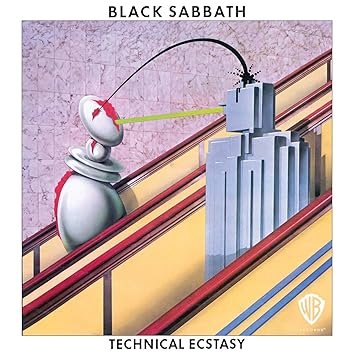
Critics pointed to the album’s lack of memorable riffs and hooks compared to earlier work. The songs that attempted to be heavy often felt generic, while the experimental tracks seemed at odds with the band’s identity. The futuristic Hipgnosis album cover featuring two robots in an intimate moment became symbolic of the album’s disconnect between concept and execution.
Fan reactions were sharply divided from the start. Hardcore Sabbath devotees largely dismissed the album as a misstep, while more open-minded listeners appreciated the diversity and ambition. The debate has continued for decades, with Technical Ecstasy maintaining its reputation as the band’s most divisive release from the Ozzy era.
The initial reviews presaged the album’s long-term reputation as the weakest link in the classic Sabbath catalog. While 1978’s Never Say Die would also receive mixed notices, Technical Ecstasy bears the distinction of being the first album where critics and fans questioned whether the band had lost its way.
Commercial Success and Certifications
Despite mixed reviews, Technical Ecstasy achieved respectable commercial success upon release. The album peaked at number 13 on the UK Albums Chart, continuing the band’s string of Top 20 albums in their home country. In the United States, it reached number 51 on the Billboard 200, representing a decline from previous efforts but still a solid showing.
The album went on to earn Gold certification from the RIAA on June 19, 1997, more than two decades after its release. This delayed certification reflects the album’s status as a cult favorite that found its audience over time rather than through immediate commercial impact.
No singles from Technical Ecstasy became major hits, though “Back Street Kids” and “It’s Alright” received some radio airplay. The lack of a breakthrough single like “Paranoid” or “Iron Man” contributed to the album’s lower commercial profile compared to the band’s early 1970s peak.
Commercial performance was also hampered by the difficult touring cycle. Ozzy Osbourne briefly quit the band following the Technical Ecstasy tour, and the group’s opening act AC/DC often stole the show, further complicating the album’s commercial legacy. Substance abuse issues had reached critical levels, making it difficult for the band to properly promote the record.
Cultural Impact and Legacy
Technical Ecstasy’s cultural impact is complex and often overshadowed by the classic albums that preceded and the Ronnie James Dio era that would follow. The album represents a cautionary tale about experimentation without clear creative vision, though it has gained defenders who appreciate its ambition and sonic diversity.
The album’s importance lies partly in what it reveals about Black Sabbath’s creative process and the pressures facing the original lineup by 1976. It documents a band at a crossroads, struggling with internal demons while attempting to evolve musically. This vulnerability and uncertainty make it a fascinating if flawed chapter in the Sabbath saga.
Influence on Future Artists and Genres
Technical Ecstasy’s influence on future artists is more subtle than landmark albums like Paranoid or Master of Reality. However, the album’s willingness to incorporate keyboards, softer dynamics, and diverse influences into heavy music presaged similar experiments by other metal bands in the late 1970s and 1980s.
Guns N’ Roses covering “It’s Alright” on their Live Era album introduced the song to a new generation and validated Bill Ward’s controversial contribution. The cover demonstrates that even the album’s most divisive moments contain genuine musical merit when divorced from expectations about what a Black Sabbath album should sound like.
The album’s experimental approach influenced bands willing to push beyond genre boundaries, even if Technical Ecstasy itself is rarely cited as a direct inspiration. The courage to risk failure in pursuit of artistic growth, even when the results disappoint, set an example that resonates with musicians uncomfortable with creative stagnation.
Interestingly, the album has found appreciation among progressive rock fans who value its ambition and diversity over the consistency and heaviness metal purists demand. This crossover appeal, limited though it may be, expanded Black Sabbath’s audience even as it confused their core fanbase.
Retrospective Evaluations
Modern critics tend to view Technical Ecstasy more favorably than contemporary reviewers, though it remains the consensus pick for weakest album of the Ozzy era. The passage of time has allowed listeners to evaluate the album on its own merits rather than as a disappointing follow-up to stronger work.
AllMusic’s retrospective review noted that the band was “getting further and further from their original musical path” and praised individual tracks while acknowledging the album’s overall inconsistency. This balanced perspective typifies modern assessments that recognize both ambition and shortcomings.
The 2021 Super Deluxe Edition reissue featuring Steven Wilson remixes sparked renewed interest in the album. Wilson’s mixes brought clarity to Geezer Butler’s bass and revealed sonic details buried in the original production, leading some fans to reassess the material. The reissue demonstrated that at least some of the album’s problems stemmed from muddy production rather than weak songwriting.
Technical Ecstasy still rarely appears on “greatest albums” lists and won’t challenge Paranoid or Sabbath Bloody Sabbath for favorite status among fans. However, it’s increasingly viewed as an interesting failure rather than an embarrassing one, a document of talented musicians struggling to find new directions while battling personal demons.
📢 Explore More Black Sabbath
Dive deeper into Black Sabbath’s complete discography with our comprehensive guide to all Black Sabbath albums or learn about the members of Black Sabbath and where they are now.
Production Credits and Album Personnel
Band Members:
Ozzy Osbourne – Lead Vocals (all tracks except “It’s Alright”)
Tony Iommi – Guitar, Production
Geezer Butler – Bass Guitar
Bill Ward – Drums, Lead Vocals on “It’s Alright”
Additional Musicians:
Gerald Woodroffe – Keyboards, Synthesizers
Production Team:
Tony Iommi – Producer
Michael Lewis – String Arrangements on “She’s Gone”
Hipgnosis – Album Cover Design
Recording Details:
Recorded: June 1976
Studio: Criteria Studios, Miami, Florida
Label: Vertigo Records (UK), Warner Bros. Records (US/Canada)
Released: September 25, 1976 (US), October 8, 1976 (UK)
Length: 39:58
Frequently Asked Questions About Technical Ecstasy
Conclusion: Why Technical Ecstasy Still Matters Today
Technical Ecstasy stands as Black Sabbath’s most divisive and misunderstood album, a fascinating document of creative ambition colliding with personal chaos. While it lacks the consistency and focus of the band’s classic early albums, it captures talented musicians attempting to evolve and experiment despite battling substance abuse, exhaustion, and internal tensions.
The album remains enduringly relevant as a cautionary tale about the costs of fame and creative pressure. It reveals the humanity behind heavy metal’s founding fathers, showing them struggling with the same demons they sang about on earlier records. This vulnerability makes Technical Ecstasy compelling even when the music disappoints.
Within Black Sabbath’s legacy, Technical Ecstasy represents a necessary if uncomfortable chapter. The experiments would be largely abandoned for Never Say Die before the Dio era redefined the band’s sound completely. Understanding this album deepens appreciation for both the classic albums that preceded it and the triumphant rebirth that followed Ozzy’s departure.
Listeners today should approach Technical Ecstasy with adjusted expectations, appreciating its ambition and standout tracks like “Dirty Women” and “You Won’t Change Me” while acknowledging its shortcomings. It’s an album that rewards open-minded listeners willing to hear Black Sabbath stretching beyond their comfort zone, even when they occasionally stumble in the process.
Ready to explore more classic rock history?
Check out our complete guide to Black Sabbath members or discover our Black Sabbath albums in order for the full discography!