

Billy Joel stands as one of rock music’s most prolific and beloved singer-songwriters. From his breakthrough with “Piano Man” to becoming one of the best-selling artists of all time with over 160 million records sold worldwide, Billy Joel’s journey has been nothing short of extraordinary. Though his performing career came to an end in July 2024 due to health challenges, this American pianist continues to inspire millions with his timeless melodies, honest storytelling, and a catalog of songs that will endure for generations.
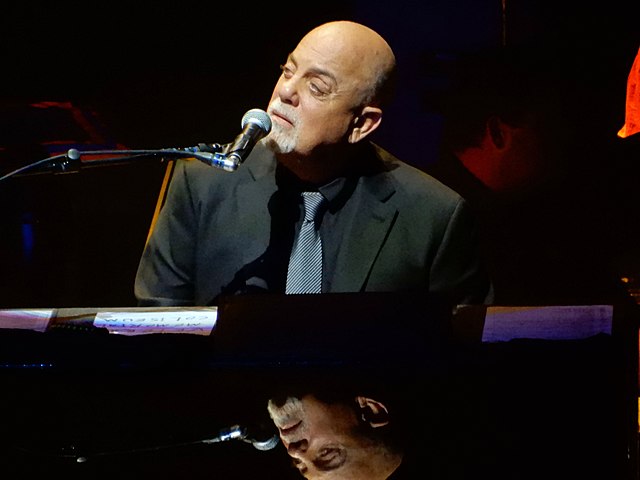
Photo Credit: Photo by Rhododendrites via Wikimedia Commons, CC BY-SA 4.0
📚 Table of Contents
Click to Expand/Collapse Navigation
🎸 Early Life and Musical Beginnings
Billy Joel was born William Martin Joel on May 9, 1949, in the Bronx, New York, to Howard Joel and Rosalind Nyman Joel. His father, a classical pianist and businessman, had fled Nazi Germany in the late 1930s, bringing with him a deep appreciation for European classical music that would profoundly influence young Billy’s musical development.
When Billy Joel was just a toddler, his family moved to the Long Island suburb of Hicksville, where he would spend his formative years. At age four, his mother enrolled him in piano lessons, beginning what would become a lifelong relationship with the instrument. Unlike many children who resist classical training, Billy Joel showed natural aptitude and genuine interest, though he admits he wasn’t always the most disciplined student.
By age 14, Billy Joel had discovered rock and roll, particularly the sounds coming from the British Invasion. Artists like The Beatles and The Rolling Stones captured his imagination in ways that classical compositions couldn’t. He began playing in local bands, earning $50 a week performing in Long Island bars and clubs while still attending Hicksville High School. The young pianist quickly learned to balance classical technique with rock and roll energy, a combination that would define his signature sound.
Billy Joel’s dedication to music came at a cost. So focused on his evening performances and growing music career, he failed to complete enough coursework to graduate with his class in 1967. This decision disappointed his family but demonstrated Joel’s unwavering commitment to pursuing music professionally. He would later receive his diploma in 1992 when Hicksville High School awarded it to him, citing his success as proof of his education’s completion.
🎤 The Hassles and Early Struggles (1966-1969)
In 1966, at just 17 years old, Billy Joel joined his first professional band, The Echoes, later renamed The Hassles. This Long Island-based rock group signed with United Artists Records, giving the teenage Joel his first taste of the recording industry. The Hassles released two albums—”The Hassles” (1967) and “Hour of the Wolf” (1968)—neither of which achieved commercial success.
The Hassles served as Billy Joel’s introduction to the harsh realities of the music business. Despite working with a major label, the band struggled to find their identity, caught between trying to sound like popular British Invasion acts and developing their own voice. Joel played keyboards and provided backing vocals, learning valuable lessons about songwriting, recording, and performance that would serve him throughout his career.
The experience with The Hassles taught Billy Joel what he didn’t want to be as an artist. The band’s failure to connect with audiences showed him the importance of authenticity and original songwriting. When The Hassles disbanded in 1969, Joel wasn’t discouraged—he was ready to take more creative control over his musical direction.
🎵 Attila and Starting Over (1970-1971)
After The Hassles dissolved, Billy Joel formed Attila with drummer Jon Small, his bandmate from The Hassles. This experimental duo created one of the most unusual entries in rock history—a heavy metal album featuring only keyboards and drums. Released in 1970 on Epic Records, “Attila” featured Joel playing distorted organ over thunderous drumming, wearing barbarian costumes on the album cover.
“Attila” was a commercial and critical disaster, often cited as one of the worst albums ever made. Billy Joel himself later admitted the project was a mistake, though he defended the artistic ambition behind it. The album sold poorly, and Epic Records quickly dropped the duo. Adding insult to injury, Joel’s personal life collapsed around the same time when he fell in love with Elizabeth Small, the wife of his bandmate and friend Jon Small.
The combination of professional failure and personal turmoil sent Billy Joel into a deep depression. In 1970, he attempted suicide by drinking furniture polish, an incident he later referenced in his song “You’re Only Human (Second Wind).” After recovering, Joel checked himself into Meadowbrook Hospital for observation, using the time to reflect on his life and career direction.
This dark period forced Billy Joel to completely reevaluate his approach to music. He realized that trying to be something he wasn’t—whether a British Invasion copycat with The Hassles or a heavy metal keyboardist with Attila—was leading nowhere. He needed to write honest, autobiographical songs that reflected his own experiences and musical training.
🚀 Piano Man: The Breakthrough (1971-1974)
In 1971, Billy Joel signed with Family Productions, a management company that promised to revitalize his career. However, the contract would later prove disastrous, as it gave the company control over his music for years to come. Despite this future problem, Family Productions got Joel signed to Paramount Records (later absorbed by ABC Records), setting the stage for his breakthrough.
Needing to escape New York and legal complications with his previous record deals, Billy Joel moved to Los Angeles in 1972. He performed under the pseudonym “Bill Martin” at the Executive Room piano bar in Wilshire, making $200 a week playing covers and his own compositions to bar patrons. This experience proved transformative—watching the diverse clientele and listening to their stories gave Joel material for what would become his signature song.
Drawing from his piano bar experiences, Billy Joel wrote “Piano Man,” a five-minute narrative ballad describing the characters he met at the Executive Room. The song featured Joel’s observational storytelling, catchy melody, and distinctive harmonica playing—elements that would become hallmarks of his style. When his debut album “Piano Man” was released in November 1973, the title track became a Top 25 hit.
While “Piano Man” the song achieved immediate success, reaching #25 on the Billboard Hot 100, the album itself had modest sales initially. Billy Joel had finally found his authentic voice—combining classical piano training with rock and roll energy, wrapped in clever, literate lyrics about everyday people and experiences. The album established Joel’s persona as a working-class storyteller, the voice of ordinary Americans facing ordinary struggles.
Despite the artistic breakthrough, Billy Joel faced ongoing financial and legal problems. His contract with Family Productions entitled them to profits from his work, leaving Joel earning minimal income despite his growing fame. This situation would plague him for years, but it couldn’t diminish the impact of “Piano Man” on his career trajectory.
💿 The Stranger and Commercial Dominance (1977)
After releasing “Streetlife Serenade” (1974) and “Turnstiles” (1976), both of which underperformed commercially, Billy Joel was in danger of being dropped by Columbia Records. The label gave him one more chance, pairing him with producer Phil Ramone for what would become the most important album of his career: “The Stranger”.
Released in September 1977, “The Stranger” transformed Billy Joel from a struggling artist into a superstar. The album spawned four Top 40 hits: “Just the Way You Are” (#3), “Movin’ Out (Anthony’s Song)” (#17), “Only the Good Die Young” (#24), and “She’s Always a Woman” (#17). Phil Ramone’s production gave Joel’s piano-driven rock a polished, radio-friendly sound while maintaining the authenticity that made his songwriting special.
“Just the Way You Are,” written for Joel’s first wife Elizabeth, became one of the most beloved love songs of the era, winning Grammy Awards for Record of the Year and Song of the Year in 1979. The song showcased Billy Joel’s ability to craft timeless melodies with universal emotional appeal—a skill that separated him from his singer-songwriter contemporaries.
“The Stranger” sold over 10 million copies in the United States alone, becoming Columbia Records’ best-selling album at the time. It remained on the Billboard 200 chart for 126 consecutive weeks and reached #2 on the chart. The album’s success finally gave Billy Joel financial security and creative freedom, proving that his piano-based rock could compete with guitar-dominated music on commercial terms.
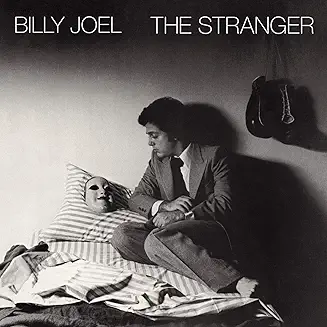
The album cover, featuring Joel dressed in a suit with a mask on the bed beside him, became iconic—representing the theme of hiding one’s true self behind societal expectations. This visual perfectly captured the album’s exploration of identity, love, and the masks people wear in relationships and society.
⚡ Peak Years: 52nd Street to Glass Houses (1978-1980)
Riding the momentum of “The Stranger,” Billy Joel released “52nd Street” in October 1978. Named after the famous New York City street known for jazz clubs, the album blended Joel’s pop-rock style with jazz influences, featuring songs like “My Life,” “Big Shot,” and “Honesty.” The album debuted at #1 on the Billboard 200, selling over 7 million copies.
“52nd Street” made history as the first album ever released on CD in Japan in 1982, cementing Billy Joel’s status as a forward-thinking artist embracing new technology. At the 1980 Grammy Awards, the album won Album of the Year and Best Pop Vocal Performance, Male, giving Joel his first Album of the Year Grammy. “My Life” reached #3 on the singles chart and became the theme song for the sitcom “Bosom Buddies,” further expanding Joel’s cultural reach.
In 1980, Billy Joel released “Glass Houses”, his hardest-rocking album to date. Influenced by punk and new wave movements, Joel wanted to prove he could rock as hard as anyone. The album featured “You May Be Right,” a guitar-driven rocker that hit #7, and “It’s Still Rock and Roll to Me,” which became Billy Joel’s first #1 hit on the Billboard Hot 100.
“Glass Houses” debuted at #1 on the Billboard 200 and won the Grammy for Best Rock Vocal Performance, Male. The album sold over 7 million copies and proved Billy Joel could successfully adapt to changing musical trends without abandoning his core identity. Songs like “Don’t Ask Me Why” and “Sometimes a Fantasy” showed his versatility, moving seamlessly between styles while maintaining the melodic craftsmanship that defined his work.
During this peak period from 1977-1980, Billy Joel established himself as one of America’s premier songwriters and performers. He sold out arenas worldwide, earned critical acclaim, and achieved commercial success that few artists of his generation could match. His string of hit albums demonstrated remarkable consistency in quality and broad appeal across different demographics.
🏆 The 1980s: An Innocent Man Era (1982-1989)
After “Glass Houses,” Billy Joel released “The Nylon Curtain” (1982), his most ambitious and politically conscious album. Featuring songs about the Vietnam War (“Goodnight Saigon”), economic hardship (“Allentown”), and suburban despair (“Pressure”), the album showed Joel tackling serious social issues. While it sold well (3 million copies), it didn’t match the commercial heights of his previous work, reaching #7 on the charts.
In 1983, Billy Joel returned to more accessible territory with “An Innocent Man”, a loving tribute to the doo-wop and soul music of his youth. The album spawned multiple hit singles: “Tell Her About It” (#1), “Uptown Girl” (#3), “An Innocent Man” (#10), “The Longest Time” (#14), and “Leave a Tender Moment Alone” (#27). The album sold over 7 million copies and spent 6 weeks at #4 on the Billboard 200.
“Uptown Girl,” inspired by Joel’s relationship with supermodel Christie Brinkley (whom he would marry in 1985), became one of his most enduring hits, especially popular internationally. The song’s Frankie Valli-inspired falsetto and retro production captured the innocent romance of early 1960s pop while remaining thoroughly modern and radio-friendly.
Billy Joel’s 1986 album “The Bridge” featured the hit single “A Matter of Trust” and notable collaborations with Ray Charles (“Baby Grand”) and Steve Winwood (“Getting Closer”). While successful, selling over 3 million copies, it marked a slight commercial decline compared to his early 1980s peak.
In 1989, Billy Joel released “Storm Front,” featuring “We Didn’t Start the Fire,” a rapid-fire historical chronicle that became his third #1 hit. The album also included “I Go to Extremes” (#6) and “And So It Goes,” demonstrating Joel’s continued ability to craft commercially successful yet artistically substantial work. “Storm Front” sold over 4 million copies and gave Billy Joel his last #1 album of original material.
💪 Classical Turn and Pop Retirement (1993-2001)
After “Storm Front,” Billy Joel released “River of Dreams” in 1993, his final studio album of original pop material. The title track reached #3 on the Billboard Hot 100, becoming his last Top 10 hit. The album explored themes of spiritual searching and mid-life reflection, with Joel’s lyrics taking on more philosophical depth. “River of Dreams” sold over 5 million copies and debuted at #1 on the Billboard 200.
Following “River of Dreams,” Billy Joel made the surprising decision to retire from writing and recording pop music, though he continued performing his catalog live. He cited the pressure of commercial expectations and the desire to explore other musical directions as reasons for stepping away from pop. At 44 years old, Joel felt he had said everything he wanted to say in that medium.
In 2001, Billy Joel released “Fantasies & Delusions,” an album of classical piano pieces he composed and performed by pianist Richard Hyung-ki Joo. This marked Joel’s return to his classical roots, the music his father had introduced him to as a child. The album reached #1 on the Billboard Classical Albums chart and allowed Joel to demonstrate his compositional skills beyond pop songwriting.
Throughout the 1990s and 2000s, Billy Joel continued touring extensively, performing over 100 concerts per year at his peak. His live shows became legendary for their energy, musicianship, and Joel’s obvious joy in performing his catalog. He proved that an artist could maintain a successful career without releasing new material, as long as the existing catalog remained strong and the performances stayed vital.
⭐ Madison Square Garden Residency (2014-2024)
In January 2014, Billy Joel announced a historic residency at Madison Square Garden, performing once a month at the iconic New York venue for as long as there was demand. This unprecedented arrangement gave Joel a permanent home to perform in his beloved hometown while avoiding the grueling schedules of traditional touring. The residency became one of the most successful concert series in music history.
Billy Joel’s final concert at Madison Square Garden took place on July 25, 2024, marking the end of his historic 10-year residency. The sold-out show was his 150th lifetime performance at the venue, breaking all previous records for performances at MSG. He surpassed Elton John’s previous record and created a legacy that may never be matched. The shows regularly sold out within minutes throughout the entire decade, with fans traveling from around the world to see Joel perform in the intimate (for an arena) 20,000-seat venue.
Billy Joel’s historic final performance at Madison Square Garden, July 25, 2024
Each Billy Joel MSG show featured a mix of his greatest hits alongside deep cuts, with setlists varying from night to night to keep the experience fresh for repeat attendees. Joel often took audience requests, making each show unique. The residency grossed over $500 million, cementing Joel’s status as one of live music’s most bankable performers despite not releasing new pop material in over three decades.
The Madison Square Garden residency represents Billy Joel’s legacy coming full circle. The kid from Hicksville, Long Island, who struggled for years to make it in the music business, commanded New York’s most prestigious venue on his own terms, performing only when and where he chose, for audiences that spanned multiple generations.
💪 Health Challenges and NPH Diagnosis
Following his final Madison Square Garden performance in July 2024, Billy Joel was diagnosed with normal pressure hydrocephalus (NPH), a brain disorder that significantly impacted his ability to perform. NPH has affected his hearing, vision, and balance, three critical elements required for live performance. The diagnosis explained some of the challenges Joel had been experiencing and led to the difficult decision to step away from touring.
Billy Joel canceled all upcoming concerts to focus on treatment and recovery. His medical team has advised him to rest from performing while undergoing physical therapy and other treatments. While Joel reports feeling okay overall, the combination of symptoms makes live performance unsafe and impractical at this time. The decision prioritizes his long-term health over continuing to tour.
Billy Joel’s health update and NPH diagnosis
Normal pressure hydrocephalus occurs when cerebrospinal fluid builds up in the brain’s ventricles, causing them to enlarge and potentially damage surrounding brain tissue. The condition can affect walking, bladder control, and cognitive function. Billy Joel’s symptoms have primarily impacted his sensory and balance systems, making it difficult to perform at the level his fans expect and deserve.
For more comprehensive details on Billy Joel’s health journey, read our full coverage: Billy Joel Health Update: The Piano Man’s Resilience.
Despite these challenges, Billy Joel remains optimistic about his treatment and recovery. He continues to engage with fans through social media and occasional public appearances when his health allows. The music community has rallied around Joel, celebrating his incredible 50-year career and wishing him well during his recovery journey.
📀 Essential Billy Joel Albums
🎵 Piano Man (1973)
The album that introduced the world to Billy Joel’s storytelling genius.
Billy Joel’s breakthrough album “Piano Man” established him as a uniquely American voice in 1970s rock. The title track remains one of the most beloved songs in popular music history, a five-minute narrative that captures the loneliness, dreams, and quiet desperation of bar patrons seeking escape through music and drink. The album showcases Joel’s ability to craft character-driven songs with cinematic detail.
Beyond the iconic title track, “Piano Man” features gems like “Captain Jack,” a dark examination of suburban drug use and ennui, and “Travelin’ Prayer,” showcasing Joel’s rock and roll side. The album’s commercial success was modest initially, but it has since been certified multi-platinum and established the Billy Joel template: piano-driven rock with literate, observational lyrics and memorable melodies.
Every Billy Joel fan should own this foundational album that launched one of music’s most successful careers.
🎵 The Stranger (1977)
Billy Joel’s masterpiece and one of the greatest albums of the 1970s.
“The Stranger” represents Billy Joel at the absolute peak of his songwriting powers. Produced by Phil Ramone, the album balances commercial accessibility with artistic integrity, creating a collection of songs that work both as radio singles and as parts of a cohesive artistic statement. From the opening whistling of the title track to the closing notes of “Everybody Has a Dream,” the album never falters.
The album features four top 40 hits, including “Just the Way You Are,” which won Record of the Year and Song of the Year at the Grammys. “Movin’ Out (Anthony’s Song)” perfectly captures working-class frustration with its sardonic lyrics and driving piano. “Only the Good Die Young” caused controversy with its Catholic school girl narrative but became a Joel signature song. Billy Joel’s lyrics reached new sophistication here, addressing complex relationships, social expectations, and personal identity with rare honesty.
This is the essential Billy Joel album—if you only buy one, make it “The Stranger.”
🎵 52nd Street (1978)
The Album of the Year winner that cemented Billy Joel’s superstar status.
Released just one year after “The Stranger,” “52nd Street” proved Billy Joel wasn’t a one-album wonder. The album blends pop, rock, and jazz influences, creating a sophisticated sound that appealed to both critics and commercial audiences. Named after New York’s legendary jazz street, the album tips its hat to Joel’s musical influences while remaining thoroughly contemporary.
“My Life” became an anthem of independence and self-determination, reaching #3 on the charts. “Big Shot” satirized the pretentious nightclub scene with cutting wit and a memorable piano riff. “Honesty” showcased Billy Joel’s ballad-writing skills with a piano-and-strings arrangement that highlights his voice and the song’s emotional core. The album won Grammy Awards for Album of the Year and Best Pop Vocal Performance, Male, validating Joel’s artistic achievements.
A must-have for anyone who appreciates Billy Joel’s jazz-influenced pop-rock sophistication.
🎵 Glass Houses (1980)
Billy Joel rocks harder than ever on this new wave-influenced powerhouse.
“Glass Houses” found Billy Joel responding to punk and new wave with his hardest-rocking album. Tired of being dismissed as a “soft rocker,” Joel cranked up the guitars and delivered an album that could compete with anyone in the rock arena. The result was both a commercial smash and artistic triumph that showed Joel’s versatility and willingness to evolve.
“You May Be Right” opens with a guitar crunch and Joel shouting, immediately establishing this isn’t your parents’ Billy Joel album. “It’s Still Rock and Roll to Me” became Joel’s first #1 hit, a sarcastic commentary on music trends and fashion. The album also features “Don’t Ask Me Why,” showcasing Joel could still deliver his signature piano ballads within a harder-rocking context. Billy Joel won the Grammy for Best Rock Vocal Performance, Male, proving critics and audiences accepted his evolution.
Essential for understanding Billy Joel’s range and his ability to adapt to changing musical landscapes while maintaining his identity.
🎵 Greatest Hits Volume I & II (1985)
The perfect introduction to Billy Joel’s incredible catalog of hits.
For listeners wanting a comprehensive overview of Billy Joel’s career through 1985, this double album compilation delivers every major hit and several deep cuts. Released at the height of Joel’s commercial success, “Greatest Hits Volume I & II” has sold over 25 million copies worldwide, making it one of the best-selling albums in American history.
The compilation includes “Piano Man,” “Just the Way You Are,” “My Life,” “It’s Still Rock and Roll to Me,” “Uptown Girl,” and dozens of other classics. Billy Joel personally selected the tracks, ensuring the collection represented his career accurately rather than just throwing together radio hits. The album introduces new fans to Joel’s breadth while giving longtime fans a convenient collection of favorites.
Perfect for new Billy Joel fans or anyone wanting all the hits in one place—this compilation is essential.
🛒 Shop Billy Joel Classics on Amazon 🎵
Explore Billy Joel’s legendary discography with these essential albums. Each purchase supports this site at no extra cost to you!


💙 Support Classic Rock Artists: When you purchase through these Amazon links, you’re supporting this site at no additional cost to you. As an Amazon Associate, I earn from qualifying purchases. Thank you for keeping classic rock journalism alive!
🎪 2025 Updates and Current Status
Billy Joel is not currently touring in 2025 due to his diagnosis of normal pressure hydrocephalus (NPH). Following his final Madison Square Garden performance on July 25, 2024, Joel made the difficult decision to cancel all upcoming concerts and step away from live performance to focus on his health and recovery. His medical team has advised complete rest from performing while he undergoes treatment, including physical therapy.
The NPH diagnosis has significantly impacted Billy Joel’s ability to perform. The brain disorder affects his hearing, vision, and balance, making it impossible to deliver the high-quality performances his fans expect and deserve. While Joel reports feeling okay overall, the combination of symptoms means that returning to the stage is not currently feasible. His priority remains treatment and recovery rather than rushing back to performing.
For more details on Billy Joel’s recent health challenges and diagnosis, read our coverage: Billy Joel Health Update: The Piano Man’s Resilience.
Billy Joel’s cultural relevance extends beyond his live performances. In 2025, his music continues appearing in films, television shows, and commercials, introducing new generations to classics like “Piano Man,” “Uptown Girl,” and “We Didn’t Start the Fire.” His vault releases and archival performances keep dedicated fans engaged. For an in-depth look at one of these special releases, read our feature on Billy Joel’s Vault Release: Archival Performance from a Long, Long Time Ago.
Fans worldwide have expressed support for Billy Joel during this challenging time, sharing memories of his concerts and celebrating his five-decade career. The music community continues to honor his legacy while respecting his need to focus on health and recovery. Whether Joel returns to performing remains uncertain, but his impact on popular music is already secure.
Personal Life and Family
Billy Joel has been married four times. His first marriage to Elizabeth Weber Small lasted from 1973 to 1982. He married supermodel Christie Brinkley in 1985, and they had one daughter, Alexa Ray Joel, born in 1985. Joel and Brinkley divorced in 1994. He married Katie Lee in 2004; they divorced in 2010. In 2015, Joel married Alexis Roderick, with whom he has two daughters, Della Rose (born 2015) and Remy Anne (born 2017).
Billy Joel currently resides in Long Island, New York, maintaining strong ties to his childhood home despite decades of international fame. He owns several properties in the area and is actively involved in local community initiatives and charitable causes.
Joel is an avid boater and motorcycle enthusiast, often spending his free time on the water around Long Island. He has also shown interest in classical music composition and has discussed potentially writing more classical pieces in the future, following his 2001 album “Fantasies & Delusions.”
Musical Innovations and Influence
Billy Joel pioneered the integration of classical piano technique with rock and roll energy, creating a unique sound that separated him from guitar-dominated rock. His formal training in classical piano gave his compositions harmonic sophistication rarely found in pop-rock music. Songs like “Root Beer Rag” showcase his ability to blend classical finger work with modern sensibilities.
Joel’s lyrical approach combined literary storytelling with working-class authenticity. Unlike many singer-songwriters who focused on abstract emotions or poetic imagery, Billy Joel wrote narrative songs about specific characters and situations—the bartender in “Piano Man,” the factory workers in “Allentown,” the soldiers in “Goodnight Saigon.” This cinematic quality influenced countless songwriters who followed.
Billy Joel influenced artists across multiple genres, from Elton John (who became a close friend and touring partner) to contemporary singer-songwriters like John Mayer, Ben Folds, and Gavin DeGraw. His ability to craft hook-laden melodies while maintaining lyrical substance created a template for commercially successful yet artistically valid pop-rock.
Collaborations with Rock Legends
- Elton John – Joel’s most famous collaboration involves co-headlining the “Face to Face” tour series with Elton John, which ran intermittently from 1994 to 2010 and grossed hundreds of millions of dollars.
- Ray Charles – The soul legend appeared on “Baby Grand” from “The Bridge” (1986), trading vocals with Joel on a beautiful tribute to piano-playing legends.
- Steve Winwood – Collaborated on “Getting Closer” from “The Bridge,” with Winwood’s distinctive keyboards complementing Joel’s piano.
- Garth Brooks – The country superstar joined Joel on “Shameless,” which Brooks covered and took to #1 on the country charts.
- Tony Bennett – The jazz legend has performed with Joel multiple times, including memorable duets of standards and Joel classics.
- Paul Simon – Fellow Long Island native joined Joel for special performances celebrating their shared New York roots.
- Bruce Springsteen – The New Jersey icon has jammed with Joel multiple times, including a memorable 12/12/12 concert benefiting Hurricane Sandy victims.
- Cyndi Lauper – The 80s pop star joined Joel for performances celebrating New York music heritage.
Television and Film Appearances
Beyond his music career, Billy Joel has made numerous television and film appearances. He hosted “Saturday Night Live” and performed as musical guest multiple times. His song “My Life” became the theme song for the sitcom “Bosom Buddies” starring Tom Hanks. Joel appeared in the documentary “The Last Play at Shea” (2010), chronicling his farewell concerts at Shea Stadium before its demolition.
Billy Joel has been the subject of multiple documentaries, including “A Matter of Trust: The Bridge to Russia” (2014), which documented his groundbreaking 1987 concerts in the Soviet Union. His life and career have been featured in numerous television specials, including multiple Grammy Awards performances and Kennedy Center Honors tributes to other artists.
Awards and Recognition
- Grammy Award for Record of the Year – “Just the Way You Are” (1979)
- Grammy Award for Song of the Year – “Just the Way You Are” (1979)
- Grammy Award for Album of the Year – “52nd Street” (1980)
- Grammy Award for Best Pop Vocal Performance, Male – “52nd Street” (1980)
- Grammy Award for Best Rock Vocal Performance, Male – “Glass Houses” (1981)
- Grammy Award for Best Recording for Children – “In Harmony 2” (1982)
- Grammy Legend Award – (1992)
- Rock and Roll Hall of Fame Induction – Class of 1999
- Songwriters Hall of Fame Induction – (1992)
- Kennedy Center Honors – (2013)
- Gershwin Prize for Popular Song – Library of Congress (2014)
- Billboard’s Century Award – (1994)
- American Music Award for Favorite Pop/Rock Male Artist – Multiple years
- ASCAP Founders Award – (1998)
❓ Frequently Asked Questions About Billy Joel
Is Billy Joel still performing and touring in 2025?
No, Billy Joel is not currently performing or touring in 2025. Following his final Madison Square Garden concert on July 25, 2024, which marked the end of his historic 10-year residency and was his 150th lifetime performance at the venue, Joel was diagnosed with normal pressure hydrocephalus (NPH). This brain disorder has affected his hearing, vision, and balance, making it impossible for him to perform at the level his fans deserve. Billy Joel canceled all upcoming concerts to focus on treatment and recovery, which includes physical therapy. While he reports feeling okay overall, his medical team has advised complete rest from performing. The 75-year-old legend has stepped away from live performance to prioritize his health, though he remains engaged with fans through other means. Whether Billy Joel will return to performing in the future remains uncertain and depends on his recovery from NPH.
What is Billy Joel’s most famous song?
“Piano Man” is widely considered Billy Joel’s most famous and iconic song. Released in 1973 as the title track from his breakthrough album, “Piano Man” tells the story of characters Joel encountered while performing at the Executive Room piano bar in Los Angeles. The song’s narrative structure, memorable melody, and Joel’s distinctive harmonica playing made it an instant classic. While Billy Joel has had numerous hits throughout his career, including “Uptown Girl,” “We Didn’t Start the Fire,” and “Just the Way You Are,” none have achieved the cultural permanence of “Piano Man.” The song has become Joel’s signature piece, regularly closing his concerts with audiences singing along to every word. “Piano Man” represents Billy Joel at his best—combining autobiographical storytelling, catchy melodies, and observational lyrics about everyday people seeking escape and connection through music.
What is Billy Joel’s net worth in 2025?
Billy Joel’s estimated net worth in 2025 is approximately $225-250 million, making him one of the wealthiest musicians in the world. This fortune comes from multiple sources: album sales of over 160 million records worldwide, decades of touring (particularly his lucrative Madison Square Garden residency which has grossed over $500 million), songwriting royalties, real estate investments, and various business ventures. Billy Joel’s catalog generates substantial ongoing income through streaming services, radio play, licensing for films and commercials, and cover versions by other artists. His monthly MSG residency alone generates millions annually, as each show sells 20,000 tickets at premium prices. Unlike many artists whose wealth comes primarily from touring or album sales, Billy Joel benefits from both performance income and ownership of his master recordings and publishing rights (after finally escaping early contractual problems). His Long Island real estate holdings and wise financial management have also contributed to his substantial net worth.
Did Billy Joel ever play in a band before going solo?
Yes, Billy Joel played in several bands before achieving solo success. His first professional group was The Echoes (later renamed The Hassles), which he joined in 1966 at age 17. The Hassles signed with United Artists Records and released two unsuccessful albums before disbanding in 1969. After The Hassles, Billy Joel formed Attila with drummer Jon Small, an experimental heavy metal duo that released one critically panned album in 1970 featuring only keyboards and drums. These early failures taught Joel valuable lessons about authenticity and artistic control. The commercial and critical disasters of The Hassles and Attila pushed Billy Joel toward a more personal, piano-driven sound that would define his solo career. After Attila’s collapse and personal turmoil, Joel refocused on solo work, eventually creating “Piano Man” and establishing himself as a singer-songwriter rather than a band member.
Is Billy Joel in the Rock and Roll Hall of Fame?
Yes, Billy Joel was inducted into the Rock and Roll Hall of Fame in 1999 in his first year of eligibility. Ray Charles inducted Joel, a fitting tribute given their collaboration on “Baby Grand.” During his induction speech, Billy Joel reflected on his long journey from playing in Long Island bars to achieving worldwide recognition. Joel’s induction acknowledged his tremendous commercial success, artistic achievements, and lasting influence on popular music. In addition to the Rock Hall, Billy Joel has been inducted into the Songwriters Hall of Fame (1992) and received the Kennedy Center Honors (2013) and the Library of Congress Gershwin Prize for Popular Song (2014). These honors recognize Billy Joel not just as a performer but as one of America’s greatest songwriters, placing him alongside legends like George Gershwin, Paul Simon, and Carole King in the pantheon of American music composition.
Why did Billy Joel stop making pop albums?
Billy Joel stopped recording pop albums after “River of Dreams” in 1993, citing creative fulfillment and commercial pressure as primary reasons. After over 20 years of writing, recording, and touring, Joel felt he had expressed everything he wanted to say in the pop-rock medium. He stated that he didn’t want to simply repeat himself or chase commercial trends to maintain relevance. Billy Joel also mentioned the exhausting cycle of album-promotion-tour that dominated his life since the early 1970s. Rather than releasing mediocre work to meet label expectations, Joel chose to preserve his artistic legacy by ending on a high note. He shifted focus to classical composition, releasing “Fantasies & Delusions” in 2001, and dedicated himself to live performance rather than studio work. Billy Joel maintains that he may write pop songs again if inspiration strikes, but only when he has something genuinely new to contribute. His decision to stop recording new pop material hasn’t diminished his career—his touring success proves audiences value his existing catalog.
What happened between Billy Joel and Christie Brinkley?
Billy Joel and supermodel Christie Brinkley were married from 1985 to 1994, one of the most high-profile celebrity marriages of the era. They met in 1983, and their relationship inspired “Uptown Girl,” one of Joel’s biggest hits. The couple had one daughter together, Alexa Ray Joel, born in 1985. Billy Joel and Brinkley divorced in 1994, with both citing the pressures of their careers and time spent apart as contributing factors. Despite the divorce, Joel and Brinkley have maintained a respectful relationship, particularly in co-parenting their daughter. Alexa Ray Joel followed in her father’s footsteps, pursuing a music career as a singer-songwriter and pianist. Both Billy Joel and Christie Brinkley have spoken positively about their time together in subsequent interviews, acknowledging they shared many wonderful years despite the marriage ultimately not working out. Their split was handled maturely and privately compared to many celebrity divorces.
How many times has Billy Joel been married?
Billy Joel has been married four times throughout his life. His first wife was Elizabeth Weber Small (1973-1982), whom he met while she was married to his bandmate Jon Small. Joel’s second marriage was to supermodel Christie Brinkley (1985-1994), with whom he had daughter Alexa Ray Joel. Billy Joel’s third marriage to Katie Lee lasted from 2004 to 2010. In 2015, Joel married Alexis Roderick, his current wife, with whom he has two daughters: Della Rose (born 2015) and Remy Anne (born 2017). Billy Joel and Alexis Roderick married in a surprise ceremony at their Long Island estate, with Governor Andrew Cuomo officiating. Joel has said that fatherhood later in life has given him renewed energy and perspective, and he credits Roderick with bringing stability and happiness to his personal life after several challenging relationships.
Bottom Line
Billy Joel’s career represents one of rock music’s most remarkable stories of persistence, talent, and authentic artistry. From his teenage struggles with The Hassles and Attila to breakthrough success with “Piano Man,” from commercial dominance with “The Stranger” and “52nd Street” to his triumphant Madison Square Garden residency, Billy Joel has consistently delivered music that resonates across generations.
His 160 million records sold worldwide remain a testament to his universal appeal, while his refusal to release mediocre work shows artistic integrity. Billy Joel’s decision to retire from recording new pop material in 1993 proved that timeless songs matter more than constant output. His decade-long Madison Square Garden residency redefined what success looks like for legacy artists, creating a sustainable model that prioritized quality over quantity.
Billy Joel’s July 25, 2024 final performance at Madison Square Garden marked the end of an era. His 150th show at the venue closed a historic 10-year residency that grossed over $500 million and created countless memories for fans worldwide. While his diagnosis of normal pressure hydrocephalus has forced him to step away from performing, his legacy as one of America’s greatest songwriters and performers remains undiminished.
As Billy Joel focuses on his health and recovery from NPH, his music continues touching lives around the world. His influence on countless songwriters and performers endures, his innovations in piano-driven rock remain foundational, and his dedication to his craft serves as inspiration far beyond the music world. The Piano Man from Hicksville, Long Island has taken his final bow on stage, but his songs will live forever.
📋 Affiliate Disclosure
This site contains affiliate links to products. I may receive a commission for purchases made through these links at no additional cost to you. As an Amazon Associate, I earn from qualifying purchases. This helps support the site and allows me to continue creating content about Billy Joel, classic rock artists, and music news. All opinions and recommendations are my own.
📚 Sources
- Wikipedia – Billy Joel Biography
- Official Billy Joel Website
- Rock and Roll Hall of Fame – Billy Joel
- Grammy Awards – Billy Joel
- Billboard – Billy Joel Chart History
- Biography.com – Billy Joel
- Rolling Stone – Billy Joel Coverage
- Madison Square Garden – Billy Joel Residency
🎶 Retired, recharged, and rocking harder than ever – I’m Charlie Gillingham. Founder of Classic Rock Artists, I live for legendary riffs, timeless tracks, and the stories that keep them alive.