

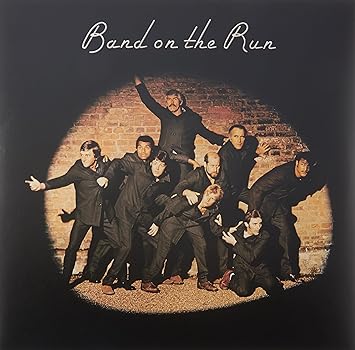
Band on the Run by Paul McCartney and Wings: The Triumphant Comeback That Silenced the Critics
Band on the Run stands as Paul McCartney’s finest post-Beatles achievement, a Grammy-winning masterpiece that transformed Wings from a ridiculed side project into a legitimate rock powerhouse.
Released in December 1973, this album topped charts in the US, UK, and Australia, eventually going triple platinum and earning McCartney his first Grammy Award since leaving the Beatles. It remains one of the best-selling albums of the 1970s.
If you’ve ever wondered what happens when a Beatle faces down his harshest critics armed with nothing but raw talent, a skeletal band, and determination forged in a Nigerian recording studio, this is that story.
Band on the Run arrived at a critical juncture for McCartney, who had endured years of dismissive reviews suggesting his best work died with the Beatles. This album proved them spectacularly wrong.
Let’s explore why this 1973 classic continues to captivate listeners more than five decades later, track by track, revelation by revelation.
⚡ Limited Time: Classic Rock Essential
Band on the Run remains one of the most sought-after albums in rock history. Original vinyl pressings are increasingly collectible, while remastered editions offer pristine sound quality. Whether you’re rediscovering this masterpiece or experiencing it for the first time, now is the perfect moment to add this essential album to your collection.
📋 Table of Contents [+]
Band on the Run Overview: Context and Creation
By 1973, Paul McCartney had spent three years trying to escape the long shadow of the Beatles, forming Wings in 1971 with his wife Linda and guitarist Denny Laine. Critics remained unconvinced, dismissing Wings as a vanity project lacking the magic of his former band.
The circumstances surrounding Band on the Run’s creation read like a rock and roll disaster film. Just weeks before recording was scheduled to begin in Lagos, Nigeria, both lead guitarist Henry McCullough and drummer Denny Seiwell quit the band, leaving McCartney with only Linda and Denny Laine to complete what would become his most ambitious project yet.
Rather than cancel or postpone, McCartney pressed forward with the skeletal trio, determined to prove his critics wrong. The choice of Lagos as a recording location was itself controversial, as Nigeria was experiencing political upheaval and the city’s infrastructure was far from ideal for recording a major album.
Recording spanned from August to September 1973, with McCartney playing bass, drums, keyboards, and guitar himself to compensate for the reduced lineup. This hands-on approach gave him complete creative control but also placed enormous pressure on the remaining band members.
The album’s goal was simple yet daunting: create a cohesive, sophisticated work that would silence doubters and establish Wings as a serious musical force independent of Beatles nostalgia. McCartney succeeded beyond anyone’s expectations.
Recording Sessions and Production
EMI’s studio in Lagos presented immediate challenges. The equipment was outdated, the tropical heat was oppressive, and the studio’s acoustics were far from ideal. McCartney and his reduced band arrived to find a 16-track facility when they had expected state-of-the-art equipment.
McCartney produced the album himself, adopting a meticulous approach that drew on his Beatles experience while pushing toward new sonic territories. He played multiple instruments on most tracks, overdubbing drum parts, guitar solos, and keyboard arrangements with remarkable precision.
The recording sessions were marked by both innovation and adversity. McCartney was mugged at knifepoint one evening, losing demo cassettes of the album’s songs. The band also faced hostility from Fela Kuti, the pioneering Afrobeat musician who accused McCartney of stealing African music, though the two later reconciled.
Despite these obstacles, the sessions produced some of McCartney’s most intricate arrangements. The title track alone required extensive overdubbing to achieve its three-part suite structure, while songs like “Jet” benefited from the raw, stripped-down approach forced by the reduced lineup.
Band Dynamics During Creation
The departure of McCullough and Seiwell just before recording created tension but also unexpected creative freedom. With only three members, decision-making became streamlined, and McCartney’s vision could be executed without compromise or debate.
Linda McCartney, often criticized for her limited musical experience, proved essential to the album’s creation. She handled keyboards and backing vocals while providing emotional support during the challenging Lagos sessions. Her presence kept the project grounded when frustrations mounted.
Denny Laine emerged as McCartney’s most valuable collaborator, contributing guitar work and vocals that elevated several tracks. The two developed a creative partnership built on mutual respect, with Laine willing to follow McCartney’s exacting standards while adding his own melodic sensibilities.
The band dynamics shifted from collaborative democracy to McCartney-driven auteurship, a change that paradoxically produced Wings’ most cohesive and critically acclaimed work. The reduced lineup forced excellence through necessity rather than choice.
💡 Did You Know?
Fela Kuti, the legendary Afrobeat pioneer, confronted Paul McCartney in Lagos, accusing him of coming to Africa to steal musical ideas. McCartney later admitted he was terrified during the encounter. Ironically, Band on the Run contains minimal African musical influence, focusing instead on McCartney’s rock and pop sensibilities. The two musicians eventually made peace, with mutual respect for each other’s artistry.
Track-by-Track Analysis of Band on the Run
Band on the Run contains nine tracks spanning 41 minutes, each meticulously crafted to showcase different facets of McCartney’s songwriting genius. The album flows seamlessly from rock anthems to intimate ballads, creating a cohesive listening experience that rewards both casual listeners and dedicated fans.
The sequencing demonstrates McCartney’s understanding of album structure, learned during the Beatles’ groundbreaking work on Sgt. Pepper’s and Abbey Road. Each track transitions naturally into the next, building momentum toward the climactic title track before cooling down with reflective closing numbers.
The album’s sonic journey moves from the explosive energy of the opening tracks through contemplative mid-album moments to the triumphant finale, creating an emotional arc that mirrors McCartney’s own journey from Beatles aftermath to solo superstardom.
Standout Tracks and Hidden Gems
Track 1: “Band on the Run”
The seven-minute title track opens with dramatic piano and soaring vocals before exploding into one of rock’s most iconic guitar riffs. McCartney constructs a three-part suite exploring themes of escape and freedom, with each section flowing seamlessly into the next. The song’s ambitious structure and flawless execution immediately announced that Wings had arrived as a serious musical force.
Track 2: “Jet”
This hard-rocking number features one of McCartney’s most memorable guitar riffs and nonsensical-yet-catchy lyrics supposedly inspired by his Labrador puppy. The driving rhythm and infectious energy made it a perfect single choice, reaching number seven on the Billboard Hot 100. The track showcases McCartney’s ability to craft pure pop-rock excitement without overthinking the details.
Track 3: “Bluebird”
A tender acoustic ballad featuring beautiful harmonies between Paul and Linda McCartney, “Bluebird” provides a gentle respite after the album’s explosive opening. The song’s country-tinged arrangement and optimistic lyrics about nature and renewal demonstrate McCartney’s melodic sophistication and his willingness to explore diverse musical styles within a single album.
Track 4: “Mrs. Vandebilt”
This reggae-influenced rocker finds McCartney experimenting with Caribbean rhythms and playful, almost surreal lyrics. The song’s bouncy groove and sing-along chorus create an irresistibly fun atmosphere. It demonstrates McCartney’s fearless genre exploration and his knack for making stylistic experiments sound effortless and natural.
Track 5: “Let Me Roll It”
Perhaps the album’s most Lennon-esque moment, this bluesy rocker features a distorted guitar riff and echo-drenched vocals that directly reference John Lennon’s solo work. Whether intentional homage or subconscious influence, the track showcases McCartney’s grittier rock sensibilities and proves he could match his former partner’s raw intensity when he chose to unleash it.
Track 6: “Mamunia”
Inspired by a Moroccan hotel where McCartney stayed, this upbeat track celebrates life’s simple pleasures with infectious optimism. The song features bright acoustic guitars and a memorable melody that sticks in your head long after the album ends. It exemplifies McCartney’s gift for finding profundity in everyday moments and transforming them into universal anthems.
Track 7: “No Words”
The only track on the album not solely written by McCartney, this ballad credits both Paul and Denny Laine as composers. The lush arrangement and heartfelt vocals create an intimate atmosphere, demonstrating the creative chemistry between the two musicians. It stands as evidence of what Wings could achieve when McCartney allowed collaborative input.
Track 8: “Picasso’s Last Words (Drink to Me)”
This extended piece began as a songwriting challenge from actor Dustin Hoffman, who gave McCartney a magazine article about Pablo Picasso’s final words and dared him to write a song. McCartney crafted a sprawling, theatrical composition featuring multiple sections, orchestral arrangements, and a reprise of “Jet.” The track showcases his compositional ambition and proves his Beatles-era experimental spirit remained intact.
Track 9: “Nineteen Hundred and Eighty Five”
The album closes with this piano-driven rocker that builds from gentle verses to explosive choruses. The title references a mythical future year, giving the song a timeless, forward-looking quality. Its placement as the final track provides a triumphant conclusion, ending the album on a note of defiant celebration that mirrors McCartney’s victory over his doubters.
Musical Themes and Innovations
Band on the Run explores themes of freedom, escape, and perseverance throughout its runtime. The title track’s narrative about prisoners breaking free serves as a metaphor for McCartney’s own liberation from Beatles comparisons and critical dismissal. These themes resonate throughout the album in both obvious and subtle ways.
Lyrically, McCartney moves between abstract imagery and concrete storytelling, creating songs that work on multiple levels. Some tracks offer straightforward narratives while others embrace surrealism and wordplay, demonstrating his range as a lyricist and his refusal to be pigeonholed into any single approach.
Musically, the album showcases remarkable diversity, incorporating rock, reggae, blues, country, and orchestral elements into a cohesive whole. McCartney’s production ties these disparate influences together through his distinctive melodic sensibility and meticulous attention to sonic detail. The result sounds simultaneously eclectic and unified.
The album represents a crucial evolution in McCartney’s post-Beatles career, proving he could create sophisticated, ambitious work without his former bandmates. It established a template for his future solo and Wings albums, balancing commercial appeal with artistic integrity and demonstrating that he remained a vital creative force in popular music.
Critical Reception and Chart Performance
Upon release in late 1973, Band on the Run received overwhelmingly positive reviews, a dramatic reversal from the lukewarm reception that had greeted most of McCartney’s previous Wings albums. Critics who had dismissed him as a lightweight pop craftsman suddenly recognized his artistic depth and ambition.
Rolling Stone praised the album’s sophisticated production and strong songwriting, while other major publications highlighted McCartney’s successful reinvention as a solo artist. The critical consensus marked a turning point in perceptions of his post-Beatles career, validating his decision to persist despite years of harsh reviews.
Initial Reviews and Contemporary Reactions
Jon Landau, writing for Rolling Stone, called it McCartney’s finest work since the Beatles’ breakup, praising its musical ambition and emotional honesty. Other critics focused on the title track as evidence of McCartney’s compositional genius, comparing its suite structure to the Beatles’ Abbey Road medley.
Some reviewers expressed surprise at the album’s rock edge, noting that McCartney had finally shed the lightweight pop image that plagued his earlier Wings releases. The stripped-down recording circumstances, forced by band member departures, paradoxically resulted in a more focused, powerful sound that critics celebrated.
Fan reactions were equally enthusiastic, with Wings’ existing supporters vindicated and skeptics converted. The album demonstrated that McCartney could still create music worthy of the Beatles legacy while establishing a distinct identity separate from that iconic band. It unified critics and fans in rare agreement about its quality.
Commercial Success and Certifications
Band on the Run topped the Billboard 200 chart for four weeks and reached number one in the UK, Australia, and numerous other countries. It became the top-selling album of 1974 in the United Kingdom and one of the year’s biggest sellers worldwide, moving millions of copies within months of release.
The album spawned three hit singles. The title track reached number one in the US, while “Jet” peaked at number seven and “Helen Wheels” (added to the US version) climbed to number ten. This commercial dominance proved McCartney could compete with contemporary acts on their own terms while maintaining his distinctive musical identity.
Certifications accumulated rapidly, with the album eventually going triple platinum in the United States and achieving similar multi-platinum status in other major markets. Its sales success silenced those who claimed McCartney’s commercial peak had passed, proving that quality songwriting and authentic artistry could still dominate the marketplace.
The album’s chart longevity was equally impressive, remaining on the Billboard 200 for over two years. This sustained commercial performance, combined with critical acclaim, established Band on the Run as one of the defining albums of the 1970s and secured McCartney’s position among rock’s elite solo artists.
Cultural Impact and Legacy
Band on the Run’s impact extends far beyond its impressive sales figures and critical acclaim. The album fundamentally reshaped perceptions of Paul McCartney as an artist, proving he could thrive creatively without the Beatles and create work worthy of his legendary status.
The album’s success validated McCartney’s decision to form Wings and persist through years of critical dismissal. It demonstrated that former Beatles could forge successful solo careers producing work that honored their legacy while exploring new creative territory. This opened doors for other heritage artists to reinvent themselves.
Influence on Future Artists and Genres
Countless artists have cited Band on the Run as influential, from power-pop bands inspired by its melodic craftsmanship to rock groups drawn to its ambitious arrangements. The album’s blend of accessibility and sophistication created a blueprint for how mainstream rock could remain artistically ambitious without alienating general audiences.
The title track’s suite structure influenced progressive rock and art rock bands, demonstrating that complex compositional forms could coexist with memorable hooks and commercial appeal. McCartney proved that ambition and accessibility were not mutually exclusive, a lesson absorbed by generations of songwriters.
Musicians from diverse genres have covered tracks from the album, with the title song becoming a rock standard performed by everyone from indie bands to jazz ensembles. These interpretations demonstrate the songs’ fundamental strength and their ability to transcend their original 1970s context.
The album’s production techniques, particularly McCartney’s approach to overdubbing and multi-instrumental recording, influenced home recording pioneers and DIY musicians. It showed that one person with vision and determination could create sophisticated, professional-sounding albums without a full band or elaborate studio setup.
Retrospective Evaluations
Modern critics consistently rank Band on the Run among the greatest albums of the 1970s and McCartney’s finest solo work. It regularly appears on “best albums of all time” lists from publications like Rolling Stone, Pitchfork, and NME, with many considering it superior to some later-period Beatles albums.
The album’s reputation has only grown over time, with reissues and remastered editions introducing it to new generations. Unlike some 1970s albums that sound dated, Band on the Run’s production and songwriting have aged remarkably well, sounding fresh and relevant decades after its creation.
Scholars and music historians view the album as a pivotal moment in rock history, marking the point when former Beatles proved they could create significant work independently. It demonstrated that the Beatles’ magic derived from individual genius as much as collective chemistry, validating the solo careers that followed.
Contemporary listeners continue discovering the album, often surprised by its sophistication and energy. Its enduring popularity on streaming platforms and continued physical sales demonstrate that great songwriting transcends generational boundaries, speaking to universal human experiences through McCartney’s distinctive melodic language.
📢 Explore More Paul McCartney and Wings
Dive deeper into Paul McCartney’s complete discography with our comprehensive guide to all Paul McCartney and Wings albums or catch him live on the Paul McCartney 2025 tour.
Production Credits and Album Personnel
Band Members:
Paul McCartney – Lead vocals, bass guitar, drums, acoustic guitar, electric guitar, keyboards, percussion
Linda McCartney – Keyboards, backing vocals, percussion
Denny Laine – Electric guitar, acoustic guitar, backing vocals, lead vocals on “No Words”
Production Team:
Paul McCartney – Producer
Geoff Emerick – Recording engineer
Tony Clark – Assistant engineer
Additional Musicians:
Ginger Baker – Percussion on “Picasso’s Last Words”
Tony Visconti – String arrangements
Howie Casey – Saxophone on “Bluebird”
Recording Details:
Recorded: August-September 1973
Studio: EMI Studios, Lagos, Nigeria; AIR Studios, London, England
Label: Apple Records
Released: November 30, 1973 (UK), December 5, 1973 (US)
Frequently Asked Questions About Band on the Run
Conclusion: Why Band on the Run Still Matters Today
Band on the Run stands as Paul McCartney’s definitive statement of artistic independence, a triumphant masterpiece that proved his genius extended far beyond the Beatles. The album’s sophisticated songwriting, diverse musical palette, and flawless production established Wings as a legitimate rock powerhouse.
More than five decades after its release, the album remains enduringly relevant because it captures universal themes of freedom, perseverance, and creative triumph. Its songs continue resonating with new generations who discover that great melodies and authentic emotion transcend their original era.
The album represents a crucial moment in rock history when a former Beatle proved he could create work worthy of that legacy while forging a distinct solo identity. It validated the solo careers that followed and demonstrated that collaborative magic could be matched by individual vision and determination.
Whether you’re discovering Band on the Run for the first time or revisiting a cherished classic, this album offers rich rewards for attentive listeners. It showcases Paul McCartney at his creative peak, crafting timeless songs that remind us why he remains one of popular music’s most important figures.
Ready to explore more classic rock history?
Check out our complete guide to 70s classic rock or discover the Beatles’ legendary singles for the full McCartney story!
Sources:
Paul McCartney – Official Website
Band on the Run Review – Rolling Stone
Last updated: November 29, 2025