

King Crimson Red Album: 50th Anniversary Edition – Progressive Rock’s Dark Masterpiece Reborn
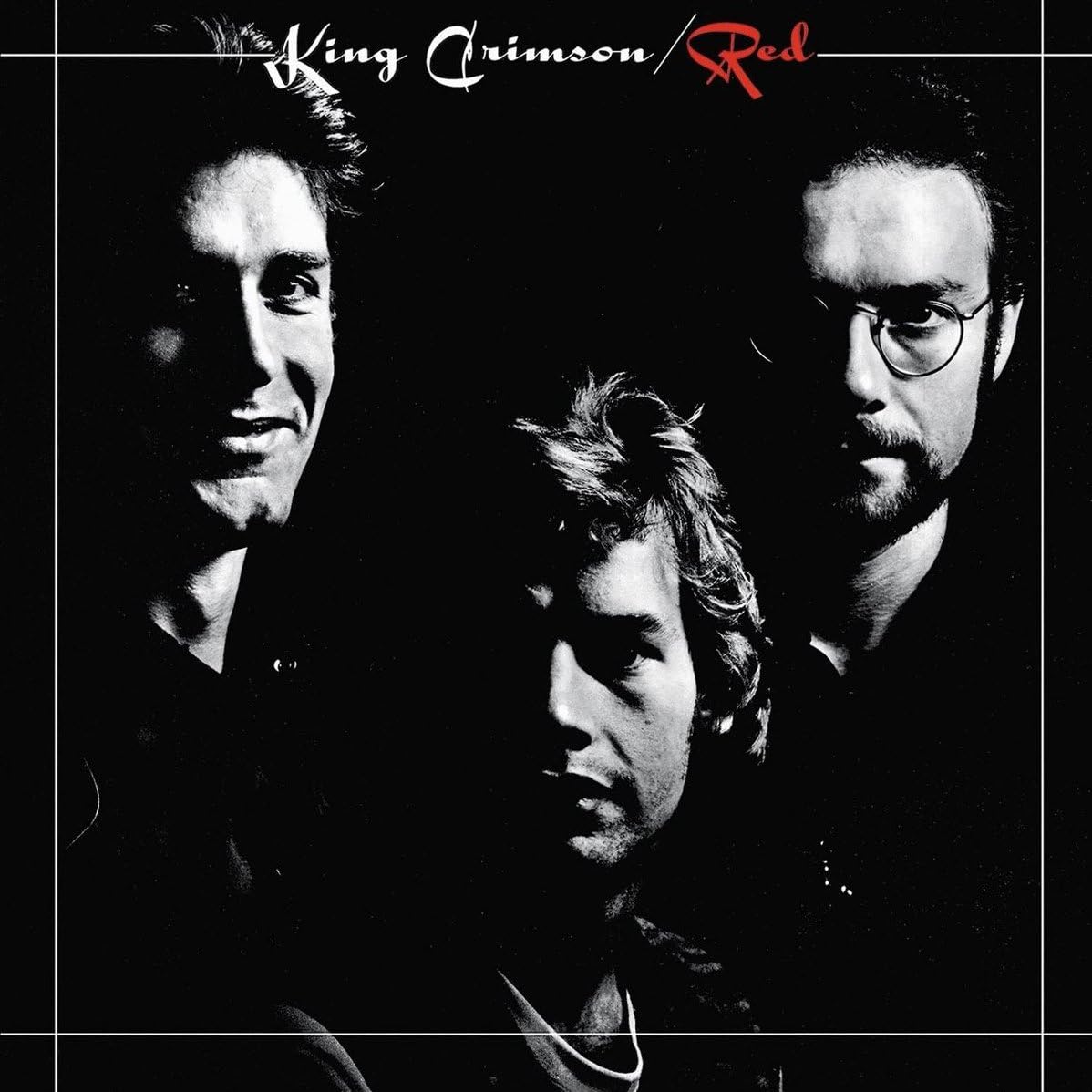
The King Crimson Red album stands as one of progressive rock’s most powerful and uncompromising statements, and the 50th Anniversary Edition released in 2024 brings this 1974 masterpiece to stunning new life through Steven Wilson’s meticulous remixes. This isn’t just another reissue but a complete sonic reimagining of an album that changed the face of heavy progressive music forever.
Released on October 6, 1974, just weeks after the band’s dissolution, Red emerged from the ashes of King Crimson’s most turbulent period to become their second best-selling album after In the Court of the Crimson King. The album peaked at number 45 on the UK Albums Chart and has since influenced countless artists from Tool and Mastodon to modern progressive metal pioneers.
If you’re exploring King Crimson’s catalog or seeking to understand why Red is consistently ranked among the greatest progressive rock albums ever made, this 50th Anniversary Edition offers the definitive listening experience. The power trio lineup of Robert Fripp, John Wetton, and Bill Bruford created something that still sounds impossibly ahead of its time.
The new edition features completely remixed Dolby Atmos, 5.1 surround, and stereo versions that reveal layers and textures previously buried in the original 1974 mix. Additionally, David Singleton’s “Elemental Mixes” offer a fascinating alternate universe version of the album, utilizing recordings and elements left on the cutting room floor five decades ago.
This comprehensive review explores why Red deserves its place in the progressive rock pantheon and how the 50th Anniversary Edition transforms an already magnificent album into an essential modern listening experience that resonates with both longtime fans and new audiences discovering King Crimson for the first time.
🎸 Limited 50th Anniversary Edition Available Now
Don’t miss this definitive remaster! The Red 50th Anniversary Edition features Steven Wilson’s groundbreaking 2024 remixes, rare studio takes, and complete live performances that have never been available in this quality before.
This comprehensive box set represents the ultimate King Crimson Red Album experience with over 8 hours of music across multiple formats.
📋 Table of Contents [+]
Red Album Overview: The Final Statement of 1970s King Crimson
By the summer of 1974, King Crimson had spent nearly two grueling years on the road, recording two acclaimed albums along the way with Larks’ Tongues in Aspic (1973) and Starless and Bible Black (1974). The band had shed two members during this period, violinist David Cross and percussionist Jamie Muir, leaving the core power trio of Robert Fripp on guitar and Mellotron, John Wetton on bass and vocals, and Bill Bruford on drums.
What made Red particularly remarkable was its context as a swan song. Robert Fripp had already decided to disband King Crimson before the album was even released, suffering from what he described as a nervous breakdown during the recording sessions. The album emerged not as a hopeful new beginning but as a definitive final statement from one of progressive rock’s most innovative and uncompromising bands.
The circumstances leading to Red’s creation were marked by creative tensions and personal exhaustion. After their final US tour in July 1974, which Robert Fripp later described as containing performances where the bottom of his spine registered “out of this world,” the band entered Olympic Studios in London with a collection of compositions that would become some of the most influential progressive rock music ever recorded.
Unlike the more experimental and improvisational approach of Starless and Bible Black, Red represented a more focused and composed effort. The timeline from conception to release was remarkably compressed, with recording taking place in July and August 1974, mixing completed in September, and the album hitting stores on October 6, just two weeks after Fripp publicly announced the band’s dissolution on September 25, 1974.
The album’s artistic vision was clear: to create the heaviest, most powerful progressive rock statement possible while maintaining the experimental spirit and musical sophistication that defined King Crimson. As Steven Wilson would later observe about the 2024 remix, “What I hear on Red is the best representation of the ’72-’74 era lineup in the studio. In effect this is a power trio record and their sound is just huge.”
Recording Sessions and Production at Olympic Studios
Red was recorded at the legendary Olympic Studios in Barnes, London, during July and August 1974. The studio, which had previously hosted The Rolling Stones, Led Zeppelin, and Jimi Hendrix, provided the perfect environment for capturing King Crimson’s massive, dense sound. The sessions were marked by Robert Fripp’s deteriorating mental state, which paradoxically may have contributed to the album’s overwhelming emotional intensity.
The production approach differed significantly from the band’s previous two albums. While Larks’ Tongues in Aspic and Starless and Bible Black had incorporated substantial amounts of live material and improvisations, Red consisted primarily of carefully constructed studio recordings. The only exception was “Providence,” a live improvisation captured during the band’s final US tour.
Recording engineer George Chkiantz worked closely with the band to capture their increasingly heavy sound. The guitar tones on Red were among the most distorted and aggressive heard in progressive rock at that time, foreshadowing the development of progressive metal decades later. Fripp’s doubled guitar approach, with heavily distorted guitars panned to opposite channels, created a wall of sound that was both massive and precisely articulated.
Interestingly, despite Red being primarily a power trio record, the album features several guest musicians who had previously played with King Crimson. Mel Collins returned on saxophones, Ian McDonald contributed more saxophone work, Mark Charig played cornet on “Fallen Angel,” and Robin Miller added oboe. An uncredited cellist performed on “Starless,” adding haunting textures to the album’s epic closer.
The Power Trio Dynamic and Guest Musicians
The power trio formation of Fripp, Wetton, and Bruford created a unique chemistry that defined Red’s sonic identity. Bill Bruford, who had famously left the commercially successful Yes to join King Crimson, found liberation in the band’s more challenging and aggressive approach. Robert Fripp later recalled that Bruford was “an animal unleashed” during this period, particularly in live performances.
John Wetton’s role extended far beyond his bass playing and vocals. He was the primary melodic voice on the album, both as a singer and as a composer. His bass lines on Red are gorgeously melodic yet incredibly powerful, providing both harmonic foundation and melodic counterpoint to Fripp’s guitar work. The three musicians had developed an almost telepathic understanding through constant touring.
However, tensions existed within the group. Fripp’s spiritual crisis and decision to disband King Crimson created an atmosphere of finality that permeated the recording sessions. Bruford and Wetton found themselves taking on more responsibility as Fripp struggled with his personal demons. This shift in creative dynamics may have contributed to the album’s more accessible and emotionally direct approach compared to its immediate predecessors.
The guest musicians served specific purposes rather than being permanent band members. Mel Collins’ saxophone work on “One More Red Nightmare” pushed the song into jazz-fusion territory, while the cornet and oboe on “Fallen Angel” provided pastoral touches that recalled earlier King Crimson albums like Islands. These orchestrations were carefully planned rather than spontaneous additions, demonstrating the band’s compositional sophistication.
💡 Did You Know?
Bill Bruford contributed to the composition of “Starless” without playing a single note. During the song’s development, he wrote the menacing 13/8 bass riff that forms the foundation of the instrumental section. The complex time signature and threatening feel of this riff became one of the song’s most distinctive elements, demonstrating how Bruford’s compositional thinking transcended his drumming.
Track-by-Track Analysis of Red
Red consists of five tracks totaling approximately 40 minutes, making it one of King Crimson’s most concise albums. However, this brevity belies the album’s depth and complexity. Each track serves a specific purpose in the album’s emotional and musical arc, from the explosive opening to the devastating conclusion of “Starless.”
The album’s sequencing demonstrates remarkable compositional intelligence. The heavy instrumental “Red” establishes the album’s aggressive tone, “Fallen Angel” provides melodic respite and emotional vulnerability, “One More Red Nightmare” adds funk and jazz elements to the heaviness, “Providence” offers pure improvisational intensity, and “Starless” synthesizes all these elements into a 12-minute epic that stands as one of progressive rock’s greatest achievements.
What makes Red’s track sequence particularly effective is how it balances accessibility with experimentation. Despite the album’s reputation for heaviness and difficulty, songs like “Fallen Angel” and portions of “Starless” feature some of the most beautiful and emotionally direct music King Crimson ever recorded. This contrast between beauty and brutality creates a listening experience that remains engaging across multiple listens.
Standout Tracks and Hidden Gems
Track 1: “Red” (6:16)
The title track opens with an ascending guitar figure that immediately signals this will be unlike anything else in progressive rock. The main riff, built on a whole-half diminished scale, winds back on itself like an M.C. Escher staircase, creating a sense of perpetual motion and mounting tension. Robert Fripp’s doubled guitars, heavily distorted and precisely articulated, create a wall of sound that influenced countless heavy bands. This instrumental powerhouse introduced the world to what would later become known as progressive metal, decades before the term existed.
Track 2: “Fallen Angel” (6:00)
After the assault of “Red,” this lush ballad provides necessary breathing room while maintaining emotional intensity. John Wetton’s vocals soar over Mark Charig’s cornet and Robin Miller’s oboe, creating a pastoral atmosphere reminiscent of King Crimson’s Islands album. Fripp’s acoustic guitar work here represents the last time he would play acoustic on a King Crimson recording. The song demonstrates the band’s range and compositional sophistication, proving they could be just as effective in quieter moments as in their heavier passages.
Track 3: “One More Red Nightmare” (7:06)
This track begins with a tritone-heavy riff that explodes into one of the album’s most dynamic songs. Inspired by John Wetton’s fear of flying and specifically about a dream of a plane crash (the “Pan-American nightmare” referenced in the lyrics), the song shifts between crushing heaviness and funky, syncopated verses. Mel Collins’ extended saxophone solo in the final section takes the song into jazz-fusion territory while maintaining its menacing edge. The combination of prog complexity, metal heaviness, and jazz improvisation makes this one of King Crimson’s most uniquely compelling tracks.
Track 4: “Providence” (8:08)
This live improvisation, recorded at the Palace Theatre in Providence, Rhode Island on June 30, 1974, captures King Crimson at their most experimental. It’s the only track on Red that features violinist David Cross, who had left the band before the studio sessions began. Starting ominously and building to chaotic intensity, “Providence” divides listeners. Some find it challenging and even unlistenable; others consider it a masterclass in collective improvisation. It represents the avant-garde side of King Crimson that would largely disappear when the band reformed in the 1980s with a more structured approach.
Track 5: “Starless” (12:18)
The album’s closer ranks among progressive rock’s greatest achievements. The song divides into three distinct sections: an opening ballad with Wetton’s achingly vulnerable vocals over Fripp’s Mellotron and guitar melodies; a middle section built on Bill Bruford’s menacing 13/8 bass riff that creates an atmosphere of mounting dread; and a climactic freakout featuring Mel Collins’ soprano saxophone dueling with Fripp’s guitar before returning to the opening theme. The lyrics, revised by Richard Palmer-James from earlier versions, reference Dylan Thomas’ “Under Milk Wood” with the phrase “starless and bible black,” evoking profound emptiness and absence of hope. Many consider “Starless” not just King Crimson’s finest moment but one of rock music’s most emotionally powerful compositions.
Musical Themes and Proto-Metal Evolution
Red’s musical themes revolve around tension, paranoia, and apocalyptic unease. The album sounds like the soundtrack to a world falling apart, which perhaps reflects Robert Fripp’s personal crisis during its creation. Unlike much progressive rock of the era, which often explored fantasy or science fiction themes, Red feels grounded in psychological and emotional realities, albeit expressed through abstract musical means.
Lyrically, the album explores themes of disillusionment, loss, and existential dread. “Fallen Angel” addresses the corrupting nature of fame and success. “One More Red Nightmare” captures the terror of losing control. “Starless” presents an apocalyptic vision where external beauty masks internal desolation. These themes resonated with the mid-1970s zeitgeist of economic uncertainty and cultural pessimism.
Musically, Red pioneered what would later be called progressive metal. The heavy, distorted guitar tones; the emphasis on power and intensity alongside technical complexity; and the willingness to embrace genuine heaviness rather than just musical sophistication influenced bands like Dream Theater, Tool, Opeth, and countless others. The album demonstrated that progressive music didn’t need to sacrifice power for complexity or vice versa.
The album also represents King Crimson’s most successful fusion of their various influences: the heaviness of Black Sabbath, the improvisation of jazz, the compositional ambition of classical music, and the experimental spirit of avant-garde music. This synthesis created something genuinely new, a template that progressive music would continue exploring for decades.
The 50th Anniversary Edition: Steven Wilson’s Sonic Revolution
The 50th Anniversary Edition of Red represents far more than a typical reissue. Released in October 2024 to commemorate the album’s golden anniversary, this comprehensive package includes multiple formats: a deluxe 2CD+2Blu-ray box set, a double vinyl release, and various streaming configurations. Each format offers a different listening experience, but all benefit from Steven Wilson’s meticulous approach to remixing and remastering.
Steven Wilson’s relationship with King Crimson extends back to 2009 when he undertook his first remix of Red, making King Crimson among the first classic bands to receive his remix treatment. Returning to the album 15 years later with improved technology, higher-resolution source files, and significantly more experience, Wilson crafted what many consider the definitive version of this classic album.
The 50th Anniversary Edition doesn’t just improve upon the original mix; it reimagines the album entirely. The separation of instruments, the clarity of individual elements, and the preservation of the album’s overwhelming power represent a remarkable technical achievement. As Wilson himself notes, the goal was to capture “the best representation of the ’72-’74 era lineup in the studio,” emphasizing the power trio’s massive sound.
Beyond the remixes, the edition includes extensive bonus material: instrumental mixes, studio takes, three complete mixes of the live album USA in high-resolution stereo, and five audio-restored bootleg concert recordings from the 1974 tour making their debut on official release. This represents the most comprehensive overview of Red and its era ever assembled.
2024 Remixes and Dolby Atmos Experience
Steven Wilson’s 2024 remix begins with 96kHz/24-bit digital transfers of the original multitrack tapes, significantly higher resolution than was available for his 2009 remix. This improved source material allowed Wilson to extract details and nuances that were previously buried or obscured. The result is an album that sounds simultaneously more powerful and more detailed than ever before.
The stereo mix addresses several issues from previous editions. Most significantly, Wilson has corrected some controversial choices from his 2009 remix, such as recessed vocals and the jarring panning of the guitar solo on “Fallen Angel” from center to hard left. The 2024 mix keeps elements properly centered and present while maintaining excellent instrument separation. The bass has more weight and definition, the drums have more air and space, and Fripp’s guitars retain their aggression while revealing more tonal complexity.
The Dolby Atmos mix represents Wilson’s most ambitious work with the album. Atmos allows for object-based sound placement, meaning individual instruments and elements can be positioned anywhere in three-dimensional space rather than being locked to specific channels. For “Starless,” this means the opening Mellotron can float above the listener while the rhythm section remains grounded below. During the climactic section, saxophone and guitar can spiral around the listening space, creating an immersive experience impossible with traditional stereo or even 5.1 surround.
The 5.1 surround mix, also included in the deluxe edition, offers a middle ground between traditional stereo and the full Atmos experience. Wilson’s approach to 5.1 mixing emphasizes clarity and separation without resorting to gimmicky placement. The rear channels typically contain ambient information, room sound, and subtle instrumental layers rather than isolated instruments, creating an enveloping but not disorienting listening experience.
One of the most remarkable aspects of Wilson’s remix work is how he’s managed to increase clarity and definition while maintaining or even enhancing the album’s overwhelming power. The ending of “Starless,” one of progressive rock’s most intense and cathartic moments, benefits particularly from the increased headroom and definition in the new mix, allowing listeners to experience it at higher volumes without the fatiguing harshness of earlier editions.
Elemental Mixes: The Alternate Red
David Singleton’s “Elemental Mixes” represent perhaps the most fascinating aspect of the 50th Anniversary Edition. Singleton, King Crimson’s longtime producer and band manager, returned to the original multitrack recordings to create an alternate version of Red that reveals a very different take on these familiar compositions.
The Elemental Mixes aren’t simply alternate takes or demos; they’re fully realized versions of the songs using different instrumental layers, takes, and arrangements from the original session reels. Singleton pulled elements that were recorded but not used in the final 1974 mix, creating what he describes as “a Red that could have been.”
On “Fallen Angel,” for instance, the Elemental Mix features significantly more orchestration in the introduction, with additional layers from Mark Charig’s cornet and Robin Miller’s oboe that were recorded but scaled back in the final version. This creates a lusher, more ornate sound that recalls Islands more directly. However, it also demonstrates why Robert Fripp made the choices he did; the sparer arrangement of the released version better serves the song’s emotional directness.
“Starless” receives particularly interesting treatment in the Elemental Mix. The uncredited cello playing is much more prominent, and three separate saxophone tracks can be heard distinctly during portions usually dominated by Mel Collins’ soprano sax. These additional textures are fascinating from a musicological perspective, revealing the complex layering that went into the sessions, even if the released version’s tighter focus ultimately proves more effective.
The Elemental Mixes also feature greater separation of instruments and different balance choices. Bill Bruford’s drumming often sits higher in the mix, while some of Robert Fripp’s guitar overdubs receive more prominence. This provides a different perspective on the performances, allowing listeners to hear details and interactions between instruments that were blended together in the original and Steven Wilson mixes.
“Providence” is notably absent from the Elemental Mixes, likely because as a live improvisation, there were no alternate studio takes to draw from. This leaves the Elemental album at four tracks instead of five, which actually creates a tighter listening experience focused on the composed material.
Critical Reception and Chart Performance
Red’s initial reception was complicated by the fact that King Crimson had already disbanded when the album was released on October 6, 1974. With no band to promote the album through tours or interviews, and with Robert Fripp having retreated from public life to study with spiritual teacher J.G. Bennett, Red received minimal promotion from its label, Island Records in the UK and Atlantic Records in the United States.
Despite these challenges, critical response to Red was generally positive, with reviewers recognizing the album’s power and innovation even if they sometimes struggled to categorize it. The album was clearly progressive rock, but it was heavier and more aggressive than anything Genesis, Yes, or Emerson, Lake & Palmer were producing at the time. Some critics compared it to heavy metal, though King Crimson’s compositional sophistication and jazz influences distinguished it from the genre’s other pioneers.
Initial Reviews and Contemporary Reactions
Contemporary reviews from publications like Melody Maker, NME, and Rolling Stone praised Red’s intensity and musicianship while sometimes expressing uncertainty about its accessibility. The album didn’t fit neatly into any existing category: too heavy for traditional prog fans, too complex for heavy metal fans, and too dark for mainstream rock audiences. This meant that while critics respected the album, they sometimes struggled to identify its audience.
John Wetton’s vocals received particular praise, with reviewers noting his powerful delivery and emotional range. Bill Bruford’s drumming was recognized as a significant step forward from his work with Yes, showcasing greater power and intensity. Robert Fripp’s guitar work divided opinion; some found his heavily distorted tones too harsh, while others recognized them as genuinely innovative.
The album’s darkness and emotional intensity prompted discussion about its place in the progressive rock landscape. Where many prog albums of the era explored fantasy or science fiction themes with ornate arrangements, Red presented a more austere, psychologically intense vision. Some reviewers found this refreshing; others found it oppressive or difficult.
“Starless” was immediately recognized as a standout track, with most reviewers praising its emotional depth and musical architecture. However, “Providence” proved divisive, with some critics finding the improvisation brilliant and others considering it self-indulgent or inaccessible. This division of opinion about Red’s more experimental elements would persist in retrospective evaluations.
Commercial Success and Certifications
Red peaked at number 45 on the UK Albums Chart, a respectable showing considering the lack of promotional support. In the United States, it reached number 66 on the Billboard 200. These chart positions, while not spectacular, represented solid commercial performance for a progressive rock album released in 1974, when the genre was beginning to face commercial headwinds.
The album’s commercial performance improved significantly over time. As King Crimson’s reputation grew through the 1980s and 1990s, Red became recognized as an essential album. When the band reformed in 1981 for the Discipline era, new fans discovering that incarnation of King Crimson often worked backward through the catalog, discovering Red and appreciating its forward-thinking approach.
By the late 1990s and early 2000s, as progressive metal became an established genre, Red experienced a commercial renaissance. Bands like Dream Theater, Tool, and Opeth cited it as an influence, introducing their fans to the album. This created a new generation of listeners who appreciated Red’s combination of heaviness, complexity, and emotional intensity.
Sales figures are difficult to verify precisely, but Red has sold well over 500,000 copies worldwide across all formats and editions. In the decades since its release, it has become King Crimson’s second best-selling album after In the Court of the Crimson King. The various reissues, from the 1989 CD release through the 2009 and 2013 editions to the 2024 50th Anniversary Edition, have each found audiences, demonstrating the album’s enduring appeal.
While Red has never received official RIAA certification, its influence far exceeds its sales figures. The album’s impact on progressive metal, post-rock, and experimental heavy music is impossible to quantify but undeniably significant. For related perspectives on King Crimson’s evolution, explore our comprehensive guide to King Crimson albums.
Cultural Impact and Legacy
Red’s reputation has grown exponentially since its release. An album that charted modestly and received positive but not ecstatic reviews upon release has become recognized as one of the defining albums of 1970s progressive rock and a foundational text for progressive metal. This transformation from respected album to genuine classic took decades but seems permanent.
The album’s influence extends beyond progressive rock. Bands as diverse as Neurosis, Mastodon, The Mars Volta, and Nine Inch Nails have cited Red as an influence. Its combination of heaviness, sophistication, and emotional intensity provided a template for musicians seeking to create heavy music that retained intellectual substance and compositional ambition.
Influence on Progressive Metal and Modern Rock
Red’s most obvious legacy lies in progressive metal, a genre that didn’t fully emerge until the late 1980s and early 1990s but for which Red provided crucial groundwork. Dream Theater’s John Petrucci has called Red a major influence, particularly praising the heavy guitar tones and complex compositional structures. The band covered “Starless” live, and their approach to combining metal heaviness with progressive complexity owes much to what King Crimson achieved on Red.
Tool’s relationship with Red is particularly well-documented. Guitarist Adam Jones and bassist Justin Chancellor have both cited King Crimson as influences, and Tool’s approach to building long-form compositions around compelling riffs and unconventional time signatures echoes Red’s methodology. The band’s use of tension and release, their willingness to embrace both beauty and brutality, and their preference for atmosphere over showy technicality all reflect Red’s influence.
Opeth’s Mikael Åkerfeldt has spoken extensively about King Crimson’s influence on his band’s combination of heavy and soft passages. The way Opeth structures long compositions with dramatically contrasting sections clearly draws from the Red playbook, particularly from “Starless” and its three-part structure. Even Opeth’s production aesthetics, emphasizing clarity within heaviness, echoes Red’s approach.
Beyond progressive metal, Red influenced post-rock and experimental heavy music. Neurosis’ Scott Kelly has cited Red as an important album for the band, and the way Neurosis builds intense, atmospheric compositions through repetition and controlled dynamics owes something to King Crimson’s approach. Similarly, Pelican, Russian Circles, and other instrumental heavy bands working with dynamics and atmosphere can trace lineage back to Red.
The album also influenced how musicians thought about heaviness itself. Before Red, heavy music was largely the province of bands like Black Sabbath, Deep Purple, and Led Zeppelin, playing within blues-rock structures. Red demonstrated that heaviness could coexist with harmonic sophistication, complex time signatures, and extended compositional forms, fundamentally expanding what heavy music could be.
Retrospective Evaluations and Rankings
Red’s critical standing has improved dramatically over the decades. In 2000, The Mojo Collection described Red as “that rarest of records, the sound of a lineup quitting while ahead,” recognizing the album’s place as a dignified farewell rather than a desperate last gasp. This perspective became more common as critics gained historical distance from the album.
The album regularly appears on “greatest albums” lists focused on progressive rock and heavy music. While In the Court of the Crimson King typically ranks as King Crimson’s most acclaimed album on broader “greatest albums of all time” lists, Red often ranks higher on lists specifically focused on heavy or progressive music, reflecting its particular influence on those genres.
Red has appeared in multiple editions of the book “1001 Albums You Must Hear Before You Die,” a recognition of its essential status in rock history. Progressive rock publications and websites consistently rank it among the top 10 or even top 5 progressive rock albums ever made. Within King Crimson’s catalog, it typically ranks second to In the Court of the Crimson King in critical estimations, though some fans and critics argue it’s actually the band’s finest work.
Modern reviewers often praise aspects of Red that concerned contemporary critics. The heaviness that seemed potentially excessive in 1974 now sounds prescient and influential. The darkness that seemed oppressive now sounds emotionally honest and psychologically acute. The combination of complexity and power that confused some original reviewers now appears as the album’s greatest strength, proof that sophistication and intensity need not be opposed.
Musician and critic assessments have been particularly enthusiastic. Steve Vai wrote in his online diary that “it’s impossible to quantify the effect that this band has had on contemporary musicians,” specifically praising the mid-1970s King Crimson lineup that created Red. Such testimonials from working musicians demonstrate Red’s ongoing relevance to practicing artists rather than just historical interest.
📢 Explore More King Crimson
Dive deeper into King Crimson’s groundbreaking discography with our analysis of Beat, discover more classics in our album reviews section, or explore other iconic 1970s rock albums that defined the era.
Production Credits and Album Personnel
Core Band Members:
Robert Fripp – Guitar, Mellotron
John Wetton – Bass, Lead Vocals
Bill Bruford – Drums, Percussion
Guest Musicians:
Mel Collins – Soprano Saxophone (“One More Red Nightmare,” “Starless”)
Ian McDonald – Alto Saxophone (“Starless”)
Mark Charig – Cornet (“Fallen Angel”)
Robin Miller – Oboe (“Fallen Angel”)
David Cross – Violin (“Providence” only)
Uncredited Cellist – Cello (“Starless”)
Production Team (Original 1974 Release):
Produced by King Crimson
George Chkiantz – Recording Engineer
Recorded at Olympic Studios, Barnes, London
Mixed at Olympic Studios
50th Anniversary Edition Production:
Steven Wilson – 2024 Stereo, 5.1, and Dolby Atmos Remixes
David Singleton – Elemental Mixes
Tony Arnold – Additional Mixing
Jason Mitchell – Vinyl Cutting at Loud Mastering
Alex Wharton – Mastering
Recording Details:
Recorded: July-August 1974
Studio: Olympic Studios, Barnes, London, England
“Providence” recorded live: Palace Theatre, Providence, Rhode Island, June 30, 1974
Original Label: Island Records (UK), Atlantic Records (US)
50th Anniversary Label: Panegyric Records
Original Release Date: October 6, 1974
50th Anniversary Release: October 11, 2024
Frequently Asked Questions About King Crimson Red
Conclusion: Why Red Still Matters 50 Years Later
Five decades after its release, Red stands as one of progressive rock’s most powerful and influential albums. The 50th Anniversary Edition proves that great music only improves with time and attention, as Steven Wilson’s meticulous remixes reveal details and dynamics that enhance rather than replace the original vision. This isn’t just a historical artifact but a living, breathing work of art that continues to inspire musicians and move listeners.
What makes Red enduringly relevant is its combination of uncompromising artistic vision with emotional authenticity. Where many progressive rock albums of the 1970s sound dated today, Red’s intensity and darkness feel timeless, perhaps even more resonant in our current age than in its own era. The album doesn’t pander or compromise; it demands engagement and rewards close attention across multiple listens.
The power trio format of Fripp, Wetton, and Bruford proved remarkably prescient, foreshadowing how bands would combine technical virtuosity with raw power in progressive metal and beyond. The album demonstrated that heaviness and sophistication weren’t opposing values but complementary strengths. This insight influenced generations of musicians seeking to create music that engaged both mind and body, thought and emotion.
The 50th Anniversary Edition ensures that Red will continue reaching new audiences for decades to come. Whether you’re discovering King Crimson for the first time or revisiting a longtime favorite, this definitive edition offers the most complete and sonically impressive experience of one of rock music’s genuine masterpieces. Red remains essential listening for anyone serious about understanding progressive rock, heavy music, or the infinite possibilities that emerge when artists refuse to compromise their vision.
Ready to explore more progressive rock masterpieces?
Discover our analysis of “Providence”, explore “Fallen Angel”, or dive into our complete Classic Rock Artists collection featuring detailed reviews of the albums that shaped rock history!


