

In The Court of the Crimson King Album 1969!
Key Takeaways
- Released: October 10, 1969 via Island Records (UK) / Atlantic Records (US)
- Genre: Progressive Rock with elements of Jazz, Classical, and Avant-Garde
- Hit Songs: “21st Century Schizoid Man,” “Epitaph,” “The Court of the Crimson King”
- Commercial Success: No. 5 UK, No. 28 US Billboard 200, Gold certified in US and UK
- Legacy: Widely regarded as the album that launched progressive rock as a genre
- Best For: Fans of Pink Floyd, Yes, Genesis, Emerson Lake & Palmer, and adventurous rock
In The Court of the Crimson King album stands as the seismic event that launched progressive rock into existence. Released on October 10, 1969, this debut from King Crimson shattered every convention of what rock music could be. Pete Townshend of The Who famously declared it “an uncanny masterpiece,” while Jimi Hendrix called King Crimson “the best group in the world.” More than five decades later, the album’s fusion of jazz, classical, and rock continues to influence musicians across every genre.
What makes this record so revolutionary? King Crimson abandoned the blues-based foundations that dominated late 1960s rock, replacing them with Mellotron-drenched soundscapes, complex time signatures, and lyrics that explored war, alienation, and corrupt power. The In The Court of the Crimson King album didn’t just push boundaries, it obliterated them entirely, creating a template that bands like Yes, Genesis, and Pink Floyd would follow for decades.
In The Court of the Crimson King

Table of Contents –
- King Crimson’s Journey to In The Court of the Crimson King
- Track-by-Track Analysis
- Listen: 21st Century Schizoid Man Video
- Musical Themes and Innovations
- Critical Reception and Chart Performance
- Cultural Impact and Legacy
- Production Credits and Personnel
- Similar Albums You’ll Love
- Frequently Asked Questions
- Why In The Court of the Crimson King Still Matters Today
King Crimson’s Journey to In The Court of the Crimson King
The story of how this groundbreaking album came to be is nearly as remarkable as the music itself. King Crimson emerged from the ashes of Giles, Giles and Fripp, a quirky, unfocused group whose 1968 album The Cheerful Insanity of Giles, Giles and Fripp combined folk, pop, and comedy to mixed results. When multi-instrumentalist Ian McDonald and lyricist Peter Sinfield joined the fold, everything changed. The In The Court of the Crimson King album would represent a complete transformation.
The band formed in late 1968, with the classic lineup solidifying by early 1969: Robert Fripp on guitar, Greg Lake on bass and vocals, Ian McDonald on saxophone, flute, and Mellotron, Michael Giles on drums, and Peter Sinfield as lyricist and visual coordinator. This combination proved to be lightning in a bottle, though none of them could have predicted just how quickly success would come.
The Recording Process
King Crimson made their live debut on April 9, 1969, at The Speakeasy Club in London. Just three months later, they played to an estimated 250,000 to 500,000 people when they opened for The Rolling Stones at Hyde Park on July 5, 1969. This massive exposure, combined with Jimi Hendrix’s enthusiastic endorsement, created enormous anticipation for their debut album.
Initial recording sessions began in early 1969 with producer Tony Clarke, famous for his work with The Moody Blues. However, the band felt Clarke was trying to reshape them into something they weren’t. In a bold move that could have ended their careers before they started, King Crimson fired Clarke and decided to produce the album themselves. Their manager, David Enthoven, remortgaged his house to cover the £15,000 recording costs, an all-or-nothing gamble on the band’s vision.
Recording took place at Wessex Sound Studios in London on a 1-inch 8-channel recorder, engineered by Robin Thompson with Tony Page assisting. The sessions began in mid-July 1969 and were completed in just 15 days by mid-August, an astonishing timeframe for such a complex and layered work.
Album Concept and Direction
Unlike many of their blues-based contemporaries, King Crimson drew inspiration from European classical music and avant-garde jazz. As Greg Lake later explained, “Since that well had been visited so many times, we decided we would try to use European music as our base influence, in order to be different.”
The album’s lyrical themes, crafted by Peter Sinfield, explored war (particularly the Vietnam conflict), societal alienation, corrupt power structures, and the perceived futility of human efforts against oppressive forces. The medieval imagery that pervades the album, with its kings, jesters, and courts, was deliberately used as allegory for modern society’s power dynamics.
The iconic album cover, painted by Barry Godber using his own face viewed through a mirror as the model, perfectly captured this duality. The screaming “Schizoid Man” on the outside and the menacing “Crimson King” on the inside represent two faces of the same societal critique. Tragically, Godber died of a heart attack in February 1970 at just 24 years old, making this his only artwork. Robert Fripp now owns the original painting.
Track-by-Track Analysis
The In The Court of the Crimson King album contains just five tracks spread across approximately 44 minutes, but each song represents a distinct musical world. From apocalyptic fury to pastoral calm to symphonic grandeur, the album covers more sonic territory than most bands explore in their entire careers.
Track 1: “21st Century Schizoid Man” (Including “Mirrors”)
Length: 7:21
The album explodes into existence with what many consider the first true progressive rock anthem. “21st Century Schizoid Man” remains one of the most startling opening tracks in rock history, a seven-minute assault that fuses heavy metal intensity with jazz complexity and avant-garde experimentation.
The track was actually the last song recorded for the album, yet it became its most famous. In a remarkable display of musical prowess, the entire instrumental backing was captured in a single live take with no edits, a fact that Ian McDonald proudly confirms. Only Robert Fripp’s guitar solo and some of Michael Giles’s drum fills were overdubbed later.
Peter Sinfield’s lyrics were written at the very end of the sessions, when the band knew the track needed to be “angry, against the Vietnam war.” The distorted vocals, achieved by singing through a reverb chamber and adding distortion, created an otherworldly effect that perfectly complemented the song’s apocalyptic themes. The instrumental section, subtitled “Mirrors,” features one of Fripp’s most ferocious guitar solos, with the entire band locked into precision despite the apparent chaos.
For more on this groundbreaking track, see our complete analysis of King Crimson’s 21st Century Schizoid Man.
Track 2: “I Talk to the Wind”
Length: 6:05
Following the devastating opener, “I Talk to the Wind” provides a stark and beautiful contrast. This gentle, pastoral ballad was the only track on the album originally written for King Crimson’s predecessor group, Giles, Giles and Fripp, but it was retained to showcase the band’s softer side.
Ian McDonald’s flute work provides the melodic centerpiece, while Greg Lake delivers one of his most tender vocal performances. According to Peter Sinfield, the song was influenced by Joni Mitchell, and he has called it his favorite lyric he ever wrote. The track builds through two gorgeous flute solos, with Robert Fripp’s distinctive guitar textures weaving throughout.
The song serves as a meditation on isolation and the inability to communicate, themes that resonated deeply with the counterculture audience of 1969. For a deeper dive, explore our feature on King Crimson’s I Talk to the Wind.
Track 3: “Epitaph” (Including “March For No Reason” and “Tomorrow And Tomorrow”)
Length: 8:47
Perhaps the album’s most emotionally devastating track, “Epitaph” took approximately 10 hours to record the basic track, longer than any other song on the album. The effort was worth it, producing what many consider the definitive symphonic rock piece of its era.
The song builds from quiet introspection to overwhelming orchestral grandeur, driven by Ian McDonald’s Mellotron providing lush string textures. Greg Lake’s vocals reach their emotional peak on the famous chorus: “Confusion will be my epitaph / As I crawl, a cracked and broken path / If we make it, we can all sit back and laugh / But I fear tomorrow I’ll be crying.”
The lyrics represent Sinfield at his most prophetic, warning of technological progress leading humanity toward destruction, with “the wall on which the prophets wrote / Is cracking at the seams.” The track includes two sections, “March For No Reason” and “Tomorrow And Tomorrow,” which expand the piece into a complete suite. Read our full analysis at King Crimson’s Epitaph.
Track 4: “Moonchild” (Including “The Dream” and “The Illusion”)
Length: 12:12
The most controversial track on the album, “Moonchild” divides listeners to this day. The first two and a half minutes, titled “The Dream,” present a haunting, Mellotron-driven ballad with Sinfield’s most dreamlike lyrics about a moonchild dancing by a river and whispering to trees.
Then the song transforms completely. “The Illusion” consists of approximately ten minutes of free-form improvisation that the band recorded specifically to fill unused tape space. As Ian McDonald explained, “We had recorded the material that we wanted to be on the album, so we thought, why not record something that is not improvisation in a jazz way, but is free of structure?”
During this section, Robert Fripp briefly quotes Rodgers and Hammerstein’s “The Surrey with the Fringe on Top,” a moment edited out of the 2009 Steven Wilson remix. While some listeners find this extended improvisation tedious, others praise it as a bold experiment that anticipated ambient music and freeform jazz-rock fusion. Explore the full story at King Crimson’s Moonchild.
Track 5: “The Court of the Crimson King” (Including “The Return of the Fire Witch” and “The Dance of the Puppets”)
Length: 9:22
The title track was actually the first song recorded during the sessions on July 16, 1969. Originally conceived as “a sort of Bob Dylan song” according to Sinfield, it evolved into the album’s grandest statement, a nine-minute epic that brings all the album’s themes to a triumphant close.
The distinctive Mellotron riff that opens the track is one of the most recognizable in progressive rock, reportedly influenced by James Brown’s sense of groove. The medieval imagery, with its black queen, keeper of the city keys, fire witch, and the yellow jester, creates a vivid tapestry of power and corruption that Sinfield intended as commentary on modern society’s manipulators and oppressors.
The song builds through multiple sections, including the instrumental “The Dance of the Puppets,” before returning to its main theme. Released as a single, it became King Crimson’s only track to chart on the Billboard Hot 100, reaching No. 80. For complete coverage, visit The Court of the Crimson King song analysis.
Listen: “21st Century Schizoid Man” Live at Hyde Park 1969
Experience the explosive opening track that helped define In The Court of the Crimson King album as a progressive rock landmark.
Watch King Crimson perform “21st Century Schizoid Man” at Hyde Park before an estimated half million people
Musical Themes and Innovations
The In The Court of the Crimson King album introduced several innovations that would become hallmarks of progressive rock. The extensive use of the Mellotron, an early keyboard that played pre-recorded tape loops of orchestral instruments, created the album’s signature lush, symphonic textures. Ian McDonald spent hours overdubbing layers of Mellotron along with various woodwind and reed instruments.
The album’s arrangements drew heavily from classical composition techniques, with complex time signatures, dynamic shifts, and suite-like structures that were unprecedented in rock music. The band’s technical proficiency allowed them to execute intricate passages with jazz-like precision while maintaining rock’s emotional intensity.
Lyrically, Peter Sinfield avoided the typical love songs and blues imagery of late 1960s rock. His poetry explored themes of alienation, the corruption of power, environmental destruction, and humanity’s troubled relationship with technology. The medieval allegory that pervades the album wasn’t escapist fantasy but pointed social commentary, with the court of the Crimson King representing the forces of manipulation and control in modern society.
Critical Reception and Chart Performance
Upon its release on October 10, 1969, the In The Court of the Crimson King album received largely positive reviews, though some critics struggled to categorize its ambitious fusion of styles.
Initial Reviews and Contemporary Reactions
Rolling Stone’s John Morthland praised the band for having “combined aspects of many musical forms to create a surreal work of force and originality.” Cashbox called the album a “tour-de-force” with “no loose ends,” praising the band’s musicianship, compositional skills, and arrangements. Billboard highlighted the band’s “towering sound and foreboding poetry.”
Not everyone was convinced. Village Voice critic Robert Christgau infamously dismissed the album in characteristically blunt terms. However, such negative reviews were drowned out by the overwhelming enthusiasm from both the music press and fellow musicians.
Pete Townshend’s declaration that it was “an uncanny masterpiece” and Jimi Hendrix’s endorsement of King Crimson as “the best group in the world” gave the album enormous credibility. International Times, the counterculture magazine, featured interviews with the band at the start of recording, building anticipation among the underground audience.
Commercial Success and Certifications
The album achieved remarkable commercial success for such unconventional music. It debuted at No. 5 on the UK Albums Chart and reached No. 28 on the US Billboard 200, No. 24 in Canada, and No. 7 in Australia.
Certification milestones tell the story of the album’s enduring appeal: Gold certification in the US (500,000 units) on March 29, 1977, Gold in the UK (100,000 units) on August 9, 2013, Platinum in Canada (100,000 units), and Double Gold in France (200,000 units). Total worldwide sales have exceeded 750,000 units, with ongoing streaming contributing to its continued relevance.
The title track, released as a single split into two parts, became King Crimson’s only entry on the Billboard Hot 100, reaching No. 80, proving that even the album’s most complex material could connect with mainstream audiences.
Cultural Impact and Legacy
The significance of the In The Court of the Crimson King album extends far beyond its commercial success. Many critics and historians credit it as the album that truly launched progressive rock as a distinct genre.
Influence on Future Artists and Genres
The album’s influence on progressive rock cannot be overstated. Genesis, Yes, Rush, and Emerson, Lake & Palmer all drew heavily from King Crimson’s template of extended compositions, classical influences, and conceptual ambition. Greg Lake himself would go on to co-found ELP, carrying King Crimson’s DNA into that supergroup.
Beyond prog rock, the album’s impact reaches into heavy metal (the crushing riff of “21st Century Schizoid Man” anticipated the genre by years), ambient music (the improvised section of “Moonchild”), and even industrial and alternative rock. Nine Inch Nails’ Trent Reznor has cited the album’s distorted vocals as an influence, while Bad Religion’s guitarist Brett Gurewitz named his record label Epitaph after the song and wrote “21st Century Digital Boy” as a tribute.
Hip-hop artist Kanye West famously sampled “21st Century Schizoid Man” on his 2010 track “Power” from My Beautiful Dark Twisted Fantasy, introducing King Crimson to an entirely new generation. The sampling lawsuit, settled in May 2024, only reinforced the album’s continued cultural relevance.
Retrospective Evaluations
Critical opinion has only grown more favorable over the decades. In 2015, Rolling Stone ranked it No. 2 on their list of the “50 Greatest Prog Rock Albums of All Time,” behind only Pink Floyd’s The Dark Side of the Moon. AllMusic calls it “one of the most daring debut albums ever recorded by anybody” and King Crimson’s “definitive album.”
The album appears in numerous “greatest albums” lists, including the book 1001 Albums You Must Hear Before You Die. Classic Rock magazine named it one of the “50 Albums That Built Prog Rock,” while readers of Rhythm voted it the eighth greatest drumming album in progressive rock history.
As Greg Lake reflected, “It fired the starting pistol on progressive rock. I wouldn’t say Crimson were the only band to bring new things along, but we were certainly fundamental and important in the progressive movement.”
Explore More King Crimson
Dive deeper into King Crimson’s complete discography with our comprehensive guide to all King Crimson albums or check out our reviews of Red, Starless, and more.
Production Credits and Album Personnel
Band Members:
Robert Fripp – Guitar, Mellotron
Greg Lake – Lead Vocals, Bass Guitar
Ian McDonald – Alto Saxophone, Flute, Clarinet, Bass Clarinet, Mellotron, Piano, Harpsichord, Vibraphone, Reed Organ, Co-lead Vocals, Backing Vocals
Michael Giles – Drums, Percussion, Backing Vocals
Peter Sinfield – Lyrics, Illumination
Production Team:
King Crimson – Producers
Robin Thompson – Recording Engineer
Tony Page – Assistant Engineer
Barry Godber – Album Artwork
Recording Details:
Recorded: July 21 – August 21, 1969
Studio: Wessex Sound Studios, London, England
Label: Island Records (UK), Atlantic Records (US)
Released: October 10, 1969
Format: LP (original), CD, Digital
Running Time: Approximately 43:45
Similar Albums You’ll Love
If you enjoyed In The Court of the Crimson King album, these King Crimson releases and related classics offer similar progressive rock excellence:
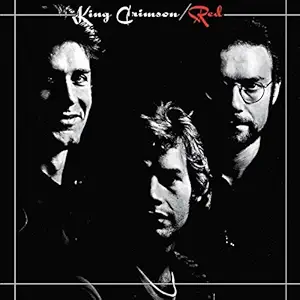
Red
by King Crimson
The 1974 masterpiece widely considered prog’s heaviest album, featuring the triumphant “Starless.” Essential listening for fans of the Court.
Read Full Review
In the Wake of Poseidon
by King Crimson
The 1970 follow-up that continued the debut’s symphonic grandeur while introducing new textures and themes. Now available in new 2025 mixes.
Buy on Amazon
Larks’ Tongues in Aspic
by King Crimson
The 1973 reinvention that introduced improvisation and aggression to King Crimson’s sound, featuring the legendary John Wetton on bass.
Buy on Amazon
Discipline
by King Crimson
The 1981 comeback that revolutionized the band’s sound with interlocking guitars and new wave influences. Adrian Belew joins the fold.
Buy on Amazon
Lizard – All New 2025 Mixes
by King Crimson
The experimental 1970 album featuring Yes vocalist Jon Anderson, now available with stunning new CD+Blu-ray remixes.
Buy on Amazon
In The Wake Of Poseidon – 2025 Mixes
by King Crimson
Experience the second King Crimson album with all-new 2025 Steven Wilson mixes on CD+Blu-ray. A fresh perspective on a classic.
Buy on AmazonFrequently Asked Questions About In The Court of the Crimson King
Conclusion: Why In The Court of the Crimson King Still Matters Today
More than five decades after its release, the In The Court of the Crimson King album remains a towering achievement in rock music. It didn’t merely push boundaries; it redefined what was possible when musicians combined technical virtuosity with genuine artistic vision.
The album’s influence continues to reverberate through contemporary music. From the progressive metal bands who cite its complex arrangements as inspiration to hip-hop artists sampling its iconic riffs, King Crimson’s debut proves that truly revolutionary art transcends its era. The original lineup may have lasted just 335 days, but their work endures.
For new listeners, the album offers a gateway into progressive rock’s rich history. For longtime fans, each listen reveals new details in its dense arrangements and prescient lyrics. Whether experienced through the original 1969 mix or the Steven Wilson 40th anniversary remix, In The Court of the Crimson King rewards attention with revelations.
In an age of three-minute songs optimized for streaming algorithms, this sprawling, ambitious masterpiece stands as a reminder of music’s capacity to challenge, provoke, and transform. The Crimson King still holds court, and his reign shows no signs of ending.
Ready to explore more classic rock history?
Check out our complete guide to King Crimson album reviews or discover the band’s upcoming 2026 Beat tour dates!