
Introduction: The Night the Rulebook Burned
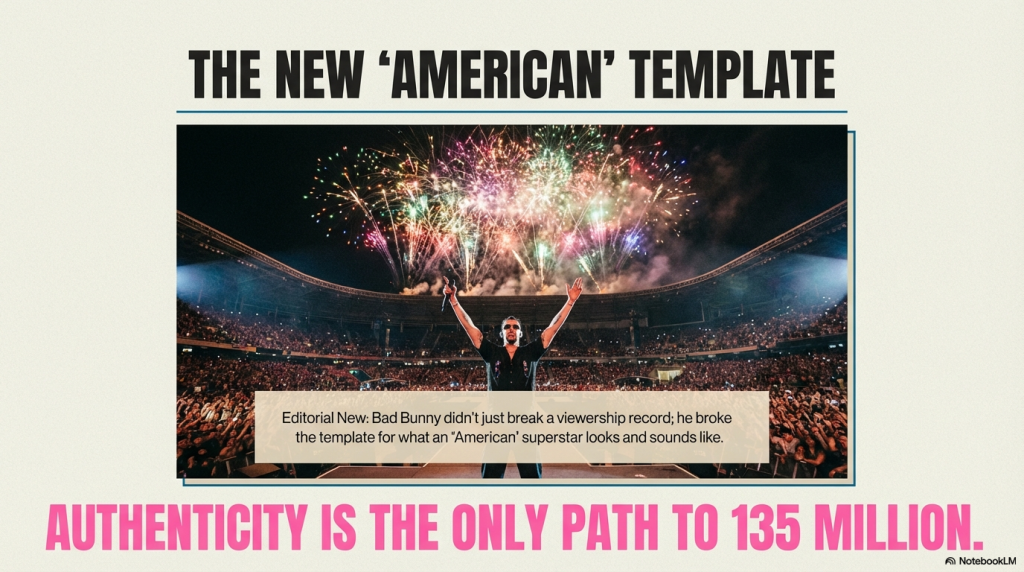
The lead-up to the Bad Bunny halftime show at Super Bowl LX was defined by a palpable tension, a clash between the “pro football machine” and the shifting tides of global culture. When the NFL announced Bad Bunny as the headliner, the choice was met with sharp conservative backlash, from Donald Trump calling the booking “absolutely ridiculous” to influencers labeling it an affront to the nation. Yet, on February 8, 2026, at Levi’s Stadium, the cultural monolith was not just challenged; it was dismantled.
How did a performance rooted in Puerto Rican street culture, delivered entirely in a language other than English, become the most-watched halftime show in history? This wasn’t just a concert; it was a masterclass in cultural equity. By the time the final firework faded, Benito Antonio Martínez Ocasio had used the most traditional stage in the United States to stage a high-stakes act of resistance, effectively redefining “America” as a continental identity rather than a US-specific term.
1. The “English-Only” Myth is Officially Dead
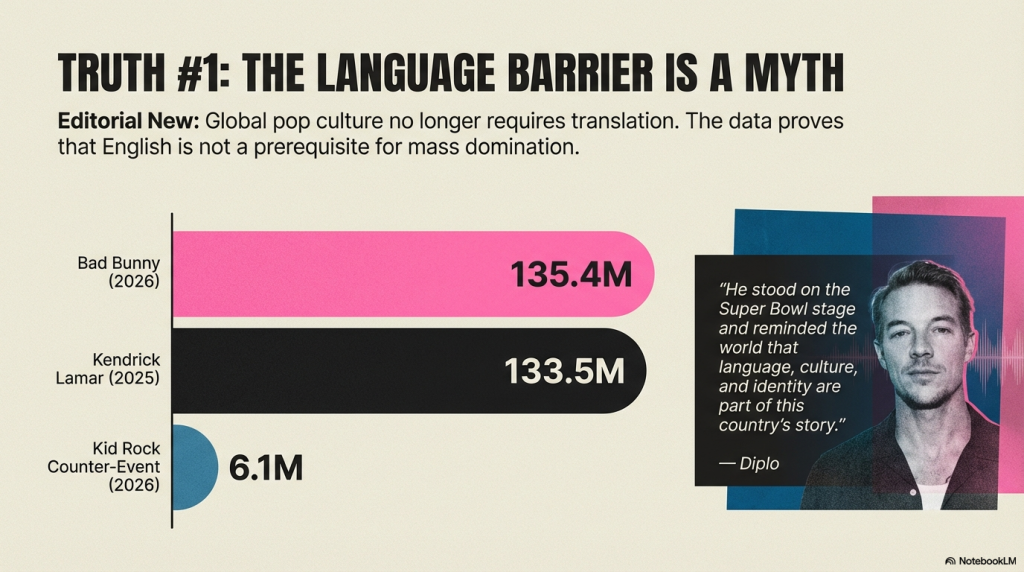
For decades, the “American monolith” was protected by the broadcast myth that mainstream success required English-language conformity. Bad Bunny didn’t just break this myth; he pulverized it. According to official data, the Super Bowl LX halftime show reached a record-breaking 135.4 million viewers across television and streaming platforms.
The strategic weight of this number cannot be overstated: it aggressively surpassed the previous record of 133.5 million set by Kendrick Lamar in 2025. While Lamar’s show was a high-water mark for American Hip Hop, Bad Bunny’s dominance in Spanish marks a definitive tipping point in digital media. Language is no longer a barrier to reach; it is a secondary factor to brand authenticity and “vibe.”
“Viewers from all backgrounds tuned in, proving that language was not a barrier… the record matters. Viewership is how success is measured at the Super Bowl. And by that standard, Bad Bunny did not just succeed. He rewrote the record book.” — The Times of India
3. Unlikely Allies: The Heartland Meets the Global Village
One of the most profound strategic victories of the night was the coalition of celebrity support that bridged the gap between 1980s Americana and the 2026 “Global Village.” While figures like Jake Paul attempted to fragment the audience by labeling Bad Bunny a “fake American,” the counter-rally was led by an unexpected architect of Heartland Rock: John Mellencamp.
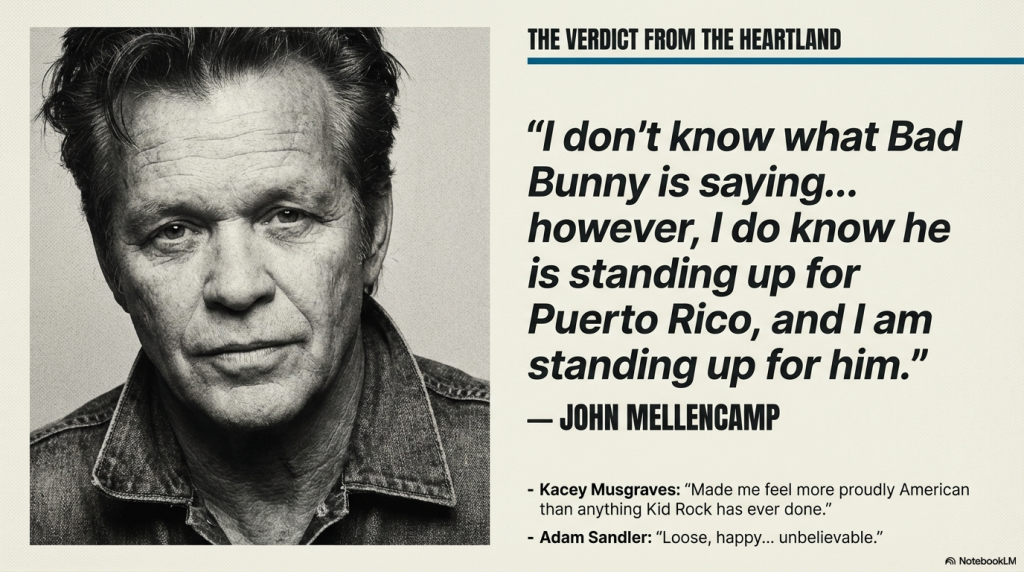
At 74, Mellencamp, the man who built a career on songs like “Small Town,” recognized a kindred spirit in the Puerto Rican superstar. By standing in solidarity, Mellencamp effectively passed the torch of “protest music” to a reggaeton artist. This is more than a celebrity endorsement; it is a recognition that the struggle for local identity against corporate or colonial power is a universal “American” theme, regardless of the language spoken.
“I don’t know what Bad Bunny is saying… however, I do know he is standing up for Puerto Rico, and I am standing up for him. His halftime show was great.” — John Mellencamp
4. How the Bad Bunny Halftime Show Redefined “America” on the 50-Yard Line
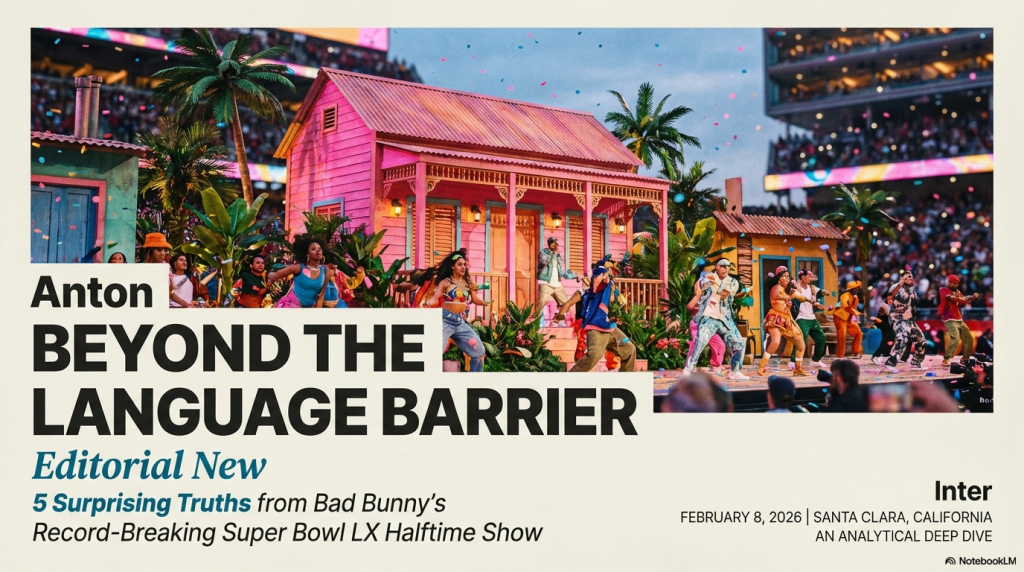
Bad Bunny utilized the Levi’s Stadium stage to deliver a sophisticated political critique, transforming the field into a “Puerto Rican street party” complete with domino tables and performers dressed as swaying tall grass. This wasn’t just set dressing; it was the assertion of unfiltered brand authenticity.
The performance was rich with visual symbols of resistance. Clad in an all-white jersey with “Ocasio” on the back, a nod to his heritage and political lineage, Benito famously climbed an electrical pole during “El Apagón,” a direct reference to the systemic power failures in Puerto Rico. This was the most impactful act of resistance of the night, performed on the NFL’s dime.
The show’s three core political messages were clear:
Continental Identity: By spiking a football emblazoned with “Together we are America,” Bad Bunny argued for a shared identity spanning the entire continent, reclaiming the word from its US-centric confinement.
Anti-Colonialism: The performance of “Lo Que Le Pasó a Hawaii” (with Ricky Martin) served as a sharp commentary on imperialism, drawing direct parallels between the histories of Puerto Rico and Hawaii as islands struggling under colonization.
Global Love: Amid the “Benito Bowl” hype, the show emphasized unity over hate, using the stadium Jumbotron as a massive billboard for radical empathy.
5. The Failed “Counter-Programming” Experiment
In an attempt to weaponize the “fragmentation of the monolith,” Turning Point USA launched an “All-American Halftime Show” headlined by Kid Rock. Billed as a “no agenda” alternative focused on “faith, family, and freedom,” the event was positioned as a David vs. Goliath struggle against the “pro football machine.”
Strategically, the experiment failed. By failing to provide a statistically significant alternative, the Kid Rock broadcast actually validated the Bad Bunny halftime show dominance. While the TPUSA show drew 19 million total YouTube views, it was a drop in the ocean compared to the 135.4 million who stayed tuned to the official broadcast.
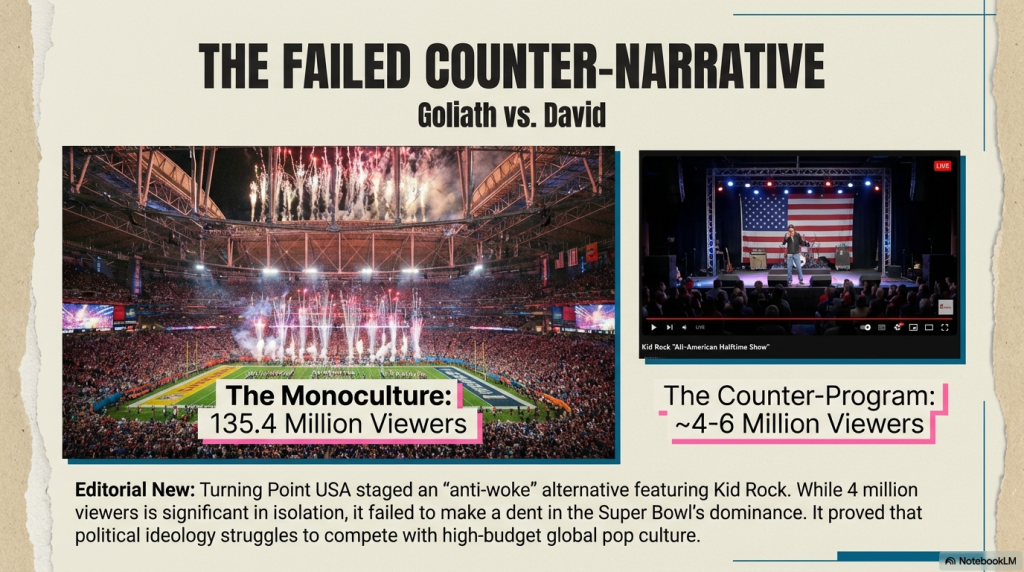
| Feature | Official Halftime Show (Bad Bunny) | Alternative Halftime Show (Kid Rock) |
|---|---|---|
| Total Viewership | 135.4 Million | 6.1 Million (Concurrent) / 19 Million (Total) |
| Key Guest Stars | Lady Gaga, Ricky Martin, Los Pleneros de la Cresta, Karol G | Brantley Gilbert, Lee Brice, Gabby Barrett |
| Cultural Strategy | Authentic Roots / Global Representation | Commercial Country / Political Alternative |
The “Solo” Milestone and the Wedding Surprise
Super Bowl LX was the culmination of a year-long political campaign for Benito. Only a week prior, on February 1, he made history by winning the first-ever Spanish-language Album of the Year at the Grammys, where he famously shouted “ICE, out!” during his speech.
This solo headlining slot was a necessary evolution from his 2020 guest appearance with J-Lo and Shakira. It signaled that the market no longer views Latino artists as “special guests” but as the primary drivers of the “American” narrative. This theme of inclusion was humanized by a real-life legal wedding performed on stage during Lady Gaga’s salsa arrangement of “Die With a Smile.” As actress Kerry Washington noted on social media, the “Benito Bowl” was the ultimate “epitome of LOVE.”
Why the Bad Bunny Halftime Show Changed Everything
The legacy of Super Bowl LX will not be found in the NFL’s ledger (as the league notably does not pay halftime performers). Instead, its value is measured in impact currency. Bad Bunny forced a global audience of 135 million to engage with the reality of Puerto Rican history, the beauty of the Spanish language, and an expanded definition of the American Dream.
The performance leaves us with a provocative question: Is the “American Dream” no longer an English-only pursuit, but a multilingual, continental concept?
The final takeaway, flashed on the Levi’s Stadium Jumbotron, remains the definitive statement of the night: “The Only Thing More Powerful Than Hate is Love.“