

Dewey Martin stands as one of rock music’s most resilient and technically proficient figures.
From his early achievements as a session drummer in the heart of Nashville to his peak success with Buffalo Springfield, the journey of Dewey Martin has been a definitive chronicle of the 1960s folk-rock revolution.
Even decades after the band’s initial disbandment, this Canadian-born musician continues to inspire millions with his signature style and unwavering passion for rhythmic innovation.
His ability to bridge the gap between country-western precision and rock-and-roll fluidity made him the indispensable backbone of one of history’s most volatile musical ensembles.
This report explores the life of Walter Milton Dwayne Midkiff, known to the world as Dewey Martin, a man whose legacy is etched into the very foundation of the Americana genre.
As the oldest member of his most famous group, he provided a professional anchor that allowed legendary songwriters to flourish.
His story is one of incredible highs, including a Rock and Roll Hall of Fame induction, and challenging lows involving complex legal disputes.
Ultimately, he remains a titan of the percussion world whose influence can still be heard in the country-rock hybrids of today.
I am an Amazon affiliate and may earn a commission from qualifying purchases made through links in this article.
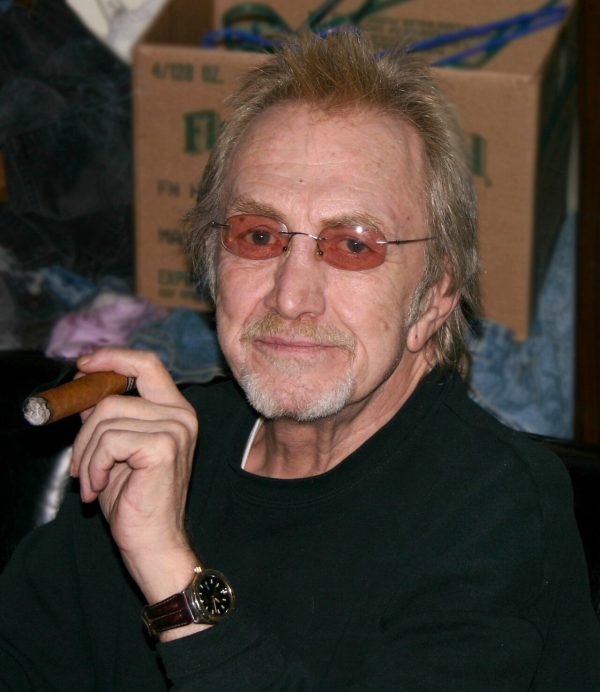
Photo: Dewey Martin performing at the Whisky a Go Go.Credit: Wikimedia Commons / Public Domain
📚 Table of Contents
🎸 Dewey Martin: Early Life and Musical Beginnings
Dewey Martin was born on September 30, 1940, in the rural community of Chesterville, Ontario.
His path to musical greatness began in the quiet landscapes of Smiths Falls and the burgeoning cultural scene of Ottawa.
Born as Walter Milton Dwayne Midkiff, his stage name originated from a simple childhood inability to pronounce “Dwayne” correctly.
Interestingly, his journey into the world of music began not behind a drum kit, but with the saxophone.
He played the woodwind instrument throughout his early adolescence before making the pivotal switch to percussion.
While attending Glebe Collegiate Institute in Ottawa, Dewey Martin demonstrated early leadership qualities, eventually being elected “head boy” of the school.
His first venture into organized music was with a high school group known as the Jive Rockets.
This early exposure allowed him to refine his sense of timing and performance dynamics within the local Ottawa Valley circuit.
Consequently, he soon progressed to playing with various dance and rockabilly groups, including Bernie Early and the Early Birds.
Through a connection with singer Andy Wilson, he was given the opportunity to sing “Whole Lotta Shakin’ Going On” with Larry Lee and the Leesures.
A Nashville producer caught this performance and was impressed by the young Canadian’s energy and vocal range.
The producer’s encouragement prompted a move to the United States, marking the start of a legendary professional trajectory.
Before his career truly ignited, Dewey Martin completed a brief stint in the U.S. Army.
🎤 The Nashville Apprenticeship: Dewey Martin’s Professional Roots
Dewey Martin moved to Nashville in the early 1960s, quickly finding himself immersed in the rigorous world of country session work.
His time in Tennessee was characterized by a high volume of freelance gigs for legendary artists who demanded absolute precision.
During this era, Dewey Martin toured and recorded with the likes of Patsy Cline and the Everly Brothers.
He also provided the backbeat for Roy Orbison and Faron Young, gaining invaluable experience in melodic phrasing.
Playing with Roy Orbison was described by Martin as a significant learning experience that refined his “sensitive” drumming style.
In 1963, his travels with Faron Young’s band led him to Las Vegas and eventually the sunny climate of Los Angeles.
Captivated by the West Coast environment, Dewey Martin decided to stay in California to seek new musical frontiers.
He made his official recording debut as a lead vocalist in 1964 with Sir Raleigh and the Coupons.
This group attempted to capitalize on the British Invasion by releasing a beat-heavy version of “White Cliffs of Dover”.
By the spring of 1966, he had briefly joined the bluegrass group the Dillards but found himself at a crossroads.
It was through the suggestion of the Byrds’ manager, Jim Dickson, that he was introduced to a new project featuring Stephen Stills and Neil Young.
His seniority and professional background made him the final piece of the puzzle for what would become Buffalo Springfield.
🎵 Buffalo Springfield: The Classic Era (1966–1968)
The formation of Buffalo Springfield is one of the most fortuitous events in rock history.
Stephen Stills and Neil Young had previously met in Thunder Bay, Ontario, but lost touch for months.
A chance encounter in a traffic jam on Sunset Boulevard brought Stills, Young, Richie Furay, and Bruce Palmer together.
Dewey Martin joined the group less than a week later, completing the iconic five-piece lineup.
The band famously took their name from a steamroller parked on the street made by the Buffalo-Springfield Roller Company.
They debuted at The Troubadour in West Hollywood on April 11, 1966, opening for the Dillards and the Byrds.
Within weeks, they had secured a residency at the Whisky a Go Go, the premier venue for the burgeoning folk-rock scene.
The band’s sound was a revolutionary mix of folk, country, psychedelia, and rock, fueled by twin lead guitars.
Dewey Martin played a crucial role in these early sessions, providing a rhythmic stability that allowed the guitarists to experiment.
He also contributed to the band’s rich vocal harmonies, which were a hallmark of their self-titled debut album.
The group signed with Atco Records and released “Nowadays Clancy Can’t Even Sing” as their first single.
However, it was the late-1966 release of “For What It’s Worth” that catapulted the band to national prominence.
Dewey Martin provided the iconic, subtle drum pattern that defined the tension of this classic political rock anthem.
🚀 Signature Achievement: Dewey Martin and the Rhythmic Revolution
The recording of the band’s second album, Buffalo Springfield Again, remains a high-water mark for 1960s production.
Released in 1967, the album featured a more diverse array of musical styles, from orchestral folk to hard rock.
Dewey Martin delivered one of his most soulful performances on the track “Good Time Boy,” which was written specifically for him by Richie Furay.
The song featured a brassy, R&B-influenced arrangement that showcased Martin’s powerful lead vocals.
On the same album, he provided the haunting vocal introduction to Neil Young’s “Broken Arrow,” singing lines from “Mr. Soul”.
Neil Young frequently praised Dewey Martin in his biography “Shakey,” noting his incredible sensitivity to musical dynamics.
Young famously stated that Martin could feel the music intuitively, hitting harder as the intensity grew and pulling back for softer passages.
Despite the artistic success, this period was marked by rising tensions between the band’s primary songwriters.
Dewey Martin often served as a mediator, even physically intervening when Stephen Stills and Neil Young’s fights became too intense.
He shared a beach house in Malibu with Stills during this era, further cementing his role as the band’s emotional center.
In a memorable 1967 performance, Martin’s idol, Otis Redding, joined him on stage to duet on “In The Midnight Hour”. For an in-depth look at this legendary track, read our feature on Buffalo Springfield’s “For What It’s Worth” – The Sound of the Strip.
💿 Solo Explorations: Dewey Martin’s Medicine Ball (1970)
Following the disbandment of Buffalo Springfield in May 1968, Dewey Martin sought to establish himself as a solo artist.
In October 1969, he signed a deal with Uni Records and began recording with a new collective of musicians.
The resulting album, “Dewey Martin’s Medicine Ball,” was released in August 1970.
Notably, former Buffalo Springfield bassist Bruce Palmer contributed to the record, particularly on the track “Recital Palmer”.
Martin took a hands-on approach to production, utilizing advanced “pan techniques” to create a dynamic stereo field for the drums and steel guitar.
The album was a country-rock affair that received positive reviews from critics at Variety and the Abilene Reporter-News.
It featured a mix of original compositions like “Indian Child” and covers such as Buddy Holly’s “Maybe Baby”.
The sessions also included steel guitar legend Buddy Emmons and studio drumming icon Hal Blaine on select tracks.
Despite the critical acclaim, the album failed to find a significant audience, and Uni Records eventually dropped the project.
Martin continued to record into the early 1970s, working with the TCB Band and releasing a lone single on RCA in 1971.
His solo work remains a hidden gem for fans of the early 1970s country-rock sound.
⚡ Legal Battles and the New Buffalo Springfield Dispute
One of the most difficult periods in Dewey Martin’s life involved the legal battles over the Buffalo Springfield name.
In September 1968, Martin formed a new version of the group dubbed “New Buffalo Springfield”.
The initial lineup included Dave Price, Gary Rowles, Bob Apperson, Don Poncher, and Jim Price.
The band toured extensively, but Stephen Stills and Neil Young took legal action to prevent the use of the moniker.
Dewey Martin eventually lost the legal case, which had a devastating impact on his financial stability.
As a result of the litigation, he lost his future royalties from the original band’s catalog.
The legal troubles caused many of his new bandmates to depart, leading to frequent lineup changes.
The group briefly evolved into Blue Mountain Eagle, an ensemble that retained some of the Springfield’s sonic hallmarks.
By the mid-1970s, the lack of commercial success and legal exhaustion led Martin to retire from the music industry.
He returned to his hometown of Ottawa and worked as a car mechanic for several years, living a quiet life away from the spotlight.
This period of professional withdrawal reflected the deep personal toll that the industry’s legal complexities had taken on him.
🏆 Later Career and the Buffalo Springfield Revisited Years
The 1980s saw a revival of interest in the legendary band’s history, prompting Dewey Martin to return to the stage.
In 1985, he reunited with former bassist Bruce Palmer to form the tribute group “Buffalo Springfield Revisited“.
The band toured fairly extensively throughout the mid-1980s, performing at high-profile events like the Vietnam Veteran’s Benefit concert.
During this era, they recorded a version of Neil Young’s “Down To The Wire,” keeping the spirit of the original band alive.
In the early 1990s, Martin moved back to Canada and embarked on several tours in Western Canada under the same name.
These tours featured a new lineup including Frank Wilks, John Wilks, and Derek Atherton.
While these performances were smaller in scale than his 1960s peak, they allowed him to reconnect with a dedicated fanbase.
Martin’s magnetic personality continued to draw audiences, with fellow musicians describing him as a “wild and crazy guy” until the end.
He eventually retired from live work following these Canadian dates, focusing more on personal projects and inventions.
Throughout the late 1990s and early 2000s, he remained a respected elder statesman of the Los Angeles rock scene.
His legacy was further cemented by the ongoing critical reassessment of Buffalo Springfield’s influence on modern music.
Consequently, Dewey Martin remained proud of his contributions to the band that changed the landscape of American music.
💪 Musical Innovation: The Dewey Martin Drum Rim Patent
Dewey Martin was not only a gifted performer but also a technical innovator in the world of percussion.
In his later years, he became a born-again Christian and focused his energy on improving the tools of his trade.
In 1997, he invented and filed a patent application for a revolutionary new drum rim. The design featured a three-part rim that allowed a drummer to produce three distinct rimshot sounds from a single instrument.
This invention was filed under his legal name, Walter M.D. Midkiff, and he was officially granted patent number 5,834,667 on November 10, 1998.
His work on this technology demonstrated a deep understanding of the acoustics and mechanics of the drum set.
Martin spent significant time developing this rim, hoping it would provide new expressive possibilities for future drummers.
His friends noted that he was always tinkering with equipment, looking for the “perfect sound” that he had first sought in the 1960s.
This mechanical aptitude served him well during his years as a car mechanic, but it found its most creative expression in his drum designs.
His commitment to innovation ensured that his impact on the music world extended beyond his recorded performances.
ven as his health began to decline in the late 2000s, he remained passionate about the technical side of drumming.
⭐ Rock and Roll Hall of Fame Recognition
The most significant recognition of Dewey Martin’s career occurred in 1997 when he was inducted into the Rock and Roll Hall of Fame.
He received the honor alongside his Buffalo Springfield bandmates, marking a moment of reconciliation for the group.
Though he was initially hesitant to attend, he was encouraged by friends to accept the acknowledgment of his life’s work.
The induction highlighted his role as the rhythmic backbone of a band that released only three albums but influenced countless artists.
The Hall of Fame recognizes Buffalo Springfield as a “progenitor of country-rock,” a sound Martin helped invent in Nashville and L.A.
In addition to this honor, his drumming on “For What It’s Worth” has been cited in numerous “Best Of” lists for its historical impact.
Music historians consistently rank Buffalo Springfield Again as one of the greatest rock albums ever recorded.
Martin’s vocal work on “Good Time Boy” and “Mr. Soul” is often cited as an example of the band’s incredible internal depth.
In his native Canada, Dewey Martin is remembered as a pioneering figure in the North American rock explosion.
His obituary in major outlets recognized him as a foundational figure in the Americana genre.
The respect of his peers, particularly Neil Young, stands as perhaps his most enduring award.
His death on January 31, 2009, was a significant loss for the classic rock community.
📀 Essential Albums
For fans looking to explore the rhythmic genius of Dewey Martin, the following albums are essential for any collection.
These records represent the complete arc of his professional career, from the heights of the 60s to his solo explorations.
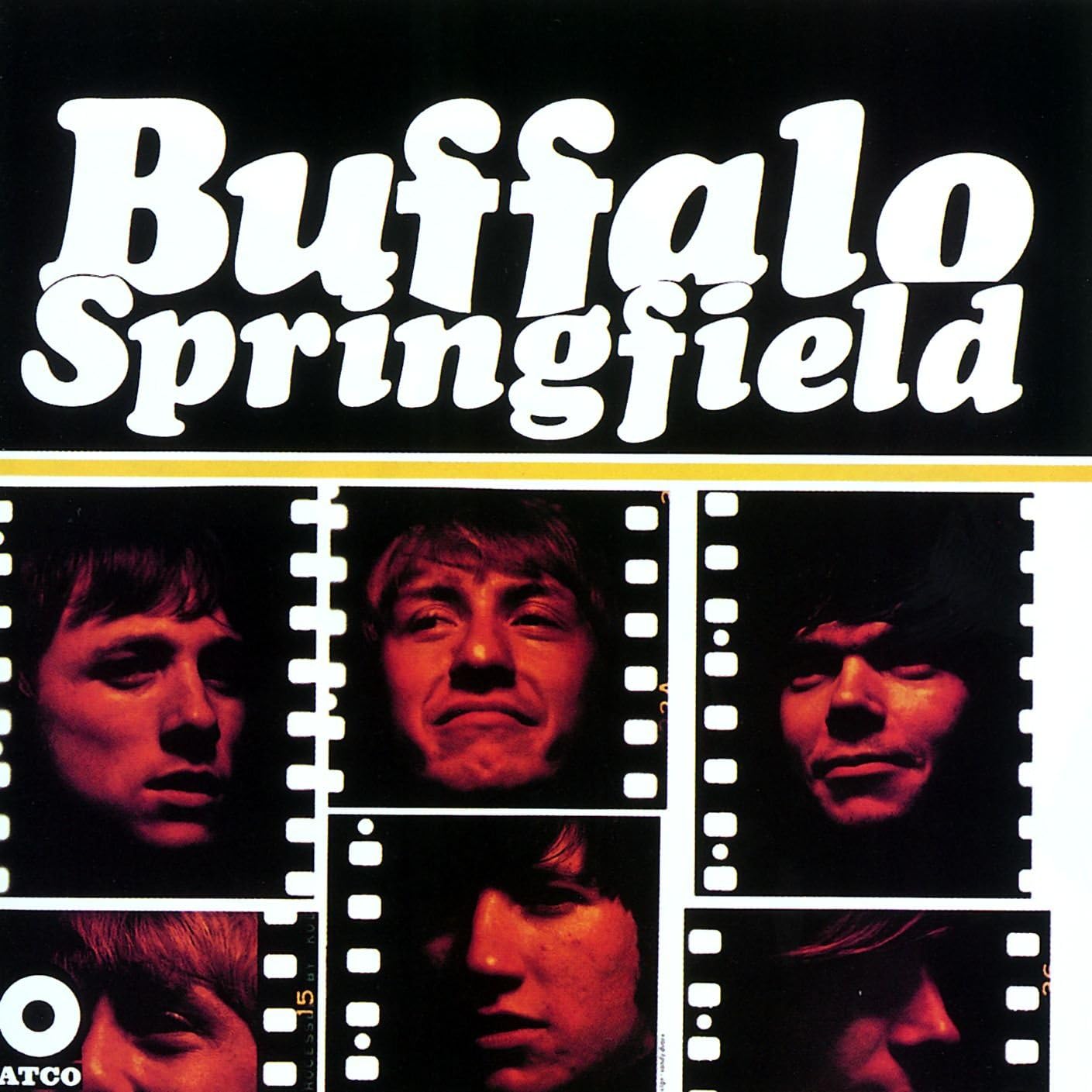
Buffalo Springfield (1966): The raw, folk-rock energy of the band’s debut, featuring the timeless “For What It’s Worth”.
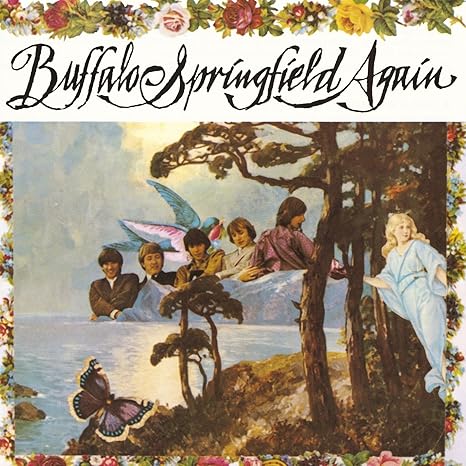
Buffalo Springfield Again (1967): Widely considered their masterpiece, featuring Martin’s lead vocal turn and experimental production.
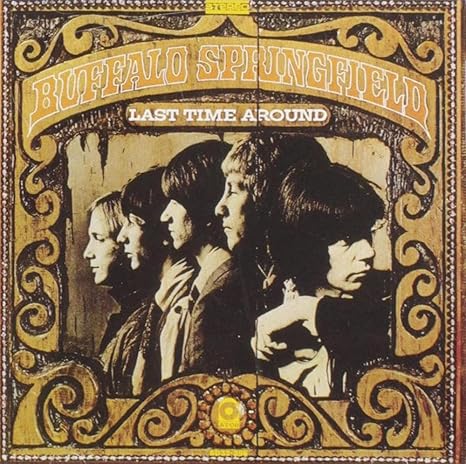
Last Time Around (1968): The band’s swan song, offering a glimpse into the individual directions of its members.
Medicine Ball (1970): Dewey Martin’s definitive solo statement, blending country-rock with innovative studio techniques.
What’s That Sound? The Complete Albums Collection (2018): A definitive box set featuring high-resolution remasters of the core catalog.
🎪 2026 Updates and the Dewey Martin Legacy
As of February 2026, the legacy of Dewey Martin and Buffalo Springfield continues to ripple through the music world.
In recent news, Neil Young has cancelled his entire 2026 tour schedule, including dates with his band The Chrome Hearts.
The announcement, shared through official channels on February 6, 2026, left fans across Europe and the UK disappointed.
Young stated simply that “this is not the time” for a large-scale tour, though he reiterated his love for performing live.
Despite these cancellations, Record Store Day 2026, set for April 18, will feature major classic rock releases.
Neil Young and the Chrome Hearts will issue a 2LP clear vinyl set titled “The Live Album,” limited to 6,900 copies.
Other 2026 RSD exclusives include multi-disc live sets from Bruce Springsteen and the Grateful Dead.
Interestingly, Neil Young recently announced he would provide free access to his entire archive for residents of Greenland.
This act of digital diplomacy aims to offer “unprecedented access” to his catalog, including the Springfield years.
While the surviving members of the band continue to evolve, the historical importance of Dewey Martin’s era remains undisputed.
Tribute bands like “Harvest & Rust” and “Deja Vu” are scheduled to perform throughout 2026, keeping the songs alive in concert halls.
The music of Buffalo Springfield continues to define the spirit of the 1960s for a new generation of listeners.
❓ Frequently Asked Questions
Was Dewey Martin an original member of Buffalo Springfield?
Yes, Dewey Martin was one of the five founding members who joined at the band’s inception in 1966.
What was Dewey Martin’s real name?
His birth name was Walter Milton Dwayne Midkiff.
Did Dewey Martin ever record for other famous artists?
Yes, he was a session drummer for legends like Patsy Cline, the Everly Brothers, and Roy Orbison.
What was his signature song with Buffalo Springfield?
He is best known for the lead vocals on “Good Time Boy” and the drum part on “For What It’s Worth”.
When was Dewey Martin inducted into the Rock and Roll Hall of Fame?
He was inducted in 1997 as a member of Buffalo Springfield.
What happened to “New Buffalo Springfield”?
The group faced legal challenges from Neil Young and Stephen Stills, eventually disbanding or changing names.
Did Dewey Martin ever release a solo album?
Yes, he released Dewey Martin’s Medicine Ball in 1970 on Uni Records.
Where was Dewey Martin from?
He was born in Chesterville, Ontario, and spent much of his early life in the Ottawa area.
What was his drum rim invention?
In 1997, he patented a 3-part rim that allowed for three different rimshot sounds on one drum.
When did Dewey Martin pass away?
He died of natural causes on January 31, 2009, at the age of 68.
The timeless rhythm of Dewey Martin will forever echo through the halls of rock history.
Image credit: https://commons.wikimedia.org/wiki/File:Dewey_Martin_cropped.jpg