

Tommy Shaw is one of the most gifted guitarist-vocalists in classic rock history, a songwriter whose melodies became the anthems of a generation.
Born in Montgomery, Alabama, Shaw rose from playing in local bowling alley lounges to co-fronting one of the biggest stadium acts of the 1970s and 1980s.
His tenure with Styx produced some of the era’s most enduring rock songs, from the hard-driving “Renegade” to the anthemic “Blue Collar Man.”
Furthermore, Shaw proved his artistry was far bigger than any single band, building a remarkable solo career and co-founding the platinum-selling supergroup Damn Yankees.
His story is one of talent discovered in the American South, ambition tested in the crucible of arena rock, and resilience that kept him relevant across five decades.
Significantly, Shaw never stopped writing, performing, or pushing creative boundaries, making him one of rock’s most compelling lifers.
To this day, Tommy Shaw remains an active force in classic rock, continuing to tour and record with Styx for fans old and new.
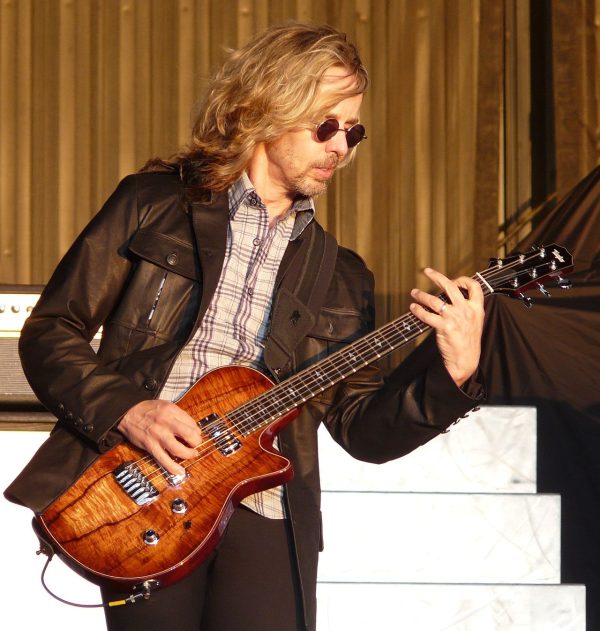
Table of Contents
- Early Life: Alabama Roots and First Guitar
- First Major Band: MS Funk and the Road to Chicago
- Tommy Shaw and Styx: The Peak Era
- Career Challenges: Tensions, Splits, and the Solo Years
- The Revival: Damn Yankees, Shaw Blades, and the Styx Return
- Recognition: Awards, Hall of Fame, and Musical Legacy
- Essential Tommy Shaw Discography
- Frequently Asked Questions About Tommy Shaw
Early Life: Alabama Roots and First Guitar
Tommy Roland Shaw was born on September 11, 1953, in Montgomery, Alabama, the youngest of four children.
His father, Dalton Earl Shaw, worked as a pipefitter, and his mother, Mildred Uline Shaw, was a nurse.
When Tommy was just two years old, the family relocated to Prattville in Autauga County, where he would spend the next decade of his life.
It was in Prattville, in 1963, that a ten-year-old Tommy Shaw first picked up a guitar and found his true calling.
The Beatles were a defining early influence, and their music gave young Tommy a burning desire to pursue music professionally.
In contrast, he also drew inspiration from country music, learning Hank Williams songs alongside the British Invasion hits he loved.
By the time he attended Robert E. Lee High School in Montgomery, Shaw was already playing in local bands and developing his trademark blend of melodic hard rock.
One of his high school groups, Jabbo Stokes and the Jive Rockets, gave him his first real stage experience in front of live audiences.
Shaw has credited these formative years in Montgomery as essential to shaping both his vocal style and his instinct for a powerful, hook-driven melody.
Furthermore, performing regularly in small local venues gave him a discipline and stage presence that would later impress the members of one of America’s biggest rock bands.
First Major Band: MS Funk and the Road to Chicago
After graduating high school, Shaw made a bold move, leaving Montgomery and heading to Nashville, Tennessee, at the age of 19.
His professional career took its first major step when he joined a Chicago-managed outfit known as MS Funk.
MS Funk gave Shaw three years of intensive road experience, playing club dates across the country and refining his guitar work and vocals.
The band’s performances in Chicago proved pivotal, as it was during a two-week club engagement there that members of Styx first took notice of the young Alabama guitarist.
In contrast to the theatrical direction Styx was pursuing, Shaw offered raw rock energy and a piercing high tenor voice that set him apart from other players.
When MS Funk eventually disbanded, Shaw returned home to Montgomery and joined a local group called Harvest with childhood friends.
Harvest performed regularly at a club inside a bowling alley called Kegler’s Cove, where Shaw continued honing his craft in intimate, unpretentious surroundings.
Significantly, this period of downtime would not last long, as the seeds planted during those Chicago gigs with MS Funk were about to bear extraordinary fruit.
Tommy Shaw and Styx: The Peak Era
The Audition That Changed Everything
In December 1975, Styx found themselves in a crisis when co-founding guitarist John Curulewski abruptly quit, just days after the band signed to A&M Records and booked a national tour.
Tour manager Jim Vose tracked down Tommy Shaw in Montgomery and convinced him to fly to Chicago for an audition.
Shaw has recalled that Styx never even asked him to play guitar during the tryout, so focused were they on hearing whether he could nail the demanding vocal harmonies.
Once Shaw demonstrated he could hit the soaring high harmony in “Lady,” he was hired on the spot.
He joined Styx officially on December 12, 1975, and played his first show with the band just four days later, in Zanesville, Ohio.
The three requirements for the role had been straightforward: good hair, capable guitar skills, and the ability to hit Styx’s signature high harmony notes.
Shaw delivered on all three counts, then far exceeded expectations as a songwriter of exceptional talent and instinct.
Tommy Shaw Transforms Styx’s Sound
Shaw’s debut with the band was the 1976 album Crystal Ball, which was actually named after one of his own compositions.
The album also included two other Shaw originals, “Mademoiselle” and “Shooz,” signaling immediately that Styx had found a serious songwriting force.
The follow-up, The Grand Illusion in 1977, became the band’s commercial breakthrough and went platinum.
Shaw contributed the celebrated track “Fooling Yourself (The Angry Young Man),” which became one of his most beloved signature songs with the band.
Furthermore, he personally traveled coast to coast lobbying radio stations to play Dennis DeYoung’s “Come Sail Away”, helping turn it into a massive hit.
In 1978, Pieces of Eight marked the true emergence of Tommy Shaw as Styx’s rock powerhouse.
He wrote and sang all three singles released from that album, an extraordinary achievement for any band member.
“Renegade” reached No. 16 on the Billboard Hot 100, and “Blue Collar Man (Long Nights)” followed to No. 21.
Both tracks became permanent rock radio staples and remain among the most recognizable songs in the classic rock canon.
The ballad “Sing for the Day” also charted at No. 41, making Shaw the rare artist to write and perform every single pulled from a Styx album.
Significantly, this trifecta established Shaw as the face of Styx’s hard rock identity and the essential counterweight to Dennis DeYoung’s pop and theatrical ambitions.
The Commercial Peak: Cornerstone and Paradise Theatre
The 1979 album Cornerstone saw the band reach unprecedented commercial heights, becoming one of the top-selling albums of both 1979 and 1980.
DeYoung’s “Babe” became a No. 1 pop hit, and the album climbed to No. 2 on the Billboard charts while earning a Grammy nomination for Best Album of the Year.
In contrast to DeYoung’s ballad direction, Shaw preferred the harder rock sound that had built the band’s loyal live following.
That creative tension would simmer throughout the early 1980s and ultimately shape the band’s fate.
The follow-up, Paradise Theatre in 1981, went triple platinum and featured Shaw’s “Too Much Time on My Hands,” one of the band’s most recognized songs.
“Too Much Time on My Hands” reached No. 9 on the Billboard Hot 100 and became one of those timeless rock anthems that defined an entire generation’s experience.
Paradise Theatre reportedly became one of the best-selling pop-rock albums of its era, cementing Styx’s place in the arena rock pantheon.
The Kilroy Was Here album in 1983 took Styx in a bold conceptual direction, featuring an elaborate theatrical stage production and an 11-minute cinematic film introduction at every concert.
Shaw contributed strong rock tracks to the record, but the Kilroy era represented the peak of the internal conflict between his vision and DeYoung’s theatrical ambitions.
Career Challenges: Tensions, Splits, and the Solo Years
By the early 1980s, the creative tensions within Styx had reached a breaking point between Shaw’s rock instincts and DeYoung’s theatrical pop ambitions.
Shaw strongly opposed the idea of releasing back-to-back pop ballads, fearing it would permanently alienate Styx’s core rock fan base.
The Kilroy Was Here tour proved to be a financial disappointment, and the band went their separate ways in 1984.
In 1984, Shaw released his debut solo album Girls with Guns on A&M Records, scoring a Top 40 hit with the title track.
“Girls with Guns” also appeared on the soundtrack of the hit TV series Miami Vice, giving Shaw considerable mainstream visibility as a solo act.
He followed with What If in 1985 and Ambition in 1987, but neither record matched the commercial impact of his Styx-era work.
Furthermore, the shifting musical landscape of the late 1980s, with grunge and alternative movements gaining momentum, created real headwinds for classic rock-styled solo acts.
Ambition failed to chart, presenting Shaw with a crossroads moment that would ultimately lead to one of the most exciting chapters of his entire career.
In contrast to the frustrations of these solo years, this period of adversity sharpened his songwriting and prepared him well for the collaborative supergroup that would soon reignite his career.
The Revival: Damn Yankees, Shaw Blades, and the Styx Return
Damn Yankees: The Early 90s Supergroup
In 1989, legendary A&R executive John Kalodner brought together three rock veterans who were each at a career crossroads: Tommy Shaw, Night Ranger’s Jack Blades, and the Motor City Madman Ted Nugent.
Drummer Michael Cartellone, who had served as Shaw’s drummer during the Ambition tour, rounded out the lineup of this new supergroup, Damn Yankees.
In a remarkable half-hour writing session, Shaw and Blades co-wrote “High Enough,” a soaring power ballad that Kalodner immediately recognized as a massive hit.
The band’s debut album, released by Warner Bros. Records on March 13, 1990, went double platinum in the United States.
“High Enough” rose to No. 3 on the Billboard Hot 100 and No. 2 on the AOR charts, becoming the most successful single of Ted Nugent’s entire career.
The band followed with an 18-month world tour alongside revamped Bad Company, Poison, and Jackyl before returning to the studio.
Their second album, Don’t Tread, went gold in 1992 and produced additional AOR airplay with tracks including “Where You Goin’ Now.”
Significantly, Damn Yankees proved that Tommy Shaw’s songwriting gift translated powerfully beyond the Styx context and reached a new generation of hard rock fans.
Shaw Blades and the Road Back to Styx
After Nugent departed for a solo career in 1994, Shaw and Blades formed the duo Shaw Blades and released Hallucination in 1995.
The title track was featured in the hit film Tommy Boy, and “I’ll Always Be with You” received meaningful AOR airplay across North America.
Shaw and Blades also became a highly sought-after songwriting team, penning tracks for major artists including Aerosmith, Ozzy Osbourne, Vince Neil, and Cher.
In 1995, Shaw rejoined Styx for a reunion that launched a major tour alongside Def Leppard, Foreigner, and REO Speedwagon.
In 1998, he released his fourth solo album, 7 Deadly Zens, which featured all four members of Damn Yankees contributing to the recordings.
Furthermore, Shaw continued leading Styx through a productive new era, releasing albums and touring consistently into the 2000s and 2010s.
In 2007, Shaw Blades reunited for the album Influence, a collection of cover songs honoring the musicians who shaped both men’s musical identities.
In 2011, Shaw demonstrated remarkable versatility by releasing The Great Divide, a bluegrass album that climbed to No. 2 on the Bluegrass Billboard Charts.
In 2017, Styx released The Mission to strong critical reviews, with Shaw as a primary creative force behind the record’s direction and songs.
Styx continues to be one of classic rock’s most active touring acts, consistently bringing their music to new audiences every year.
Check the 2026 Styx concert schedule for upcoming shows near you.
In 2022, Shaw sang lead vocals on “Uroboros,” the debut release from legendary producer Alan Parsons’ album From the New World, underscoring his ongoing relevance at the highest levels of rock music.
Tommy Shaw’s official biography and current activity can be explored at his official website.
Recognition: Awards, Hall of Fame, and Tommy Shaw’s Musical Legacy
Tommy Shaw was inducted into the Alabama Music Hall of Fame on February 22, 2008, at a ceremony held in his hometown of Montgomery.
The honor was a meaningful homecoming for a musician who had left Alabama as a teenager with a dream and returned as a certified rock legend.
As a member of Styx, Shaw contributed to multiple triple-platinum albums, including The Grand Illusion, Pieces of Eight, Cornerstone, and Paradise Theatre.
Furthermore, his work with Damn Yankees added double-platinum and gold certifications to an already outstanding commercial record.
Shaw was instrumental in the development of the Hamer Duotone guitar, a 6/12-string double-neck instrument that reflects his commitment to sonic innovation.
His songwriting catalog includes some of rock’s most recognizable titles, from “Renegade” and “Blue Collar Man” to “Too Much Time on My Hands” and “High Enough.”
Significantly, Shaw’s songs have continued to appear in films, television, and major sporting events for decades, demonstrating their durable cultural reach.
In 2016, he performed with the Contemporary Youth Orchestra in the celebrated concert “Sing For the Day,” which was later released on CD and Blu-Ray.
For a full exploration of the band he helped build into a rock dynasty, visit the complete guide to Styx members.
You can also explore the full history of 70s classic rock and 80s classic rock at ClassicRockArtists.com.
Essential Tommy Shaw Discography
The following albums represent essential listening for any Tommy Shaw fan, spanning his Styx contributions, supergroup success, and solo career.
With Styx
- Equinox (1975) — The pivotal Styx album that preceded Shaw’s arrival and set the stage for the band’s major-label transformation.
- Crystal Ball (1976) — Shaw’s debut with Styx, featuring his compositions “Crystal Ball” and “Mademoiselle.” A defining moment of arrival for a future rock legend.
- The Grand Illusion (1977) — The platinum breakthrough featuring Shaw’s “Fooling Yourself (The Angry Young Man).” Essential listening for any classic rock fan.
- Pieces of Eight (1978) — Shaw’s songwriting masterclass, featuring “Renegade” and “Blue Collar Man.” A must-own for every arena rock collection.
- Cornerstone (1979) — Triple platinum and Grammy nominated, showcasing the full range of Styx at their commercial and creative peak.
- Paradise Theatre (1981) — Features Shaw’s iconic “Too Much Time on My Hands.” One of the best-selling rock albums of the entire era.
- Kilroy Was Here (1983) — A bold concept album and the dramatic final chapter of Styx’s first era, worth experiencing for its sheer ambition.
Solo
- Girls with Guns (1984) — Shaw’s debut solo album featuring a Top 40 title track and a placement on the legendary Miami Vice soundtrack.
With Damn Yankees
- Damn Yankees (1990) — Double platinum debut featuring “High Enough” and “Coming of Age.” The definitive early-90s rock supergroup record and a career-defining moment for Shaw.
Watch Tommy Shaw in Action: Hear the story behind the music and see Shaw perform in this must-watch video on YouTube.
Frequently Asked Questions About Tommy Shaw
What bands has Tommy Shaw been a member of?
Tommy Shaw is best known as the co-lead vocalist and guitarist of Styx, which he joined in December 1975.
He also co-founded the supergroup Damn Yankees with Ted Nugent, Jack Blades, and Michael Cartellone in 1989.
Additionally, he formed the duo Shaw Blades with Blades in 1995 and has released multiple albums as a solo artist throughout his career.
What are Tommy Shaw’s most famous songs?
Shaw’s most celebrated compositions include “Renegade,” “Blue Collar Man (Long Nights),” “Too Much Time on My Hands,” and “Fooling Yourself (The Angry Young Man),” all written for Styx.
With Damn Yankees, he co-wrote “High Enough,” which became a No. 3 Billboard Hot 100 hit and one of the most iconic power ballads of the early 1990s.
Where is Tommy Shaw from?
Tommy Shaw was born in Montgomery, Alabama, on September 11, 1953, and grew up partly in Prattville, Alabama.
He was inducted into the Alabama Music Hall of Fame in 2008, honoring his roots and his extraordinary contributions to American rock music.
Is Tommy Shaw still touring with Styx?
Yes, Tommy Shaw continues to tour and record with Styx, remaining one of the band’s primary creative voices and lead performers.
He and guitarist James “JY” Young are the only members from Styx’s classic era still performing full-time with the group.
For the latest on Styx live performances, see the current classic rock tour dates.
Where can I learn more about Tommy Shaw?
You can read Tommy Shaw’s full career history at his Wikipedia biography or visit his official website for current news and updates.
For more classic rock artist coverage, browse the latest classic rock news at ClassicRockArtists.com.
From a bowling alley lounge in Montgomery, Alabama, to the top of the rock charts with multiple platinum albums, one of the genre’s most enduring catalogs, and a legacy that spans five decades, Tommy Shaw stands as one of the true greats of classic rock.