

Gowan is one of rock music’s most accomplished and enduring performers, a Scottish-born Canadian artist who carved out a legendary solo career before becoming the iconic frontman of classic rock giants Styx.
Lawrence Gowan’s journey spans decades of hits, heartbreaks, reinventions, and remarkable comebacks that few artists ever manage.
His story is one of extraordinary talent meeting relentless determination, shaped by two countries and a lifelong devotion to the craft of songwriting and performance.
From the arenas of 1980s Canada to sold-out stages across North America with Styx, Gowan has never stopped evolving.
This is the definitive biography of Lawrence Gowan, one of rock’s most compelling and gifted artists.
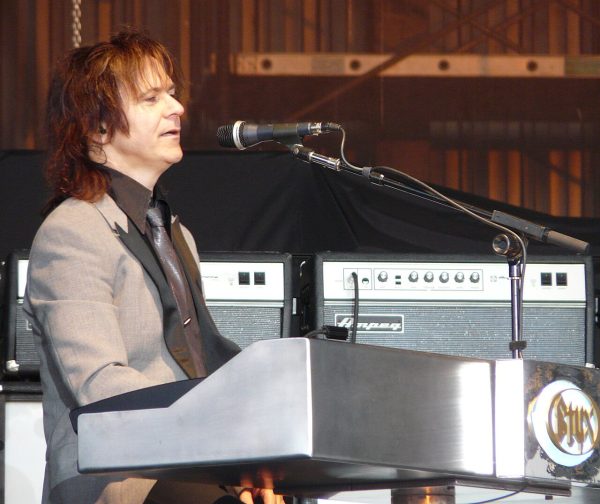
Image Credit: Wikimedia Commons
Table of Contents
Early Life and Scottish Roots
Lawrence Gowan was born on November 22, 1956, in Glasgow, Scotland, into a working-class family with a deep love of music.
His family emigrated to Canada when he was just a young child, settling in Toronto, Ontario, where Gowan would spend his formative years.
Toronto in the 1960s and 1970s was a city buzzing with rock and roll energy, and young Lawrence absorbed all of it with remarkable intensity.
He began playing piano at an early age, demonstrating a natural aptitude that quickly set him apart from his peers.
His formal training gave him a strong technical foundation, but it was his raw passion for rock music that would define his artistic direction.
Gowan drew early inspiration from British rock acts, particularly the theatrical keyboard-driven sounds that were dominating the era.
Artists like Yes, Genesis, and Supertramp left a lasting imprint on his developing musical sensibility.
Furthermore, the flamboyant showmanship of Elton John and the operatic grandeur of Queen clearly influenced the performer Gowan would become.
By his teenage years, he was already playing in local bands around Toronto, developing the stage presence that would later earn him a devoted following.
His family’s encouragement and his own fierce work ethic drove him toward a professional music career with singular focus.
Significantly, it was Toronto’s vibrant club and bar scene that gave Gowan his earliest real-world education in connecting with an audience.
That education would prove invaluable throughout every chapter of his career.
First Steps: Gowan’s Early Musical Career
Before his solo breakthrough, Gowan spent years honing his craft in the trenches of the Canadian music industry.
He performed extensively on the Toronto circuit, building a reputation as a gifted keyboardist and vocalist with undeniable stage charisma.
In the late 1970s and early 1980s, Gowan worked with various groups and session projects, absorbing the discipline of professional musicianship.
He briefly played with the rock band Rhinegold, an experience that sharpened his songwriting instincts and pushed him toward a distinctive sound.
In contrast to many of his contemporaries, Gowan was never content to simply imitate popular trends.
He was searching for a musical identity that blended prog-rock sophistication with accessible pop hooks and arena-rock power.
His keyboard work was technically impressive, but what truly distinguished him was his voice: a soaring, emotionally charged tenor capable of extraordinary range and nuance.
By the early 1980s, it was clear that Gowan was ready to step out on his own.
The Canadian music industry was beginning to take serious notice, and the conditions were ripe for a breakout solo career.
Importantly, Gowan’s time in the clubs had built him a loyal grassroots following that would become the bedrock of his future success.
The Peak Era: Gowan’s Solo Breakthrough
Strange Animal and the Rise of Gowan
Gowan released his self-titled debut album in 1982, announcing his arrival as a serious solo force in Canadian rock.
The album displayed his range as a songwriter and performer, blending synth-driven new wave textures with classic rock ambition.
However, it was his second album, Strange Animal, released in 1985, that truly launched Gowan into Canadian rock stardom.
Strange Animal produced the massive hit “A Criminal Mind,” a moody, theatrical track that reached number one in Canada and became one of the defining songs of the decade.
“A Criminal Mind” was remarkable for its literary concept: a first-person narrative from the perspective of a convicted killer seeking understanding, not absolution.
The song’s dramatic construction, driven by Gowan’s piano and his commanding vocal performance, struck a chord with listeners across the country.
Furthermore, it demonstrated that Gowan was not interested in making easy, disposable pop music.
He wanted to tell stories with weight and emotional complexity, and Canadian audiences rewarded him enormously for it.
The album also produced the hits “Guerrilla Soldier” and “Strange Animal,” both of which received heavy rotation on Canadian radio and MuchMusic.
Strange Animal was certified platinum in Canada, establishing Gowan as one of the country’s premier rock artists.
His live performances during this era were spectacular events, featuring elaborate keyboard rigs, theatrical lighting, and the kind of audience engagement that arenas demand.
Gowan was not simply a studio talent. He was a genuine live performer who elevated every show into an experience.
Gowan’s Commercial Peak: Great Dirty World and Beyond
Gowan followed Strange Animal with Great Dirty World in 1987, continuing his commercial momentum in Canada.
The album produced the Top 10 hits “Cosmetics” and “Love Is a Contact Sport,” further cementing his reputation as a hitmaker.
Great Dirty World demonstrated a broader sonic palette, incorporating harder rock edges alongside his signature melodic sensibilities.
Significantly, Gowan’s albums from this era hold a special place in Canadian rock history, frequently appearing on lists of the greatest Canadian albums ever recorded.
His 1990 album Lost Brotherhood marked a creative shift, exploring deeper themes and more complex arrangements.
While commercial success in Canada remained consistent, Gowan found breaking into the American market a far more difficult proposition.
The US rock landscape of the late 1980s and early 1990s was rapidly shifting toward grunge, leaving many melodic rock artists struggling for mainstream relevance.
In contrast to some of his peers, Gowan responded not with compromise but with continued artistic integrity, releasing material that reflected his genuine creative instincts.
His 1992 album But You Can Call Me Larry showcased a more personal and introspective side of his artistry.
Throughout this entire period, Gowan remained a dominant live draw in Canada, consistently selling out venues and building one of the most devoted fan bases in the country.
His piano-driven theatricality and soaring vocal performances made every concert a memorable event.
The Gowan live experience was, by all accounts, something that audiences who witnessed it never forgot.
Career Challenges and Personal Hurdles
Like virtually every artist who has sustained a long career, Gowan faced significant challenges along the way.
The shifting tides of the music industry in the early 1990s created genuine difficulties for melodic rock artists of his generation.
Grunge and alternative rock reshaped commercial radio almost overnight, and many artists who had thrived in the 1980s found themselves without major label support.
Gowan navigated this period with characteristic resilience, continuing to record and perform even as the industry landscape changed dramatically around him.
Furthermore, the challenge of building a truly international career remained a persistent obstacle throughout his solo years.
Despite his enormous popularity in Canada, Gowan never achieved the same level of commercial penetration in the United States that his talent arguably deserved.
Breaking through in the American market required not just great music but timing, label investment, and often a degree of fortune that circumstances did not consistently provide.
Significantly, however, these challenges never diminished his standing in Canada, where he remained a respected and beloved figure in rock music.
Gowan’s personal and artistic integrity through difficult commercial periods actually deepened the loyalty of his core audience.
He continued writing, recording, and touring with the same commitment that had defined his earliest years as a professional musician.
That perseverance would ultimately lead him to one of the most remarkable second acts in rock music history.
The Revival: Gowan Joins Styx
How Gowan Became the Voice of Styx
In 1999, Lawrence Gowan was offered one of the most significant opportunities of his career: the chance to join Styx as their lead vocalist and keyboardist.
Styx had been one of the defining bands of the 1970s and early 1980s, delivering a string of iconic albums that remain classics of the genre.
From the prog-rock grandeur of The Grand Illusion to the concept album brilliance of Kilroy Was Here, Styx had built an extraordinary legacy.
The band had experienced significant internal tensions and lineup changes throughout the 1990s, most notably the departure of founding vocalist and keyboardist Dennis DeYoung.
Finding someone to fill that role was a monumental challenge. Gowan was the answer.
His vocal range, keyboard mastery, and theatrical stage presence made him a natural fit for the Styx sound and legacy.
Furthermore, Gowan possessed something equally important: the kind of professionalism and collaborative spirit that a band with Styx’s history required.
He joined alongside longtime Styx members Tommy Shaw, James “JY” Young, Chuck Panozzo, and Todd Sucherman.
His integration into the band was remarkably seamless, a testament to both his adaptability and the quality of his musicianship.
Gowan quickly became one of the most celebrated aspects of the revitalized Styx live experience, honoring the band’s classic material while bringing fresh energy to every performance.
Fans who saw him perform Styx’s catalog were consistently impressed by his ability to honor the original recordings while adding his own unmistakable character.
Gowan and Styx: A Partnership for the Ages
For over two decades, Gowan has been an integral part of Styx, touring relentlessly and helping to keep the band’s music alive for multiple generations of rock fans.
He has performed on some of the band’s most celebrated recordings from the post-classic era, contributing his keyboard artistry and vocal power to the ongoing Styx story.
Albums like Paradise Theatre and Pieces of Eight remain staples of the Styx live set, and Gowan has become closely identified with their continued performance.
Styx concerts remain major events on the North American touring circuit, and Gowan is a central reason why.
If you’re interested in seeing him live, check out upcoming Styx concert dates for 2026.
Meanwhile, Gowan has also continued to nurture his solo artistry, releasing the Ghost Light Sessions and maintaining a creative output that reflects his enduring passion for songwriting.
His Ghost Light Sessions on YouTube offer fans an intimate look at Gowan in his element, stripped back and deeply expressive.
In contrast to artists who settle into a purely nostalgic role with legacy bands, Gowan continues to grow as a musician and performer.
His official website at lawrencegowan.com keeps fans updated on all his current projects and activities.
Recognition and Musical Legacy of Gowan
Gowan’s contributions to Canadian music have been recognized with numerous honors over the course of his career.
He has received Juno Award nominations, Canada’s equivalent of the Grammy, reflecting his standing as one of the country’s most respected rock artists.
“A Criminal Mind” remains one of the most iconic Canadian rock songs ever recorded, a permanent fixture in the country’s musical heritage.
Significantly, his longevity in the industry speaks volumes about the quality and authenticity of his artistry.
In a business notorious for chewing up and discarding talent, Gowan has sustained a remarkable career spanning more than four decades.
His keyboard work is widely regarded as among the finest in rock music, blending classical training with rock firepower in a way that few artists have matched.
Furthermore, his vocal performances, both in his solo career and with Styx, have earned consistent praise from critics and fellow musicians alike.
Gowan’s influence on Canadian rock is difficult to overstate. He helped prove that Canadian artists could compete with the world’s best on the international stage.
His detailed biography on Wikipedia documents the full scope of his achievements and critical recognition.
For fans of classic rock more broadly, exploring the 70s rock and 80s rock eras puts Gowan’s work in essential context.
He stands comfortably alongside the greats of those decades, an artist whose work has genuinely stood the test of time.
Essential Gowan Discography
The following albums represent the essential Gowan listening experience, from his solo classics to his work with Styx.
- Gowan (1982): The debut that announced his arrival. A showcase of his keyboard virtuosity and melodic songwriting instincts.
- Strange Animal (1985): The career-defining album featuring “A Criminal Mind.” Essential listening for any fan of Canadian rock.
- Great Dirty World (1987): A harder-edged follow-up delivering Top 10 Canadian hits and proving his commercial staying power.
- Lost Brotherhood (1990): A more introspective collection showing the depth and range of his songwriting talent.
- But You Can Call Me Larry (1992): Personal and adventurous, reflecting a mature artist unafraid to take creative risks.
- Gowan Solo Discography on Amazon: Browse and purchase Gowan’s complete discography on Amazon. Own these landmark Canadian rock albums in your collection today.
For deeper context on the Styx catalog that Gowan has helped carry forward, explore albums like Come Sail Away, Cornerstone, Equinox, and Crystal Ball.
These records form the musical foundation that Gowan has spent more than two decades honoring and extending with Styx.
FAQ: Your Questions About Gowan Answered
Where is Lawrence Gowan from originally?
Lawrence Gowan was born in Glasgow, Scotland, and emigrated with his family to Toronto, Canada, as a young child.
He is considered a Canadian artist and has spent the majority of his life and career in Canada.
What is Gowan’s most famous song?
“A Criminal Mind,” from the 1985 album Strange Animal, is widely considered Gowan’s signature song.
It reached number one in Canada and remains one of the most iconic Canadian rock songs ever recorded.
When did Gowan join Styx?
Gowan joined Styx in 1999, stepping in as lead vocalist and keyboardist following the departure of founding member Dennis DeYoung.
He has been an integral part of the band for over two decades since then.
Has Gowan released any solo music since joining Styx?
Yes, Gowan has continued to pursue solo creative projects alongside his work with Styx.
His Ghost Light Sessions project demonstrated that his solo artistry remains vital and deeply personal.
What makes Gowan’s keyboard playing distinctive?
Gowan’s keyboard style blends rigorous classical training with the energy and attitude of rock and roll.
His playing is technically precise yet emotionally expressive, capable of both delicate melodic passages and thundering arena-rock power.
It is this combination that has made him one of the most respected keyboard players in the classic rock world.
Lawrence Gowan’s extraordinary career is a testament to the power of talent, resilience, and unwavering dedication to the craft of music.
From the Glasgow streets of his birth to the sold-out arenas of North America, Gowan has lived one of rock music’s great stories.
For fans of classic rock who want to explore the full depth of his legacy, there has never been a better time to discover or rediscover the remarkable music of Gowan.