

Tears for Fears The Tipping Point: Album Review
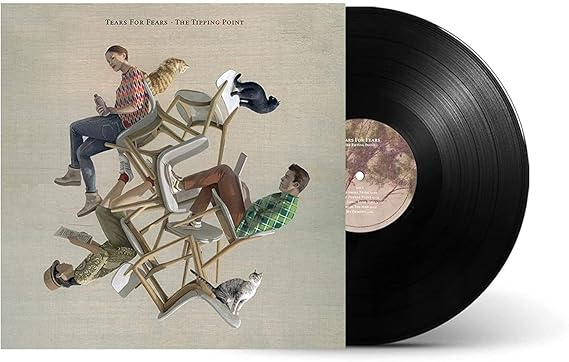
Tears for Fears The Tipping Point is one of the most emotionally charged comeback albums in classic rock history, and it earns every single feeling it puts you through.
After nearly two decades of silence, Roland Orzabal and Curt Smith returned with an album that proves they still have something urgent and real to say, as explored in our deep dive on Tears for Fears celebrating 40 years.
Released in February 2022, this record was a long time coming.
The wait made it heavier, and the circumstances behind it made it almost unbearable to ignore.
Quick Navigation
The Long Road Back: 17 Years of Silence
Seventeen years is a long gap between studio albums for any band.
For Tears for Fears, that gap was filled with fractured relationships, personal tragedy, and the slow, painful process of finding each other again.
Their previous record, Everybody Loves a Happy Ending, came out in 2004 and was largely overlooked by mainstream audiences, which stung.
Roland and Curt went their separate ways for years, each pursuing solo projects and touring commitments independently.
You can get the full story of the band’s complicated lineup history in our guide to the Tears for Fears members.
What brought them back together was not a record label deal or a nostalgia tour.
It was grief, pure and simple.
Roland Orzabal lost his wife, Caroline, in 2012 after a long illness.
That loss became the gravitational center around which this entire record orbits.
According to detailed reporting on the album’s background, Roland began writing through his grief almost immediately, and what emerged over the following years was the raw material for The Tipping Point.
By the time Curt rejoined the process, the album had both an emotional purpose and a creative direction that neither could have found alone.
Tears for Fears The Tipping Point: Grief Turned Into Music
There is a reason this album feels different from everything else in the band’s catalog.
It is built on real loss, and you can hear that weight in every arrangement, every vocal performance, every lyrical choice.
Roland’s voice sounds older, more worn, and more honest than it did on The Hurting, which itself was no lightweight record.
That debut captured the anxiety and pain of youth with startling clarity.
This album captures something harder: the grief of middle age, of watching someone you love disappear slowly.
Curt Smith brings balance here, as he always has.
His presence keeps the album from collapsing entirely under its own emotional weight.
The interplay between these two voices, one darker and more introspective, one warmer and more grounded, is what makes Tears for Fears work as a unit.
It is a dynamic that Songs from the Big Chair proved could reach millions of listeners, and it still works brilliantly here.
Key Tracks That Define the Record
The album opens with “No Small Thing,” a track that sets the tone immediately with layered synths and a slow-burning intensity.
It does not reach for your collar and shake you the way “Shout” once did.
Instead, it draws you in quietly, like someone pulling back a curtain to let you see something private.
The title track is the beating heart of the record.
The song “The Tipping Point” was written specifically about the moment Roland knew his wife would not recover, and that context is impossible to unhear once you know it.
Watch the official music video for “The Tipping Point” and you will feel every second of that story.
“Break the Man” is the album’s most overtly political moment, a pointed commentary on toxic masculinity that feels both timely and classic in its execution.
Curt takes the lead vocal and absolutely delivers.
“Please Be Happy” closes the album on a note that is equal parts devastating and hopeful.
It is Roland speaking directly to Caroline, and it is the kind of song that makes you sit quietly for a while after it ends.
The full album catalog experience is something you can explore further through The Seeds of Love, arguably their most ambitious pre-Tipping Point record.
Affiliate Disclosure: As an Amazon Associate, I earn from qualifying purchases. If you click on any Amazon link on this site and make a purchase, I may receive a small commission at no extra cost to you. This helps support ClassicRockArtists.com and keeps the deep-dive content coming. Thank you for your support!
Get The Tipping Point on Amazon and hear it the way it was meant to be heard.
Production and Sound: Old Instincts, New Ambition
Roland Orzabal and longtime collaborator Charlton Pettus co-produced the record, and their approach is tasteful throughout.
They did not try to make a retro-80s record, which would have been the easy and cynical choice.
The production is modern but never cold.
Strings appear when the emotion demands them.
Synths pulse and shimmer without dominating.
Guitars carry real weight when they show up.
The overall sound lands somewhere between the orchestral ambition of Elemental and the intimate confessionalism of a singer-songwriter record.
It is not a record trying to sound young.
It sounds exactly like two men in their sixties who have lived full, complicated lives and are not pretending otherwise.
That honesty is its greatest production achievement.
The mix gives every instrument room to breathe, and it rewards headphone listening more than most modern records do.
Tears for Fears The Tipping Point vs. Their Classic Catalog
Comparing any new record to a back catalog that includes The Hurting, Songs from the Big Chair, and Seeds of Love is an unfair fight.
Those records defined an era.
They are woven into the cultural fabric of the 1980s in a way that new music simply cannot replicate.
But The Tipping Point does not try to win that fight.
It plays a different game entirely.
Everybody Loves a Happy Ending in 2004 tried hard to recapture classic Tears for Fears energy, and while it had its moments, it felt like an exercise in nostalgia.
This record does not look back at all.
It is firmly rooted in the present tense of Roland’s emotional experience.
If you want the closest comparison, think about what Raoul and the Kings of Spain was reaching for in 1995, that mature, introspective sound, and then imagine them finally getting there completely.
That is what The Tipping Point delivers.
It is not their best album in a commercial sense.
It is arguably their most honest.
For longtime fans who have followed Everybody Wants to Rule the World and the full arc of their career, this record feels like a necessary and deeply satisfying final chapter, though hopefully not the last.
Browse the full Everybody Loves a Happy Ending breakdown for more context on where they were before this record arrived.
Final Verdict: Is The Tipping Point Worth Your Time?
Yes, without question.
If you approach this album expecting a greatest-hits energy or a crowd-pleasing return to form, you will be disappointed.
If you approach it as a deeply personal document from two artists who have genuinely earned their scars, you will find something rare and rewarding.
The production is immaculate.
The songwriting is some of the most emotionally direct work either man has produced.
The performances are authentic in a way that studio polish rarely achieves.
It is not a perfect record.
A few of the middle tracks lose some momentum.
But when it lands, it lands hard.
“The Tipping Point,” “Please Be Happy,” and “Break the Man” alone are worth the price of admission.
This is the kind of album that sounds better the third time than the first, and better still the tenth.
It rewards the patience it asks of you.
Pick up the full Tears for Fears collection while you are at it: browse Tears for Fears albums and merch on Amazon.
Nearly thirty years from now, people will still be discovering tears for fears the tipping point and understanding exactly why it mattered.
Tears for Fears Studio Discography
- The Hurting (1983)
- Songs from the Big Chair (1985)
- The Seeds of Love (1989)
- Elemental (1993)
- Raoul and the Kings of Spain (1995)
- Everybody Loves a Happy Ending (2004)
- The Tipping Point (2022)
FAQ: Tears for Fears The Tipping Point
When was The Tipping Point released?
The album was released on February 25, 2022.
Who produced The Tipping Point?
Roland Orzabal and Charlton Pettus co-produced the record.
How long was the gap before The Tipping Point?
It was their first studio album in 17 years, following Everybody Loves a Happy Ending in 2004.
What is the album about?
The record is largely about Roland Orzabal processing the grief of losing his wife Caroline, who passed away in 2012.
Is The Tipping Point on streaming platforms?
Yes, the album is available on all major streaming platforms as well as on CD and vinyl through Amazon.