

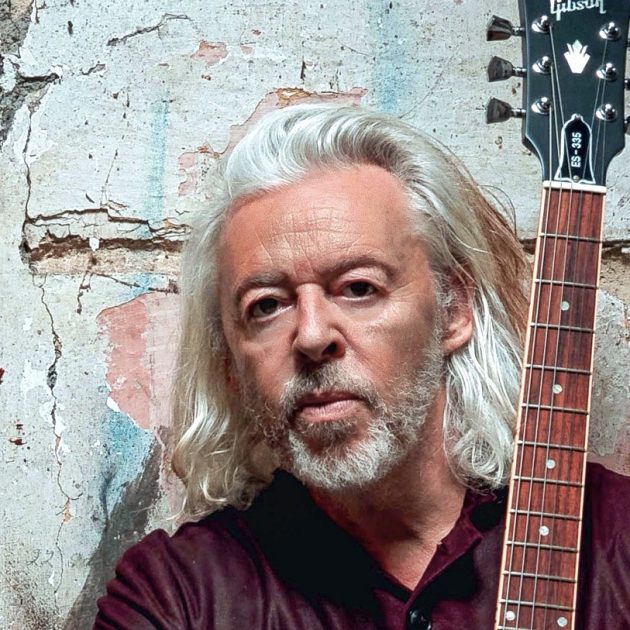
Roland Orzabal is one of the most gifted, psychologically complex, and enduringly influential songwriters to emerge from the British new wave era.
Born Roland Jaime Orzabal de la Quintana on August 22, 1961, in Portsmouth, Hampshire, England, he grew up in circumstances that would profoundly colour every note he ever wrote.
His father, a Spanish-born entertainer of Argentine descent, abandoned the family when Roland was still a child.
That wound of early loss and instability would later become the raw material for some of the most emotionally charged music of the 1980s.
Raised in Bath, Somerset, Orzabal found both solace and purpose in music from a young age.
His teenage friendship with Curt Smith would evolve into one of the most celebrated creative partnerships in pop history.
Together they built Tears for Fears into a global phenomenon, selling over 30 million albums worldwide.
Orzabal served as the band’s principal songwriter, guitarist, and musical visionary throughout their career.
His work blended the melodic hooks of mainstream pop with a lyrical depth rooted in Arthur Janov’s theories of primal therapy.
That rare combination of accessibility and intellectual ambition elevated the band far above their new wave contemporaries.
More than four decades into his career, Roland Orzabal remains a formidable creative force whose songs continue to resonate with millions of listeners around the world.
☰ Table of Contents — Click to Expand
Early Life and Musical Beginnings
Roland Orzabal spent his formative years in Bath, a city whose elegant Georgian architecture and artistic culture proved a fitting backdrop for a boy with an unusually inquisitive mind.
His mother raised him largely on her own after the departure of his father, and the emotional turbulence of that household left a lasting mark.
As a teenager, Roland discovered the guitar and quickly taught himself to play, developing a style that favoured feel over technical flash.
He was drawn particularly to the songwriters of the 1970s who had mastered the art of marrying deep emotional content with accessible melody.
Artists like David Bowie, Peter Gabriel, and Kate Bush shaped his understanding of what pop music could achieve.
Around the age of thirteen, Roland befriended Curt Smith, a fellow Bath student who shared his passion for music.
The two began writing and performing together almost immediately, forging a creative bond that would define both their lives.
Orzabal’s reading habits were unusually broad for a teenager, and he soon encountered the work of Arthur Janov, the American psychologist who developed primal therapy.
Janov’s theories about suppressed childhood pain and the healing power of emotional catharsis resonated deeply with Orzabal’s own experience.
That intellectual framework would become the thematic backbone of virtually everything he wrote throughout the 1980s.
Graduate: Roland Orzabal’s First Major Band
Before Tears for Fears existed, Roland Orzabal and Curt Smith were core members of a Bath-based new wave outfit called Graduate.
Formed in 1979, Graduate drew its sound from the clean, angular post-punk energy sweeping Britain at the time.
The band released one full-length album, Acting My Age, in 1980 through Precision Records.
Although Acting My Age failed to chart significantly, it showcased the melodic sensibility that Orzabal was already developing.
The band toured steadily across the UK and attracted a modest following in the early 1980s new wave club scene.
Graduate gave Orzabal and Smith invaluable experience in live performance, studio recording, and the mechanics of the music industry.
By 1981, however, the two had grown beyond what Graduate could offer them artistically.
They departed amicably and began laying the groundwork for a new project that would be far more personal and ambitious.
That new project, deeply influenced by Janov’s primal therapy concepts, would become one of the most significant acts of the decade.
The Rise of Tears for Fears
Tears for Fears officially formed in Bath in 1981, with Roland Orzabal and Curt Smith at its centre.
The name itself was taken directly from Janov’s primal therapy literature, signalling from the outset that this would be music with psychological intent.
Keyboardist Ian Stanley and drummer Manny Elias completed the original lineup and contributed significantly to the band’s early sound.
The full roster of musicians who passed through the band’s history is a fascinating story in itself, as covered in the complete Tears for Fears members guide.
The band signed to Mercury Records and began recording their debut album under producer Chris Hughes.
The Hurting arrived in 1983 and entered the UK Albums Chart at number one.
It was a startling debut: a record drenched in synthesizers, hurt, and the unmistakable vocabulary of primal therapy.
Songs like “Mad World,” “Pale Shelter,” and “Change” established Orzabal as a songwriter of unusual emotional intelligence.
The full story of The Hurting reveals just how deliberately and painstakingly Orzabal constructed its themes of childhood pain and psychological survival.
The album sold over two million copies and positioned the band as one of the most compelling new voices in British pop.
Songs from the Big Chair: Roland Orzabal at His Creative Peak
The success of The Hurting gave Roland Orzabal the confidence and resources to pursue a far grander vision on the band’s second album.
Songs from the Big Chair, released in February 1985, remains one of the defining albums of the entire decade.
The production was enormous: lush, layered, cinematic, and yet always anchored by Orzabal’s gift for a melody that lodged permanently in the listener’s memory.
The album debuted at number two in the United Kingdom and climbed to number one on the United States Billboard 200.
It eventually sold over 10 million copies worldwide, making it one of the best-selling albums of the 1980s.
Orzabal wrote or co-wrote every track, drawing on themes of political power, emotional repression, and the search for authentic human connection.
The record marked a decisive shift from the introspective pain of The Hurting toward a more outward-looking engagement with the wider world.
Shout and the Global Explosion
“Shout” was the album’s lead single and became an anthem of almost cathedral proportions.
Its opening synthesizer riff is one of the most instantly recognisable sounds of the entire new wave era.
Orzabal described the song as a call for people to release their suppressed emotions, a direct application of Janov’s cathartic principles to a stadium-sized pop context.
“Shout” reached number one in both the United Kingdom and the United States and spent five weeks at the top of the Billboard Hot 100.
The accompanying music video, directed by Nigel Dick, received heavy rotation on MTV and helped propel the band to global superstardom.
Watch Tears for Fears deliver the song with all its visceral energy in this classic live performance.
Everybody Wants to Rule the World
The second monster single from the album arrived in March 1985 and instantly became one of the most beloved pop songs ever recorded.
The complete breakdown of Everybody Wants to Rule the World reveals a deceptively layered song beneath its gleaming radio-friendly surface.
Orzabal wrote the track alongside keyboardist Ian Stanley and producer Chris Hughes.
Lyrically, the song interrogates humanity’s appetite for dominance and the dangerous seductiveness of power.
It reached number one in the United States and the United Kingdom and won the BRIT Award for Best British Single in 1986.
Its cool, breezy guitar hook and rolling drum pattern gave it a timeless quality that made it feel equally at home in 1985 or forty years later.
Few songs in the history of popular music have so successfully packaged political cynicism inside a summer-afternoon melody.
The Seeds of Love: A Lush New Direction
After the unprecedented success of Songs from the Big Chair, Orzabal took four years to craft the follow-up.
The Seeds of Love, released in September 1989, was the most ambitious and expensive production of Orzabal’s career to that point.
The recording sessions reportedly cost over a million pounds and involved an enormous cast of collaborators.
Among the most celebrated of those collaborators was pianist and vocalist Oleta Adams, whom Orzabal and Smith had discovered performing in a hotel bar in Kansas City.
Adams’s powerful gospel-inflected voice transformed several of the album’s key tracks and introduced a soulful warmth that was new to the Tears for Fears palette.
The album drew heavily on psychedelic rock, jazz, and orchestral pop, reflecting Orzabal’s voracious musical appetite.
The lead single “Sowing the Seeds of Love” was openly inspired by the baroque pop of the 1960s, and particularly by the adventurous studio experiments of The Beatles.
Seeds of Love reached number one in the United Kingdom and the top five in the United States.
However, the staggering cost and creative tension surrounding the sessions began to fracture the relationship between Orzabal and Smith.
For fans who want to understand the full richness and complexity of this album, it represents Orzabal at his most ambitious and uncompromising.
Career Challenges and Personal Struggles
By the early 1990s, the creative and personal tensions between Roland Orzabal and Curt Smith had become impossible to resolve.
Smith left the band in 1991, citing unhappiness with the direction of the music and his sense of being marginalised in the creative process.
The split was painful for both men and marked the end of the classic Tears for Fears lineup that fans had embraced throughout the decade.
Orzabal made the decision to continue recording and touring under the Tears for Fears name, a choice that proved controversial with some segments of the fanbase.
The 1990s presented a broader cultural challenge as well: grunge and alternative rock had reshaped the commercial landscape, and the synthesizer-driven sounds of the 1980s had fallen sharply out of critical favour.
On a deeply personal level, Orzabal’s wife Caroline Johnston had been diagnosed with a serious illness that would shadow the following decades of his life.
Despite these mounting pressures, he continued to write and record with a determination that spoke to the core of his artistic character.
He has spoken candidly in interviews about the difficulties of maintaining creativity through periods of grief and professional uncertainty.
Those struggles never silenced him; instead, they fed directly into the music he made throughout the decade and beyond.
Roland Orzabal’s Solo Years and the Reunion
With Curt Smith’s departure, Roland Orzabal assembled a new band and released Elemental in 1993.
The Elemental album represented a deliberate pivot toward a harder, more guitar-driven sound.
It entered the UK Albums Chart at number five and demonstrated that Orzabal’s songwriting instincts remained sharp even without his long-time partner.
Two years later, he pushed even further into experimental territory with Raoul and the Kings of Spain, released in 1995.
That album drew on flamenco textures, acoustic guitar, and Orzabal’s Spanish heritage in ways that surprised even devoted fans.
While neither record matched the commercial heights of the band’s 1980s peak, they confirmed his commitment to artistic growth over commercial calculation.
The reunion with Curt Smith began in earnest in the early 2000s, with the two men reportedly reconnecting over shared memories and mutual respect.
Everybody Loves a Happy Ending, released in 2004, marked the official return of the classic lineup and was greeted warmly by the fanbase.
The album showed that the chemistry between the two men remained very much intact after more than a decade apart.
Further work together followed, including extensive touring and the kind of re-engagement with their back catalogue that introduced Tears for Fears to an entirely new generation.
In 2022, the band released The Tipping Point, their first new studio album in eighteen years.
The album was partly a tribute to Caroline Orzabal, who had passed away in 2017 after battling mental illness for many years.
The Tipping Point debuted at number two in the United Kingdom and number five in the United States, a commercial vindication that few artists achieve this far into their careers.
The band’s 40-year anniversary brought renewed critical appreciation and a major international tour that reminded the world why Tears for Fears mattered.
Fans looking to follow all their upcoming live dates can find the latest information in the ClassicRockArtists.com tours section.
Awards, Recognition, and Lasting Legacy
Over a career spanning four decades, Roland Orzabal has accumulated a body of recognition that reflects his profound impact on popular music.
The BRIT Award for Best British Single in 1986, won for “Everybody Wants to Rule the World,” was one of the first formal acknowledgements of his songwriting genius.
His profile at the Grammy Awards reflects the sustained international attention that his work has commanded.
Songs from the Big Chair has been certified platinum multiple times across different territories and is consistently ranked among the greatest albums of the 1980s in retrospective critical polls.
“Mad World,” one of Orzabal’s earliest compositions, received a second cultural life when Gary Jules recorded a stripped-down version for the film Donnie Darko in 2001.
That cover reached number one in the United Kingdom in 2003 and introduced Orzabal’s writing to millions of listeners who had not been born when the original was released.
The band’s music has also been widely sampled and covered, appearing in major film soundtracks, television series, and advertising campaigns around the world.
As a source of comprehensive coverage for music of this era, ClassicRockArtists.com tracks the ongoing legacy of artists like Orzabal who helped define a generation.
Orzabal’s influence can be heard in the work of countless artists who came after him, from Radiohead to Lorde.
The latest news and updates about his ongoing projects are regularly covered in the ClassicRockArtists.com news section.
His commitment to writing music of genuine emotional and intellectual weight has secured his place among the most important figures in British popular music history.
Essential Discography
The following albums represent the essential listening guide to the recorded legacy of Roland Orzabal and Tears for Fears.
- The Hurting (1983) — The debut album that introduced the world to Orzabal’s primal therapy-inspired songwriting, reaching number one in the United Kingdom on its release.
- Songs from the Big Chair (1985) — The band’s commercial and artistic breakthrough, yielding two number-one hits on both sides of the Atlantic and selling over ten million copies worldwide.
- The Seeds of Love (1989) — A sprawling, critically admired record that showcased Orzabal’s most ambitious production work and introduced the world to Oleta Adams.
- Elemental (1993) — The first Tears for Fears album recorded without Curt Smith, demonstrating Orzabal’s ability to evolve the band’s sound in a harder, more guitar-driven direction.
- Raoul and the Kings of Spain (1995) — A bold artistic statement drawing on Orzabal’s Spanish heritage, acoustic textures, and flamenco influences in ways that divided and delighted critics.
- Everybody Loves a Happy Ending (2004) — The reunion record that brought Orzabal and Smith back together and proved the original creative partnership was still very much alive.
- The Tipping Point (2022) — A deeply personal album partly dedicated to Orzabal’s late wife Caroline, which debuted in the top five in both the United Kingdom and the United States.
Shop the Complete Roland Orzabal & Tears for Fears Discography on Amazon:
🛒 Browse Albums on Amazon
As an Amazon affiliate, I earn a small commission on qualifying purchases made through this link, at no extra cost to you. Thank you for your support — it helps keep this site running.
Roland Orzabal: Frequently Asked Questions
What is Roland Orzabal best known for?
Roland Orzabal is best known as the co-founder, principal songwriter, and guitarist of Tears for Fears.
He wrote or co-wrote iconic songs including “Shout,” “Everybody Wants to Rule the World,” “Head Over Heels,” and “Mad World.”
His songwriting drew on primal therapy concepts and combined deep psychological themes with radio-friendly melodic hooks.
Did Roland Orzabal have a solo career?
Yes, following Curt Smith’s departure from the band in 1991, Orzabal continued releasing music under the Tears for Fears name.
Elemental in 1993 and Raoul and the Kings of Spain in 1995 were both released without Smith and represented a more experimental phase in his career.
Both albums charted respectably in the United Kingdom and demonstrated Orzabal’s willingness to push beyond familiar commercial territory.
What happened between Roland Orzabal and Curt Smith?
Curt Smith left Tears for Fears in 1991 due to creative and personal tensions that had grown during the stressful recording sessions for The Seeds of Love.
The two men eventually reconciled and reunited in the early 2000s, releasing Everybody Loves a Happy Ending together in 2004.
Their reunion proved durable: they have continued to record and tour together ever since, releasing The Tipping Point in 2022.
What was Roland Orzabal’s most successful album?
Songs from the Big Chair, released in 1985, remains his most commercially and critically successful record.
It reached number one in the United States and number two in the United Kingdom, selling over 10 million copies worldwide.
The album produced two transatlantic number-one singles and is widely regarded as one of the definitive records of the 1980s new wave era.
Is Roland Orzabal still making music today?
Yes, Roland Orzabal remains actively creative alongside Curt Smith under the Tears for Fears name.
The Tipping Point, released in 2022, was their most commercially successful album in nearly three decades.
The band has continued to tour internationally to sold-out audiences, and Roland Orzabal shows no signs of slowing down.
From the primal cry of The Hurting to the emotional depth of The Tipping Point, Roland Orzabal has spent more than four decades proving that pop music, at its best, can be both genuinely intelligent and genuinely moving.