
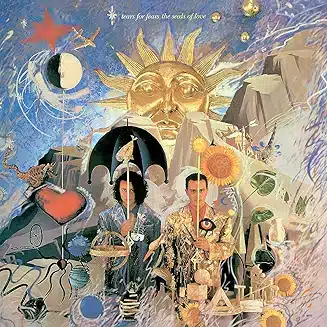
Sowing the Seeds of Love by Tears For Fears (1989): A Psychedelic Masterpiece
The psychedelic soul of sowing the seeds of love marked a radical departure from the synth-pop foundations of the previous decade.
It remains a towering achievement of production that captured a band evolving into their most ambitious form.
Quick Navigation
What is the meaning of Sowing the Seeds of Love by Tears For Fears?
Sowing the Seeds of Love is a politically charged anthem written by Roland Orzabal during the 1987 UK General Election.
It serves as a call for social revolution and spiritual growth, blending a satirical look at contemporary politics with a plea for human compassion and collective enlightenment.
The Vibe: Genre, Mood, and Search Intent
The track is a kaleidoscope of sound that intentionally mirrors the late-period Beatles while maintaining a polished 80s hi-fi sheen.
It balances the intricate arrangements of progressive pop with the soulful power of gospel-infused backing vocals.
- Genre: Neo-Psychedelia, Sophisti-pop, Progressive Pop
- Mood: Triumphant, Cerebral, Expansive
- Tempo: Mid-tempo shuffle
- Best For: High-fidelity headphone sessions, summer road trips, political rallies
- Similar To: “I Am the Walrus” by The Beatles
- Fans of Tears For Fears also search: “best 80s psychedelic songs,” “Roland Orzabal songwriting style,” “meaning of 80s protest music”
Behind the Lyrics: The Story of Sowing the Seeds of Love
The origins of the track lie in the political climate of Margaret Thatcher’s Britain, specifically the 1987 election cycle.
Roland Orzabal felt a deep disconnect with the prevailing “greed is good” mentality and sought to write something that felt like a protest song for a new era.
He drew inspiration from a radio broadcast where a DJ played a selection of classic 80s hits followed by 60s psychedelic tracks, sparking the idea for a retro-modern fusion.
The inclusion of “Mr. Badman” in the lyrics was a direct swipe at the political leaders of the time who Orzabal felt were ignoring the working class.
During the recording process, the band’s dynamic was shifting significantly as they moved away from the sound of Songs From The Big Chair toward a more organic, live-player feel.
The Wikipedia entry for the song notes it took years to perfect, reflecting the band’s notorious perfectionism in the studio.
Technical Corner: The Gear Behind Sowing the Seeds of Love
The production of the track is legendary for its complexity and the sheer amount of studio hours logged at Townhouse Studios.
To achieve the “Beatlesque” drums, producer David Bascombe and Orzabal opted for a live, room-heavy sound that contrasted with the gated reverb of their previous hits.
Key instruments included the E-mu Emulator II for various orchestral samples and the Fairlight CMI for intricate sequencing work.
The track also features a prominent Hammond B3 organ and a soaring flugelhorn solo that adds a jazz-inflected sophistication to the bridge.
Engineer Phil Palmer provided the crisp acoustic guitar work that anchors the verses, while the layering of Oleta Adams’ soulful vocals provided the track’s emotional core.
The final mix is a masterclass in dynamic range, moving from intimate vocal moments to a massive, wall-of-sound crescendo.
Legacy and Charts: Why Sowing the Seeds of Love Still Matters
Upon its release, the song became a global smash, proving that mainstream audiences were hungry for complex, multi-layered pop music.
It peaked at number 2 on the US Billboard Hot 100, number 5 in the UK, and number 1 on the Canadian charts.
The music video, featuring groundbreaking animation and psychedelic imagery, won two MTV Video Music Awards and remains a staple of the era’s visual history.
Over the decades, the track has been covered by various artists and featured in numerous documentaries about the social history of the 1980s.
It marked the pinnacle of the The Seeds of Love album cycle before the band entered a period of transition.
Listener’s Note: A Personal Take on Sowing the Seeds of Love
When I first heard this on vinyl, the sheer density of the arrangement felt like a physical weight in the room.
The texture of the brass against that heavy, shuffling drum beat creates a tension that doesn’t resolve until the glorious “high time we made a stand” chorus breaks through.
There is a specific moment at the four-minute mark where the layers peel back and you can hear the grit in Orzabal’s vocal that always sends a chill down my spine.
Collector’s Corner: Own Sowing the Seeds of Love on Vinyl or CD
If you truly want to appreciate the depth of this production, the 180-gram vinyl reissue is the only way to go.
The separation between the instruments and the clarity of the vocal harmonies are vastly superior to any compressed streaming version.
Get The Seeds of Love on Vinyl at Amazon
Affiliate Disclosure: As an Amazon Associate, I earn from qualifying purchases. This means that if you click on a link to a classic rock album or piece of gear on this site and make a purchase, I may receive a small commission at no extra cost to you. This helps support classicrockartists.com and allows me to keep providing deep-dive content on the legends of rock. Thank you for your support!
Frequently Asked Questions About Sowing the Seeds of Love
Who wrote Sowing the Seeds of Love?
The song was primarily written by Roland Orzabal, with contributions from keyboardist Ian Stanley. It was one of the first major tracks where Orzabal took a dominant role in the creative direction after the band’s initial success.
What album is Sowing the Seeds of Love from?
It is the opening track and lead single from the 1989 album titled The Seeds of Love. This album followed their massive 1985 release and took several years to complete due to the complex production requirements.
Is there an official music video for the song?
Yes, the band released a highly acclaimed music video directed by Jim Blashfield. You can watch the official video on the Tears For Fears YouTube channel to see the award-winning animation that accompanied the track.
The enduring power of sowing the seeds of love lies in its refusal to be just another simple pop song.