

Jumping Jack Flash by The Rolling Stones (1968): The Riff That Reset Rock
The Rolling Stones unleashed “Jumping Jack Flash” on an unsuspecting world in May 1968, and the song hit like a fist through a wall of psychedelic wallpaper.
After a year of Sgt. Pepper cosplay and baroque excess, this single announced, loudly and without apology, that the Stones were done playing dress-up.
Quick Navigation
What is the meaning of Jumping Jack Flash by The Rolling Stones?
“Jumping Jack Flash” is about survival, hardship, and defiant resilience. Written by Mick Jagger and Keith Richards, the lyrics describe a rough, pain-filled upbringing told with dark humor. Jagger has said it was a metaphor for breaking free from the psychedelic excess of their previous era and returning to something raw and honest.
The Vibe: Genre, Mood, and Search Intent
From its very first bar, this track plants its flag in the hard blues-rock dirt and refuses to move.
There is grit in every note, a swagger in the tempo, and zero interest in being polite about any of it.
- Genre: Blues Rock / Hard Rock
- Mood: Defiant, Raw, Electrifying
- Tempo: Driving, mid-to-uptempo with a locked groove
- Best For: Volume-up road trips, gym sessions, shutting down a bad day
- Similar To: “Paint It Black” and early blues-driven Stones tracks
- Fans of The Rolling Stones also search: “best Rolling Stones singles 1960s,” “classic rock blues rock songs,” “greatest rock riffs of all time”
Behind the Lyrics: The Story of Jumping Jack Flash
The story of how this song got its name is almost too simple to believe.
Keith Richards and Mick Jagger were staying at Richards’ country house in the English countryside when they were woken early one morning by the heavy, clumping footsteps of Richards’ gardener walking past the window outside.
Jagger, startled, asked what that noise was.
Richards replied: “Oh, that’s Jack. That’s jumpin’ Jack.”
The title was born before a single lyric was written.
From that accidental spark, Jagger built something darker and more visceral: a narrator born in a crossfire hurricane, raised in a storm, baptized in pain, and still grinning through it all.
According to author Victor Bockris, the “crossfire hurricane” line was Richards’ own contribution, a direct reference to his birth in Dartford, England, in 1943, during World War II bombing raids.
In a 1995 interview with Rolling Stone magazine, Mick Jagger was direct about the song’s purpose: it arose “out of all the acid of Satanic Majesties. It’s about having a hard time and getting out. Just a metaphor for getting out of all the acid things.”
The track was recorded during the Beggars Banquet sessions of early 1968, and it marked a conscious, decisive pivot away from the psychedelic experimentation of Their Satanic Majesties Request.
Brian Jones described it at the time as “getting back to the funky, essential essence” of what the Stones were at their core.
Released on May 24, 1968 in the UK on Decca Records, it was the band’s first UK single in five and a half months, the longest gap between releases they had experienced up to that point.
It debuted, and then promptly went to number one.
You can explore the full Jumping Jack Flash Wikipedia page for a complete breakdown of its chart history and legacy.
The song first appeared on a Stones album via the 1960s compilation Through the Past, Darkly (Big Hits Vol. 2) in 1969, one year after the original single release.
Technical Corner: The Gear Behind the Song
The sound of “Jumping Jack Flash” came not from expensive studio gear or the latest electric technology, but from two acoustic guitars, a tape recorder, and a brilliant piece of lateral thinking.
Keith Richards used a Gibson Hummingbird acoustic guitar tuned to open D (essentially the same intervals as open E, but slackened down), with a capo placed high on the neck to get that tight, compressed sound.
Over the top of that, he layered a second acoustic guitar strung in Nashville tuning, a technique Richards had picked up from a player in George Jones‘ band back in San Antonio in 1964.
Here is the key production trick: both acoustic guitars were recorded not through a studio console, but by jamming a microphone directly into each guitar and running the signal through a Philips cassette recorder, then playing it back through an extension speaker.
That cassette-recorder compression is what gives the track its gnarly, distorted low-end bite, something no studio effect could have manufactured so organically.
The session was produced by Jimmy Miller, recorded at Olympic Sound Studios in Barnes, London.
The full lineup on the recording included Charlie Watts on drums, Bill Wyman on organ, Brian Jones on electric rhythm guitar, Ian Stewart on piano, Rocky Dijon on maracas, and Jimmy Miller himself adding backing vocals.
Richards played both the acoustic rhythm guitar and the bass guitar parts, in addition to his lead guitar contributions.
Wyman, in his memoir Rolling with the Stones, also claimed a role in shaping the original main riff alongside Jones and Watts, though the writing credit remains with Jagger and Richards.
The result is a track that somehow feels simultaneously ancient, like Delta blues field recordings, and completely timeless.
You can compare the raw blues DNA of this track against the debut era by reading about The Rolling Stones’ self-titled debut album and hearing just how far they had evolved by 1968.
Legacy and Charts: Why Jumping Jack Flash Still Matters
“Jumping Jack Flash” went straight to number one on the UK Singles Chart and peaked at number three on the US Billboard Hot 100 in 1968.
It topped the US Cash Box Top Singles chart for one week and dominated multiple American regional radio charts throughout that summer.
In Canada, it reached number eight on the RPM Top Singles chart.
The song has since been certified Silver in the United Kingdom and Platinum in Australia.
The critical recognition has been just as strong as the commercial performance.
Rolling Stone magazine ranked it number 144 on its 2021 list of the 500 Greatest Songs of All Time.
Q Magazine placed it at number two on its 100 Greatest Guitar Tracks list in 2005, trailing only the riff to a single other song.
VH1 ranked it number 65 on its 100 Greatest Rock Songs broadcast.
Rolling Stone also ranked it seventh on its list of the 100 Best Rolling Stones Songs, placing it behind only a handful of their deepest catalog cuts.
Its live legacy is equally extraordinary.
The Rolling Stones have performed “Jumping Jack Flash” on every single tour since its release in 1968, making it the most frequently played song in their entire live catalog.
It appears on landmark live albums including Get Yer Ya-Ya’s Out! (1970), Love You Live (1977), Flashpoint (1991), and Shine a Light (2008), and you can watch one of the defining live performances on YouTube here.
The song’s reach extended into film when its title was used for the 1986 Whoopi Goldberg comedy, with Aretha Franklin recording a soulful cover version for the film featuring Richards and Ronnie Wood on guitars.
For more on the Stones’ continued live power, check out the Rolling Stones IMAX concert film that returned in late 2025.
The song also anchored the Stones’ legendary 1981 comeback run, the same era that produced “Start Me Up”, proving that “Jumping Jack Flash” had lost none of its live voltage in over a decade.
Compare this song’s commercial reach against their mid-90s output with a look at “Love Is Strong” (1994), and you see the rare thread of durability that connects every era of the band.
Listener’s Note: A Personal Take on the Song
When I first heard “Jumping Jack Flash” on vinyl, the needle drop alone felt like something was about to catch fire.
The intro riff doesn’t ease you in. It grabs you by the collar and hauls you forward, and there’s a moment in that cassette-recorder distortion where everything sounds simultaneously wrong and absolutely correct in a way that no modern production could replicate on purpose.
What gets me every single time is the vocal performance.
Jagger sounds like he’s relaying survival news, not singing a pop song, half-shouting across a bar where the roof might cave in at any moment.
The drum sound is punishing in the best possible way, and the chord changes feel earned rather than expected.
It’s a song that makes you want to play it loud and play it again immediately.
For those chasing more of that early Stones fire, the 1973 hit “Angie” shows a completely different side of the band, and the contrast is worth exploring.
And for a more recent look at how the band has kept finding new angles, “Angry” from their 2023 era is worth a spin right alongside this one.
Affiliate Disclosure: As an Amazon Associate, I earn from qualifying purchases. If you click on any Amazon link on this site and make a purchase, I may receive a small commission at no extra cost to you. This helps support classicrockartists.com and allows me to keep producing in-depth coverage of the legends of rock. Thank you for your support.
Collector’s Corner: Own It on Vinyl or CD
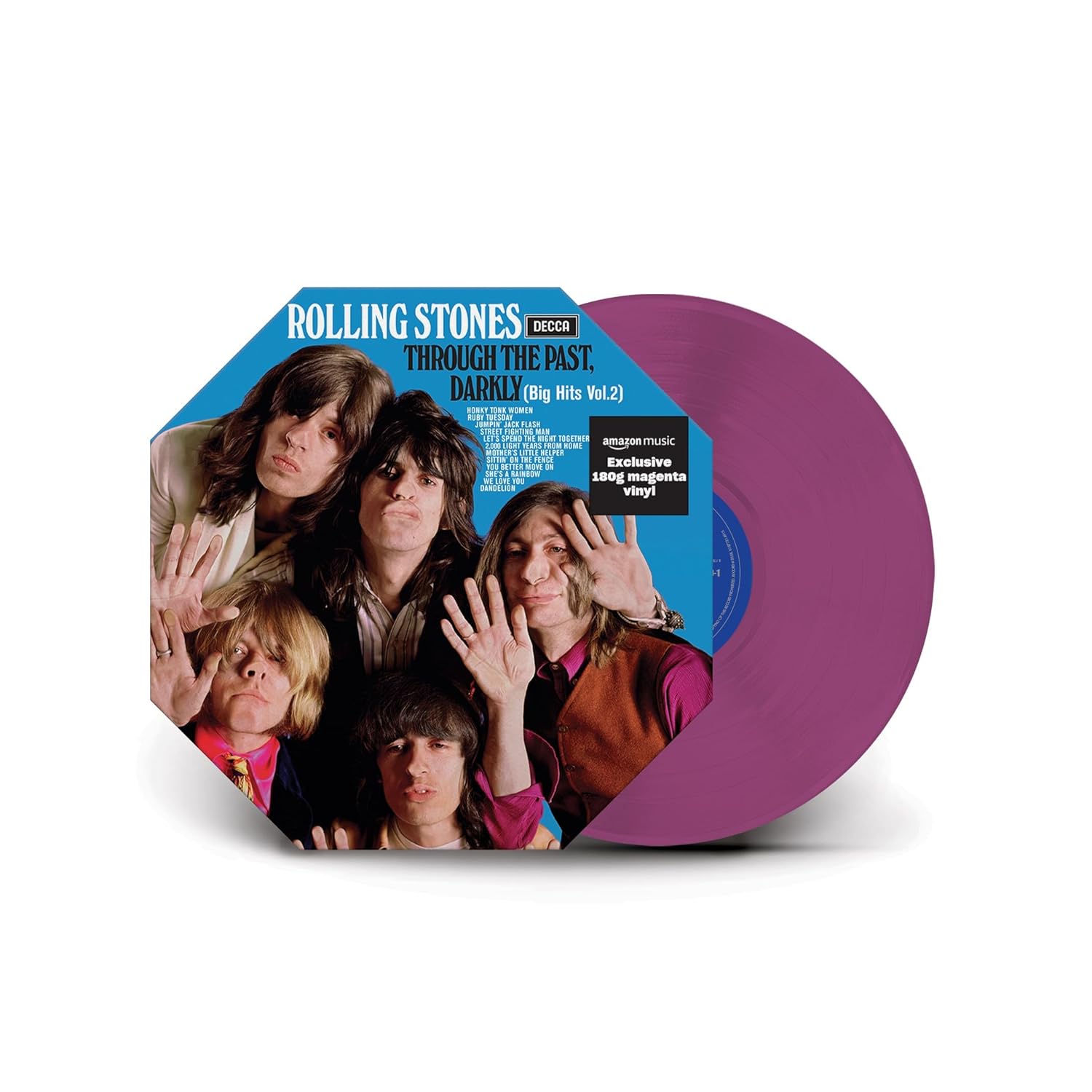
The UK Magenta LP pressing of Through The Past, Darkly (Big Hits Vol. 2) is the quintessential way to own “Jumping Jack Flash” on vinyl, a compilation that captures the Stones at the peak of their commercial powers with some of the best mastering of the era.
If you’re building a serious collection, this is the one to track down, and the cover art alone is worth framing.
For collectors interested in more recent Stones pressings, the Black and Blue reissue is another excellent recent release worth knowing about.
On the hunt for vinyl or want to browse the full catalog? Check out Rolling Stones Albums and Merch on Amazon.ca for current availability.
You can also pick up the Pressed and Poured vinyl set for a premium collector’s experience.
Get Through The Past, Darkly (Big Hits Vol. 2) on Vinyl at Amazon
Frequently Asked Questions
Who wrote Jumping Jack Flash?
“Jumping Jack Flash” was written by Mick Jagger and Keith Richards, the core songwriting duo of The Rolling Stones. Bill Wyman later claimed in his memoir that he helped develop the original guitar riff alongside Brian Jones and Charlie Watts, though the official writing credit has always been Jagger-Richards.
What album is Jumping Jack Flash on?
The song was originally released as a standalone non-album single in May 1968. It first appeared on a Rolling Stones album via the 1969 UK compilation Through the Past, Darkly (Big Hits Vol. 2). It has since appeared on dozens of Stones compilations, including Hot Rocks 1964-1971, Forty Licks, and GRRR!
What does Jumping Jack Flash mean?
The title came directly from Keith Richards’ gardener, Jack Dyer, whose heavy footsteps outside inspired the phrase “Jumpin’ Jack.” The lyrics use the imagery of a hard, violent upbringing as a metaphor for resilience. Mick Jagger said the song was also about breaking free from the psychedelic haze of their previous album era and returning to something real and direct.
How did Jumping Jack Flash perform on the charts?
The single reached number one in the UK, number three on the US Billboard Hot 100, and topped the US Cash Box chart for one week in 1968. It also hit number eight in Canada. The track was certified Silver in the UK and Platinum in Australia, making it one of the Stones’ most decorated singles of the era. Rolling Stone ranked “Jumping Jack Flash” number 144 on their 2021 list of the 500 Greatest Songs of All Time, a position that still undersells how much impact this song had on rock and roll.