

Tumbling Dice by The Rolling Stones (1972): The Unruly Classic
“Tumbling Dice” is the song that proved The Rolling Stones could bottle pure chaos and call it rock and roll.
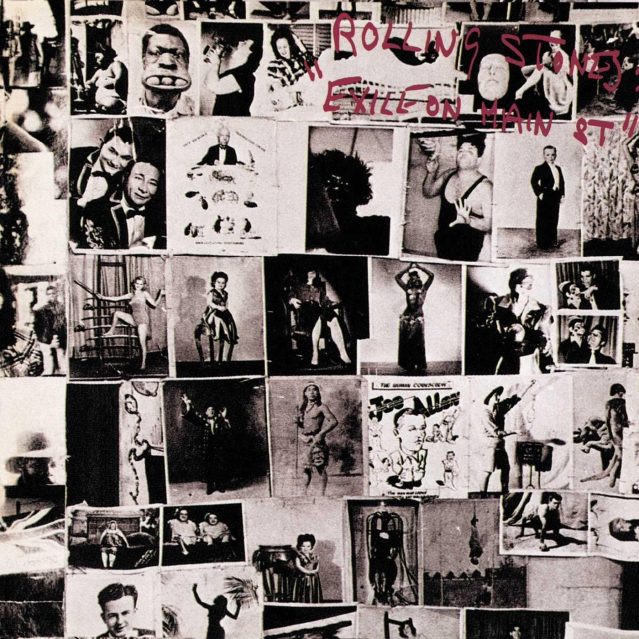
Released as the lead single from Exile on Main St. in April 1972, it arrived like a transmission from a French villa basement: loose, louche, and absolutely alive in a way few singles from that era could match.
Quick Navigation
What is the meaning of Tumbling Dice by The Rolling Stones?
“Tumbling Dice” by The Rolling Stones is about a serial gambler who treats women the way he treats a dice roll: without commitment, always chasing the next thrill. Written by Mick Jagger and Keith Richards, the lyrics use gambling as a metaphor for reckless, unfaithful living, built over a loose blues-boogie groove recorded in the south of France.
The Vibe: Genre, Mood, and Search Intent
This is blues rock at its most unguarded, driven by a rolling shuffle groove that sounds like it could fall apart at any second but never does.
The song sits in a place where boogie-woogie and hard rock meet, with a relaxed swagger that no amount of studio polish could have improved.
- Genre: Blues Rock / Boogie-Woogie Rock
- Mood: Reckless, sun-baked, swaggering
- Tempo: Mid-tempo rolling shuffle
- Best For: Late-night road trips, Saturday afternoon vinyl sessions, backyard gatherings
- Similar To: Jumpin’ Jack Flash, Happy by The Rolling Stones
- Fans of The Rolling Stones also search: “best Rolling Stones songs 1972,” “Exile on Main St. full album,” “blues rock classics 70s”
Behind the Lyrics: The Story of Tumbling Dice
The song had a long road before the version the world knows finally emerged.
An earlier, rougher version called “Good Time Women” was recorded at Stargroves around 1970 during sessions for Sticky Fingers, leaning heavily on Ian Stewart‘s piano work.
It shared the same boogie-woogie bones but had incomplete lyrics and never made the cut.
The real “Tumbling Dice” was born in the basement of Villa Nellcôte, a 19th-century mansion near Villefranche-sur-Mer on the French Riviera.
The Rolling Stones had become UK tax exiles in 1971, fleeing a 93 per cent supertax imposed by Harold Wilson’s Labour government.
Recording sessions ran at all hours, organised around Keith Richards’s famously nocturnal schedule.
In the liner notes to Jump Back: The Best of The Rolling Stones, Richards described the process plainly: he wrote the riff upstairs in the front room and brought it downstairs the same evening to record.
Jagger finished the lyrics months later in Los Angeles after a conversation with a housekeeper who loved shooting dice.
He later told journalists she “liked to play dice and I really didn’t know much about it,” but the exchange gave him the raw material for lines about being “all sixes and sevens and nines.”
Music journalist Bill Janovitz wrote that Jagger was “consciously turning over rocks, looking for something specific,” suggesting the lyrical concept was already forming before that conversation.
The result is a narrator who is not apologising for anything: he is a rolling gambler, a love-them-and-leave-them type who makes no promises and keeps fewer.
For more context on the era that shaped this track, explore the 70s Iconic Hits and Stories archive on this site.
Technical Corner: The Gear Behind Tumbling Dice
The basic track was cut on 3 August 1971 in the basement of Villa Nellcôte using the Rolling Stones Mobile Studio.
Keith Richards played rhythm guitar in his signature five-string open G tuning, with a capo on the fourth fret.
This setup, sometimes referred to as “Keef-chord” tuning, strips out the low E string and lets the guitar ring out with a natural, almost sloppy openness that is immediately recognisable.
With Bill Wyman absent from the session, Mick Taylor stepped in to play bass while Mick Jagger handled rhythm guitar.
Ian Stewart’s piano work underpins the shuffle feel, holding the groove together the way only a boogie-woogie pianist can.
Producer Jimmy Miller worked alongside engineers Andy Johns and Glyn Johns to capture the live room dynamics of that basement.
Recording engineer Andy Johns described getting a satisfactory take as “like pulling teeth,” with dozens to potentially hundreds of reels recorded before the right version emerged.
The song was completed at Sunset Sound Studios in Los Angeles between November 1971 and March 1972.
The background vocals, layered and slightly ragged, were provided by Clydie King, Vanetta Fields, and Shirley Goodman, adding a gospel-inflected warmth that offsets the narrator’s otherwise self-serving attitude.
The final mix has a deliberate looseness to it: the rhythm section breathes, the piano floats slightly ahead of the beat, and the whole thing sounds like it was captured on the first take worth keeping.
Legacy and Charts: Why Tumbling Dice Still Matters
“Tumbling Dice” was released on 14 April 1972 as the lead single from Exile on Main St.
In the United States, it peaked at number seven on the Billboard Hot 100.
In the United Kingdom, it spent eight weeks on the Singles Chart, peaking at number five.
The single also reached the top ten in the Netherlands, Norway, and Spain.
The most celebrated cover came from Linda Ronstadt, who recorded the song for her 1977 album Simple Dreams, reframing the lyrics from a female perspective.
Ronstadt’s version became a Top 40 hit the following year and appeared on the soundtrack of the 1978 film FM.
Rolling Stone magazine and Vulture have both included the track in their lists of the greatest rock songs ever recorded.
The Stones have played “Tumbling Dice” at concerts consistently since 1972, and it remains a reliable live highlight across every era of the band’s touring history.
Compared to the polished arena rock that dominated the rest of the decade, the song’s raw, unvarnished production became a marker of authenticity that other bands spent years chasing.
Songs like “Start Me Up” and “Angie” showed the band could do it all, but “Tumbling Dice” remains the purest expression of what the Stones sounded like when no one was cleaning anything up.
Listener’s Note: A Personal Take on Tumbling Dice
When I first heard “Tumbling Dice” on vinyl, the thing that stopped me was the feel before the first lyric even landed.
That opening guitar figure from Richards does not announce itself; it just starts rolling, like a ball bearing dropped on a hardwood floor.
There is a moment partway through where the background vocals kick in and the whole track seems to exhale, and you realize this was never about tightness or precision.
It was about the groove finding its own level, which it does every single time.
Heard at volume on a decent turntable, this track sounds like the room it was recorded in: large, warm, slightly underground, and full of people who have been awake too long.
That is not a criticism. That is the entire point.
Affiliate Disclosure: As an Amazon Associate, I earn from qualifying purchases. If you click on an Amazon link on this site and make a purchase, I may receive a small commission at no extra cost to you. This helps support ClassicRockArtists.com and keeps the deep-dive content coming. Thank you for your support.
Collector’s Corner: Own Tumbling Dice on Vinyl or CD
Exile on Main St. is widely considered one of the greatest double albums in rock history, and owning it on vinyl is an experience the digital version simply cannot replicate.
The warmth of the low end and the open-room sound of the recording were made for an analog medium.
Get Exile on Main St. by The Rolling Stones on Vinyl at Amazon
Frequently Asked Questions About Tumbling Dice
Who wrote Tumbling Dice?
“Tumbling Dice” was written by Mick Jagger and Keith Richards, credited under their longstanding songwriting partnership known as Jagger-Richards. The lyrics were completed by Jagger after a conversation with a housekeeper in Los Angeles who introduced him to the world of dice games. Richards composed the core guitar riff at Villa Nellcôte in France.
What album is Tumbling Dice on?
“Tumbling Dice” appears on Exile on Main St., the Rolling Stones’ double album released on 22 May 1972. It was also issued as a standalone single on 14 April 1972, ahead of the album release. The single reached number seven in the United States and number five in the United Kingdom.
Where was Tumbling Dice recorded?
The basic track was recorded on 3 August 1971 in the basement of Villa Nellcôte near Villefranche-sur-Mer, France, using the Rolling Stones Mobile Studio. The Stones were living in France as tax exiles at the time. The song was then completed at Sunset Sound Studios in Los Angeles between late 1971 and early 1972.
Has Tumbling Dice been covered by other artists?
The most notable cover of “Tumbling Dice” was recorded by Linda Ronstadt for her 1977 album Simple Dreams. Ronstadt reinterpreted the song from a female perspective, and her version reached the Top 40 in 1978. It also appeared on the soundtrack of the 1978 film FM. Several other artists have covered the track over the decades, but Ronstadt’s version remains the most widely heard.