

Gimme Shelter by The Rolling Stones (1969): Edge of the Abyss
Gimme Shelter is the song that taught the world what it truly sounds like when rock and roll stares down the apocalypse, and The Rolling Stones made sure you felt every second of it.
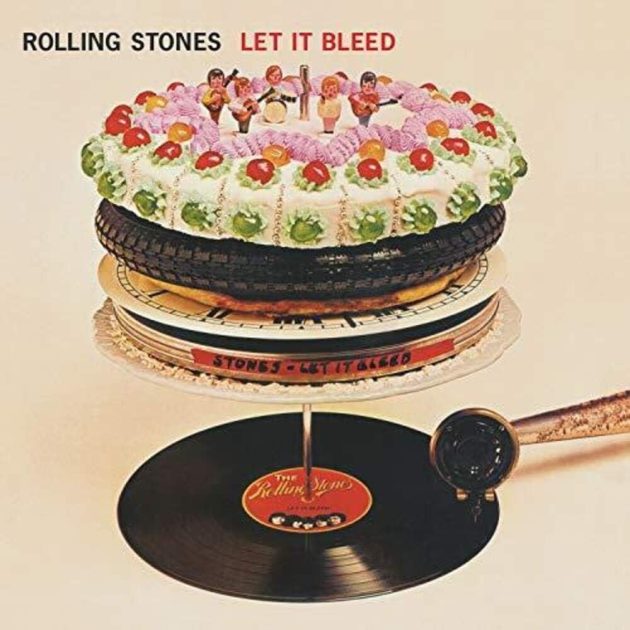
Released in December 1969 as the opening track on Let It Bleed, it arrived at the exact moment when the idealism of the 1960s was curdling into something far darker, and it captured that cultural collapse with terrifying accuracy.
Quick Navigation
What is the meaning of Gimme Shelter by The Rolling Stones?
“Gimme Shelter” is The Rolling Stones’ meditation on the violence and desperation consuming the world in 1969. Written by Mick Jagger and Keith Richards, the song frames war, rape, and murder as existential weather closing in on humanity. Its central plea is simple: find cover before civilization tears itself apart.
The Vibe: Genre, Mood, and Search Intent
There is no other Rolling Stones song that sounds quite like this one.
The opening guitar riff has a coiled, predatory quality that immediately tells you this is not a party record.
- Genre: Blues Rock, Hard Rock, Dark Rock
- Mood: Foreboding, urgent, apocalyptic
- Tempo: Mid-tempo slow burn with building intensity
- Best For: Late-night drives, intense playlist sessions, studying the craft of recorded rock
- Similar To: Paint It Black for sheer psychological weight, or anything off Led Zeppelin’s Led Zeppelin IV
- Fans of The Rolling Stones also search: “best Rolling Stones songs of the 60s,” “darkest classic rock tracks 1969,” “Merry Clayton Gimme Shelter vocals”
Behind the Lyrics: The Story of Gimme Shelter
The song began with a rainstorm and a man alone at a window.
Keith Richards was sitting in his friend Robert Fraser’s apartment on Mount Street in London, acoustic guitar in hand, when the sky turned black and a sudden monsoon drenched the city below.
He watched people scattering for cover and felt the first pulse of what would become one of the greatest opening tracks in rock history.
Richards later recalled: “It was just people running about looking for shelter. That was the germ of the idea. We went further into it until it became rape and murder are just a shot away.”
There was another layer feeding into the song’s darkness.
While Mick Jagger was away filming Performance in London with Richards’ girlfriend Anita Pallenberg, Richards channelled his jealousy and suspicion directly into the song’s tense, coiled energy.
In his autobiography Life, Richards confirmed that the emotional friction of that period shaped the recording’s mood in ways that go beyond craft.
The song’s other defining element is the voice of Merry Clayton.
Producer Jimmy Miller wanted a female vocalist on the track, and fellow producer Jack Nitzsche made the call around midnight, pulling Clayton out of bed.
She arrived at the studio four months pregnant, wearing hair rollers, and delivered a performance that cracked the entire history of rock open at the seams.
When Clayton screams “Rape, murder! It’s just a shot away!”, her voice physically breaks under the force of it at around the three-minute mark.
You can hear Jagger in the background saying “Woo!” in response, completely unprompted, because even the band knew something extraordinary had just happened.
Jagger described the song to NPR as “a very moody piece about the world closing in on you a bit. When it was recorded, early ’69 or something, it was a time of war and tension, so that’s reflected in this tune.”
You can read the full background on the Gimme Shelter Wikipedia page, and watch the official audio below.
Watch Gimme Shelter – Official Audio on YouTube
Technical Corner: The Gear Behind Gimme Shelter
The song’s signature opening riff was played on an Australian-made Maton SE777, a large single-cutaway hollowbody guitar that Richards had also used on “Midnight Rambler.”
The instrument barely made it through the session.
Richards told Guitar World in 2002: “On the very last note of ‘Gimme Shelter,’ the whole neck fell off. You can hear it on the original take.”
That hollowbody tone — warm, slightly boxy, with a natural resonance — gives the intro its eerie, almost acoustic quality before the full band enters.
The rhythm section was anchored by Charlie Watts on drums and Bill Wyman on bass, playing with a restraint that makes the song’s explosive climax hit even harder.
Nicky Hopkins contributed piano, adding harmonic texture beneath Jagger’s lead vocal.
Jimmy Miller, the producer, also played percussion on the track.
Notably, Brian Jones was absent from these sessions entirely.
The instrumental backing tracks were recorded at Olympic Studios in London in February and March 1969.
The lead and overdub vocals were then captured later that year in Los Angeles, at both Sunset Sound Recorders and Elektra Studios, in October and November 1969.
That split recording process — guitars in London, screams in LA — gives the song its strange, dislocated tension, as though two separate worlds are being stitched together under pressure.
Jimmy Miller’s production approach was deliberately raw: he let Clayton’s voice crack rather than smooth it over, preserving one of the most viscerally human moments in the history of recorded music.
If you want to hear what production decisions of that calibre sound like in the context of the full Stones catalogue, Honky Tonk Women — also produced by Miller in 1969 — is the natural companion piece.
Legacy and Charts: Why Gimme Shelter Still Matters
“Gimme Shelter” was never released as a commercial single, yet it has become one of the most recognized songs in rock history.
In 2021, Rolling Stone magazine ranked it number 13 on its updated list of the 500 Greatest Songs of All Time.
Music critic Greil Marcus, reviewing Let It Bleed for Rolling Stone at the time of its release, wrote that the band had “never done anything better.”
The song has been licensed for use in an enormous number of films, perhaps most famously in GoodFellas (1990), Apocalypse Now (1979), and The Departed (2006).
That range of films — mob drama, Vietnam war epic, crime thriller — tells you everything about the emotional register the song occupies.
It has also become a live Stones staple, performed on virtually every major tour since 1969.
For live versions, vocalist Lisa Fischer filled the Merry Clayton role from 1989 to 2015.
During the 2012 50th anniversary tour, the band performed the song with special guests including Mary J. Blige, Florence Welch, and Lady Gaga.
Clayton’s original contribution held the record as the most prominent female vocal on a Rolling Stones track for 54 years, until Lady Gaga appeared on “Sweet Sounds of Heaven” from Hackney Diamonds in October 2023.
For more on the band’s recent activity, check out the Rolling Stones IMAX concert film returning in late 2025.
Listener’s Note: A Personal Take on Gimme Shelter
When I first heard “Gimme Shelter” on vinyl, I made the mistake of playing it at low volume.
That was wrong.
The Maton’s opening riff needs room to breathe at a level where you can feel the body of the guitar resonating, not just the notes.
By the time Merry Clayton enters, you realize the song has been quietly tightening a vice around your chest, and her voice is the moment the handle finally turns all the way.
There’s a point roughly three minutes in where her voice cracks on the word “murder” and something primal happens in your body, even if you’ve heard the song a hundred times.
That involuntary reaction is not nostalgia.
It’s the sound of a real human being pushed to her absolute limit, captured on tape, and preserved forever.
No amount of digital remastering can make it feel more or less than exactly what it is.
Affiliate Disclosure: As an Amazon Associate, I earn from qualifying purchases. If you click on an Amazon link on this site and make a purchase, I may receive a small commission at no extra cost to you. This helps keep ClassicRockArtists.com running and allows me to keep writing deep-dive content on the legends of rock. Thank you for your support.
Collector’s Corner: Own Gimme Shelter on Vinyl
The Let It Bleed 50th Anniversary Edition vinyl is the definitive way to experience this record, pressed to honour the original’s raw, analogue warmth.
If you’re serious about owning one of the greatest albums in rock history in the format it deserves, this is the edition to get.
Get Let It Bleed 50th Anniversary Edition on Vinyl at Amazon
Frequently Asked Questions About Gimme Shelter
Who wrote Gimme Shelter?
“Gimme Shelter” was written by Mick Jagger and Keith Richards, the Rolling Stones’ primary songwriting partnership credited as Jagger-Richards. Richards wrote the opening guitar riff at a friend’s apartment in London after watching people run from a sudden rainstorm, and the two developed the song’s themes of war and violence from there.
What album is Gimme Shelter from?
“Gimme Shelter” is the opening track on The Rolling Stones’ 1969 album Let It Bleed, released in December of that year. It was never issued as a standalone single but has appeared on numerous Stones compilations, including Hot Rocks 1964-1971 and Forty Licks.
Who is the female singer on Gimme Shelter?
The female vocalist is Merry Clayton, an American singer who was called into the studio around midnight by producer Jack Nitzsche. Clayton was four months pregnant at the time and delivered her extraordinary performance in just a few takes before returning home. Her name was mistakenly printed as “Mary” on the original album sleeve.
Has Gimme Shelter won any awards or appeared on any best-of lists?
In 2021, Rolling Stone magazine ranked “Gimme Shelter” at number 13 on its list of the 500 Greatest Songs of All Time. The song has also been featured in numerous acclaimed films, including Goodfellas, Apocalypse Now, and The Departed, cementing its status as one of the most culturally durable songs in rock history.
You Might Also Like
Another Stones track where Richards’ menacing guitar riff drives a song rooted in chaos and survival, recorded just one year before Gimme Shelter.
The emotional counterpoint to Gimme Shelter from the same era, trading apocalyptic dread for devastating vulnerability in the same key of raw humanity.
If Gimme Shelter’s heavy, blues-rooted menace appeals to you, Deep Purple’s lineup history explains how another 1969-era band weaponized the same raw rock energy in a different direction.
From the moment that Maton guitar rings out and the world starts closing in, Gimme Shelter remains the single most uncompromising statement The Rolling Stones ever committed to record.