

Sympathy for the Devil by The Rolling Stones (1968): The Devil’s Own Masterpiece
Sympathy for the Devil is not just a Rolling Stones song. It is a six-minute seduction that ranks among the most audacious recordings in rock history.
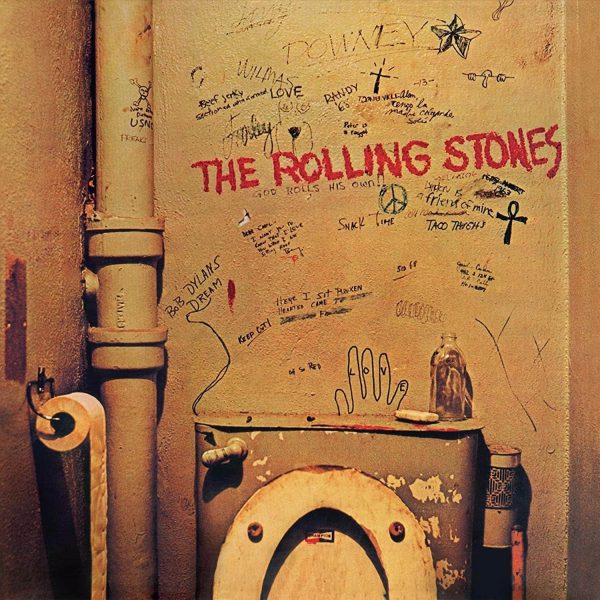
Released as the opening track on Beggars Banquet in December 1968, it arrived during a year already cracking under the weight of assassinations, war protests, and the death of the 1960s dream, making it feel less like art and more like a verdict.
Quick Navigation
What is the meaning of Sympathy for the Devil by The Rolling Stones?
“Sympathy for the Devil” is written from the first-person perspective of Satan, who narrates his presence across history’s worst atrocities, from the crucifixion of Christ to the Russian Revolution to the Kennedy assassinations. Mick Jagger’s lyric asks listeners to acknowledge their own role in human evil, not to worship it. The song is a satirical mirror pointed at collective culpability.
The Vibe: Genre, Mood, and Search Intent
From the first strike of Rocky Dijon’s congas, “Sympathy for the Devil” operates on its own frequency: part rock song, part ritual, part history lecture delivered by the most charming villain in music.
- Genre: Blues Rock, Samba-Rock, Psychedelic Rock
- Mood: Seductive, menacing, intellectually provocative
- Tempo: Mid-tempo samba groove with building intensity
- Best For: Late-night listening, deep rock rabbit holes, road trips through the dark
- Similar To: Paint It Black in its darkness, but with a swagger that one never had
- Fans of The Rolling Stones also search: “best Rolling Stones songs 1960s,” “Beggars Banquet album review,” “songs written from the devil’s point of view”
Behind the Lyrics: The Story of Sympathy for the Devil
The song began in Mick Jagger’s head as a folk number, quiet, literary, almost bookish.
His then-girlfriend Marianne Faithfull had given him a copy of The Master and Margarita by Soviet novelist Mikhail Bulgakov, a dark satirical novel in which the Devil visits Stalin-era Moscow with gleeful, destructive freedom.
Jagger was also drawing on the French symbolist poet Charles Baudelaire, telling Rolling Stone in 1995 that he took the concept from French writing and expanded on it, adding that he originally wrote it as a kind of Bob Dylan song.
The working title was “The Devil Is My Name,” earlier still called “Fallen Angels.”
Then Keith Richards got hold of it.
It took 32 takes of the folk version before Richards suggested moving to a samba feel, laying down bass first and overdubbing guitar later.
Richards recalled the shift simply: the song started as a folk thing with acoustics and ended up as a kind of mad samba.
That pivot changed everything.
The recording session also produced one of rock history’s great accidents.
Robert Kennedy was assassinated on June 5, 1968, the very day the Stones were tracking overdubs at Olympic Sound Studios.
Jagger’s original lyric asked who killed Kennedy, referring to JFK’s 1963 murder.
He changed it overnight to the plural: “who killed the Kennedys”, a lyric that felt prescient, raw, and almost unbearably current at the time of release.
The “whoo-whoo” backing vocals, now as iconic as the conga groove, were born from producer Jimmy Miller muttering “who, who?” in the control room while urging Jagger through takes.
Anita Pallenberg picked up on it, repeated it back, and the Stones immediately knew they had something.
The gang vocal was recorded with Pallenberg, Richards, Brian Jones, Faithfull, Bill Wyman, and Miller all gathered around a single microphone.
French New Wave director Jean-Luc Godard filmed the entire process for his 1968 documentary One Plus One, capturing the song’s evolution from tentative folk sketch to samba-driven rock statement across five June days.
A film lamp from Godard’s crew started a fire in the studio during the sessions. The Stones’ equipment was badly damaged, but producer Miller saved the tapes before evacuating, and Godard’s cameras kept rolling through the smoke.
Watch the original official audio on YouTube and hear how the conga pattern locks you in before a single word is sung.
Technical Corner: The Gear
The rhythmic foundation of the track is built on Rocky Dijon’s hand-played congas and Bill Wyman’s Bo Diddley-influenced maracas, two percussion instruments that give the track its hypnotic samba pulse without a single drum kit hit in the opening bars.
Pianist Nicky Hopkins plays the churning boogie-woogie piano line that runs through the verse, providing harmonic motion under Jagger’s vocal without ever competing with it.
Charlie Watts eventually enters on a jazz-Latin kit feel, playing in a style he described as similar to what jazz drummer Kenny Clarke might have played on a bebop standard.
Keith Richards plays bass on the original recording, then overdubs the snarling electric-guitar solo, famously captured in the Godard film as it takes shape in real time on his Gibson Les Paul “Black Beauty.”
Brian Jones plays an acoustic guitar that was largely mixed out of the final cut, though isolated tracks reveal it running alongside the piano.
Producer Jimmy Miller, who also helmed Gimme Shelter and much of the Stones’ late-60s catalog, recorded the session at Olympic Sound Studios in Barnes, London.
Miller’s production choice to keep the low end warm and the percussion dry, with no reverb swamp drowning the congas, which was what gave the track its sense of forward momentum over six-plus minutes.
The vocal reverb on Jagger’s lead is close and intimate, almost conversational, which makes the first-person devil narrative feel uncomfortably personal.
You are not hearing a performance. You are hearing a confession.
For a deeper look at the band behind the song, visit our complete guide to the Members of the Rolling Stones.
Legacy and Charts: Why Sympathy for the Devil Still Matters
“Sympathy for the Devil” was not released as a single in the UK or US upon the original 1968 release of Beggars Banquet. It lived entirely as an album track.
Rolling Stone magazine placed it at #32 on their 2004 list of the 500 Greatest Songs of All Time, and #106 in the updated 2021 edition.
The song has been performed by The Rolling Stones more than 800 times in concert, appearing on their live albums Get Yer Ya-Ya’s Out!, Love You Live, and Flashpoint, among others.
The song took on a darker dimension at the Altamont Free Concert on December 6, 1969, when the crowd grew violently unruly shortly after the Stones performed it, though the fatal stabbing of Meredith Hunter by Hells Angels security occurred later in the set during “Under My Thumb,” a fact Rolling Stone magazine initially misreported.
Guns N’ Roses recorded a cover in 1994 for the closing credits of Neil Jordan’s film Interview with the Vampire, reaching #55 on the Billboard Hot 100.
Director Martin Scorsese has used the song in three films: Goodfellas (1990), Casino (1995), and The Departed (2006), cementing its status as Hollywood shorthand for moral ambiguity and stylish menace.
The song also inspired a generation of hard rock and heavy metal acts to explore literary and historical themes, from Deep Purple to artists across the classic rock spectrum who took note of what the Stones proved: that rock could carry the weight of philosophy without losing its groove.
Explore more of the Stones’ defining 60s iconic hits and stories to understand the full context of this era.
Listener’s Note: A Personal Take
When I first heard “Sympathy for the Devil” properly. Not as background noise, but sitting down with the needle on vinyl. The thing that caught me off guard was how patient it is.
The congas hit and you think you know where you are, and then two minutes pass before the song fully commits to what it is, and by then you are already in the pocket, already implicated, already one of the people Jagger is talking to when he says “guess my name.”
There’s a specific moment after the second chorus where Richards’ guitar comes in high and clipped, almost offhand, and it breaks the spell for just a second before the groove pulls you back under.
That contrast between the intellectual weight of the lyrics and the pure physical joy of that samba rhythm is what makes this song work at 2 a.m. as well as it does in a film about organized crime.
It is the rare song that gets smarter every time you hear it.
Affiliate Disclosure: As an Amazon Associate, I earn from qualifying purchases. This means that if you click on a link to a classic rock album or piece of gear on this site and make a purchase, I may receive a small commission at no extra cost to you. This helps support classicrockartists.com and allows me to keep providing deep-dive content on the legends of rock. Thank you for your support!
Collector’s Corner: Own It on Vinyl or CD
Beggars Banquet is one of the essential Rolling Stones records, and the vinyl pressing sounds exactly as warm and live as a session recorded in an Olympic Studios summertime fire should.
Whether you are upgrading an old copy or coming to it fresh, this is the album that belongs in any serious classic rock collection.
Shop Rolling Stones Vinyl and CDs at Amazon
Frequently Asked Questions About Sympathy for the Devil
Who wrote Sympathy for the Devil?
“Sympathy for the Devil” is officially credited to the Jagger-Richards songwriting partnership, as all Rolling Stones compositions were. However, the song was primarily written by Mick Jagger. Keith Richards’ key contribution was suggesting the shift in tempo from a folk arrangement to the samba groove that defines the final recording.
What album is Sympathy for the Devil from?
“Sympathy for the Devil” is the opening track on Beggars Banquet, released by The Rolling Stones on December 6, 1968, through Decca Records in the UK and London Records in the US. It was produced by Jimmy Miller at Olympic Sound Studios in London.
What does Sympathy for the Devil mean?
The song is written from the perspective of the Devil himself, who claims responsibility for a series of historical atrocities including the crucifixion of Christ, the Russian Revolution, the Romanov murders, World War II, and the Kennedy assassinations. Rather than glorifying evil, Jagger’s lyric implicates all of humanity in these events, echoing themes from Mikhail Bulgakov’s novel The Master and Margarita and the work of Charles Baudelaire.
Did Sympathy for the Devil win any awards?
“Sympathy for the Devil” was not a chart single upon its original 1968 release, so it was not eligible for many contemporary awards. However, its long-term critical standing is extraordinary: Rolling Stone magazine ranked it #32 on their 2004 list of the 500 Greatest Songs of All Time and #106 in the 2021 updated edition. There is no more accurate summary of its status than this: nearly six decades on, “Sympathy for the Devil” remains the song every rock band secretly wishes they had written.
You Might Also Like
Honky Tonk Women by The Rolling Stones
Recorded just months after Sympathy for the Devil, this 1969 single shows the Stones at the same swagger-drenched peak with Jimmy Miller behind the board.
Wild Horses by The Rolling Stones
If Sympathy for the Devil reveals the Stones at their most menacing, Wild Horses shows the other side of Jagger-Richards’ genius: raw, aching, and completely unguarded.
Jumping Jack Flash by The Rolling Stones
Released the same year as Beggars Banquet, Jumping Jack Flash shares Sympathy’s relentless forward momentum and Jagger’s gift for making darkness sound irresistible.