

The Rolling Stones Sticky Fingers: The Definitive Review
The Rolling Stones Sticky Fingers, released on April 23, 1971, is one of the most important albums ever recorded in the history of rock and roll.
If you want to understand what this band was truly capable of, this is the place to start.
It captured a band finally free from legal chains, riding a lineup and a chemistry that would never quite be replicated.
The members of the Rolling Stones had survived tragedy, management battles, and the wreckage of the 1960s to deliver something extraordinary.
Quick Navigation
The Rolling Stones Sticky Fingers: A New Era Begins
By early 1971, the Rolling Stones were carrying the weight of a turbulent era.
Their previous studio album, Let It Bleed, had closed out the 1960s with songs steeped in dread and foreboding.
Founding guitarist Brian Jones had died in July 1969, just two days before the Stones played a massive free concert in Hyde Park as a tribute to him.
The Altamont Free Concert that December had turned violent and tragic, leaving a shadow over the entire rock world.
Former manager Allen Klein had maneuvered the band into signing over their entire pre-1970 American catalogue, a wound that would take decades to heal.
Sticky Fingers arrived as the band’s definitive answer to all of it.
It debuted on Rolling Stones Records, their own newly founded label, marking the first time they had full creative control over their music and artwork.
The album was also the first studio release to fully showcase guitarist Mick Taylor, who had previously appeared on Gimme Shelter and the live record Get Yer Ya-Ya’s Out!.
Taylor’s fluid, melodic playing gave the Stones a new sonic depth that no previous lineup had provided.
Sticky Fingers went on to become the first Rolling Stones studio album to hit number one on both the UK and US charts simultaneously, a milestone confirmed by its full chart and recording history.
From Muscle Shoals to Stargroves: How It Was Made
The making of Sticky Fingers was a long story told across three very different locations.
In December 1969, after finishing their US tour, the Stones flew to Muscle Shoals Sound Studio in Alabama.
There they cut three songs that would become the album’s backbone: Brown Sugar, Wild Horses, and “You Gotta Move.”
The band then moved sessions to London’s Olympic and Trident studios.
The bulk of the remaining recording happened at Mick Jagger’s country estate, Stargroves, using the band’s own mobile recording unit.
Producer Jimmy Miller oversaw a supporting cast that included saxophonist Bobby Keys, pianist Nicky Hopkins, and keyboardists Billy Preston and Jack Nitzsche.
Charlie Watts later recalled that many of the album’s foundational ideas came from Jagger writing and playing guitar while filming the movie Ned Kelly in Australia.
Sessions typically ran from evening well into the early hours of the morning.
The entire process took nearly 500 days from the first session to the finished master.
That long gestation only deepened the record: the performances feel lived-in, not rushed.
Andy Warhol and the Iconic Zipper Cover
Even before you hear a single note, Sticky Fingers commands your attention.
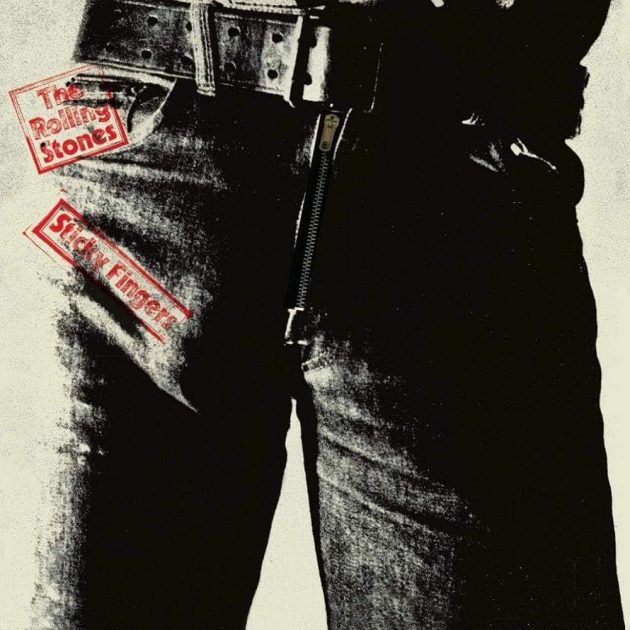
The cover was conceived by pop art legend Andy Warhol, who photographed a tight denim-clad male crotch complete with a fully functional metal zipper.
Pulling the zipper on original pressings revealed a printed sub-cover image of white briefs, stamped with Warhol’s own signature.
Actor Joe Dallesandro served as the model, though only his torso appeared and his identity was not revealed at the time.
The design brought real logistical headaches: the working zipper was expensive to produce and physically scratched the vinyl records packed behind it.
The New Musical Express captured the cultural moment perfectly, noting that fame had spread from Mick Jagger’s lips to his zips.
Later pressings dropped the working zipper but kept the photograph, and the cover has lost none of its audacity in the decades since.
It remains one of the most discussed and reproduced album sleeves in rock history.
Track by Track: Every Song Reviewed
The album opens with Brown Sugar, a stampeding blues-rock single that topped the Billboard Hot 100 in 1971.
It remains one of the most electrifying album openers in rock history, even as its complicated lyrics have sparked ongoing debate for over 50 years.
“Sway” follows, and this is where Mick Taylor fully announces himself.
His guitar tone is warm, fluid, and completely his own, weaving around Jagger’s vocals like smoke.
Wild Horses arrives next, a country-tinged heartbreaker shaped during jam sessions with Gram Parsons of the Flying Burrito Brothers.
It is tender, aching, and still one of the finest ballads the band ever recorded.
“Can’t You Hear Me Knocking” is a seven-minute marvel, opening with a ferocious Keith Richards riff before erupting into a jazz-inflected jam that reportedly happened by accident: the tape kept rolling and the band kept playing.
Side One closes with “You Gotta Move,” a reverent reading of the traditional blues song associated with Mississippi Fred McDowell.
Side Two opens with “Bitch,” one of the most underrated grooves the Stones ever cut, powered by Bobby Keys’ punching horn work.
“I Got the Blues” finds Jagger at his most soulful, channeling the Otis Redding school of vocal delivery with genuine authority.
“Sister Morphine” is the album’s darkest corner: a slow, crawling portrait of addiction that sounds genuinely unsettling even now.
“Dead Flowers” provides a sharp tonal shift, a wry country stomper that winks at its own self-destruction.
The album closes with “Moonlight Mile,” a sweeping orchestral epic that stands among the most ambitious things this band ever committed to tape.
Mick Taylor reportedly co-wrote and played the defining guitar parts on “Moonlight Mile” during sessions when Keith Richards was absent from the studio.
You can feel the full scope of this album’s live power in the official Rolling Stones concert footage on YouTube.
The Rolling Stones Sticky Fingers: Legacy and Lasting Influence
Sticky Fingers entered the UK Albums Chart at number one in May 1971, holding that position for four weeks.
In the United States, it reached the top of the Billboard 200 within days of release and stayed there for a month.
The album has since been certified triple platinum in the United States.
It was inducted into the Grammy Hall of Fame in 1999, recognizing its permanent place in recorded music history.
Rolling Stone magazine ranked it number 63 on their original 2003 list of the 500 Greatest Albums of All Time and number 104 in the 2020 updated edition of the same list.
Critic Lester Bangs named it his most-played album of the year in 1971, voting it his personal number one in The Village Voice’s Pazz & Jop critics poll.
Writing in 2015, Rolling Stone critic David Fricke praised the record as a statement of maturing artistic depth and a confident farewell to a messy chapter in the band’s history.
The album pointed directly toward the double-album masterpiece that came next: Exile on Main St. in 1972.
The Stones continued that run with Goats Head Soup in 1973, but for many fans this album remained the peak of the Mick Taylor era.
A 2015 deluxe reissue, timed to coincide with the Zip Code Tour, introduced new listeners to previously unreleased tracks and full live shows from the original 1971 tour.
Fifty years on, The Rolling Stones Sticky Fingers remains the definitive statement of what this band could do when everything clicked perfectly.
Affiliate Disclosure: I am an Amazon Associate, and if you purchase through any Amazon link on this site I may earn a small commission at no extra cost to you. This helps keep ClassicRockArtists.com running and allows me to keep bringing you deep dives into the albums and artists that matter. Thank you for your support.
Browse Rolling Stones Albums and Merch on Amazon
Frequently Asked Questions
When was Sticky Fingers released?
The Rolling Stones released Sticky Fingers on April 23, 1971, on their newly founded Rolling Stones Records label.
Who designed the Sticky Fingers album cover?
Pop artist Andy Warhol conceived and photographed the cover.
The original vinyl pressing featured a fully functional metal zipper, making it one of the most expensive and unusual album sleeves in rock history.
Actor Joe Dallesandro was the unnamed model for the jeans photograph.
Did Sticky Fingers reach number one?
Yes. It was the first Rolling Stones studio album to simultaneously reach number one on both the UK Albums Chart and the US Billboard 200.
In the UK it held the top position for four weeks, and it did the same in the United States.
What songs are on Sticky Fingers?
The ten-track album runs as follows: Brown Sugar, Sway, Wild Horses, Can’t You Hear Me Knocking, You Gotta Move, Bitch, I Got the Blues, Sister Morphine, Dead Flowers, and Moonlight Mile.
Is Sticky Fingers in the Grammy Hall of Fame?
Yes. The album was inducted into the Grammy Hall of Fame in 1999.
It also appears on Rolling Stone magazine’s 500 Greatest Albums of All Time list across multiple editions.
Who played lead guitar on Sticky Fingers?
Both Keith Richards and Mick Taylor shared lead guitar duties throughout the album.
Taylor’s contributions were especially central on tracks including Sway, Can’t You Hear Me Knocking, and Moonlight Mile, the last of which he reportedly co-wrote and arranged largely on his own.