

Mick Jagger: The Definitive Life and Legacy of a Rock Icon
Mick Jagger is the most recognizable rock vocalist in history, a performer whose combination of raw vocal power, physical charisma, and relentless creative drive has defined what it means to front a rock band for more than six decades.
Born in postwar England and shaped by American blues records that were nearly impossible to find in 1950s Britain, he co-founded the Rolling Stones in 1962 and helped transform rock and roll into the dominant art form of the twentieth century.
His voice is instantly unmistakable: raw, expressive, and capable of shifting from a menacing growl to a delicate croon within a single line.
As a lyricist and co-writer alongside Keith Richards, he shaped some of the most enduring songs in popular music history.
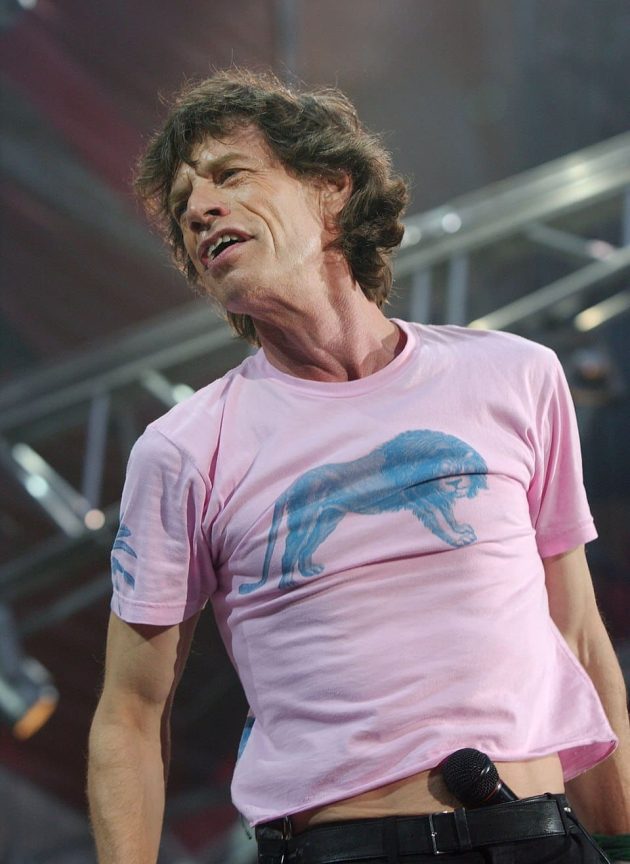
Beyond the recording studio, Jagger built a parallel reputation as one of the most physically commanding live performers ever to set foot on a stage.
His ability to hold audiences of tens of thousands with nothing but movement, presence, and a microphone stand remains without serious parallel in rock history.
From the blues clubs of early 1960s London to sold-out residencies in the world’s largest arenas, his career arc has never stopped reaching forward.
At ClassicRockArtists.com, we are dedicated to chronicling the artists who built the music we love, and no artist demands more thorough, authoritative treatment than Mick Jagger.
This article covers his early life and influences, his creative partnerships, his greatest records, his personal struggles, and the remarkable late-career resurgence that continues to unfold.
Read on for the definitive account of the man, the music, and the enduring myth he helped create.
▼ Table of Contents
Early Life and Musical Roots
Michael Philip Jagger was born on July 26, 1943, in Dartford, Kent, England.
His father, Basil “Joe” Jagger, was a physical education teacher, and his mother, Eva Ensley, was a hairdresser of Australian descent.
The family was solidly middle-class, and Jagger showed early academic ability that would eventually earn him a place at the London School of Economics.
As a child, he developed an obsession with American rhythm and blues, particularly the music of Muddy Waters, Chuck Berry, and Little Richard.
These imports were difficult to find in postwar Britain, which made them feel all the more exciting to curious young listeners.
Jagger attended Wentworth Primary School in Dartford, where he first befriended a fellow pupil named Keith Richards.
The two drifted apart after primary school but famously reconnected on a Dartford train platform in 1961, when Jagger was spotted carrying a stack of rare American blues albums under his arm.
That chance meeting reignited a shared musical passion that would change the course of rock history.
Together with guitarist Dick Taylor, they formed Little Boy Blue and the Blue Boys, a loose amateur group that rehearsed blues covers in bedrooms and back rooms.
This informal ensemble was the foundation on which everything that followed was built.
The 1960s were arriving with enormous velocity, and the British music scene was hungry for something completely new.
The Birth of the Rolling Stones
The Rolling Stones were officially formed in London in 1962, taking their name from a Muddy Waters song.
The founding lineup included Jagger on lead vocals, Keith Richards on guitar, Brian Jones on guitar and additional instruments, Charlie Watts on drums, and Bill Wyman on bass.
Jones was technically the group’s original leader and its most technically accomplished musician, but Jagger quickly emerged as the undisputed focal point.
For a complete overview of every musician who has passed through the band’s ranks over the decades, visit our guide to the members of the Rolling Stones.
The Stones built an early following through a residency at the Crawdaddy Club in Richmond, Surrey, playing raw Chicago blues covers for devoted audiences.
Blues promoter and bandleader Alexis Korner championed them in those early months, helping connect the group with key industry figures.
They signed with Decca Records in 1963, and their debut single, a cover of Chuck Berry’s “Come On,” climbed into the UK Top 20.
Their self-titled debut album, released in 1964, was a statement of raw intent that showcased Jagger’s commanding presence and the band’s deliberately unpolished energy; our full coverage of The Rolling Stones debut album explores it in much greater depth.
Manager Andrew Loog Oldham positioned the Stones as the dangerous antidote to the Beatles: rebellious, sexually provocative, and proudly threatening.
Oldham also pushed Jagger and Richards to write their own material, a decision that proved transformative for both the band and rock music as a whole.
Songs like Paint It Black (1966) demonstrated that the Stones were no longer a blues covers act but a genuine and original songwriting force.
Similarly, Jumping Jack Flash (1968) announced a return to stripped-back rock energy after a brief psychedelic detour.
By the close of the decade, the Rolling Stones had become one of the two most important bands on the planet.
Mick Jagger and the Rolling Stones: The Golden Era
The period between 1968 and 1974 is widely regarded as the creative peak of the Rolling Stones, and the most sustained and brilliant chapter of Mick Jagger’s career as a vocalist, lyricist, and frontman.
During these years, the band released a sequence of albums that critics and musicians consistently rank among the greatest in rock history.
Jagger stood at the center of every creative decision, from lyrical tone to tour staging, and his instincts proved consistently correct.
The Albums That Defined an Era
Beggars Banquet (1968) marked the turning point, steering the Stones away from psychedelia and back toward a roots-driven blues rock sound with real menace.
Sympathy for the Devil opened that record with one of the most audacious vocal performances of Jagger’s career.
His spoken narrative voice layered over a hypnotic samba rhythm created an atmosphere of genuine menace that mainstream radio had never encountered before.
Let It Bleed followed in 1969 and deepened that dark, cinematic quality still further.
Gimme Shelter opened that album with one of the most chilling meditations on violence and social collapse ever recorded, propelled by Jagger’s urgent, escalating vocal and Merry Clayton‘s devastating guest performance.
Honky Tonk Women, released as a standalone single in 1969, topped the charts in both the UK and the US simultaneously.
Jagger’s drawling, world-weary delivery turned a simple bar-room scenario into something far more charged and compelling than the words alone could explain.
In 1971, Sticky Fingers debuted at number one in both the UK and the United States, the commercial milestone the band had been steadily building toward for years.
Brown Sugar opened the album with a riff so immediately identifiable that its first three seconds told you everything about what the Rolling Stones had become.
Wild Horses revealed Jagger’s gentler register: vulnerable, aching, and more emotionally honest than critics had typically credited him with being.
One year later, Exile on Main St. (1972) divided critical opinion on its initial release but has since been recognized as one of the greatest rock records ever committed to tape.
Recorded largely in Keith Richards’s rented villa in the south of France during a period of tax exile, it was sprawling, chaotic, and deliberately lo-fi.
Tumbling Dice became one of its defining singles, with Jagger’s vocals buried just enough into the mix to feel like a voice heard through a party wall at an event you urgently want to join.
In 1973, the band released Goats Head Soup, which produced the melancholic ballad Angie.
Angie became the band’s biggest chart hit since Honky Tonk Women and showcased an emotional range that Jagger had not always been given credit for possessing.
Throughout this peak period, Mick Taylor served as lead guitarist, his fluid, melodic playing providing a critical counterweight to Richards’s rhythmic aggression.
Taylor’s departure in 1974 marked the end of what many consider the band’s most purely musical creative era.
For a deeper exploration of the classic hits and stories that defined these years, our 70s iconic hits and stories section covers the decade in extensive detail.
Mick Jagger’s Stage Presence and Live Performance
While the studio records were remarkable achievements, Mick Jagger’s greatest art form was always the concert stage.
He studied and absorbed elements from James Brown, the blues shouters he idolized, and even classical mime, synthesizing these into a wholly original performance style.
His strut, his hip movements, and his ability to shift in an instant from intimate to explosive became the blueprint for virtually every rock frontman who followed.
He maintained a level of physical fitness that athletes admired, famously covering the equivalent of twelve miles during the course of a single Rolling Stones concert.
Even into his seventies and eighties, he continued to perform with a stamina and precision that left audiences genuinely stunned.
The Rolling Stones’ global tours have consistently shattered box office records, and a significant share of that commercial pull is attributable directly to Jagger’s presence; explore the full history of their live career on our tours page.
He approached every performance with the preparation of a professional athlete: vocal warm-ups, intense physical training, and meticulous on-stage choreography.
His ability to read an audience and calibrate his energy in real time is a skill that very few performers in any genre have ever matched.
The Glimmer Twins Songwriting Partnership
The creative engine of the Rolling Stones was always the Jagger-Richards songwriting partnership, known formally as the Glimmer Twins.
Richards typically supplied the musical foundations: riffs, chord sequences, and arrangements that were deceptively simple but rhythmically irresistible.
Jagger brought the words, the melody, the vocal phrasing, and a lyrical sensibility that moved with equal ease from street-level cynicism to genuine emotional vulnerability.
Their collaboration was frequently contentious, with both men airing grievances publicly, particularly throughout the fractured 1980s.
However, that productive tension also generated the songs’ energy and unpredictability.
Together, they produced a body of work that stands among the most performed and licensed catalogues in popular music history.
Career Challenges and Creative Turbulence
The Rolling Stones did not navigate the late 1960s and the 1970s without significant turbulence and genuine tragedy.
The death of founding guitarist Brian Jones in July 1969 preceded the disastrous Altamont Free Concert by only five months.
At Altamont, the Stones headlined a free festival in Northern California that collapsed into violence when a concertgoer was killed by members of the Hells Angels motorcycle club, who had been hired as security.
Jagger was photographed visibly shaken backstage, and the event cast a long and difficult shadow over the idealism of the 1960s counterculture.
In 1967, both Jagger and Richards had been arrested during the notorious Redlands drug raid.
Jagger was convicted and briefly imprisoned before the conviction was overturned on appeal, but the episode cemented his standing as a symbol of countercultural defiance.
By the mid-1970s, the band’s tax exile in France and Keith Richards’s worsening heroin dependency placed enormous pressure on the group’s cohesion and output.
The Black and Blue album (1976) reflected that transitional uncertainty, recorded while the band openly auditioned potential replacements for the departing Mick Taylor.
Ronnie Wood ultimately accepted the role, bringing a more complementary chemistry with Richards that the lineup had lacked since its earliest formation.
In the 1980s, the Jagger-Richards relationship deteriorated sharply and almost fatally.
Jagger pursued a solo career with She’s the Boss (1985) and Primitive Cool (1987), which Richards interpreted publicly as an act of abandonment.
Richards responded with his own solo recordings and notoriously referred to Jagger as “Brenda” in press interviews.
The feud put the Rolling Stones effectively on hold for several years, the longest genuine hiatus in the band’s history.
Jagger’s personal life was equally turbulent during this period.
His marriage to Bianca Jagger ended in 1978, and his long relationship with model and actress Jerry Hall, with whom he had four children, ended in 1999.
In March 2014, his partner fashion designer L’Wren Scott died by suicide in New York City.
The Stones cancelled their Australian tour immediately and Jagger, who has spoken rarely and carefully about the loss, described it as the most devastating event of his personal life.
Mick Jagger’s Revival and Later Career
Even before the worst of the 1980s turbulence, Jagger had already demonstrated the band’s ability to course-correct with speed and precision.
Some Girls (1978) arrived at what seemed like a creatively uncertain moment and shocked critics by becoming one of the Stones’ best-selling albums in history.
Miss You dominated radio across the summer of 1978 and proved that Jagger could embrace disco’s rhythmic vocabulary without sacrificing the band’s rock identity in the process.
In 1981, Tattoo You produced Start Me Up, which became one of the most-played rock songs in commercial radio history and earned a second life in 1995 as the sonic centerpiece of Microsoft’s Windows 95 launch campaign.
Following the Jagger-Richards reconciliation in the late 1980s, the Stones launched the Steel Wheels Tour in 1989, which became at that time the highest-grossing concert tour in history.
In the 1990s, the band maintained their dominance and continued to evolve.
The Voodoo Lounge album (1994) returned them to the top of the international charts, and its lead track Love Is Strong demonstrated that Jagger’s vocal authority and instinct for a memorable hook had not diminished with age.
Bassist Darryl Jones joined the touring and recording lineup following Bill Wyman’s retirement, bringing a deep rhythmic precision that served the band’s live sound exceptionally well.
The 2000s saw Jagger knighted as a Knight Bachelor in the 2003 New Year Honours, officially becoming Sir Mick Jagger.
Keith Richards was publicly and pointedly critical of the honor, arguing that accepting a knighthood directly contradicted the rebellious spirit that had always defined rock and roll.
When Charlie Watts passed away in August 2021 after a short illness, it appeared that the Rolling Stones might finally face an existential question about their future.
Instead, Jagger and Richards regrouped with drummer Steve Jordan, a longtime Richards collaborator, and returned to the studio with a renewed and palpable sense of purpose.
Hackney Diamonds (2023) became the band’s first album of entirely new material in eighteen years, and its critical reception exceeded virtually every expectation.
The lead single Angry reached the Top 10 across multiple countries and sounded unmistakably like a band performing with genuine urgency rather than nostalgic obligation.
In early 2025, Jagger delivered a show-stopping performance at the Academy Awards ceremony; you can watch it via this Oscars 2025 video to see his stage command completely intact.
The Stones also confirmed the return of their concert film to IMAX theatres in December 2025, confirming that their reach into contemporary entertainment culture has never been stronger.
Recognition and Lasting Legacy
The Rolling Stones were inducted into the Rock and Roll Hall of Fame in 1989, in only the fourth year of that institution’s existence.
Jagger received a Grammy Lifetime Achievement Award in 2009, recognizing a career that had shaped not only rock music but Western popular culture across multiple generations.
Rolling Stone magazine ranked him among the 100 Greatest Singers of All Time, and his influence on subsequent performers, including David Bowie, Prince, Freddie Mercury, and Steven Tyler, is widely documented and freely acknowledged by those artists themselves.
As a commercial force, the Rolling Stones have grossed over two billion dollars from touring alone, making them one of the highest-earning live acts in the entire history of popular music.
A special collector’s edition of the Stones’ debut album was also released as part of National Vinyl Record Day celebrations; our full coverage of the Rolling Stones debut pressed and poured vinyl set has the complete details.
Jagger also acted in films, most notably the critically acclaimed Performance (1970), in which his portrayal of a reclusive rock star earned genuine critical praise and surprised audiences who had viewed him solely as a musician.
His eight children with five partners have largely maintained private lives, though daughter Georgia May Jagger has built a significant international career as a model.
For anyone building a comprehensive picture of the classic rock era, our full album reviews archive contains detailed coverage of every major Rolling Stones record.
Essential Discography
The albums below represent the essential arc of Mick Jagger’s work with the Rolling Stones, from the raw ambition of the early records to the late-career triumph of their most recent release.
For a complete listing of his solo and collaborative output, the Mick Jagger discography on Wikipedia provides a thorough reference.
- The Rolling Stones (1964) — The debut record that announced the most dangerous band in Britain, built on American blues covers and anchored by Jagger’s raw, confrontational vocal presence.
- Beggars Banquet (1968) — A pivotal creative recalibration that launched the band’s most celebrated era, opening with the sinister samba of Sympathy for the Devil.
- Let It Bleed (1969) — A dark, cinematic record that opened with Gimme Shelter and closed with You Can’t Always Get What You Want, bookending one of rock’s most turbulent years.
- Sticky Fingers (1971) — The band’s first simultaneous UK and US number one album, featuring Brown Sugar, Wild Horses, and the coiled menace of Can’t You Hear Me Knocking.
- Exile on Main St. (1972) — Widely considered one of the greatest rock albums ever recorded: sprawling, chaotic, lo-fi, and utterly irreplaceable.
- Goats Head Soup (1973) — A brooding, underrated record that surprised listeners with the delicate worldwide hit Angie and demonstrated unexpected emotional depth from both Jagger and Richards.
- Some Girls (1978) — The album that silenced punk-era critics and delivered the disco-inflected Miss You, proving the Stones could dominate any musical moment they chose to enter.
- Hackney Diamonds (2023) — A genuinely vital and energetic comeback record featuring guest appearances from Paul McCartney and Lady Gaga, and including recorded drum tracks by the late Charlie Watts, confirming that Jagger and Richards still had something essential left to say.
As an Amazon Associate, I earn a small commission on qualifying purchases made through this link at no extra cost to you. Thank you for your support.
Shop Rolling Stones Albums & Merch on Amazon
Mick Jagger: Frequently Asked Questions
How old is Mick Jagger?
Mick Jagger was born on July 26, 1943, making him 81 years old as of 2025.
Despite his age, he continues to tour and record with the Rolling Stones at a level of physicality and energy that consistently surprises audiences and critics alike.
How many children does Mick Jagger have?
Mick Jagger has eight children with five different partners.
They are: Karis Jagger (with Marsha Hunt), Jade Jagger (with Bianca Jagger), Elizabeth, James, Georgia, and Gabriel Jagger (with Jerry Hall), Lucas Jagger (with Luciana Gimenez Morad), and Deveraux Jagger (with Melanie Hamrick).
What is Mick Jagger’s best album with the Rolling Stones?
Critics most frequently cite Exile on Main St. (1972) as the band’s single greatest achievement, though Sticky Fingers, Let It Bleed, and Beggars Banquet each make compelling cases of their own.
Hackney Diamonds (2023) has also earned serious critical consideration as one of the strongest records of the band’s later career.
Is Mick Jagger knighted?
Yes, Mick Jagger was appointed Knight Bachelor in the 2003 New Year Honours List, officially becoming Sir Mick Jagger.
Keith Richards was publicly critical of the decision, arguing that the honor contradicted the rebellious spirit at the core of rock and roll.
For more on the full roster of musicians who have shaped the Rolling Stones, browse our members of classic rock bands section.
What is Mick Jagger doing now?
As of 2025, Mick Jagger continues to tour and record actively with the Rolling Stones.
Following the acclaimed release of Hackney Diamonds, the band launched the Hackney Diamonds Tour in 2024, extending into 2025 with dates across North America and Europe.
His performance at the Academy Awards in early 2025 confirmed that his profile in mainstream entertainment has never been more prominent.
Stay current with our classic rock news page for all the latest Rolling Stones and Mick Jagger updates as they happen.
More than sixty years after that chance encounter on a Dartford train platform with a stack of rare American records under his arm, Mick Jagger remains the definitive standard against which every rock frontman in history is ultimately measured.