

Bill Wyman: The Quiet Stone Who Shaped Rock History
Bill Wyman spent 31 years as the rhythmic bedrock of the Rolling Stones, quietly shaping one of the most celebrated catalogs in rock history.
Nicknamed “The Quiet One” and “Old Stoneface,” he never chased the spotlight.
He played with controlled restraint, giving the Stones their unmistakable groove and locking in with Charlie Watts to create one of rock’s most telepathic rhythm sections.
Born into wartime poverty in South London, Wyman rose to international fame through determination, patience, and a deep love of rhythm and blues.
He appeared on 19 consecutive Rolling Stones studio albums, from their debut in 1964 through Steel Wheels in 1989.
Along the way, he co-wrote the iconic riff of “Jumpin’ Jack Flash,” recorded one of the decade’s most recognizable solo singles, and compiled one of the most detailed personal archives in rock history.
After parting ways with the Stones in 1993, Wyman continued performing and recording, forming Bill Wyman’s Rhythm Kings and, decades later, making a surprise return to the studio with the Stones on Hackney Diamonds.
This is the complete story of Bill Wyman, the man who quietly held it all together.
▼ Table of Contents
Bill Wyman: Early Life and Beginnings
William George Perks, the man the world would come to know as Bill Wyman, was born on October 24, 1936, at Lewisham Hospital in South London.
His father, William George Perks Sr., was a bricklayer, and his mother Kathleen, known as Molly, raised six children in difficult conditions.
The family settled in Penge, a working-class area of South East London, where young William’s childhood was shaped by wartime hardship.
Wyman later recalled those years as “scarred by poverty,” having survived the Blitz and Nazi fighter planes strafing his neighbourhood, killing some of his neighbors.
He attended Oakfield Primary School and passed his eleven-plus exam, earning a place at Beckenham and Penge County Grammar School.
However, his father pulled him out of school before his GCE examinations to take a job at a local bookmaker.
Music entered his life early: Wyman took piano lessons between the ages of 10 and 13, developing an instinctive feel for melody and rhythm.
In January 1955, he was called up for National Service in the Royal Air Force.
He signed on for an extra year and was posted to Oldenburg Air Base in Lower Saxony, West Germany.
It was in the dancehalls of West Germany and on Armed Forces Network radio that he first encountered the raw power of rock and roll.
In August 1956, he purchased a guitar for 400 Deutsche Mark, and the following year he formed a skiffle group on base with musician Casey Jones.
After returning to England, he married Diane Cory on October 24, 1959, and continued pursuing music across South London.
The instrument that truly changed everything was the bass guitar, which he discovered at a concert by The Barron Knights.
Inspired by what he heard, Wyman acquired a second-hand Dallas Tuxedo bass and removed its frets, fashioning a rudimentary fretless instrument with a unique, singing tone.
He was heavily influenced by the walking bass style of blues great Willie Dixon, whose approach would inform his playing throughout his entire career.
The Cliftons: Wyman’s First Professional Band
By 1961, Wyman had joined The Cliftons, a South London beat group that performed American rock and roll and rhythm and blues to local audiences.
The band sharpened his bass instincts and gave him his first real experience of performing for a paying crowd.
In December 1962, Cliftons drummer Tony Chapman told Wyman that a rhythm and blues outfit called the Rolling Stones needed a new bassist.
Wyman auditioned at a Chelsea pub on December 7, 1962, replacing Dick Taylor in the lineup.
By his own account, the band was initially more impressed by his amplifiers, including a Vox AC30, than by his playing.
It quickly became apparent, however, that his steady, lock-tight timing was exactly what the young band needed.
At 26, he was the oldest member of the group, which included vocalist Mick Jagger, guitarist Keith Richards, multi-instrumentalist Brian Jones, and drummer Charlie Watts.
In August 1964, he legally changed his surname from Perks to Wyman, adopting the phonetic spelling of his RAF friend Lee Whyman’s name.
It was a deliberate reinvention, cementing his identity as one of the founding members of the Rolling Stones.
Bill Wyman and the Rolling Stones: The Peak Years
The Swinging Sixties: From Blues Bars to the World Stage
The Rolling Stones launched their recording career in 1964 with a raw, blues-drenched self-titled debut that staked their claim on the British rock scene.
Wyman’s bass on those early tracks was deceptively understated, always serving the groove rather than chasing attention.
He also contributed backing vocals on many of the band’s early recordings and performed live harmonies in concert through 1967.
By 1966, the Stones had expanded their sonic palette, releasing the brooding Paint It Black, a chart-topping single built on sitar and mounting tension.
One of Wyman’s most significant and least-publicized creative contributions came around this period.
In his 1990 autobiography Stone Alone, he claimed that he, Brian Jones, and Charlie Watts together developed the central riff of Jumpin’ Jack Flash, one of the most recognizable guitar figures in rock history.
Despite this contribution, Wyman received no official songwriting credit.
In 1967, he stepped into an even rarer spotlight, singing lead on “In Another Land” from Their Satanic Majesties Request, a single released under his name alone.
Furthermore, Wyman revealed in Stone Alone that it was he, Watts, and Jones who cast the decisive votes to release “(I Can’t Get No) Satisfaction” as a single, overruling Jagger and Richards, who had doubted its commercial potential.
In 1968, the Stones delivered Beggars Banquet, a landmark record that stripped away the psychedelic experiments of the prior year and returned to a raw, blues-driven sound.
The album opened with the samba-driven epic Sympathy for the Devil, which showcased Wyman’s rhythmic discipline on a track built around percussion, narrative, and mounting dread.
Beggars Banquet is widely considered one of the Stones’ finest hours and marked a decisive turning point in their artistic direction.
The Golden Era: Exile, Experimentation, and Excellence
The Stones closed the decade with Let It Bleed in 1969, a record that contained the apocalyptic Gimme Shelter, widely regarded as one of the most powerful rock recordings ever made.
Let It Bleed also coincided with a period of profound personal grief for Wyman.
His close friend Brian Jones was found dead in his swimming pool in July 1969, and Wyman was one of only two band members, alongside Charlie Watts, to attend the funeral.
The 1970s opened with Sticky Fingers in 1971, the first album issued on the Rolling Stones’ own record label.
The record featured the hard-driving Brown Sugar alongside the graceful country-soul of Wild Horses, with Wyman’s bass anchoring both tracks with characteristic restraint.
A year later, in 1972, the Stones released what many consider their masterpiece.
Exile on Main St. was recorded primarily in the basement of Keith Richards’s rented villa in the south of France, capturing the band in a loose, urgent, and gloriously raw state.
Tumbling Dice, the album’s lead single, is a masterclass in rhythmic restraint, built on the interlocking chemistry between Wyman and Charlie Watts.
In 1973, the band released Goats Head Soup, featuring the tender ballad Angie, a song that reached number one in both the UK and the United States.
In 1976, Black and Blue arrived with a heavy funk influence as the band auditioned potential replacements for departed guitarist Mick Taylor.
Wyman adapted to every shift in the Stones’ musical direction, from blues to psychedelia and from hard rock to funk, without ever losing his grounded, unhurried approach.
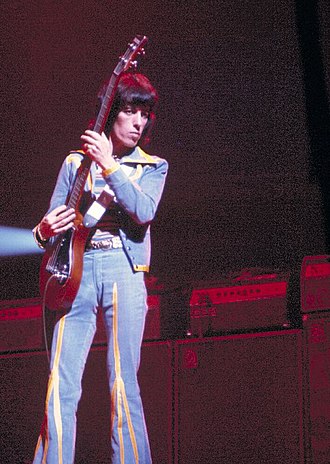
His instrument of choice throughout this era was predominantly short-scale bass guitars, which gave him a warmer, rounder tone than the standard long-scale instruments most rock bassists favored.
Into the Eighties: The Final Chapter with the Stones
In 1978, the Stones re-energized their career with Some Girls, their most commercially successful album of the decade.
The disco-inflected Miss You became one of the band’s biggest-selling singles, and Wyman’s inventive bass line was central to making the genre shift feel natural and effortless.
In 1981, Tattoo You delivered the Stones’ biggest hit of the decade when Start Me Up became an international rock anthem.
Outside of his Stones commitments, Wyman was building a successful solo career during this period.
In July 1981, his single “(Si Si) Je Suis un Rock Star” reached the UK top 20 and charted across Europe.
That same year, he composed the full film score for Green Ice, starring Ryan O’Neal and Omar Sharif, demonstrating his range well beyond rock and roll.
In 1983, Wyman organized a charity concert project called Willie and the Poor Boys, raising funds for Action Research into Multiple Sclerosis.
The initiative was inspired by his friendship with Ronnie Lane, the beloved Small Faces and Faces musician who was living with the disease.
Guest performers included Eric Clapton, Jeff Beck, and Jimmy Page, making it one of the most star-studded charity projects of the decade.
The Stones completed their final tour together with the Steel Wheels/Urban Jungle Tour in 1989 and 1990, a massive global run that proved their commercial dominance remained undiminished.
It was the last time Wyman would perform live as a full member of the Rolling Stones.
Career Challenges and Personal Controversies
Behind the stoic stage persona, Wyman’s personal life attracted significant public scrutiny in the late 1980s.
In 1989, at the age of 52, he married Mandy Smith, who was 18 at the time of the wedding.
Smith later disclosed that their relationship had begun when she was 13, generating considerable controversy and ongoing public debate about the nature of the relationship.
The couple separated two years after their wedding and finalized their divorce in 1993.
That same year, an additional and widely reported complication emerged: Wyman’s son Stephen married Patsy Smith, the mother of Wyman’s ex-wife Mandy, creating a family configuration that drew substantial media attention around the world.
Amid the personal upheaval, Wyman made a defining professional decision.
In January 1993, he formally resigned from the Rolling Stones, ending a 31-year tenure as one of rock’s most enduring rhythm sections.
He cited a desire to spend more time with his family as a key motivation, and he has never walked back that decision.
In contrast to the turbulent reputations of some of his bandmates, Wyman had been notably moderate in his personal use of alcohol and drugs throughout his career.
The Rolling Stones replaced him with touring bassist Darryl Jones, who has served in that role for every Stones tour since but has never been granted official band membership.
In April 1993, Wyman married Suzanne Accosta, a woman he had first met in 1980 and with whom a deeper romance had gradually developed.
The couple have three daughters and remain together.
Bill Wyman’s Rhythm Kings and the Later Revival
Four years after leaving the Stones, Wyman formed Bill Wyman’s Rhythm Kings in 1997, a blues rock ensemble with a rotating cast of accomplished musicians.
The band performed covers drawn from blues, soul, jazz, and early rock and roll, with occasional Rolling Stones material woven into the set list.
Wyman rarely took lead vocal duties, but made a signature of singing Honky Tonk Women during Rhythm Kings performances.
The Rhythm Kings released multiple studio albums, including Anyway the Wind Blows (1997), Struttin’ Our Stuff (1999), and Back to Basics (2015), demonstrating Wyman’s continued musical vitality well into his seventies.
In November 2012, Wyman made a guest appearance with the Rolling Stones at their 50th anniversary concerts in London, joining his former bandmates for two songs at the O2 Arena.
He later confirmed he had no interest in rejoining the band for further tour dates.
In 2019, director Oliver Murray released a documentary about Wyman’s life titled The Quiet One, drawing on his vast personal archive of diaries, photographs, and memorabilia maintained since childhood.
Then, in 2023, came one of the most unexpected moments of his later career.
Wyman returned to the recording studio with the Rolling Stones to play bass on “Live By the Sword,” a track on their twenty-fourth studio album Hackney Diamonds.
It was the first time he had appeared on a Rolling Stones studio recording since 1991, and lead single Angry captured widespread attention from music fans around the globe.
The Stones’ enduring presence in popular culture was further confirmed when their IMAX concert film returned to cinemas in December 2025, a clear signal of the global appetite for their music that Wyman helped build.
On August 9, 2024, Wyman released his ninth solo studio album, Drive My Car, adding to a solo catalog that showcases the range he developed far beyond the Stones.
Alongside music, he has cultivated several distinct creative passions in his later years.
He is an enthusiastic metal detectorist and published the illustrated book Treasure Islands in 2005, recounting archaeological discoveries across the British Isles.
He is also an accomplished photographer whose work has appeared in gallery exhibitions, including a major retrospective in Saint-Paul-de-Vence, France in 2010.
His official website at billwyman.com and his Facebook page remain active destinations for fans wanting to follow his ongoing projects.
Recognition, Legacy, and Lasting Impact
Wyman was inducted into the Rock and Roll Hall of Fame in 1989 as a member of the Rolling Stones, recognition of a career that helped define the shape of modern rock music.
As a bassist, he favored short-scale instruments and a walking bass approach drawn from the blues players he had studied since his RAF days in West Germany.
His original modified Dallas Tuxedo fretless bass was not just a curiosity: it was a key sonic ingredient in the Stones’ early recordings and remains one of rock’s most storied instruments.
In 2020, his 1969 Fender Mustang Bass sold at auction for $380,000, the highest price ever paid for a bass guitar at the time.
Beyond performance, Wyman kept meticulous personal journals throughout his life, a practice that informed both his 1990 autobiography Stone Alone and his comprehensive 2002 book Rolling with the Stones.
Both books are considered invaluable primary sources for anyone studying the inner history of the Rolling Stones.
For years, Wyman also ran the Sticky Fingers restaurant in Kensington, London, named after the classic 1971 Stones album, which became a popular gathering place for music fans until its closure in 2015.
In 2011, The Bass Centre in London issued the Wyman Bass, a fretted interpretation of his original homemade instrument, played and endorsed by Wyman himself.
His work spans the 60s, the boundary-pushing sounds of the 70s, and the arena-filling rock of the 80s, three decades of transformative music in which his bass was a constant, defining presence.
The dedication of the Rolling Stones fan community to their legacy was demonstrated by special releases such as the debut Pressed and Poured vinyl set, celebrating the very album on which Wyman first introduced his sound to the world.
Following the death of Charlie Watts in 2021, Steve Jordan became the Stones’ touring drummer, marking yet another chapter in the band’s long history without its founding bassist.
Yet Wyman’s fingerprints remain on every classic-era recording, a quiet legacy written in bass lines and preserved in every spin of those records.
Essential Discography
Below is a curated selection of the most essential recordings featuring Bill Wyman, spanning his three decades with the Rolling Stones and his solo work beyond the band.
- The Rolling Stones (1964) — The debut album that introduced the world to the Stones’ raw, blues-rooted sound, with Wyman’s modified fretless bass establishing the rhythmic foundation from day one.
- Beggars Banquet (1968) — A defining return to hard blues roots, featuring “Sympathy for the Devil” and some of the most focused ensemble playing of Wyman’s recording career.
- Let It Bleed (1969) — An essential late-1960s record featuring the thunderous “Gimme Shelter,” released during one of the most emotionally charged periods of the band’s history.
- Sticky Fingers (1971) — The debut on Rolling Stones Records, showcasing Wyman’s bass on iconic tracks that span hard rock, country soul, and blues.
- Exile on Main St. (1972) — Widely considered the Stones’ finest achievement, recorded in the south of France and built on the Wyman-Watts rhythm section at its most intuitive.
- Goats Head Soup (1973) — A UK and US number-one album featuring the ballad “Angie,” with Wyman’s bass providing gentle but purposeful support throughout.
- Some Girls (1978) — The band’s commercial comeback, on which Wyman’s disco-influenced bass on “Miss You” helped the Stones conquer a new decade without losing their identity.
- Monkey Grip (1974) — Wyman’s debut solo album, a funk-influenced record that revealed a distinctly personal musical voice separate from his Stones persona.
- Stone Alone (1976) — His second solo record, deepening the artistic identity he had been building quietly alongside his commitments to the world’s biggest rock band.
- Hackney Diamonds (2023) — The Rolling Stones’ twenty-fourth studio album, notable for Wyman’s guest appearance on “Live By the Sword,” his first studio contribution to the band since 1991.
Affiliate Disclosure: As an Amazon Associate, I earn a small commission on qualifying purchases made through this link at no extra cost to you. I thank you in advance for your support.
Browse Rolling Stones albums and official merchandise on Amazon to explore Bill Wyman’s recordings and add essential titles to your collection.
For a complete chronological listing of his work, visit Bill Wyman’s full discography on Wikipedia.
Bill Wyman FAQ
Why Did Wyman Leave the Rolling Stones?
Wyman formally resigned from the Rolling Stones in January 1993, following the completion of the Steel Wheels/Urban Jungle Tour.
He cited a desire to spend more time with his family as his primary reason for leaving.
The decision ended a 31-year tenure that had seen him perform on 19 consecutive Rolling Stones studio albums.
Did He Ever Return to the Stones?
Wyman made a guest appearance at the Rolling Stones’ 50th anniversary concerts in London in November 2012, joining his former bandmates for two songs.
More significantly, in 2023, he returned to the studio to play bass on “Live By the Sword” for the album Hackney Diamonds, marking his first studio contribution to the band since 1991.
He has not rejoined the band as a full member.
What Has Wyman Been Doing Since the Stones?
After leaving the Stones, Wyman formed Bill Wyman’s Rhythm Kings in 1997, a project that kept him touring and recording for more than two decades.
In August 2024, he released his ninth solo studio album, Drive My Car.
He also remains active as a photographer, author, and metal detectorist, maintaining homes in Suffolk, England and Saint-Paul-de-Vence, France.
What Were His Most Iconic Bass Lines?
Among his most celebrated contributions is the rolling, disco-influenced groove of “Miss You” from Some Girls (1978), which helped the Stones move seamlessly into a new era.
His work on “Tumbling Dice” and across the entirety of Exile on Main St. is also frequently cited by musicians and critics as some of the most influential bass playing in rock.
Furthermore, his original fretless bass sound on early Stones recordings remains a touchstone for bass players studying the roots of rock.
How Old Is He?
Bill Wyman was born on October 24, 1936, making him 89 years old as of 2026.
He continues to release music and maintain an active public presence.
Bill Wyman remains one of the great surviving figures of the classic rock era, his legacy permanently etched into three decades of Rolling Stones recordings that will endure for generations to come.