

Welcome to the Jungle by Guns N’ Roses (1987): The Song That Changed Rock Forever
“Welcome to the Jungle” by Guns N’ Roses didn’t just announce a band — it announced a new era in hard rock.
When this track opened Appetite for Destruction in 1987, it hit like a thunderbolt to the chest, raw, dangerous, and completely alive in a way that most rock radio had forgotten was possible.
To understand the full story of the band behind this moment, the Guns N’ Roses members guide covers every lineup change and chapter from 1985 to today.
Quick Navigation
What is the meaning of Welcome to the Jungle by Guns N’ Roses?
“Welcome to the Jungle” is about the brutal, seductive chaos of Los Angeles, specifically the Sunset Strip music scene Axl Rose experienced after moving from Lafayette, Indiana. The song warns an innocent newcomer about predators, addiction, and the city’s ability to consume those who aren’t prepared. It draws directly from Axl’s own arrival in L.A. in the early 1980s.
The Vibe: Genre and Mood
The song is hard rock at its most primal, with a thread of blues and a punk attitude running underneath the metal surface.
It moves from a coiled, menacing opening riff into a full-throttle assault by the first chorus.
The mood is predatory and theatrical at the same time.
Axl Rose’s vocal range is on full display here, stretching from a low conspiratorial growl to a shrieking high-register that borders on operatic.
Slash has described the opening riff as something he wrote almost as a demo exercise, never expecting it to become one of the most recognized guitar lines in rock history.
The song is built around tension and release, and it executes that structure about as well as rock music ever has.
Behind the Lyrics
Axl Rose has spoken in interviews about the specific moment that inspired this song.
A stranger on the street in New York City looked at him, fresh off the bus from Indiana, and said: “Do you know where you are? You’re in the jungle, baby.”
That encounter planted the seed for the entire lyric.
The “jungle” in the song is equal parts literal city and metaphor for any environment where survival demands ruthlessness.
Lines about drugs, manipulation, and the hunger for sensation were not embellished for effect.
They were accurate reporting from the Sunset Strip circa 1984 to 1986.
The writing credit belongs to all five classic members: Axl Rose, Slash, Izzy Stradlin, Duff McKagan, and Steven Adler.
That collective credit reflects how the track grew organically from the band’s shared experience rather than a single author’s vision.
It also appears on the same album era that gave the world “November Rain,” showing the incredible range GN’R had even at the start.
Technical Corner: The Gear
Slash recorded Appetite for Destruction primarily through a Marshall Super Lead 100-watt head, cranked to the edge of feedback.
His main guitar at the time was a 1959 Les Paul Standard replica built by luthier Kris Derrig.
Producer Mike Clink recorded the sessions at Rumbo Recorders, Take One Studio, and Can’t Go Wrong Studios in Los Angeles.
Clink’s production philosophy was to capture the band playing live in a room whenever possible, which is why the album breathes and sweats in a way that studio-polished records of the era simply do not.
Duff McKagan’s bass was run direct into the board, adding a punching low-end that you feel in your chest on a good stereo.
Steven Adler’s loose, swinging drum style was largely tracked live with the band, giving the track its dangerous, slightly-off-the-rails energy.
The song’s dramatic opening sequence, the slow chromatic guitar descent before Slash unleashes the main riff, was a calculated theatrical device that Slash had been developing in rehearsal.
Legacy and Charts: Why Welcome to the Jungle Still Matters
“Welcome to the Jungle” peaked at number seven on the Billboard Hot 100 in 1988, reaching number 24 on the UK Singles Chart.
Its commercial breakthrough was slow: it initially received almost no radio airplay after release in 1987.
The turning point came when Ronald Reagan reportedly watched the music video and called MTV to have it played.
Whether that story is fully accurate or partly mythology, the video did begin receiving heavy rotation and the song never looked back.
The track has appeared in dozens of films and television shows, most famously in Dead Pool 2, where its use in a key scene reintroduced the song to an entirely new generation.
It remains the de facto opening song at GN’R live shows, and for good reason: nothing else in their catalog announces a concert quite like those first four notes.
For fans planning to see the band live, the Guns N’ Roses 2026 tour dates are worth checking now.
The song is certified platinum multiple times over and regularly appears on lists of the greatest rock songs in history.
It also serves as the opening track on the same album that produced “Sweet Child O’ Mine,” confirming that Appetite for Destruction was not a one-hit wonder but a front-to-back classic.
Listener’s Note: A Personal Take on Welcome to the Jungle
The first time I heard this on vinyl, the needle drop before Slash’s opening figure felt like watching a match being struck in a dark room.
There is a specific quality to the guitar tone here that you cannot replicate digitally: slightly overdriven, slightly rough around the edges, with a mid-range bite that cuts through everything else in the room.
What I keep coming back to is the vocal performance in the verses, the way Axl drops his voice to almost a whisper before the chorus erupts.
That dynamic contrast is why the song never gets old on repeated listens.
It rewards attention every time.
Affiliate Disclosure: I am an Amazon affiliate and if you purchase through any Amazon links on this site I may earn a small commission at no extra charge to you. This helps keep ClassicRockArtists.com running and the deep-dive content coming. Thank you for your support.
Collector’s Corner: Own Welcome to the Jungle on Vinyl or CD
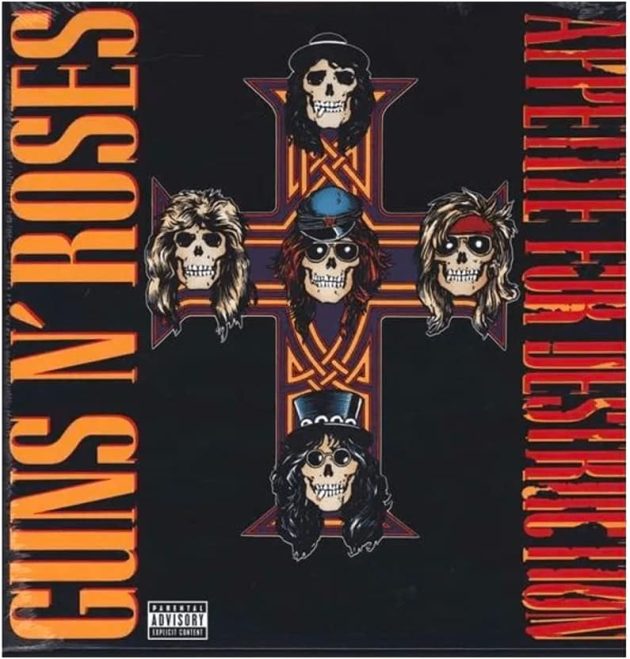
Appetite for Destruction is one of the most important debut albums in rock history, and owning it on vinyl is a genuine listening experience worth having.
The 2018 Deluxe Edition also includes previously unreleased Sound City session recordings that give a fascinating window into how the classic lineup built these tracks.
Get Appetite for Destruction on Vinyl at Amazon
Frequently Asked Questions About Welcome to the Jungle
Who wrote Welcome to the Jungle?
The song is credited to all five members of the classic Guns N’ Roses lineup: Axl Rose, Slash, Izzy Stradlin, Duff McKagan, and Steven Adler. The core lyrical concept came from Axl Rose’s experience arriving in New York City from Indiana and being confronted by a stranger on the street.
What album is Welcome to the Jungle on?
It is the opening track on Appetite for Destruction, released on July 21, 1987, through Geffen Records. The album went on to become the best-selling debut album in US history with over 30 million copies sold worldwide.
What does Welcome to the Jungle mean?
The song is a visceral portrait of Los Angeles as a predatory environment that chews up and spits out the unprepared. It draws on Axl Rose’s personal experience of arriving in the city from a small town and discovering the Sunset Strip’s dark side of drugs, violence, and manipulation.
Did Welcome to the Jungle win any awards?
The song was nominated for a Grammy Award for Best Hard Rock/Metal Performance Vocal or Instrumental in 1989, losing to Jethro Tull’s Crest of a Knave in a result that remains one of the most controversial Grammy decisions in rock history. It has since been inducted into numerous “greatest songs” lists and is certified multi-platinum.
You Might Also Like
Like GN’R, Mötley Crüe ruled the Sunset Strip in the same era with the same dangerous energy that defined 1980s hard rock excess.
Slash has cited Tony Iommi as a formative influence, and the heavy, riff-first DNA of Welcome to the Jungle owes a debt to Sabbath’s blueprint.
Deep Purple’s fusing of blues, hard rock, and sheer volume in the 1970s created the sonic vocabulary that GN’R inherited and weaponized.