

Paradise City by Guns N’ Roses (1987): The Anthem That Closes Every Show
“Paradise City” by Guns N’ Roses is one of the most purely joyful songs in hard rock history, six minutes and forty-seven seconds of escalating euphoria that still brings stadiums to their knees.
Written during the same hungry, broke period that produced all of Appetite for Destruction, the song captures a longing for escape that anyone who has ever felt trapped in the wrong life will recognize immediately.
For full context on the band behind this anthem, the complete Guns N’ Roses members story covers every musician who shaped this sound.
Quick Navigation
What is the meaning of Paradise City by Guns N’ Roses?
“Paradise City” is about the longing to escape a hard life and reach a better place, whether that place is a real city, a state of mind, or simply a life without struggle. Axl Rose has connected the lyric to his difficult upbringing in Lafayette, Indiana, and the desperation that drove him to Los Angeles. The grass-is-greener theme resonates because the “paradise” in the chorus is never fully defined, making it universal.
The Vibe: Genre and Mood
The song operates in two distinct emotional registers.
The verses are almost melancholic, built on a clean guitar figure and Axl’s lower vocal register, reflective and yearning.
Then the chorus detonates, and every ounce of restraint is abandoned.
By the final two minutes, the song has accelerated into a full-throttle hard rock sprint, drums pounding, guitars screaming, Axl going for every note he has.
It is a masterclass in building a rock song from a quiet foundation to an explosive finish.
Few bands have ever executed that arc more effectively.
Behind the Lyrics
The chorus melody was reportedly something Axl Rose began humming on the tour bus long before full lyrics were written.
Like most songs on Appetite for Destruction, the track emerged from the band’s collective life on the Sunset Strip, writing and rehearsing in a single rented room with no money and very little certainty about the future.
The writing credit is shared across all five classic members: Axl Rose, Slash, Izzy Stradlin, Duff McKagan, and Steven Adler.
Izzy Stradlin’s rhythm guitar contribution is particularly crucial here, locking in with Duff McKagan’s bass to create a groove that makes the song feel effortless despite its technical complexity.
The outro section, where the song accelerates into what feels like a controlled demolition, was one of the elements that made the official Paradise City music video such a landmark moment on MTV.
That video, filmed partly at Giants Stadium and partly at the 1988 Monsters of Rock festival at Donington Park, showed a band playing to over 100,000 people and absolutely commanding every one of them.
Technical Corner: The Gear
Slash used the same setup that defined the entire Appetite for Destruction album: a Kris Derrig-built 1959 Les Paul replica into cranked Marshall 100-watt heads.
The clean guitar intro was likely played on a different guitar and run into a cleaner amplifier channel, which gives it the distinct two-texture quality of the track.
Producer Mike Clink captured the band at Rumbo Recorders with an emphasis on live feel over studio precision.
Steven Adler’s drumming on this track deserves specific attention: the way he rides the hi-hat through the verses and then opens up the kit for the choruses is a demonstration of dynamics that many technically superior drummers fail to achieve.
Duff McKagan’s bass in the final section, where the tempo nearly doubles, is a thunderous low-end anchor that makes the acceleration feel inevitable rather than chaotic.
The song clocks in at six minutes and forty-seven seconds, long for a single but impossible to cut without losing what makes it work.
Legacy and Charts: Why Paradise City Still Matters
According to its Wikipedia entry, “Paradise City” peaked at number five on the Billboard Hot 100 and number six on the UK Singles Chart, both in 1989.
Its chart performance was delayed because radio programmers were initially reluctant to play a nearly seven-minute rock track.
The MTV video eventually did the heavy lifting and made the single unavoidable.
The song has been certified platinum multiple times in the US and is a staple on classic rock radio globally to this day.
It closes virtually every Guns N’ Roses live show and has done so for nearly four decades.
Its live version, with the crowd singing the “take me down” chorus, is one of those genuinely transcendent concert experiences that remind you why stadium rock matters.
The song also appears on the same record as Sweet Child O’ Mine, confirming that Appetite for Destruction had no weak links among its peak tracks.
Fans can catch it performed live on the Guns N’ Roses 2025 tour.
Listener’s Note: A Personal Take on Paradise City
There is a specific moment about four and a half minutes into this song where the tempo begins to climb and you realize Slash and Steven Adler are essentially in a friendly race to the finish line.
On vinyl, this section vibrates through the stylus in a way that feels almost physically urgent.
I have heard this song hundreds of times and the outro still creates a kind of contained panic in my chest, the best kind, the kind that only music at its most kinetic can produce.
It is the rare rock song that becomes more alive the louder you play it.
Affiliate Disclosure: I am an Amazon affiliate and if you purchase through any Amazon links on this site I may earn a small commission at no extra charge to you. This helps keep ClassicRockArtists.com running and the deep-dive content coming. Thank you for your support.
Collector’s Corner: Own Paradise City on Vinyl or CD
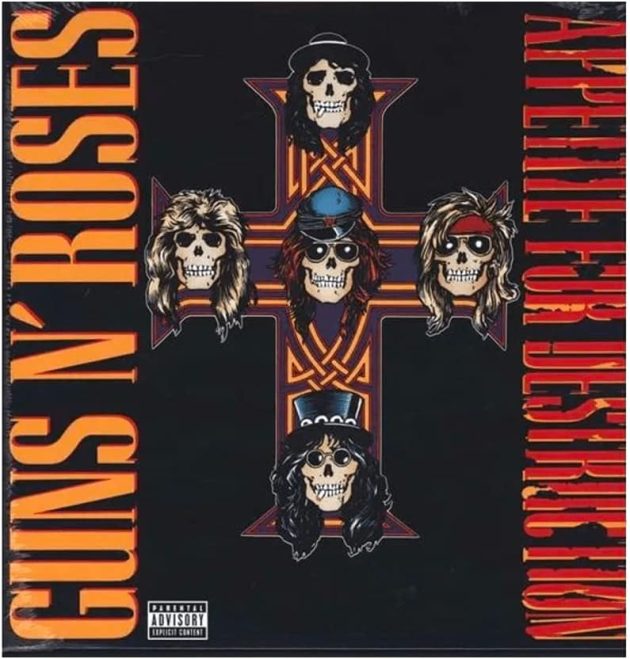
Appetite for Destruction belongs in every serious rock vinyl collection, and the way this song’s final minutes sound through a quality turntable is reason enough on its own to own the record.
Both the original pressing and the 2018 Deluxe Edition are worth tracking down.
Get Appetite for Destruction on Vinyl at Amazon
Frequently Asked Questions About Paradise City
Who wrote Paradise City?
All five classic members of Guns N’ Roses share the writing credit: Axl Rose, Slash, Izzy Stradlin, Duff McKagan, and Steven Adler. The chorus melody is attributed to Axl humming it during tour rehearsals before the band fleshed out the full arrangement.
What album is Paradise City on?
Paradise City is the closing track on Appetite for Destruction, released in July 1987 on Geffen Records. It was released as a single in 1988 and charted in 1989 after the album had already become a phenomenon.
What does Paradise City mean?
The song expresses a deep yearning for somewhere better, a place where the grass is green and the girls are pretty, as the lyric puts it. For Axl Rose, who grew up in difficult circumstances in Indiana, it drew on a real emotional need to escape. The vagueness of the “paradise” location is intentional and is what makes the song feel personal to millions of listeners.
How long is Paradise City?
The album version of Paradise City runs six minutes and forty-seven seconds. Radio edits reduced it to around four minutes, though most rock stations eventually played the full version once the song’s popularity was undeniable.
You Might Also Like
Paradise City shares the Stones’ instinct for anthemic, riff-driven rock designed to fill the biggest venues on earth.
Alice in Chains emerged from the same late-80s hard rock world as GN’R, with similarly raw songwriting built around personal pain and heavy riffs.
Motörhead’s relentless full-throttle approach to rock is the spiritual ancestor of the accelerating final section that makes Paradise City unforgettable.