

Mr. Brownstone by Guns N’ Roses (1987): Appetite’s Dark Core
Mr. Brownstone is the track where Guns N’ Roses looked straight into the thing that would eventually destroy them and made it sound like the best riff they ever wrote.
It was the first song the band finished after signing to Geffen Records, and it was already a confession, already a warning, already a masterpiece.
Quick Navigation
What is the meaning of Mr. Brownstone by Guns N’ Roses?
Mr. Brownstone is a hard rock song by Guns N’ Roses from their 1987 debut album Appetite for Destruction. Written primarily by Slash and Izzy Stradlin, the song confronts heroin addiction head-on, with “Brownstone” being slang for the drug. The lyrics chart the band’s daily descent into dependency with unflinching, almost casual precision.
The Vibe: Genre, Mood, and Search Intent
Mr. Brownstone operates somewhere between a groove and a threat.
It swings like the devil and cuts like a blade, built on a riff that sounds deceptively simple until you try to play it.
- Genre: Hard Rock
- Mood: Raw, Darkly Urgent, Unflinching
- Tempo: Driving mid-tempo with a Bo Diddley shuffle undercurrent
- Best For: Late-night drives, anyone who needs rock that tells the truth
- Similar To: Aerosmith’s “Crying,” early Mötley Crüe with sharper edges
- Fans of Guns N’ Roses also search: “best hard rock songs 1987,” “guns n roses appetite for destruction songs ranked,” “songs about heroin addiction rock”
Behind the Lyrics: How Mr. Brownstone Got Written
The origin story of this song is almost absurdly on-brand for the band.
Izzy Stradlin scratched out an early draft of the lyrics on a scrap of paper at one of the band’s Hollywood flop-house hotels.
Axl Rose reportedly found the paper when the band was checking out.
Slash and Stradlin completed the song at Izzy’s apartment, writing lyrics on the back of a grocery bag while lamenting their shared dependency on heroin.
The song was the first one Guns N’ Roses completed after signing with Geffen Records.
That says everything about where the band’s head was at the time.
Slash has said the lyrics described a typical day in the life of himself and Stradlin back then.
The central line, about needing a little more, then a little more after that, is one of the most accurate descriptions of heroin tolerance ever put to music.
Watch the official audio on YouTube: Mr. Brownstone by Guns N’ Roses.
Axl Rose would later distance himself from any reading of the song as glorifying drugs.
At live shows, he developed a personal speech before each performance, delivered differently every night, making clear that the song was about the cost, not the high.
Things came to a head in October 1989 when Guns N’ Roses were opening for the Rolling Stones at the Los Angeles Coliseum.
Before launching into the song, Rose publicly called out band members by name for their drug use, threatening the shows would be the last Guns N’ Roses concerts ever.
That moment became one of the most dramatic in rock history.
Stradlin and drummer Steven Adler had the most serious struggles, and Adler was eventually fired from the band due to his addiction.
The song that started as a confession ended up as the band’s most public intervention.
More on the full Appetite era in our guide to Sweet Child O’ Mine.
Technical Corner: The Gear Behind the Riff
Appetite for Destruction was recorded between January and March 1987 across four Los Angeles-area studios: Rumbo Recorders in Chatsworth, Take One in Burbank, the Record Plant in Hollywood, and Can Am in Tarzana.
Producer Mike Clink oversaw the sessions, with Steve Thompson and Michael Barbiero handling the final mix.
The primary guitar on the album was a Les Paul copy built by luthier Kris Derrig, who passed away from throat cancer in 1987, just months before the album’s release.
Derrig never received the credit he deserved for a guitar heard on one of the best-selling albums of all time.
Slash’s amplifier was a modified Marshall Super Lead, SIR rental unit Stock #36, modified by Frank Levi to add a gain stage that produced the album’s signature saturated tone.
Slash loved the amp so much he claimed it had been stolen after the sessions rather than return it.
A roadie accidentally brought it to a pre-tour rehearsal, SIR recognised it, and that was the end of Slash’s relationship with the tone that defined Mr. Brownstone.
The amp was paired with a Marshall 4×12 cabinet loaded with Celestion speakers.
Slash also used a Roland SRV-2000 Digital Reverb unit during the Appetite sessions, set to a delay mode that added air without washing out the aggression.
Steven Adler’s drum intro on Mr. Brownstone is worth its own conversation.
That shuffle pattern, loose and swinging with a Bo Diddley influence, sets the rhythm of the whole song before a single guitar note lands.
Duff McKagan has said that replicating Izzy’s guitar riff on bass was one of the hardest things he had to learn, because the wide spacing on bass strings demanded he play the entire riff on a single string for evenness of tone.
Clink ran eighteen-hour days through the sessions, with Slash overdubbing afternoons and evenings, and Rose returning for vocals separately.
Legacy and Charts: Why Mr. Brownstone Still Matters
Mr. Brownstone was released in the UK as the A-side of a double single with “It’s So Easy” in 1987, making it the first Guns N’ Roses single released outside the United States.
In the US, it appeared as the B-side to Welcome to the Jungle.
The parent album, Appetite for Destruction, reached number one on the US Billboard 200 and has sold over 30 million copies worldwide.
It is RIAA certified 18x Platinum and remains the best-selling debut album in American history.
Mr. Brownstone was cited in reviews of Appetite by critics at Rolling Stone, AllMusic, and The Quietus as one of the album’s essential cuts.
The song has been performed over 990 times in concert across the band’s touring career.
It sits alongside Paradise City as one of the most reliable Guns N’ Roses live staples.
The song also entered a darker chapter of cultural history in 2007 when the perpetrator of the Virginia Tech shooting was found to have written a play using the song’s title.
The band’s 2008 track “Shackler’s Revenge” from Chinese Democracy addressed the media’s handling of that connection directly.
Mr. Brownstone remains a study in how rock music can document self-destruction with clarity and groove simultaneously.
Listener’s Note: A Personal Take on the Track
When I first put on Appetite for Destruction on vinyl, Mr. Brownstone was the track that stopped the needle in my brain.
Not because it’s the loudest or the flashiest, but because it’s the most confident.
There’s a looseness to Adler’s shuffle and a tightness to Slash’s riff that shouldn’t be able to coexist, and yet they do, perfectly, for three minutes and forty-six seconds.
The texture of that guitar tone, all midrange rasp and controlled chaos, feels like someone lit a cigarette indoors and dared you to say something.
You believe every word Axl Rose sings here, which is the whole point.
Affiliate Disclosure: As an Amazon Associate, I earn from qualifying purchases. If you click on an Amazon link on this site and make a purchase, I may receive a small commission at no extra cost to you. This helps keep classicrockartists.com running and allows me to keep writing deep-dive content on the legends of rock. Thank you for your support.
Collector’s Corner: Own Appetite for Destruction on Vinyl or CD
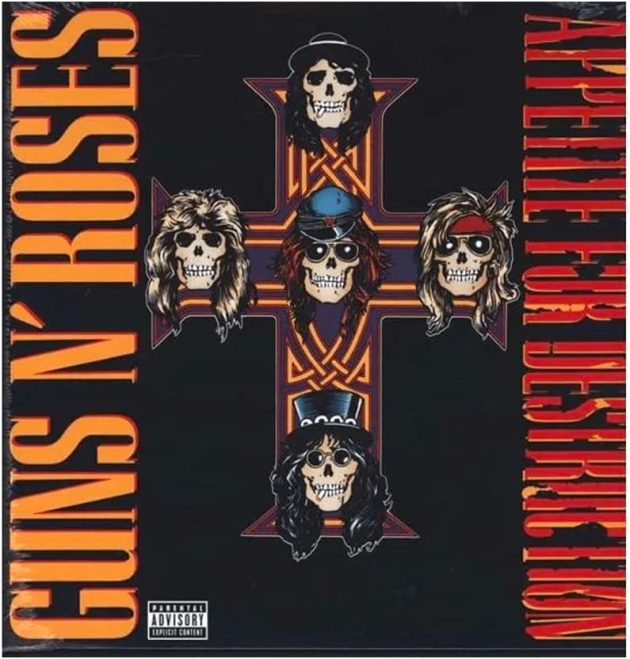
Appetite for Destruction on vinyl is a must-own for any serious rock collection, and pressing quality has improved across recent reissues for both standard and deluxe editions.
Get Appetite for Destruction on Vinyl or CD at Amazon
Frequently Asked Questions About Mr. Brownstone
Who wrote Mr. Brownstone?
Mr. Brownstone was primarily written by lead guitarist Slash and rhythm guitarist Izzy Stradlin, with all five classic Guns N’ Roses members credited on the recording. Stradlin drafted early lyrics on a scrap of paper at a Hollywood hotel, and the song was completed at his apartment. It was the first song the band wrote after signing to Geffen Records.
What album is Mr. Brownstone from?
Mr. Brownstone appears on Appetite for Destruction, the debut studio album by Guns N’ Roses, released on July 21, 1987. It is track five on the album. Appetite for Destruction is the best-selling debut album in US history, RIAA certified 18x Platinum.
What does Mr. Brownstone mean?
“Brownstone” is a slang term for heroin, making Mr. Brownstone a personification of the drug. The song documents the cycle of addiction with blunt precision, describing how “a little wouldn’t do it, so the little got more and more.” The title character represents both the substance and its grip on the band at the time.
Did Mr. Brownstone chart?
Mr. Brownstone was released in the UK as a double A-side with “It’s So Easy” in 1987, making it Guns N’ Roses’ first single outside the United States. In the US, it served as the B-side to Welcome to the Jungle. Appetite for Destruction, the album it anchors, reached number one in the US and has sold over 30 million copies worldwide.
You Might Also Like
Like Mr. Brownstone, Mötley Crüe built their catalog around the Sunset Strip’s excess, with addiction as both subject matter and career hazard.
No other band in rock history documented heroin’s pull with the same unflinching honesty as Alice in Chains, making them the closest spiritual cousin to Mr. Brownstone.
Motörhead’s riff-first, no-apologies approach directly influenced the stripped-down hard rock aggression that makes Mr. Brownstone so effective.