

Civil War by Guns N Roses (1991): GNR’s Anti-War Epic
Civil War Guns N Roses was delivered at a moment when nobody expected the band to have something this large and this is politically serious to say.
It is the track that separated Guns N Roses from every other hard rock band of their era, a nearly eight-minute protest song that quotes prison wardens, civil rights history, and Peruvian guerrilla speeches without ever losing its footing as a piece of rock music.
Quick Navigation
What is the Meaning of Civil War Guns N Roses?
Civil War is an epic anti-war protest song by Guns N Roses, originally released in 1990 and later featured as the opening track on their 1991 album Use Your Illusion II. Written by Axl Rose, Slash, and Duff McKagan, the song argues that all war is senseless, feeding the powerful while destroying the poor. Axl Rose poses the central question directly: “What’s so civil about war, anyway?”
The Vibe: Genre, Mood, and Search Intent
Civil War is a slow-building, seven-minute rock epic that earns every second of its length.
It is moody, deliberate, and heavy in a way that has more to do with weight of subject matter than volume of guitars.
- Genre: Hard Rock / Epic Rock / Protest Rock
- Mood: Sombre, Defiant, Historically Charged
- Tempo: Slow-building, mid-tempo with dynamic surges
- Best For: Late-night listening, anyone drawn to rock with political gravity, headphone sessions
- Similar To: Pink Floyd‘s “Us and Them” in tone, Rolling Stones‘ “Gimme Shelter” in ambition
- Fans of Guns N’ Roses also search: “civil war guns n roses meaning,” “anti-war rock songs 1990s,” “guns n roses use your illusion II best tracks”
Behind the Lyrics: How Civil War Came Together
Civil War began as an instrumental guitar riff that Slash had written just before the band left for the Japanese leg of the Appetite for Destruction world tour.
It was the kind of riff that lived in soundchecks, passed around and stretched out in empty arenas before crowds arrived.
At a soundcheck in Melbourne, Australia, Axl Rose began adding words to it, and the song started to take shape.
Duff McKagan contributed a lyrical thread drawn from personal memory.
He had attended a peace march for Martin Luther King Jr. with his mother when he was four years old, and that image, a child wearing a black armband in a crowd mourning a man who said peace was possible, found its way directly into the song.
The full lineup of the Guns N’ Roses classic lineup had a hand in developing the track, though the writing is credited to Rose, Slash, and McKagan.
Civil War opened not with a guitar but with a spoken word sample from the 1967 film Cool Hand Luke: the prison warden’s line about failure to communicate.
Immediately after, Axl Rose begins whistling the melody of “When Johnny Comes Marching Home,” a song that dates to the American Civil War.
That combination of a film about a man the system cannot break and a folk tune about soldiers returning home sets the emotional tone before the band even plays a note.
The song also references the assassination of President John F. Kennedy, the Vietnam War, and the civil rights movement.
Near the end, Rose delivers a rapid-fire passage quoting a speech by a commander of Peru’s Shining Path guerrilla movement, the only moment in the GNR catalog where the band reaches for something that aggressive in its political framing.
The song was first performed publicly at Farm Aid IV in Indianapolis on April 7, 1990, well before its studio release.
Before it appeared on Use Your Illusion II, Civil War was released as Guns N’ Roses’ contribution to Nobody’s Child: Romanian Angel Appeal, a 1990 charity compilation organised partly by George Harrison to support Romanian orphanages during the country’s post-Communist transition.
The album also featured tracks by the Traveling Wilburys, Elton John, Eric Clapton, and Stevie Wonder.
Watch the live Tokyo 1992 performance here: Guns N’ Roses — Civil War Live in Tokyo 1992 (YouTube).
For more on GNR’s catalogue of slow-building masterworks, see our review of Patience.
Technical Corner: The Gear and the Epic Production
Civil War was produced by Mike Clink, who also helmed Appetite for Destruction, working across the same multi-studio setup used throughout the Use Your Illusion sessions.
The song’s slow, heavy guitar movement owes much to the dynamics Slash and Clink built together over years of collaboration.
For live performances, Slash played Civil War on a Guild Crossroads Doubleneck guitar, allowing him to move between six and twelve-string sounds within the same song without changing instruments.
That doubleneck became one of the more distinctive pieces of gear in his live setup through the Use Your Illusion touring cycle.
The most historically significant gear decision on the studio recording, however, belongs to the drummer.
Civil War is the only track across both Use Your Illusion albums to feature original Guns N’ Roses drummer Steven Adler.
He had recorded the track in 1990, just before his drug addiction led to his dismissal from the band.
Matt Sorum, who had come from The Cult, recorded all remaining 29 tracks on the two albums.
The contrast between Adler’s looser, more intuitive style and Sorum’s precision is subtle but audible to anyone who knows both drummers’ work.
On Civil War, the drums sit low in the mix during the verses, barely above the level of Duff McKagan’s bass, letting the song breathe before the full band enters and the track expands.
The whistled melody of “When Johnny Comes Marching Home” in the intro and outro was performed by Axl Rose without any processing, giving the opening a raw, almost fragile quality that the electric guitar has to earn its way past.
Clink’s production allows each element its own space, with guitars and bass given room to move independently rather than being locked into a dense wall of sound.
It is one of the most sophisticated productions in the entire GNR catalog.
Legacy and Charts: Why Civil War Still Resonates
Civil War was released as a standalone single in several regions on May 3, 1993, peaking at number four on the US Mainstream Rock chart.
In the UK and Ireland, it was released as part of The Civil War EP, which reached number 11 on the UK Singles Chart and number 15 on the Irish Singles Chart.
The song also hit number one in Poland and number two in Spain.
Kerrang! ranked Civil War the fourteenth best Guns N’ Roses song in their comprehensive rankings.
It was included on Guns N’ Roses Greatest Hits (2004) and has remained a live staple for decades, though it disappeared from setlists between 1993 and December 2011 before being revived at Nashville’s Bridgestone Arena.
Since the Russian invasion of Ukraine in 2022, Guns N’ Roses have displayed the Ukrainian flag on screen during performances of the song.
An eight-minute anti-war track from 1990 finding new relevance in a European conflict more than thirty years later says more about the song’s staying power than any chart position could.
For more context on the Use Your Illusion era, see our deep-dive into November Rain.
If you want to catch Civil War live, check the Guns N’ Roses 2025 tour dates for upcoming shows.
The song is also referenced briefly in GNR’s 2008 track “Madagascar” from Chinese Democracy, which weaves the Cool Hand Luke speech into a new context.
Listener’s Note: A Personal Take on a Rock Epic
The first time Civil War fully landed for me was not through speakers.
It was through headphones, late, with the lights off, which is exactly how a song this large is supposed to be heard.
That whistled opening feels almost foolishly delicate before the guitar enters, and then the guitar enters, and you understand that Slash knew exactly what he was doing.
There is a moment about three minutes in where the track opens up after the first chorus and the bass line drops lower and steadier and the song just holds the air around it.
Most hard rock tracks can’t do that.
Most hard rock bands wouldn’t even try.
Guns N’ Roses’ Civil War doesn’t just try, it succeeds, and that is why it remains one of the great rock songs of any era.
Affiliate Disclosure: As an Amazon Associate, I earn from qualifying purchases. If you click on an Amazon link on this site and make a purchase, I may receive a small commission at no extra cost to you. This helps keep classicrockartists.com running and allows me to keep writing deep-dive content on the legends of rock. Thank you for your support.
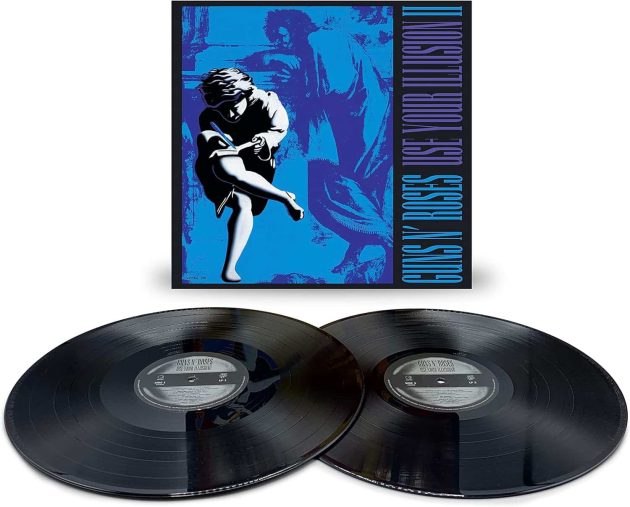
Collector’s Corner: Own Use Your Illusion II on Vinyl or CD
Use Your Illusion II opens with Civil War as its first track, making any vinyl pressing of this album worth owning for the experience of hearing that needle drop and Axl Rose’s whistle fill the room.
The 2022 Super Deluxe Edition box set is the most comprehensive release for serious GNR collectors.
Get Use Your Illusion II on Vinyl or CD at Amazon
Frequently Asked Questions About Civil War
Who wrote Civil War?
Civil War was written by Axl Rose, Slash, and Duff McKagan. Slash created the original instrumental guitar riff during the Appetite for Destruction touring period, Axl Rose developed the lyrics and vocal structure at a Melbourne, Australia soundcheck, and Duff McKagan contributed lyrical inspiration drawn from his memory of attending a peace march for Martin Luther King Jr. as a young child.
What album is Civil War from?
Civil War appears as the opening track on Use Your Illusion II, released by Guns N’ Roses on September 17, 1991. However, its first official release was on the 1990 charity compilation Nobody’s Child: Romanian Angel Appeal, making it one of the earliest public glimpses of the Use Your Illusion material. The song also appears on Guns N’ Roses Greatest Hits (2004).
Who played drums on Civil War?
Civil War is the only track across both Use Your Illusion albums to feature original Guns N’ Roses drummer Steven Adler. He recorded the track in 1990, shortly before his addiction-related dismissal from the band. All other 29 tracks on Use Your Illusion I and II were recorded by his replacement, Matt Sorum, who had previously been the drummer for The Cult.
How did Civil War chart?
Civil War peaked at number four on the US Mainstream Rock chart in 1993. In the UK, it was part of The Civil War EP, which reached number 11 on the UK Singles Chart. The song also reached number one in Poland and number two in Spain, and charted across Australia, Belgium, the Netherlands, Norway, and New Zealand.
You Might Also Like
Alice in Chains built epic, dark rock with the same kind of thematic seriousness and emotional weight that makes Civil War one of GNR’s most enduring tracks.
Black Sabbath pioneered the use of heavy rock to tackle war and social darkness, laying the groundwork for the kind of politically charged epic that Civil War represents.
Deep Purple’s mastery of dynamic shifts within large-scale rock compositions directly influenced how Civil War builds and expands over nearly eight minutes.