

Gilby Clarke: The Ultimate Biography of the Guns N’ Roses Guitarist
Gilby Clarke stands as a definitive figure in the world of 80s and 90s rock and roll history.
He is best known for his pivotal role as the rhythm guitarist for Guns N’ Roses during their massive Use Your Illusion world tour.
Beyond that iconic tenure, he has carved out a prolific career as a solo artist, producer, and collaborator with rock royalty.
His journey began in the guitar-heavy scene of Los Angeles where he honed a signature style rooted in bluesy riffs and punk-rock energy.
Despite the volatile nature of the bands he joined, he maintained a reputation for being a grounded and professional musician.
This biography explores his early beginnings, his rise to global stardom, and his enduring influence on the classic rock genre.
We look at how he transitioned from the club circuit to playing before hundreds of thousands of fans in stadiums around the globe.
Furthermore, we examine his work as a songwriter who kept the spirit of raw rock alive through shifting musical trends.
Today, he continues to record and perform, proving that the heart of rock and roll never truly fades.
Whether you know him from the music videos or his solo records, the impact of Gilby Clarke remains undeniable in the rock landscape.
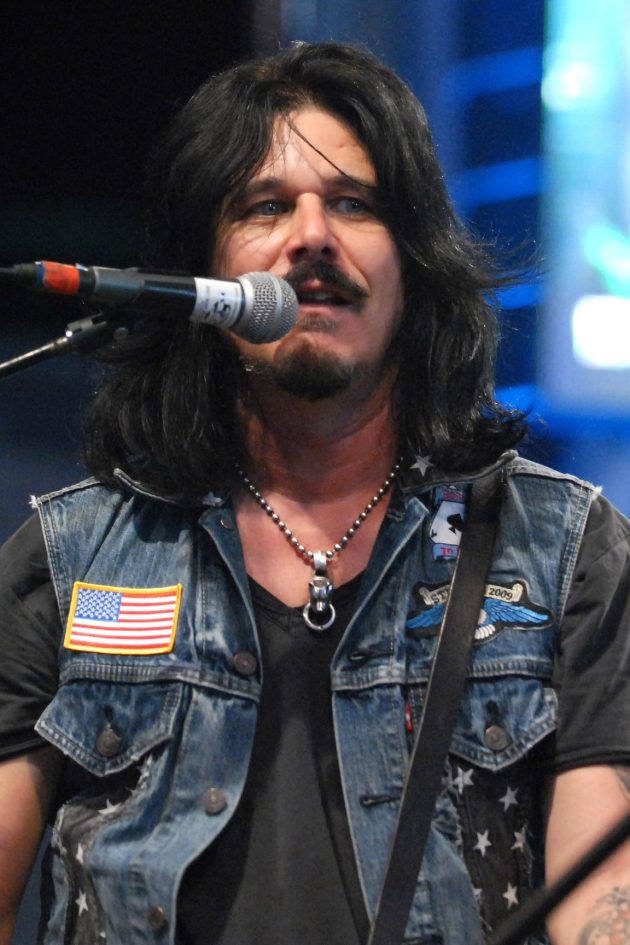
Table of Contents
- Section 1 — Early Life and Musical Beginnings
- Section 2 — Candy and the First Major Band
- Section 3 — Joining the Jungle: Gilby Clarke and Guns N’ Roses
- Section 4 — Gilby Clarke and The Spaghetti Incident
- Section 5 — Career Challenges and Transitions
- Section 6 — The Solo Revival of Gilby Clarke
- Section 7 — Supergroups and Collaborations
- Section 8 — Gilby Clarke: Awards and Recognition
- Section 9 — Essential Discography
- Section 10 — Frequently Asked Questions
Section 1 — Early Life and Musical Beginnings
Born on August 17, 1962, in Cleveland, Ohio, Gilbert Clarke was immersed in music from a very young age.
His family eventually moved to Southern California, which provided a fertile ground for his developing talent.
During his teenage years, he gravitated toward the rebellious sounds of The Rolling Stones and the New York Dolls.
He picked up the guitar and began practicing with a focus on rhythm and foundational rock structures.
Significantly, he was not just interested in the music but also the aesthetic and lifestyle of the burgeoning rock scene.
He spent countless hours in his garage, teaching himself the chords that would later define his professional sound.
His early mentors were the records he played until the grooves wore thin, learning every nuance of the blues-rock tradition.
In the early 70s, the influence of stadium rock giants started to shape his ambitions for a career on the stage.
By the time he reached his late teens, he was already a fixture in the local circuit, playing in various cover bands.
He understood early on that longevity in music required both talent and a tireless work ethic.
The vibrant atmosphere of Hollywood beckoned, and he soon found himself at the epicenter of the hard rock explosion.
Section 2 — Candy and the First Major Band
Before the world knew him as a stadium rocker, he fronted a power-pop band called Candy.
The group offered a polished, melodic alternative to the grittier heavy metal that was dominating the Sunset Strip.
They released the album Whatever Happened to Fun in 1985, which showcased his ability to write infectious hooks.
Although the band did not achieve massive commercial success, it served as a critical learning experience for the young musician.
Following the dissolution of Candy, he moved toward a much heavier and more aggressive sound.
He formed Kill for Thrills, a band that leaned into the sleaze rock aesthetic of the 90s transition era.
With this new project, he took on the role of lead singer and primary songwriter, releasing the acclaimed album Dynamite from a Nightmare.
The music was raw, honest, and perfectly captured the dark energy of the Los Angeles underground.
Critics began to take notice of his soulful delivery and his impeccable timing as a rhythm player.
It was during this period that his path would finally cross with the most famous rockers in the world.
Section 3 — Joining the Jungle: Gilby Clarke and Guns N’ Roses
In 1991, the rock world was shocked when founding member Izzy Stradlin abruptly left Guns N’ Roses.
The band was in the middle of a global tour and needed a replacement who could master a massive catalog of songs instantly.
Slash recommended his friend from the local scene, knowing that he had the right look and the right hands for the job.
He was officially hired and had only a few weeks to learn the complex arrangements of the Use Your Illusion sets.
His first performance was a baptism by fire in front of a sold-out stadium audience.
He quickly became an essential part of the live lineup, providing the steady rhythmic backbone that allowed the lead players to soar.
Fans embraced him because he brought a classic rock sensibility that mirrored the roots of Appetite for Destruction.
Throughout the tour, he performed iconic hits like Welcome to the Jungle and Paradise City with precision.
His chemistry with Duff McKagan and Matt Sorum created a powerful wall of sound.
In addition to the hits, he was part of the epic performances of November Rain that featured massive orchestral arrangements.
He also contributed to the live energy of tracks such as Nightrain and the fan-favorite Mr. Brownstone.
His presence helped the band navigate one of the most successful yet chaotic periods in their history.
The grueling schedule saw him traveling to every corner of the earth as part of the Guns N’ Roses members circle.
Significantly, he managed to stay out of the tabloid drama that often plagued his bandmates.
He focused entirely on the music and the craft of performing at the highest level possible.
Section 4 — Gilby Clarke and The Spaghetti Incident
While he did not play on the original Illusion studio albums, his studio debut with the band came via a unique project.
The group decided to record a collection of punk and glam rock covers titled The Spaghetti Incident? in 1993.
This album allowed him to showcase his roots in the punk scene through raw and energetic guitar tracks.
His playing on the record is often cited as a highlight, bringing a cohesive feel to the diverse set of songs.
However, internal tensions within the band were beginning to reach a breaking point.
Axl Rose was moving in a different creative direction that didn’t always align with the rest of the members.
He continued to work on new material with the band, but much of it would never see the light of day in that configuration.
Despite the uncertainty, his contributions to the era are immortalized in the live footage and recordings from those years.
He remains a beloved figure among the “Illusions” era fans who remember the sheer power of that lineup.
Section 5 — Career Challenges and Transitions
By 1994, the momentum of the band had stalled, and he was eventually let go from the group.
This period was incredibly difficult as he had to navigate the transition from being in the world’s biggest band to being a solo artist again.
Rather than retreating, he immediately went to work on his debut solo album, Pawnshop Guitars.
The record featured guest appearances from nearly all of his former GN’R bandmates, showing that the respect remained intact.
In contrast to the stadium sound, his solo work was more intimate and leaned heavily into his love for classic songwriting.
He faced the challenge of a changing musical landscape as grunge and alternative rock took over the airwaves.
Nevertheless, he stayed true to his rock and roll heart and continued to tour the club circuit with passion.
He also spent time producing other bands, sharing the knowledge he had gained from working with industry giants.
Section 6 — The Solo Revival of Gilby Clarke
The late 90s and early 2000s saw a creative resurgence as he released a string of solid rock albums.
Records like The Hangover and Rubber showcased his growth as a vocalist and a songwriter.
He established a loyal fan base that appreciated his “no-frills” approach to music.
In 2021, he released The Gospel Truth, his first solo album in nearly two decades.
The album was praised for its timeless sound and showcased that his guitar skills were as sharp as ever.
Furthermore, the record featured collaborations with legendary musicians, reinforcing his standing in the community.
He continues to perform solo shows and appears at major rock festivals around the world.
His live sets are a celebration of his entire career, from the early days in Candy to the stadium anthems.
Section 7 — Supergroups and Collaborations
One of the most interesting chapters of his career involved the television show Rock Star: Supernova.
He joined Tommy Lee and Jason Newsted to form a new supergroup through a reality competition.
The project brought him back into the mainstream spotlight and resulted in a world tour and a studio album.
Additionally, he has been a key member of Kings of Chaos, an all-star band featuring members of Deep Purple and Def Leppard.
He has also collaborated with Nancy Sinatra and MC5, demonstrating his incredible versatility.
His ability to fit into any musical situation makes him one of the most sought-after guitarists in the industry.
He often plays with members of Motley Crue in various side projects and jam sessions.
Section 8 — Gilby Clarke: Awards and Recognition
While he was not officially inducted into the Rock and Roll Hall of Fame with the original GN’R lineup, he was invited to perform.
He stood on stage with his former bandmates in 2012, proving his lasting impact on the group’s legacy.
He has received numerous accolades from guitar publications for his impeccable rhythm technique.
His influence is seen in a new generation of players who favor the raw, bluesy style of the 60s and 70s.
Moreover, his work as a producer has helped other artists achieve their own critical success.
He remains a staple of the Classic Rock Artists community and a respected voice in the industry.
His gear and tone are frequently studied by enthusiasts looking to capture that classic Los Angeles rock sound.
Section 9 — Essential Discography
- Pawnshop Guitars (1994) – A soulful solo debut featuring contributions from his former Guns N’ Roses bandmates.
- The Spaghetti Incident? (1993) – The only Guns N’ Roses studio album to feature his guitar work throughout the entire record.
- The Gospel Truth (2021) – A modern rock masterclass that proves his songwriting is as vital today as it was decades ago.
- Whatever Happened to Fun (1985) – The power-pop gem from his early days with the band Candy.
- Dynamite from a Nightmare (1990) – The gritty sleaze-rock debut from his project Kill for Thrills.
As an Amazon affiliate I make a small commission on any purchases made through this link at no extra cost to you.
Shop Guns N’ Roses Albums & Merch on Amazon
Section 10 — Frequently Asked Questions
Why did Gilby Clarke leave Guns N’ Roses?
He was let go in 1994 as Axl Rose began to take the band in a different creative direction that involved more experimental sounds.
Is Gilby Clarke in the Rock and Roll Hall of Fame?
He is not an official inductee, but he performed at the 2012 ceremony with Slash, Duff, and Steven Adler.
What kind of guitar does he play?
He is most famous for playing Gibson Les Pauls and Zemaitis guitars, often favoring vintage equipment for his recordings.
Did he play on the Use Your Illusion albums?
No, Izzy Stradlin recorded the rhythm tracks for those albums before he joined for the subsequent world tour.
In conclusion, the career of Gilby Clarke remains a shining example of dedication to the purest forms of rock music.