

Touch Me by The Doors (1968): The Story Behind Their Orchestral Top 5 Hit
The Doors Touch Me arrived in December 1968 as the boldest commercial gamble of the band’s career, a Robby Krieger composition wrapped in strings, brass, and a jazz saxophone solo that nobody expected from one of rock’s most uncompromising bands.
It shot to number three on the Billboard Hot 100 and reached number one on the Cashbox Top 100 in early 1969, making it one of the biggest commercial moments of their career, even as some fans loudly questioned whether The Doors had lost their nerve.
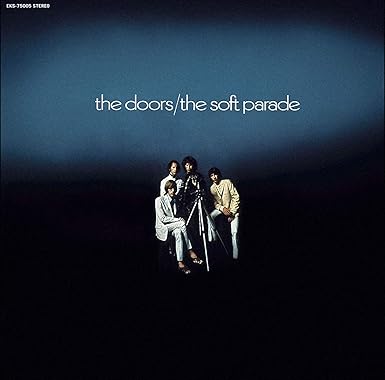
Get The Soft Parade on Vinyl or CD at Amazon
Affiliate Disclosure: I am an Amazon affiliate and if you purchase through any amazon links on this site i may earn a small commission at no extra charge to you.
Quick Navigation
What is the meaning of Touch Me by The Doors?
The Doors’ Touch Me is a plea for physical and emotional intimacy wrapped in an unusually lush, orchestrated arrangement. Written by Robby Krieger, the lyric moves from raw desire to a defiant chant in the fade-out. Jim Morrison described it as “the first rock hit to have a jazz solo in it,” suggesting the song’s deeper ambition was sonic and formal as much as lyrical.
The Vibe: Genre, Mood, and Search Intent
If you expected another dark, garage-rock Doors record, Touch Me comes at you from the opposite direction: warm brass, swelling strings, and a saxophone that turns the second half into a jazz club.
- Genre: Pop Rock, Jazz-Influenced Rock, Psychedelic Pop
- Mood: Lush, yearning, with a playful satirical kick in the coda
- Tempo: Mid-tempo, building steadily toward the saxophone break
- Best For: Deep dives into late-60s pop production, Krieger songwriting studies, Soft Parade era playlists
- Similar To: The Four Seasons’ “C’mon Marianne” filtered through a psychedelic rock band’s studio ambitions
- Fans of The Doors also search: “Soft Parade album review,” “Robby Krieger best songs,” “Doors jazz influence”
Behind the Lyrics: The Story of the Doors Touch Me
Touch Me began life under a very different title.
Robby Krieger wrote the original lyric as “Hit Me,” drawn from arguments he was having with his girlfriend at the time.
The chorus was blunt: “C’mon, hit me, I’m not afraid.”
Jim Morrison, in one of his more diplomatically unusual moments, insisted on softening the lyric.
He did not want a fan to take the instruction literally, so he rewrote the hook as “Touch Me,” shifting the song from confrontation to longing and opening it up to a broader emotional reading.
The song’s guitar riff, which Krieger built around an interpolation of The Four Seasons’ 1967 single “C’mon Marianne,” gave the track an immediate pop accessibility that the band had not pursued this deliberately since Hello, I Love You.
Producer Paul A. Rothchild saw the song’s commercial potential and pushed to orchestrate it with strings and brass, a suggestion that initially alarmed Krieger.
“I said, ‘Oh God, now we’re copying The Beatles,’ and the Stones had just done their version of the orchestra thing,” Krieger recalled in a Rolling Stone interview.
He came around after hearing arranger Paul Harris, who had worked with B.B. King, deliver the string parts.
The song was recorded at Elektra Sound Recorders in Hollywood during sessions that stretched from July 1968 through May 1969, a period defined by Morrison’s increasing distance from the band and his growing preference for alcohol over the collaboration that had fueled their early records.
Morrison was still capable of extraordinary studio work, and his vocal on Touch Me is controlled, urgent, and genuinely passionate, the performance of a man who knew the song needed him at his best.
The coda, where Morrison chants “Stronger than dirt” over a repeating chord figure, was a direct quotation from a then-ubiquitous Ajax laundry detergent television commercial.
Krieger had noticed that the song’s final four chords matched the Ajax jingle exactly, and Morrison turned the coincidence into a satirical gesture, dropping a cleaning product slogan into a pop love song with the deadpan precision of a Dadaist.
The line appears only on the album version: the single edit ends before the commercial quote.
See how Krieger has continued performing this material in the Robby Krieger Morrison Hotel Revival shows, which brought the full scope of The Soft Parade era back to a live audience.
Technical Corner: The Gear Behind Touch Me by The Doors
The orchestral arrangements on Touch Me were written by Paul Harris, a session arranger whose credits included work with B.B. King and who gave the song its sophisticated brass voicings and string countermelodies.
The most celebrated instrumental moment on the track is the saxophone solo by Curtis Amy, a Los Angeles session jazz musician who also contributed flute work to Carole King’s Tapestry album.
Morrison, who was genuinely proud of the song’s jazz integration, told Downbeat Magazine in 1970 that he believed Touch Me was “the first rock hit to have a jazz solo in it.”
Krieger’s guitar riff opens the song in B-flat minor, the introduction driving at a clean tone that gives the track its slightly bright, pop-facing energy before the brass enters.
Ray Manzarek’s keyboard work sits deeper in the mix here than on most Doors recordings, largely because Rothchild wanted the orchestral elements to carry the arrangement.
John Densmore’s drumming is notably restrained throughout, a choice that serves the brass and strings but that contributed to the band’s growing frustration with the elaborate production process.
The sessions at Elektra Sound Recorders were protracted: Rothchild’s attention to the orchestral overdubs kept the band waiting for long stretches, which was one reason they chose to produce their next album, Morrison Hotel, themselves.
A “Doors Only Mix” without any orchestration was produced by engineer Bruce Botnick for the 2019 50th Anniversary deluxe edition of The Soft Parade, including new guitar overdubs by Krieger based on Curtis Amy’s saxophone lines, offering a fascinating look at the song’s core structure before Harris’s arrangements were added.
Legacy and Charts: Why Touch Me by The Doors Still Matters
Released as a single on December 23, 1968, Touch Me debuted and climbed quickly, reaching number three on the Billboard Hot 100 in early 1969.
It hit number one on the Cashbox Top 100, making it the band’s third number-one single by that chart’s reckoning, and it also topped the RPM Canadian Singles Chart.
In Australia it peaked at number ten on the Kent Music Report.
Despite its commercial success in North America, the song did not chart in the UK Singles Chart, reflecting the different tastes of the British audience at that point in the band’s career.
The Soft Parade, the album on which it appeared when released in July 1969, peaked at number six on the Billboard 200.
The band’s television performance of Touch Me on The Smothers Brothers Comedy Hour on December 6, 1968, with the Nelson Riddle Orchestra providing live accompaniment, became one of the most famous Doors television appearances ever broadcast.
Curtis Amy recreated his saxophone solo live on the broadcast, and Krieger performed visibly bearing a black eye from a bar fight that had taken place two nights earlier.
The song earned a second wave of attention when it appeared in The School of Rock (2003), where Jack Black uses it to expand one of his students’ musical knowledge, placing it in front of an entirely new generation.
The 50th Anniversary reissue of The Soft Parade gave the song renewed critical attention, with the Doors Only Mix drawing praise for revealing how strong the band’s core performance was beneath the orchestral production.
You can explore the Doors’ full catalog in the Doors Dolby Atmos Blu-ray release, which includes The Soft Parade in immersive surround sound.
Listener’s Note: A Personal Take on Touch Me
The first time I put on a vinyl copy of The Soft Parade, Touch Me caught me off guard in a way I was not prepared for.
I came to it expecting the raw, bass-heavy Doors I knew from the debut album, and instead I got something closer to a Bond theme: that saxophone curling through the left channel, the brass swelling on the right, and Morrison sounding almost content.
Almost.
Then he says “stronger than dirt” at the end, and you realize that even in the middle of the most polished recording of his career, he could not resist puncturing the whole thing with a grocery store jingle.
There is something deeply Doors about that move.
The “Doors Only Mix” from the 50th Anniversary reissue is worth tracking down: hearing Krieger’s guitar doing the work that Curtis Amy’s saxophone does in the original is one of those alternate-timeline moments that makes you rethink what you thought you knew about a song you’ve heard a hundred times.
Affiliate Disclosure: I am an Amazon affiliate and if you purchase through any amazon links on this site i may earn a small commission at no extra charge to you. This helps support classicrockartists.com and allows me to keep providing deep-dive content on the legends of rock. Thank you for your support!
Collector’s Corner: Own The Soft Parade on Vinyl or CD
The 2019 50th Anniversary deluxe edition is the definitive version to own: remastered by Bruce Botnick using the Plangent Process and including the Doors Only Mix of Touch Me alongside new liner notes from Botnick and David Fricke.
Browse The Doors Complete Album Discography on Amazon
Frequently Asked Questions About Touch Me
Who wrote Touch Me by The Doors?
Touch Me was written by guitarist Robby Krieger. It is the first Doors album to list individual songwriting credits rather than grouping all songs under “The Doors,” because Morrison insisted on separate credits after refusing to sing a Krieger lyric on another track, Tell All the People. The Soft Parade was the first and only Doors album to list individual songwriter credits per song.
What album is Touch Me on?
Touch Me appears on The Soft Parade, the Doors’ fourth studio album, released on July 18, 1969, by Elektra Records. The single was actually released seven months before the album, on December 23, 1968, backed with Wild Child. It reached number three on the Billboard Hot 100 before the full album had even been released.
What was Touch Me originally called?
Robby Krieger originally wrote the song as “Hit Me,” inspired by arguments he was having with his girlfriend. The lyric read “C’mon, hit me, I’m not afraid.” Jim Morrison insisted on changing the title and chorus to “Touch Me” because he did not want a fan to interpret the line as a literal instruction. Morrison’s rewrite shifted the song’s tone from confrontation to desire.
What does “Stronger than dirt” mean at the end of Touch Me?
The phrase “Stronger than dirt” was the advertising slogan for Ajax laundry detergent, which ran prominent television commercials during the 1960s. Robby Krieger noticed that Touch Me’s final four chords matched the Ajax jingle exactly, and Jim Morrison turned the coincidence into a satirical lyrical moment. The line appears only on the full album version: the single edit ends before the phrase is heard.
You Might Also Like
Hello, I Love You by The Doors (1968)
Touch Me and Hello, I Love You are the two Doors singles most often criticized as commercial concessions, and both prove the band excelled when they chose to chase the pop mainstream.
Break On Through (To the Other Side) by The Doors
Hearing Break On Through alongside Touch Me shows the full range of the band’s ambition, from garage-driven debut single to jazz-orchestrated Top 5 hit.
Like The Doors during The Soft Parade era, The Rolling Stones used orchestral arrangements on Their Satanic Majesties Request, wrestling with how far rock could stretch before it broke.