

Stevie Nicks Stand Back exploded onto the airwaves in 1983 as the lead single from her second solo album, The Wild Heart, cementing her status as a solo powerhouse beyond Fleetwood Mac.
The track showcased a bold new direction for Nicks, who had already proven her songwriting prowess with Fleetwood Mac’s Gypsy just a year earlier.
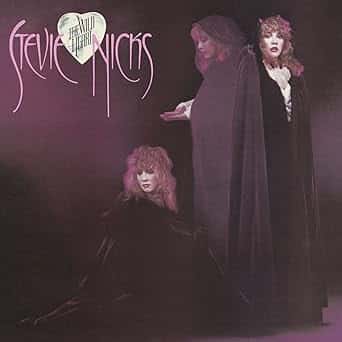
Affiliate Disclosure: I am an Amazon affiliate and if you purchase through any Amazon links on this site I may earn a small commission at no extra charge to you. This helps support classicrockartists.com. Thank you for your support!
Quick Navigation
What is the meaning of Stevie Nicks Stand Back?
Stand Back captures the rush of creative inspiration and romantic intensity Nicks felt while listening to Prince’s Little Red Corvette on her wedding day to Kim Anderson in 1983, channeling that energy into a declaration of independence and self-assertion.
The Vibe: Genre, Mood, and Sound of stevie nicks stand back
This is synth-driven rock with new wave edges, built for both radio dominance and dance floors.
- Genre: Synth-rock, new wave, pop rock
- Mood: Urgent, defiant, electrifying
- Tempo: Uptempo, driving at approximately 132 BPM
- Best For: Late-night drives, workout playlists, moments when you need to reclaim your power
- Similar To: Pat Benatar’s Love Is a Battlefield, Heart’s What About Love
- Fans of Stevie Nicks also search: Stevie Nicks solo hits, Fleetwood Mac members solo careers, 1980s female rock artists
Behind the Lyrics: The Story of stevie nicks stand back
The genesis of Stand Back reads like rock and roll mythology.
Nicks married Kim Anderson, the widower of her best friend Robin Snyder, on January 29, 1983, in a marriage that would last only three months.
During the drive to the Santa Barbara wedding, Prince’s Little Red Corvette came on the radio.
The song’s propulsive energy struck Nicks so powerfully that she rushed to a synthesizer immediately after the ceremony.
Within hours, she had written Stand Back, using the chord structure and feel of Prince’s track as her foundation.
Nicks called Prince directly to tell him about the song and invited him to the studio.
Prince showed up unannounced during the recording session at Sunset Sound in Los Angeles.
He played a synthesizer solo that became integral to the final track, though he refused any credit or payment.
The lyrics reflect Nicks’s emotional state during this turbulent period, caught between grief, obligation, and the need for personal freedom.
Lines like “No one looked as I walked by, just an invitation would have been just fine” speak to isolation and longing for connection.
The repeated command to “stand back” functions as both a warning and a declaration of independence.
The Wild Heart album, released in June 1983, found Nicks exploring darker, more electronic textures than her debut Bella Donna.
This shift reflected the changing landscape of early 1980s rock, where synthesizers were becoming as essential as guitars.
Nicks had already established herself as one of the members of Fleetwood Mac with the most successful solo career.
Stand Back proved she could evolve beyond the California soft-rock sound that defined her band work.
The song’s production marked a departure from the organic, guitar-based arrangements of Rumours-era Fleetwood Mac.
According to Wikipedia, the track became one of Nicks’s signature solo performances throughout her career.
Technical Corner: The Gear Behind stevie nicks stand back
Jimmy Iovine produced Stand Back at Sunset Sound Recorders in Hollywood, the same studio where Nicks had recorded much of Bella Donna.
The dominant synthesizer sound came from a Prophet-5, the polyphonic analog synth that defined early 1980s pop and rock.
Roy Bittan from Bruce Springsteen’s E Street Band played the main keyboard parts, bringing his signature dramatic style to the arrangement.
Prince’s uncredited synthesizer contribution added a distinctive melodic hook that weaves through the verses.
Waddy Wachtel, Nicks’s longtime guitarist and collaborator, provided the guitar work that cuts through the synth layers.
Russ Kunkel handled drums, delivering a tight, mechanical feel that complemented the electronic elements.
The production employed gated reverb on the drums, a technique popularized by Phil Collins that became ubiquitous in 1980s rock.
Nicks’s vocals were recorded with minimal effects, allowing her distinctive rasp to cut through the dense instrumental arrangement.
The mix placed the synthesizers prominently in the stereo field, creating a wall of sound that was radio-friendly yet aggressive.
Iovine’s production philosophy emphasized clarity and punch, ensuring every element had its own sonic space.
The bass line, played by Donald “Duck” Dunn, provided a funky counterpoint to the driving synth patterns.
Backing vocals were kept minimal, with Nicks handling most of the harmonies herself through overdubbing.
Legacy and Charts: Why stevie nicks stand back Still Matters
Stand Back peaked at number five on the Billboard Hot 100 in August 1983, becoming Nicks’s highest-charting solo single at that point.
The song reached number two on the Billboard Mainstream Rock chart, proving its crossover appeal.
In Canada, the track climbed to number four, while it reached number 50 in the UK.
The Wild Heart album went double platinum in the United States, driven largely by the success of this lead single.
The music video, directed by Edd Griles, received heavy rotation on MTV during the network’s golden era.
Nicks performed the song on Saturday Night Live in December 1983, introducing it to millions of viewers.
The track became a staple of Nicks’s solo concerts and later appeared in Fleetwood Mac reunion setlists.
Stand Back influenced a generation of female rock artists who saw Nicks successfully navigate the transition from band member to solo star.
The song’s blend of rock credibility and pop accessibility became a template for crossover success in the 1980s.
Prince’s involvement, though uncredited, added to the mystique and demonstrated the mutual respect between two of the era’s biggest stars.
The track has been featured in numerous films and television shows, including American Horror Story: Coven, where Nicks herself appeared.
A YouTube video of the original music video has accumulated 28 millions of views, introducing the song to new generations.
In 2019, Nicks released a remastered version as part of the Stand Back: 1981-2017 compilation, bringing renewed attention to the track.
The song remains one of the most requested tracks at Nicks’s concerts, nearly four decades after its release.
Listener’s Note: A Personal Take on Stevie Nicks Stand Back
When I first heard this on vinyl in my sister’s bedroom in 1983, the opening synthesizer blast felt like a transmission from another dimension.
My growing up years and beyond had Fleetwood Mac’s Rumours playing constantly, so Nicks’s voice is a familiar territory.
But this was different.
The urgency in her delivery, the way she stretched the word “back” into a command that felt both desperate and defiant, hit me in the chest.
That moment at 2:47 when Prince’s synth line spirals upward during the bridge still gives me chills every single time.
It’s a perfect example of how a guest musician can elevate a track without overwhelming it.
The production holds up remarkably well, avoiding the dated excesses that plague so many 1980s recordings.
Iovine knew exactly when to pull back and let Nicks’s voice carry the emotional weight.
This is a song about transformation, about shedding expectations and claiming your own space.
Every time I drop the needle on this track, I’m reminded why Nicks remains one of rock’s most compelling figures.
Affiliate Disclosure: I am an Amazon affiliate and if you purchase through any Amazon links on this site I may earn a small commission at no extra charge to you. This helps support classicrockartists.com and allows me to keep providing deep-dive content on the legends of rock. Thank you for your support!
Collector’s Corner: Own stevie nicks stand back on Vinyl or CD
The Wild Heart album deserves a place in any serious rock collection, and the original 1983 pressing captures the punch of Iovine’s production.
The 2016 remaster offers improved clarity while preserving the character of the original mix.
Get Stevie Nicks Stand Back (1983) on Vinyl or CD at Amazon
Frequently Asked Questions About stevie nicks stand back
Did Prince play on Stand Back?
Yes, Prince played synthesizer on Stand Back after Stevie Nicks called him to explain how his song Little Red Corvette inspired her composition.
He showed up at Sunset Sound studio unannounced and contributed a distinctive synth solo, though he refused any credit or payment for his work.
What album is Stand Back on?
Stand Back appears on Stevie Nicks’s second solo album, The Wild Heart, released in June 1983 on Modern Records.
The album went double platinum and featured other notable tracks like If Anyone Falls and Beauty and the Beast.
When did Stevie Nicks release Stand Back?
Stand Back was released as a single in May 1983, ahead of The Wild Heart album’s June release.
The song quickly climbed the charts, reaching its peak position of number five on the Billboard Hot 100 by August of that year.
What inspired Stevie Nicks to write Stand Back?
Stevie Nicks wrote Stand Back after hearing Prince’s Little Red Corvette on the radio while driving to her wedding to Kim Anderson on January 29, 1983.
The song’s energy inspired her so profoundly that she went straight to a synthesizer after the ceremony and composed the track in a matter of hours.
You Might Also Like
Nicks’s previous hit showcases her mystical songwriting style just before she embraced the synth-rock sound of Stand Back.
Explore how Nicks and her bandmates built parallel solo careers while maintaining one of rock’s most successful groups.
Discover the evolution of Nicks’s solo artistry from Bella Donna through her 1980s peak.
Whether you discovered it in 1983 or through a streaming playlist decades later, stevie nicks stand back remains an essential document of an artist at the height of her creative powers.