

Black Sabbath Iron Man features one of the most instantly recognizable guitar riffs in the history of heavy metal, a slow, crushing progression that helped define an entire genre.
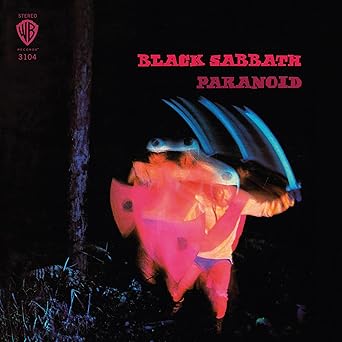
Get Black Sabbath Iron Man on Vinyl or CD at Amazon
Affiliate Disclosure: I am an Amazon affiliate and if you purchase through any amazon links on this site i may earn a small commission at no extra charge to you.
Released in 1970 on the Paranoid album, Iron Man became one of Black Sabbath’s most celebrated songs and a cornerstone of the heavy metal canon that the band was in the process of inventing.
Guitarist Tony Iommi created the riff after imagining what a large piece of iron might sound like if it could move, a visualization that led directly to the lumbering, mechanical quality that makes the song so distinctive.
Quick Navigation
What is the meaning of Black Sabbath Iron Man?
Iron Man tells a tragic science fiction story about a man who travels through time to witness the apocalypse, only to be transformed into steel during his journey back and thus unable to warn humanity of the coming destruction.
The irony at the heart of the song is that Iron Man, in his futile attempts to communicate his warning, only succeeds in frightening people away, which in turn causes him to become the agent of the very destruction he was trying to prevent.
Geezer Butler wrote the lyrics after seeing the riff Iommi had created and immediately imagining a figure made of iron lumbering through a desolate landscape.
The song can also be read as a metaphor for social rejection and the loneliness of being different, themes that resonated strongly with the working-class audiences who became Black Sabbath’s most devoted fans.
The Vibe: Genre, Mood, and Sound of Black Sabbath Iron Man
Iron Man is a defining document of early heavy metal, built on a riff so slow and heavy that it seems to bend the air around it.
The song alternates between crushing slow passages and faster, more aggressive sections, creating a dynamic range that was revolutionary for its time.
- Genre: Heavy metal, hard rock, proto-metal
- Mood: Ominous, powerful, tragic, relentless
- Tempo: Slow and crushing with faster aggressive sections
- Key Instruments: Electric guitar, bass, drums, distorted vocals
- If you like this, try: Black Sabbath’s War Pigs, Ozzy Osbourne’s Crazy Train, Deep Purple’s Smoke on the Water
Behind the Lyrics
The famous opening question about whether Iron Man is a man who travels in time and saves humanity is delivered through a deliberately robotic vocal effect that mimics the speaking voice of an automaton.
Geezer Butler created this vocal effect by running Ozzy Osbourne’s voice through an electric fan, creating the buzzing, mechanical quality that makes the introduction so memorable.
The verses describe Iron Man’s transformation and his tragic inability to communicate his warning to the very people he traveled through time to save.
The chorus shift to Iron Man’s perspective as he watches humanity reject him is genuinely affecting, turning what could have been a simple science fiction novelty into something with real emotional weight.
The final section where Iron Man exacts his revenge captures the song’s darkest implication, that good intentions corrupted by isolation and despair become something terrible.
Butler has cited Edgar Allan Poe and science fiction novels as primary influences on his lyrical approach at this period, which gave Sabbath songs a literary dimension unusual for hard rock bands of the era.
Recording Story and Production
Iron Man was recorded at Regent Sound Studios in London in June 1970, during the sessions for Paranoid that followed the band’s remarkable debut album recorded just months earlier.
Producer Roger Bain worked with the band to capture the enormous, natural sound they had developed through months of intensive live performance, keeping overdubs to a minimum.
Tony Iommi’s guitar tone on the track came partly from necessity, as he had lost the tips of two fingers on his right hand in a factory accident and used thimbles and lighter string gauges to compensate, which contributed to his distinctive muffled, heavy tone.
Bill Ward’s drumming on the track is a showcase of his unique combination of jazz-influenced phrasing and heavy rock power, creating a rhythmic backdrop that is simultaneously complex and brutally effective.
Geezer Butler’s bass playing on Iron Man is notable for its ability to hold down the low end while also providing melodic movement that adds harmonic interest to what is otherwise a deliberately minimal arrangement.
The entire Paranoid album, including Iron Man, was recorded and mixed in approximately two days, a pace that contributed to the raw, live energy that makes the recordings so powerful.
Chart Performance and Legacy
Iron Man was released as a single in the United States in 1972 and reached number 52 on the Billboard Hot 100, modest chart performance that belied its enormous cultural impact.
The Paranoid album reached number one in the United Kingdom and number twelve in the United States, establishing Black Sabbath as a major commercial force.
Rolling Stone ranked Iron Man among the 500 Greatest Songs of All Time and has cited it as one of the foundational documents of heavy metal music.
The guitar riff is one of the most studied and imitated in rock history, appearing on countless lists of the greatest riffs ever written and remaining a staple of guitar education.
Iron Man won the Grammy Award for Best Metal Performance in 2000, nearly three decades after its original release, recognition of its towering place in the metal canon.
The song’s title was later adopted by Marvel Comics for Tony Stark’s superhero identity, though the Iron Man of the song has no direct connection to the Marvel character.
Listener’s Note: A Personal Take on Black Sabbath Iron Man
That riff. There is no more efficient way to describe what makes Iron Man so special than to say: that riff. It does something to the room when it comes on.
The robotic voice intro is a piece of genius that captures the song’s science fiction premise while also demonstrating an experimental creativity that many people do not associate with early Sabbath.
The tempo change when the song accelerates is one of the great moments of dynamic contrast in rock history, the musical equivalent of a giant suddenly starting to run.
Listening to Iommi’s guitar tone through good speakers is an experience in itself. There is a weight to it that feels almost architectural.
Collector’s Corner: Own Black Sabbath Iron Man on Vinyl or CD
Original UK pressings of Paranoid on Vertigo Records, with the distinctive swirl label, are among the most valuable pieces of heavy metal vinyl and command significant prices in excellent condition.
Remastered editions on Rhino Records offer excellent sound quality and often include bonus tracks from the same recording sessions.
Get Black Sabbath Iron Man on Vinyl or CD at Amazon
Affiliate Disclosure: I am an Amazon affiliate and if you purchase through any amazon links on this site i may earn a small commission at no extra charge to you.
Frequently Asked Questions About Black Sabbath Iron Man
Who wrote Iron Man by Black Sabbath?
Iron Man was written by the entire band. Tony Iommi created the guitar riff, Geezer Butler wrote the lyrics and the story, and Ozzy Osbourne and Bill Ward contributed to the arrangement.
How was the robotic voice in Iron Man created?
The mechanical-sounding vocal introduction was created by running Ozzy Osbourne’s voice through an electric fan, producing the buzzing, robotic quality that has become one of the most recognizable sounds in rock history.
Is Black Sabbath Iron Man related to Marvel’s Iron Man?
No. The Black Sabbath song predates the popular Marvel superhero film franchise and has no connection to Tony Stark. The song’s Iron Man is a tragic time-traveler turned into steel, not a billionaire industrialist in a suit of armor.
You Might Also Like
The enduring dominance of Black Sabbath Iron Man in the heavy metal pantheon rests on Tony Iommi’s incomparable riff, a piece of guitar writing so heavy and so perfectly constructed that it has never been topped in half a century of trying.