

David Bowie Ziggy Stardust is the title track of one of rock music’s greatest concept albums, a portrait of a fictional rock messiah who blazes into the world, burns magnificently, and is ultimately consumed by the fame he created.
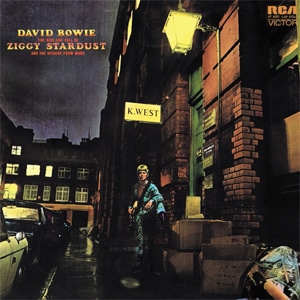
Get David Bowie Ziggy Stardust on Vinyl or CD at Amazon
Affiliate Disclosure: I am an Amazon affiliate and if you purchase through any amazon links on this site i may earn a small commission at no extra charge to you.
Released in 1972 on The Rise and Fall of Ziggy Stardust and the Spiders from Mars, the song serves as the centrepiece of Bowie’s most celebrated work, introducing the doomed alien rock star character that would make him a global phenomenon.
Bowie created the Ziggy Stardust character by blending elements of several real-life performers, including Vince Taylor, Kansai Yamamoto’s theatrical fashion aesthetic, and the underground New York scene he had encountered through Lou Reed and Iggy Pop.
Quick Navigation
What is the meaning of David Bowie Ziggy Stardust?
Ziggy Stardust is a rock fable about the seductive and ultimately self-destructive nature of rock stardom, told through the story of a fictional alien messiah who descends to Earth, achieves transcendent fame, and is destroyed by the very adulation he sought.
The song specifically portrays Ziggy’s sexual magnetism, his supernatural guitar playing, and the gradual loss of self that comes when a performer becomes fully consumed by their public persona.
Bowie was drawing on his observations of what fame had done to performers like Syd Barrett and his close friend Marc Bolan, creating a cautionary tale wrapped in the most glamorous possible packaging.
The song also functions as Bowie’s self-aware commentary on his own relationship with persona and performance, an artist exploring what it means to become something you have invented. His later work, including Heroes, would continue this exploration of identity and transformation.
The Vibe: Genre, Mood, and Sound of David Bowie Ziggy Stardust
Ziggy Stardust operates in the glam rock space that Bowie was defining in real time, blending hard rock guitar with theatrical presentation and a lyrical sophistication that set him apart from his contemporaries.
The song has a slightly ramshackle, organic quality that grounds its ambitious narrative in something raw and emotionally immediate.
- Genre: Glam rock, art rock, hard rock
- Mood: Theatrical, urgent, elegiac, electrifying
- Tempo: Driving mid-tempo with dynamic shifts
- Key Instruments: Electric guitar, bass, drums, piano
- If you like this, try: David Bowie’s Heroes, T. Rex’s Bang a Gong, Mott the Hoople’s All the Young Dudes
Behind the Lyrics
The song opens with Bowie introducing Ziggy as a guitarist who “played it left hand” but could turn it on, immediately establishing the character’s effortless supernatural ability.
The line about making love with his ego is both a description of Ziggy’s narcissism and a commentary on the way great performers seduce their audiences with personality as much as music.
Bowie’s description of Ziggy as a “leper messiah” is one of the most potent phrases in the Ziggy mythology, combining religious imagery with the social rejection of the outsider.
The Spiders from Mars, Ziggy’s backing band, are described with affection and slight condescension, skilled musicians who have given their best years to someone who will ultimately outgrow and discard them.
The song’s climax, where Ziggy is taken by surprise by the fans who make him and then unmake him, perfectly captures the violent relationship between celebrity and the public desire that creates and destroys it.
Mick Ronson‘s guitar solo is one of the defining moments of glam rock guitar, technically accomplished while remaining emotionally direct and utterly committed to the song’s dramatic arc.
Recording Story and Production
The Ziggy Stardust album was recorded at Trident Studios in London from November 1971 to February 1972, produced by Ken Scott and David Bowie in a remarkably efficient series of sessions.
Mick Ronson’s guitar work throughout the album, and on the title track specifically, was central to Bowie’s vision, providing the hard rock backbone against which Bowie’s theatrical vocals could soar.
Producer Ken Scott recalled that Bowie came to the sessions with unusually complete ideas, knowing exactly what he wanted from each track and communicating it to the band with exceptional clarity.
Trevor Bolder’s bass playing is a highlight of the recording, particularly in the song’s middle section where his melodic lines add harmonic richness beneath Ronson’s guitar.
Mick Woodmansey’s drumming is appropriately restrained in the verses but explosive in the choruses, matching the song’s dynamic arc with precision.
The recording captures Bowie at the exact moment when his years of experimentation and commercial near-misses were about to crystallize into one of the most celebrated bodies of work in rock history, released on RCA Records in June 1972.
Chart Performance and Legacy
The Ziggy Stardust album reached number five in the UK charts and number seventy-five in the US, modest numbers that grew exponentially in cultural significance over the following decades.
Rolling Stone ranked the album among the 500 Greatest Albums of All Time, placing it in the top 40 in the most recent revision, and the title track is consistently named one of the most important songs in rock history.
The Ziggy Stardust character became one of the most influential constructs in popular music, demonstrating that a rock performer could be both narrator and character, both self and invention. This persona-driven approach to rock performance would later influence acts from Queen to countless others in the decades that followed.
Bowie’s retirement of the Ziggy persona at the Hammersmith Odeon in July 1973 is one of rock’s most theatrical and memorable moments, a performer killing his own creation on stage.
The album’s influence on the art rock scene that followed was also significant; its theatrical ambition and lyrical sophistication paved the way for artists like Aladdin Sane-era Bowie himself and the glam genre he helped define.
Artists from Lady Gaga to Marilyn Manson to Gary Numan have cited the Ziggy Stardust album as a primary influence on their approach to persona, performance, and the relationship between artist and audience.
Listener’s Note: A Personal Take on David Bowie Ziggy Stardust
There is something about the organic looseness of this recording that makes it feel genuinely alive in a way that more polished productions of the era do not.
Bowie sounds completely committed to the character without ever losing the thread of himself as the narrator observing Ziggy from a careful distance.
Mick Ronson’s guitar solo is the emotional heart of the song. In those few bars he captures everything the lyrics are describing, the beauty and the damage of stardom, without a single wasted note.
The song’s ending, with its urgent, almost chaotic energy, feels like watching something wonderful being torn apart in real time. It is deeply unsettling and absolutely right.
Collector’s Corner: Own David Bowie Ziggy Stardust on Vinyl or CD
The original 1972 RCA Records pressing of The Rise and Fall of Ziggy Stardust and the Spiders from Mars is among the most desirable pieces of glam rock vinyl, with the iconic Mick Rock-photographed cover making it instantly recognizable.
The 2012 remaster on Parlophone is the definitive listening edition, with significantly improved audio clarity that reveals new details in Ronson’s guitar work.
Get David Bowie Ziggy Stardust on Vinyl or CD at Amazon
Affiliate Disclosure: I am an Amazon affiliate and if you purchase through any amazon links on this site i may earn a small commission at no extra charge to you.
Frequently Asked Questions About David Bowie Ziggy Stardust
Who is Ziggy Stardust based on?
Ziggy Stardust was a composite character inspired by several real people, primarily Vince Taylor, a British-American rock performer whose mental breakdown and messianic delusions David Bowie witnessed firsthand. The character also drew on elements of Jimi Hendrix, Lou Reed, and Iggy Pop.
What album is Ziggy Stardust on?
Ziggy Stardust is the title track and centrepiece of The Rise and Fall of Ziggy Stardust and the Spiders from Mars, released in June 1972 on RCA Records. It is widely considered one of the greatest rock albums ever recorded.
When did Bowie retire the Ziggy Stardust character?
David Bowie retired the Ziggy Stardust character on 3 July 1973 at the Hammersmith Odeon in London, announcing from the stage that it would be the last show they would ever do, shocking both the audience and his own band.
You Might Also Like
The enduring fascination of David Bowie Ziggy Stardust is the way it simultaneously creates and critiques the myth of rock stardom, building a character so compelling that Bowie himself had to destroy it before it consumed him.