

Doobie Brothers Black Water is one of the most distinctive hits in classic rock, a song that blends rock, country, blues, and acoustic folk in a way that defies easy categorization while remaining immediately accessible and deeply satisfying.
Get Doobie Brothers Black Water on Vinyl or CD at Amazon
Affiliate Disclosure: I am an Amazon affiliate and if you purchase through any amazon links on this site i may earn a small commission at no extra charge to you.
Released in 1974, Black Water became the Doobie Brothers‘ first number one hit on the Billboard Hot 100, reaching the top spot in February 1975 and establishing the band as one of the most commercially successful American rock acts of the decade.
Written by Patrick Simmons, the song was inspired by a trip through the American South and the majesty of the Mississippi River, evoking the slow power and romance of one of America’s most mythologized waterways.
Quick Navigation
What is the meaning of Doobie Brothers Black Water?
Black Water is a song about the deep, slow power of the Mississippi River and the desire to lose oneself in the romance and wildness of the American South, to hear the old river sing her song and be carried away by it.
Patrick Simmons drew on the rich cultural mythology of the Mississippi as a symbol of American history, music, and natural power, creating a lyric that connects the narrator to something vast and ancient.
The desire to be in New Orleans to watch the sun go down on the river speaks to a specific kind of American romantic longing, the wish to be present at a moment of beauty in a place of legendary significance.
The song’s a cappella section, which breaks from the band arrangement to feature unaccompanied vocal harmonies, was an unusual choice that gave the song a distinctive character and demonstrated the Doobie Brothers’ confidence in their vocal abilities.
The Vibe: Genre, Mood, and Sound of Doobie Brothers Black Water
Black Water occupies a genre space entirely its own, combining acoustic folk strumming, gospel vocal harmonies, country flavors, and rock energy into something that sounds simultaneously Californian and Southern.
The song has a rolling, unhurried quality that matches its subject matter, the music moving with the same easy power as the river it describes.
- Genre: Southern rock, country rock, folk rock, gospel-influenced
- Mood: Languid, romantic, evocative, warmly celebratory
- Tempo: Easy rolling mid-tempo, unhurried and warm
- Key Instruments: Acoustic guitar, electric guitar, bass, drums, a cappella harmonies
- If you like this, try: Doobie Brothers’ Listen to the Music, What a Fool Believes, Eagles’ Take It Easy
Behind the Lyrics
Simmons opens the song with an invitation to Old Black Water to keep rolling on, addressing the river as if it were a living entity capable of hearing and responding to the narrator’s request.
The image of lying in the shade of a tall levee captures a specific Southern landscape with the precision of someone who has actually seen and felt such a place.
The desire to hear a bullfrog sing his song and listen to the banjo player evokes the acoustic vernacular music of the American South that was part of the broader cultural heritage the Doobies were drawing on.
The vocal harmonies, particularly in the a cappella section, draw on gospel tradition, connecting the song to the African American musical heritage that flows through so much of American popular music.
Simmons delivers the lyric with a warmth and ease that makes the romantic longing feel completely natural, the song’s laid-back quality a deliberate artistic choice rather than an accident.
The repeated refrain asking to be taken down to the Mississippi creates a hypnotic quality that draws the listener deeper into the song’s evocative world with each repetition.
Recording Story and Production
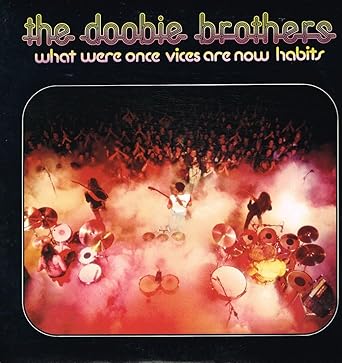
Black Water was recorded at Amigo Studios in Los Angeles in 1973 during the sessions for What Were Once Vices Are Now Habits, produced by Ted Templeman who worked with the Doobie Brothers throughout their most successful period.
Templeman recognized immediately that Black Water was something special, its unusual arrangement and atmospheric quality setting it apart from typical rock single material of the era.
The a cappella vocal section required careful arrangement and execution, the harmonies needing to be precisely calibrated to sound natural and spontaneous while actually being meticulously constructed.
Patrick Simmons’s acoustic guitar work throughout the recording establishes the song’s folk-country foundation, his playing having a warmth and ease that perfectly matches the lyrical content.
Tom Johnston’s lead guitar contributions add a rock dimension without disrupting the song’s predominantly acoustic atmosphere.
Tiran Porter’s bass work provides the song’s rhythmic foundation while also adding melodic interest that keeps the arrangement moving forward despite its deliberately unhurried pace.
The recording was initially intended as an album track rather than a single, but its unusual quality convinced Templeman and the label to release it as a single despite its unconventional structure.
Chart Performance and Legacy
Black Water reached number one on the Billboard Hot 100 in February 1975, giving the Doobie Brothers their first and most commercially successful number one single.
The song’s success demonstrated that rock audiences in the mid-1970s were receptive to a wider range of sounds and styles than radio programmers had assumed, helping to pave the way for the country-influenced rock that would become a major commercial force later in the decade.
Black Water has become a beloved classic rock staple, its distinctive sound and evocative lyric making it one of the most immediately recognizable songs of the 1970s.
The song’s a cappella section has been cited by numerous artists as an influence on their approach to vocal arrangement, demonstrating that rock songs could accommodate extended unaccompanied vocal passages without losing their momentum.
The Doobie Brothers continue to perform Black Water at their live shows, where its inviting, warm quality makes it one of the most reliably crowd-pleasing moments of their concerts.
Listener’s Note: A Personal Take on Doobie Brothers Black Water
There is a warmth to this song that feels almost physical. It sounds like an afternoon by a river, the light coming through the trees, something cold in your hand, nowhere you need to be.
The a cappella section is one of the bravest choices in 1970s rock production. It completely strips away everything except the voices and the harmonies, and it works perfectly.
Simmons delivers this lyric with a completely effortless ease that makes it sound improvised even though every element is carefully crafted. That kind of naturalness is very hard to achieve.
This song makes me want to go somewhere slow and warm and listen to the water. That is an extraordinary thing for a piece of music to do, and Black Water does it better than almost anything else I know.
Affiliate Disclosure: I am an Amazon affiliate and if you purchase through any Amazon links on this site I may earn a small commission at no extra charge to you. This helps support ClassicRockArtists.com. Thank you for your support!
Collector’s Corner: Own Doobie Brothers Black Water on Vinyl or CD
What Were Once Vices Are Now Habits on Warner Bros. Records is available in remastered editions that preserve the warmth of the original analog recording.
Original 1974 Warner Bros. pressings are collectible and sound particularly good on quality vinyl playback equipment given the recording’s predominantly acoustic character.
Get Doobie Brothers What Were Once Vices Are Now Habits on Vinyl or CD at Amazon
Frequently Asked Questions About Doobie Brothers Black Water
Who wrote Black Water by the Doobie Brothers?
Black Water was written entirely by Patrick Simmons, the Doobie Brothers’ guitarist and vocalist. Simmons was inspired by a trip through the American South and the imagery of the Mississippi River to write one of the most distinctive songs in the band’s catalog.
Did Black Water reach number one?
Yes, Black Water reached number one on the Billboard Hot 100 in February 1975, making it the Doobie Brothers’ first and biggest chart-topping single. It remained at the top spot for one week.
What album is Black Water by the Doobie Brothers on?
Black Water appears on the Doobie Brothers’ fourth studio album What Were Once Vices Are Now Habits, released in February 1974 on Warner Bros. Records. The album reached number four on the Billboard 200.
You Might Also Like
The enduring magic of Doobie Brothers Black Water is its ability to make you feel the slow pull of a great river and the deep, abiding romance of the American South in nothing more than a few guitar chords, some perfectly chosen words, and voices harmonizing in the warm air. If that acoustic-driven, folk-rock spirit resonates with you, here are three other deep dives into the legends of classic rock:
Buffalo Springfield Before the Doobie Brothers perfected their California sound, Buffalo Springfield was blending folk, country, and rock into something revolutionary. Exploring the Members of Buffalo Springfield reveals the early magic of Neil Young and Stephen Stills, whose intricate guitar work and vocal blends paved the way for the laid-back, rhythmic storytelling found in tracks like “Black Water.”
Fleetwood Mac Much like the Doobie Brothers, Fleetwood Mac mastered the art of the “vibe”—creating songs that feel like a specific time and place. Whether it’s the bluesy roots of their early years or the polished soft-rock brilliance of the 70s, the Members of Fleetwood Mac captured a sense of melodic wanderlust and harmony that remains unmatched in rock history.
Jefferson Airplane For those who appreciate the more organic, psychedelic-folk side of the late 60s and early 70s, the Members of Jefferson Airplane are essential. They brought a raw, communal energy to their music that mirrors the soulful, “gather-around” feeling of a classic acoustic anthem, blending haunting vocals with a distinct sense of Americana.
Plus + If you are looking to explore the heavier or more progressive side of rock’s evolution, check out the legendary lineups and history of the Members of Black Sabbath or the symphonic complexity of the Members of Yes.