

Fleetwood Mac Tusk stands as one of the most audacious and experimental tracks in the band’s storied catalog, a bold departure from the polished pop-rock that defined their late 1970s sound.
Released as the title track from their 1979 double album, this Lindsey Buckingham composition challenged commercial expectations and redefined what a mainstream rock band could achieve.
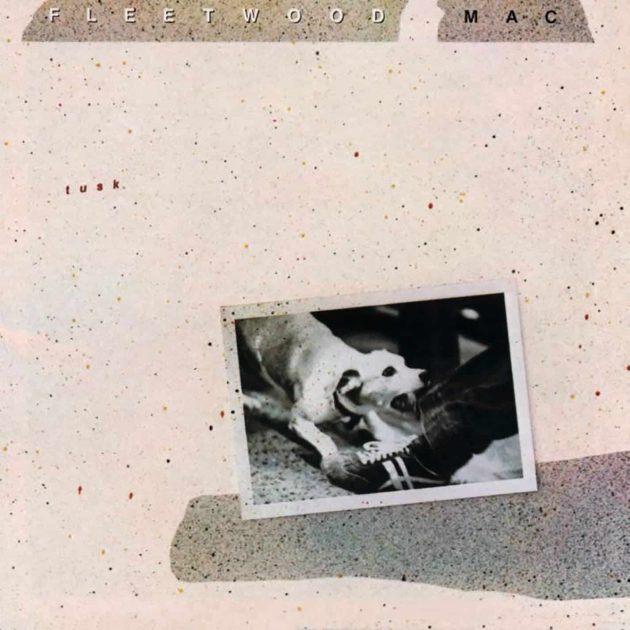
Fleetwood Mac Tusk – Available on Amazon
Get Fleetwood Mac Tusk (1979) on Vinyl or CD at Amazon
Affiliate Disclosure: I am an Amazon affiliate and if you purchase through any Amazon links on this site I may earn a small commission at no extra charge to you. This helps support classicrockartists.com. Thank you for your support!
Quick Navigation
What is the meaning of Fleetwood Mac Tusk?
The song represents Lindsey Buckingham’s artistic rebellion against commercial expectations and his tumultuous relationship with Stevie Nicks, using minimalist percussion and the USC Trojan Marching Band to create a deliberately abrasive, anti-pop statement that challenged the band’s soft-rock image while exploring themes of defiance and emotional distance.
The Vibe: Genre, Mood, and Sound of Fleetwood Mac Tusk
This track fuses new wave experimentation with marching band bombast, creating an aggressive, almost confrontational sonic landscape.
- Genre: Experimental rock, new wave, art rock
- Mood: Defiant, aggressive, playfully confrontational
- Tempo: Moderate (approximately 120 BPM)
- Best For: Stadium anthems, workout playlists, moments requiring bold energy
- Similar To: Talking Heads’ “Psycho Killer,” The Clash’s “Rock the Casbah”
Behind the Lyrics: The Story of Fleetwood Mac Tusk
Lindsey Buckingham wrote the song during a period of intense creative restlessness following the massive success of Rumours.
The 1977 album had sold over 40 million copies worldwide, creating enormous pressure for a worthy follow-up.
Rather than replicate the formula, Buckingham became obsessed with punk and new wave movements emerging in late 1970s Britain and America.
He wanted to strip away the lush production that characterized Rumours and create something raw and primitive.
The lyrics are deliberately cryptic and minimal, with Buckingham chanting “Why don’t you ask him if he’s going to stay?” and “Why don’t you tell me what’s going on?”
These questions reflect the fractured relationships within the band, particularly between Buckingham and Stevie Nicks.
Their romantic relationship had ended, yet they remained creative and professional partners.
The tension fueled much of the Tusk album’s emotional complexity.
According to Wikipedia, the song’s title came from a slang term Buckingham and drummer Mick Fleetwood used to describe male anatomy.
This irreverent choice reflected Buckingham’s desire to subvert expectations and inject humor into the band’s increasingly serious public image.
The decision to incorporate the USC Trojan Marching Band was both practical and symbolic.
Buckingham wanted a massive, unconventional sound that couldn’t be replicated by traditional rock instrumentation.
The 112-piece ensemble recorded their parts at Dodger Stadium in Los Angeles, creating a thunderous brass and percussion backdrop.
This choice cost approximately $50,000, a staggering sum for a single track in 1979.
Warner Bros. Records executives were reportedly horrified by the song’s uncommercial sound.
They had expected another Rumours, not a double album filled with experimental detours.
The Tusk album ultimately cost over $1 million to produce, making it one of the most expensive rock records ever made at that time.
Technical Corner: The Gear Behind Fleetwood Mac Tusk
Lindsey Buckingham played a Turner Model 1 electric guitar on the track, an instrument he favored for its bright, cutting tone.
He also used a Fender Stratocaster for certain overdubs, running it through a Fender Twin Reverb amplifier.
Mick Fleetwood’s drum kit was a custom Ludwig setup, featuring a 24-inch bass drum and Paiste cymbals.
His tribal, minimalist beat anchors the entire composition, providing a hypnotic foundation.
John McVie played a Fender Precision Bass, though his bassline is deliberately understated throughout most of the track.
The song was recorded at Village Recorder in Los Angeles, with additional sessions at Dodger Stadium for the marching band segments.
Ken Caillat and Richard Dashut served as co-producers alongside Buckingham and Fleetwood Mac.
Caillat had engineered Rumours and understood Buckingham’s vision for a rawer, less polished sound.
The USC Trojan Marching Band brought their own instruments, including sousaphones, trumpets, trombones, and snare drums.
Their director, Arthur C. Bartner, arranged the brass parts based on Buckingham’s vocal melody.
The recording process involved multiple takes to capture the band’s energy while maintaining synchronization with the pre-recorded rhythm track.
Buckingham employed a technique called “found sound” percussion, using unconventional objects to create rhythmic textures.
He clapped, stomped, and struck various surfaces to build layers of organic percussion.
The final mix emphasized the marching band’s brassy punch while keeping Buckingham’s vocals deliberately dry and upfront.
Legacy and Charts: Why Fleetwood Mac Tusk Still Matters
The song peaked at number eight on the Billboard Hot 100 in the United States during late 1979.
In the United Kingdom, it reached number six on the UK Singles Chart, becoming one of the band’s most successful British singles.
Canadian audiences embraced the track, pushing it to number four on the RPM Top Singles chart.
The Tusk album itself achieved double platinum certification in the United States, though it sold far fewer copies than Rumours.
Critics initially gave the album mixed reviews, with some praising its ambition and others lamenting its lack of commercial hooks.
Over time, however, Tusk has been reassessed as a bold artistic statement and a precursor to alternative rock.
The song’s influence can be heard in bands like R.E.M., Pavement, and The Strokes, all of whom cited Buckingham’s experimental approach as inspiration.
The track has appeared in numerous films and television shows, including the 1996 movie The Cable Guy starring Jim Carrey.
That placement introduced the song to a new generation of listeners unfamiliar with Fleetwood Mac’s 1970s catalog.
The USC Trojan Marching Band still performs the song at football games, cementing its status as a cultural touchstone.
Few artists have covered the track due to its unique arrangement, though indie bands occasionally attempt stripped-down versions.
The song’s legacy lies not in its chart performance but in its demonstration that established artists could take creative risks.
Buckingham proved that commercial success didn’t require artistic compromise, a lesson that resonates with musicians today.
Listener’s Note: A Personal Take on Fleetwood Mac Tusk
When I first heard this on vinyl, I was struck by how different it sounded from everything else in Fleetwood Mac’s catalog.
The opening drum pattern felt almost tribal, like something from a different continent entirely.
Then the marching band exploded into the mix, and I realized I was hearing something genuinely unprecedented.
The moment that always gets me is when Buckingham’s voice cuts through the brass, chanting those cryptic questions.
There’s a rawness to his delivery that feels almost punk, completely at odds with the polished harmonies of Rumours.
I’ve watched the official music video countless times, mesmerized by the band’s performance alongside the USC Trojan Marching Band.
The visual spectacle matches the sonic audacity perfectly.
On headphones, you can hear all the subtle percussion details Buckingham layered beneath the bombast.
There are hand claps, foot stomps, and what sounds like wooden blocks being struck in syncopated rhythms.
It’s a masterclass in texture and arrangement, proving that simplicity and complexity can coexist.
Every time I play this track, I’m reminded that great art often comes from defying expectations rather than meeting them.
Affiliate Disclosure: I am an Amazon affiliate and if you purchase through any Amazon links on this site I may earn a small commission at no extra charge to you. This helps support classicrockartists.com and allows me to keep providing deep-dive content on the legends of rock. Thank you for your support!
Collector’s Corner: Own Fleetwood Mac Tusk on Vinyl or CD
The original double LP pressing offers the warmest sound, with the marching band’s brass tones particularly rich on analog formats.
Remastered CD editions provide clarity and dynamic range that reveal Buckingham’s intricate production choices.
Get Fleetwood Mac Tusk (1979) on Vinyl or CD at Amazon
Frequently Asked Questions About Fleetwood Mac Tusk
Who wrote Fleetwood Mac Tusk?
Lindsey Buckingham wrote the song as the title track for Fleetwood Mac’s 1979 double album.
He composed it during a period of creative experimentation, drawing inspiration from punk and new wave movements.
The song reflects his desire to move away from the polished pop-rock sound of Rumours.
Why did Fleetwood Mac use a marching band on Tusk?
Lindsey Buckingham wanted a massive, unconventional sound that traditional rock instruments couldn’t provide.
The USC Trojan Marching Band’s 112 members created a thunderous brass and percussion backdrop.
This choice cost approximately $50,000 but achieved Buckingham’s vision of an anti-commercial statement.
How much did the Tusk album cost to make?
The Tusk album cost over $1 million to produce, making it one of the most expensive rock records of its era.
The title track alone required significant investment due to the marching band recording at Dodger Stadium.
Warner Bros. executives were concerned about the budget but allowed Buckingham creative freedom.
Did Fleetwood Mac Tusk win any awards?
While the song didn’t win major awards, it received critical acclaim for its innovative production and arrangement.
The Tusk album was nominated for a Grammy Award for Album of the Year in 1980.
Its legacy has grown over decades, with many critics now considering it a masterpiece of experimental rock.
You Might Also Like
The enduring fascination of Fleetwood Mac’s Tusk is its fearless departure from perfection, a sprawling, experimental masterpiece where the band traded the polished safety of their previous success for a raw, avant-garde exploration of rhythm and sound.
If you are captivated by the creative risks and the complex history of this legendary lineup, you might also like:
The Prelude to Tusk: Rumours
To fully appreciate the radical shift that Tusk represented, one must revisit the album that set the stage. Exploring the creation of Rumours by Fleetwood Mac provides the essential context of a band at its commercial peak, battling internal turmoil to create the very “perfection” they would later deconstruct with Tusk.
The Enchantment of “Sara”
While Tusk was defined by Lindsey Buckingham’s experimental edges, it also contained some of Stevie Nicks’ most hauntingly beautiful work. The story behind Fleetwood Mac’s “Sara” offers a glimpse into the ethereal, poetic side of the album, serving as a melodic anchor amidst the record’s more turbulent and tribal rhythms.
The Ever-Evolving Members of Fleetwood Mac
The experimental nature of the late 70s was only possible because of the unique chemistry of the individuals involved. Taking a deep dive into the members of Fleetwood Mac allows you to track the journey of these five distinct personalities—from their bluesy roots to the high-stakes experimentation of the Tusk era and beyond.
Plus + Interested in other bands that pushed the boundaries of their sound? Check out the progressive journey of the members of Yes or the experimental legacy of the members of King Crimson.
Fleetwood Mac Tusk remains a testament to artistic courage, proving that even the most commercially successful bands can challenge themselves and their audiences with bold, uncompromising music.