

Fleetwood Mac Big Love stands as one of the most innovative and sonically adventurous singles the band ever released, showcasing Lindsey Buckingham’s genius for layering guitars and pushing studio technology to its limits.
The track emerged from the Tango in the Night sessions, an album that would prove to be the band’s last hurrah with Buckingham before his departure, and it shares the experimental spirit found in Fleetwood Mac Tusk, where Buckingham first fully embraced his avant-garde production instincts.
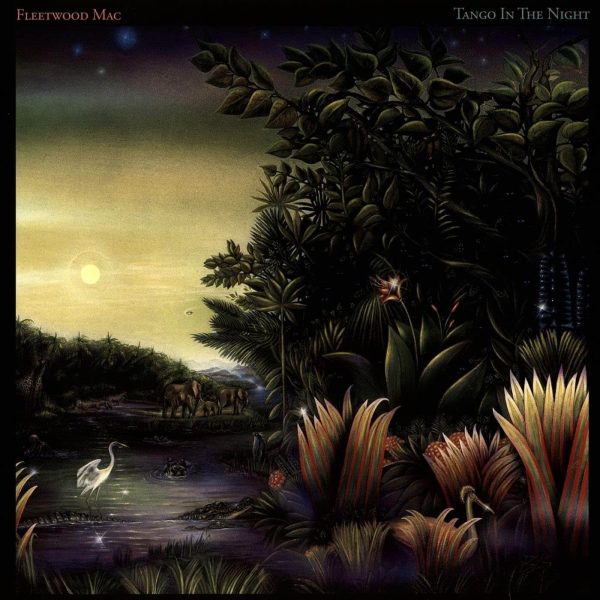
Fleetwood Mac Big Love – Available on Amazon
Get Fleetwood Mac Big Love (1987) on Vinyl or CD at Amazon
Affiliate Disclosure: I am an Amazon affiliate and if you purchase through any Amazon links on this site I may earn a small commission at no extra charge to you. This helps support classicrockartists.com. Thank you for your support!
Quick Navigation
What is the meaning of Fleetwood Mac Big Love?
Big Love explores the overwhelming intensity of romantic obsession and the consuming nature of desire that borders on madness, with Lindsey Buckingham channeling his complex relationship dynamics into a frenetic, almost manic declaration of passion that feels both celebratory and desperate.
The Vibe: Genre, Mood, and Sound of Fleetwood Mac Big Love
The song pulses with nervous energy and technological innovation, blending rock with electronic textures in a way that felt futuristic for 1987.
- Genre: Art rock, pop rock with electronic elements
- Mood: Urgent, obsessive, electrifying, slightly unhinged
- Tempo: Fast-paced, driving at approximately 138 BPM
- Best For: High-energy workouts, late-night drives, understanding 1980s production innovation
- Similar To: Peter Gabriel’s “Sledgehammer,” Talking Heads’ “Once in a Lifetime,” early solo Paul McCartney experiments
Behind the Lyrics: The Story of Fleetwood Mac Big Love
Lindsey Buckingham wrote Big Love during the Tango in the Night sessions at his home studio in Los Angeles between 1985 and 1987.
The song emerged during a period of intense creative isolation for Buckingham, who had become increasingly reclusive and obsessed with studio technology.
Unlike the raw emotional confessions that characterized Fleetwood Mac Go Your Own Way from the Rumours era, Big Love represented a more abstract exploration of desire.
The lyrics reflect Buckingham’s fascination with the irrational aspects of love, the way passion can override logic and consume one’s entire being.
According to Wikipedia, the song was initially conceived as a solo track before being brought to the band.
Buckingham’s relationship with the band had become strained by this point, with creative tensions running high.
The Tango in the Night album would be his last with Fleetwood Mac for a decade, making Big Love a kind of artistic farewell.
The song’s manic energy mirrors the chaos within the band at the time, with various members dealing with personal struggles.
Buckingham channeled his frustrations and creative ambitions into the track, creating something that felt distinctly different from classic Fleetwood Mac.
The repetitive vocal hooks and percussive guitar work create a hypnotic effect that mirrors the obsessive nature of the lyrics.
Warner Bros. Records selected Big Love as the lead single from Tango in the Night, recognizing its commercial potential despite its experimental nature.
Technical Corner: The Gear Behind Fleetwood Mac Big Love
Lindsey Buckingham produced Big Love himself at his home studio, maintaining complete creative control over every sonic detail.
The most distinctive element of the track is Buckingham’s percussive guitar technique, achieved by slapping and hitting the body of his acoustic guitar.
He used a Turner Model 1 guitar, a custom-built instrument that became his signature axe during this period.
The guitar parts were layered extensively, with Buckingham overdubbing multiple acoustic and electric tracks to create a dense, rhythmic texture.
The Fairlight CMI synthesizer played a crucial role in the song’s electronic elements, providing the futuristic sounds that punctuate the arrangement.
Buckingham employed a Linn LM-1 drum machine for the foundational rhythm track, which he then augmented with live percussion.
The vocal production features heavy compression and layering, with Buckingham’s voice treated almost as another percussive instrument.
Richard Dashut served as co-producer and engineer, having worked with Buckingham since the Rumours sessions.
The mix emphasizes clarity and separation despite the dense layering, a hallmark of Buckingham’s meticulous production approach.
No traditional bass guitar appears on the track, with low-end frequencies provided by synthesizers and the percussive guitar work.
The song’s innovative use of sampling and digital technology placed it at the cutting edge of mid-1980s production techniques.
Buckingham’s approach to building the track layer by layer, often working alone, reflected the same methodology he had explored on Lindsey Buckingham Go Insane from his solo work.
Legacy and Charts: Why Fleetwood Mac Big Love Still Matters
Big Love reached number five on the Billboard Hot 100 in the United States, becoming one of Fleetwood Mac’s biggest hits of the 1980s.
In the United Kingdom, the song peaked at number nine on the UK Singles Chart, demonstrating strong international appeal.
The track performed exceptionally well in Canada, reaching number two on the RPM Top Singles chart.
The parent album Tango in the Night went triple platinum in the United States and sold over 15 million copies worldwide.
The music video for Big Love received heavy rotation on MTV, featuring Buckingham performing the song solo with his distinctive percussive guitar technique.
The video’s stark, minimalist aesthetic contrasted sharply with the elaborate productions typical of mid-1980s music videos.
Buckingham’s live performances of the song became legendary, with him often performing it completely solo using just his acoustic guitar.
You can watch one of these remarkable solo performances on YouTube, which showcases his virtuosic technique.
The song has been covered by various artists, though none have matched the technical complexity of Buckingham’s original.
Big Love appeared in several films and television shows throughout the late 1980s and 1990s, cementing its place in pop culture.
The track influenced a generation of guitarists who sought to incorporate percussive techniques into their playing.
Modern artists like Ed Sheeran and Kaki King have cited Buckingham’s percussive guitar work on Big Love as an inspiration.
The song remains a staple of classic rock radio and streaming playlists, introducing new generations to Buckingham’s innovative approach.
Listener’s Note: A Personal Take on Fleetwood Mac Big Love
When I first heard this on vinyl in my college dorm room, I couldn’t believe what I was hearing.
The opening seconds, with that slapped acoustic guitar creating a rhythm that felt both organic and mechanical, completely redefined what I thought Fleetwood Mac could be.
I had grown up with Rumours and knew the band as masters of melodic soft rock, but Big Love was something entirely different.
The moment around 1:45 when Buckingham’s voice climbs into that falsetto while the guitar percussion intensifies still gives me chills every time.
There’s a controlled chaos to the production that mirrors the lyrical content perfectly.
What strikes me most is how the song manages to sound both dated and timeless simultaneously.
The 1980s production sheen is unmistakable, yet the core songwriting and guitar work transcend any particular era.
I’ve watched countless videos of Buckingham performing this live, and his ability to recreate the entire arrangement solo on acoustic guitar is nothing short of miraculous.
The song taught me that innovation doesn’t always require abandoning your roots, it can come from pushing familiar instruments into unfamiliar territory.
Every time I listen, I discover new layers in the production, some subtle synthesizer line or vocal harmony I hadn’t noticed before.
Affiliate Disclosure: I am an Amazon affiliate and if you purchase through any Amazon links on this site I may earn a small commission at no extra charge to you. This helps support classicrockartists.com and allows me to keep providing deep-dive content on the legends of rock. Thank you for your support!
Collector’s Corner: Own Fleetwood Mac Big Love on Vinyl or CD
The original 1987 vinyl pressing of Tango in the Night offers the warmest sound for Big Love, with the analog format complementing Buckingham’s organic guitar work beautifully.
The 2017 remastered edition provides enhanced clarity and reveals production details that were buried in earlier CD releases.
Get Fleetwood Mac Big Love (1987) on Vinyl or CD at Amazon
Frequently Asked Questions About Fleetwood Mac Big Love
Did Lindsey Buckingham play all the instruments on Big Love?
Lindsey Buckingham played nearly all the instruments on Big Love, including the distinctive percussive acoustic guitar, electric guitars, and synthesizers.
The track features minimal contributions from other band members, making it essentially a Buckingham solo recording released under the Fleetwood Mac name.
This approach was typical of the Tango in the Night sessions, where Buckingham worked extensively alone in his home studio.
What guitar technique does Lindsey Buckingham use on Big Love?
Buckingham employs a percussive fingerstyle technique where he slaps and hits the body of his acoustic guitar while simultaneously playing melodic lines.
This creates a rhythmic foundation that eliminates the need for traditional drums on much of the track.
The technique requires exceptional coordination and has become one of Buckingham’s signature performance elements.
He developed this approach over years of experimentation, building on techniques he first explored on Fleetwood Mac Never Going Back Again.
Why did Lindsey Buckingham leave Fleetwood Mac after Tango in the Night?
Buckingham left Fleetwood Mac in 1987 primarily because he refused to participate in the extensive world tour planned to support Tango in the Night.
He had grown exhausted from years of band politics and wanted to focus on his solo career and production work.
Creative differences with other band members, particularly regarding the direction of the music, also contributed to his departure.
The split was acrimonious, with reports of physical altercations during the final band meetings.
Is Big Love about a specific person?
Buckingham has never publicly identified a specific person as the subject of Big Love, keeping the song’s inspiration deliberately vague.
The lyrics appear to explore the concept of obsessive love rather than documenting a particular relationship.
Given the timing and Buckingham’s history, some fans speculate it relates to his complex relationship with Stevie Nicks, though this remains unconfirmed.
The abstract nature of the lyrics allows listeners to project their own experiences onto the song.
You Might Also Like
Lindsey Buckingham Trouble (1981)
This solo track showcases the experimental production techniques Buckingham would perfect by the time he recorded Big Love.
Fleetwood Mac Greatest Hits Songs
Explore how Big Love fits into the broader context of Fleetwood Mac’s most essential tracks across their entire career.
Learn about Lindsey Buckingham’s role in the band and how his departure after Big Love reshaped Fleetwood Mac’s lineup.
Fleetwood Mac Big Love remains a testament to Lindsey Buckingham’s fearless creativity and his willingness to push both himself and the band into uncharted sonic territory, making it an essential listen for anyone seeking to understand the full scope of what Fleetwood Mac achieved during their remarkable career.