

Blinded by the Light by Manfred Mann’s Earth Band is one of rock history’s most remarkable cover stories, a recording that took a buried Bruce Springsteen deep cut from 1973 and turned it into a #1 Billboard hit in February 1977.
Affiliate Disclosure: I am an Amazon affiliate and if you purchase through any amazon links on this site i may earn a small commission at no extra charge to you.
The original appeared on Greetings from Asbury Park, N.J., where its dense wordplay and cluttered arrangement kept it largely unheard outside devoted fans.
Manfred Mann rebuilt Blinded by the Light around his driving Minimoog synthesizer and the powerful lead vocals of Chris Thompson, giving the song an entirely new sonic identity.
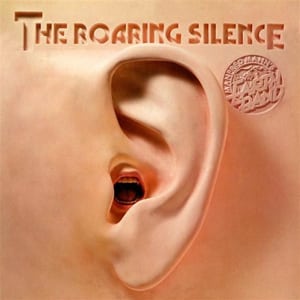
Released on the 1976 album The Roaring Silence on Bronze Records in the UK and Warner Bros. Records in the US, the Earth Band’s version spent one week at #1 on the Billboard Hot 100.
Produced by Manfred Mann himself, it stands as the commercial peak of the Earth Band’s career and one of the most celebrated cover versions in classic rock.
The song’s famously cryptic lyrics and often-misheard chorus have kept it in cultural conversation for decades, ensuring that the track never fully fades from public awareness.
| Song Title | Blinded by the Light |
| Artist | Manfred Mann’s Earth Band |
| Album | The Roaring Silence (1976) |
| Release Year | 1976 |
| Written By | Bruce Springsteen |
| Producer | Manfred Mann |
| Label | Bronze Records (UK) / Warner Bros. Records (US) |
| Chart Peak | #1 US Billboard Hot 100, #1 Canada |
Table of Contents
- What Is Blinded by the Light About?
- The Vibe: Genre, Mood, and Search Intent
- Behind the Lyrics: The Story
- Technical Corner: The Gear and Production
- Legacy and Charts: Impact and Endurance
- Listener’s Note: A Personal Take
- Collector’s Corner: Own a Piece of Rock History
- Frequently Asked Questions About Blinded by the Light
What Is Blinded by the Light About?
Blinded by the Light is a surrealist street-level portrait drawn from Bruce Springsteen’s early New Jersey imagery, piling vivid characters and rapid-fire vignettes into a breathless rush of wordplay.
The narrator moves through a carnival of working-class figures, each snapshot capturing a moment of restless energy, desperation, or comic absurdity.
Mann’s version preserves the lyrical density while wrapping it in a more melodically focused arrangement that makes the imagery feel cinematic rather than chaotic.
The Vibe: Genre, Mood, and Search Intent
The recording opens with a stabbing synthesizer riff before Thompson’s voice arrives with a controlled urgency that perfectly suits the breathless lyric.
It occupies an unusual space between progressive rock, pop, and hard rock, accessible enough to top the charts yet musically sophisticated enough to reward close listening.
- Genre: Progressive Rock, Art Rock, Classic Rock
- Mood: Kinetic, Surrealist, Triumphant
- Tempo: Driving mid-uptempo (~120 BPM)
- Best For: Classic rock playlists, 1970s deep dives, cover version comparisons
- Similar To: Boston “More Than a Feeling“, Styx “Come Sail Away“
- Fans Also Search: Manfred Mann Earth Band discography, Bruce Springsteen original version, The Roaring Silence album
Behind the Lyrics: The Story of Blinded by the Light
Bruce Springsteen wrote the song in the early 1970s as an attempt to pack as many images as possible into a single lyric, drawing on the street characters and carnival energy of his Asbury Park upbringing.
The original recording on Greetings from Asbury Park, N.J. was dense and slightly chaotic, a reflection of the rawness of Springsteen’s early style, and it failed to chart as a single.
According to the song’s Wikipedia entry, Manfred Mann first heard it on the radio and immediately recognized its potential as a vehicle for the Earth Band’s tighter, more melodic approach.
The Earth Band’s version changed several lyrical details, most famously altering Springsteen’s original line in a way that created one of rock’s most enduring mishearing debates.
The arrangement built around layered synthesizers, a propulsive rhythm section featuring Chris Slade on drums, and Chris Thompson’s lead vocal gave the song a forward momentum the original lacked.
For listeners exploring Springsteen’s early catalog, this song sits alongside Born to Run as evidence of his extraordinary early songwriting range, even when the most famous recording was made by someone else.
Technical Corner: The Gear and Production
Manfred Mann played a Minimoog synthesizer as the rhythmic and harmonic spine of the recording, using it in a way that was unusual for 1976, treating it more like a rhythm guitar than a lead or pad instrument.
The Minimoog’s attack characteristics created the stabbing, percussive quality of the famous opening riff, a sound that was instantly identifiable on radio without being replicated elsewhere in rock at the time.
Dave Flett played guitar on the track, providing additional harmonic texture beneath the synthesizer without competing for sonic space in the mix.
Mann produced the session himself at his own facilities, using a relatively direct signal chain that preserved the natural attack of each instrument rather than smoothing them into a polished studio sheen.
The recording has a slight rawness that distinguishes it from the over-produced rock records of the mid-1970s, giving it an energy that translates across decades without dating in the way that heavily treated productions often do.
Legacy and Charts: Impact and Endurance
Blinded by the Light reached #1 on the Billboard Hot 100 in February 1977, spending one week at the top, and simultaneously topped the Canadian charts, making it a genuine transatlantic phenomenon.
It is the only #1 US hit for Manfred Mann’s Earth Band, and one of very few times a cover version has substantially outperformed the original writer’s own recording on the charts.
The song revived wider interest in Springsteen’s early work at exactly the moment his career was accelerating following Born to Run, creating an unusual situation where a cover helped cement the original artist’s legacy.
Blinded by the Light has appeared in dozens of film and television productions over the decades, its distinctive opening riff making it one of the most immediately recognizable tracks from the era.
The track remains a constant presence on classic rock radio, its blend of progressive ambition and pop directness keeping it relevant across generational shifts in rock music taste.
Listener’s Note: A Personal Take
When I first heard this song in full rather than as a radio fragment, what struck me most was how much musical information Mann had packed into what sounds like a simple pop structure.
The synthesizer work is genuinely inventive, not just atmospheric decoration but a load-bearing element of the arrangement that drives the track forward from the first bar.
Chris Thompson’s vocal performance is the unsung hero of the recording: he delivers the rapid-fire Springsteen lyric with complete clarity while making it sound effortless, which is a much harder technical achievement than it appears.
Listening closely, the rhythm section’s locked-in groove creates a feeling of controlled acceleration throughout the track, as if the song is always on the verge of breaking loose but never quite does.
That tension, held throughout the full running time, is what separates genuinely great pop records from merely good ones.
Watch: The Official Music Video
Collector’s Corner: Own a Piece of Rock History
Manfred Mann’s Earth Band: The Roaring Silence (1976)
Own the album that produced the #1 classic.
Original Bronze and Warner Bros. pressings, CD reissues, and vinyl available.
Frequently Asked Questions About Blinded by the Light
Who wrote the song originally?
Blinded by the Light was written by Bruce Springsteen and originally recorded for his 1973 debut album Greetings from Asbury Park, N.J. Manfred Mann’s Earth Band covered it in 1976, and their version reached #1 in the US and Canada.
What is the song about?
The song is a surrealist collage of street-level characters and New Jersey imagery drawn from Springsteen’s early Asbury Park experiences. It piles vivid vignettes of working-class figures into a breathless, carnival-like lyric.
How high did Manfred Mann’s version chart?
Manfred Mann’s Earth Band’s version reached #1 on the US Billboard Hot 100 in February 1977 and #1 in Canada. It remains the Earth Band’s only number one single in the United States.
Who sang lead vocals on the Earth Band version?
Chris Thompson sang lead vocals on Manfred Mann’s Earth Band’s version. His powerful, controlled delivery of Springsteen’s rapid-fire lyric is widely regarded as one of the standout vocal performances in classic rock.
What is the famously misheard lyric?
The most famous misheard lyric is the chorus line, which many listeners hear as “wrapped up like a douche” rather than the actual lyric “revved up like a deuce,” a reference to a hot rod car. Springsteen’s original used “cut loose like a deuce.”
What label released the Earth Band version?
Manfred Mann’s Earth Band released the song on Bronze Records in the UK and Warner Bros. Records in the US. It appeared on their 1976 album The Roaring Silence.
What synthesizer is used in the recording?
Manfred Mann played a Minimoog synthesizer on the recording, using it rhythmically to create the song’s stabbing, percussive opening riff. The Minimoog’s distinctive attack characteristics are central to the track’s sound.
Did Springsteen ever perform the Earth Band version?
Springsteen has performed his own original version of the song live throughout his career. He has spoken positively about the Manfred Mann cover, acknowledging that their arrangement revealed melodic possibilities in his original that he had not fully explored.
You Might Also Like
Boston: More Than a Feeling (1976)
Released the same year, More Than a Feeling is another keyboard-driven rock classic that dominated FM radio and defined the sound of 1976 rock.
Foreigner: Hot Blooded (1978)
A driving, hook-heavy classic rock anthem from the same era that shares the Earth Band’s ability to blend hard rock energy with commercial radio appeal.
Styx: Renegade (1978)
Another progressive rock outfit that found massive mainstream success in the late 1970s, sharing the Earth Band’s blueprint of sophisticated musicianship delivered with pop instincts.
More than four decades after it topped the charts, Blinded by the Light remains a permanent fixture of classic rock, a track that rewards every listen with something new.