

Asia Band: How Four Geniuses Teared Their Own Masterpiece Apart
The Asia band pulled off one of rock’s most stunning achievements in 1982, then spent the next three years systematically tearing it apart.
What started as a prog-rock dream team became a cautionary tale of ego, alcohol, corporate scheming, and backstabbing that would have impressed the Borgias.
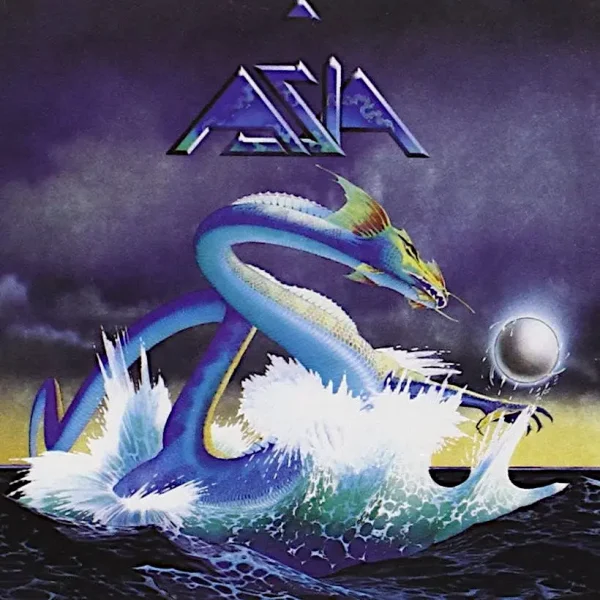
Image Credit: Geffen Records
Quick Navigation
Asia Band: The Definitive Supergroup Vision
When A&R man John Kalodner brought John Wetton and Steve Howe together at Geffen Records in early 1981, the idea was almost absurdly ambitious.
Four men, each a legend in his own right, would pool their talents into a single band built for mainstream conquest.
Wetton came armed with the raw, commanding bass work and vocal power he had honed through King Crimson and UK.
Howe brought the architectural guitar style that had defined Yes across some of the greatest progressive rock albums ever recorded.
Geoff Downes arrived fresh from the Buggles and a stint in Yes, wired for the new decade’s keyboard-driven sound.
Carl Palmer, the engine room of Emerson, Lake and Palmer, locked down the rhythm with a ferocity that made rooms shake.
Together, they were not just a band — they were an event.
Affiliate Disclosure: As an Amazon Associate, I earn from qualifying purchases. This means that if you click on a link to a classic rock album or piece of gear on this site and make a purchase, I may receive a small commission at no extra cost to you. This helps support classicrockartists.com and allows me to keep providing deep-dive content on the legends of rock. Thank you for your support!
Shop the Complete Asia Discography on Amazon
The Rise: Billboard’s Number One Album of 1982
The debut record, simply titled Asia, hit shelves in March 1982 and did not politely ask for attention — it demanded it.
Roger Dean’s dragon artwork plastered bedroom walls across America within months of release.
Billboard named it the top album in the United States for the entire year.
It sold over ten million copies worldwide, a number that would make most bands retire happy.
“Heat of the Moment” peaked at number four on the Billboard Hot 100 and hit number one on the Mainstream Rock chart.
“Only Time Will Tell” and “Sole Survivor” followed, cementing a run of hits that felt effortless from the outside.
Inside the camp, the tension was already building.
Wetton later recalled being shot down repeatedly during the recording process for writing material that some bandmates dismissed as too pop, too commercial, too far from prog’s sacred complexity.
He pushed through it, and the songs that resulted were undeniably magnificent.
As Downes reflected years later, none of them could have predicted what was coming.
Asia Band: When the Creative Tension Turned Toxic
The follow-up album, Alpha, arrived in July 1983 and performed respectably — but not respectably enough for Geffen Records.
The label had tasted ten million copies sold and wanted that again, immediately.
Downes put it plainly: the pressure of that colossal debut never let up, and it got to some of them.
Wetton’s drinking was worsening, and the tour supporting Alpha collapsed without warning in September 1983 after a show near Detroit.
What happened next depends entirely on who you ask.
Wetton said he was fired by phone, describing the episode as a Machiavellian conspiracy involving management and the record company.
Howe and Palmer insisted Wetton had effectively quit by making the tour impossible to continue.
The truth was almost certainly messier than either version.
Either way, with a massive televised concert at Tokyo’s Nippon Budokan Hall locked in for December 6, 1983, Asia suddenly had no frontman.
The Budokan Disaster: Live on Satellite, Without a Singer
Greg Lake got the call from his old ELP bandmate Carl Palmer, and he did what any loyal friend would do — he said yes, even though he barely knew the material.
The “Asia in Asia” concert became MTV’s first-ever intercontinental satellite broadcast, watched by millions.
Lake stood on that Budokan stage with a teleprompter in front of him, singing Wetton’s parts in a lower key because his voice sat differently.
He later laughed about the chaos backstage, describing corridors filled with people plotting to fire each other in every room.
It was a surreal spectacle: one of prog rock’s most anticipated events, held together by goodwill and a hastily arranged fill-in.
Lake tried to stay on, but Palmer reportedly blocked him from becoming a permanent member.
The whole episode became a symbol of just how far Asia had drifted from the unified vision of 1981.
You can watch a short look back at Asia then and now on this YouTube short.
The Full Collapse: Wetton Returns, Howe Gets Pushed Out
Wetton came back in early 1984, but he came back with a condition: Steve Howe had to go.
It was a stunning power move, and it worked.
Howe, who had helped build the band from nothing, was replaced by Mandy Meyer, a Swiss hard-rock guitarist from Krokus whose style pulled Asia further from its prog roots.
Downes later acknowledged that the personnel chaos was demoralizing for everyone involved.
The resulting album, Astra, arrived in 1985 to disappointing sales.
By 1986 the band had effectively folded, the masterpiece of 1982 now buried under years of feuds and label interference.
The story of the band’s revolving door lineup continued well into the 1990s, with various musicians cycling through under the Asia name.
John Payne stepped up as the new vocalist and bassist in 1991, keeping the Asia flag flying for over a decade with Downes as the one constant.
Even that chapter had its complications, as detailed in the ongoing saga of the band’s fractured lineages.
Asia Band Legacy: The Reunion, the Loss, and What Lives On
In 2006, the impossible happened: Wetton, Downes, Howe, and Palmer sat down together at a hotel in Paddington and agreed to reunite.
The friction between Wetton and Howe had never fully dissolved, but the music mattered more.
The reunion produced new studio albums, including Phoenix (2008) and Omega (2010), and drew enormous crowds worldwide.
John Wetton passed away on January 31, 2017, after a battle with colorectal cancer, leaving a void that the band has been navigating ever since.
Downes has continued to carry Asia forward, most recently with a thrilling new lineup featuring guitarist John Mitchell, drummer Virgil Donati, and bassist/vocalist Harry Whitley.
This current incarnation recorded Asia’s complete 1982 debut album live at Trading Boundaries in Sussex in April 2025, with a release on Frontiers Music set for March 13, 2025.
Downes has spoken about how revisiting those original songs brought the memories of 1982 flooding back, and just how remarkable it was that a collection of songs written under such pressure became so universally loved.
The story of Heat of the Moment alone is worth revisiting in full — the song that defined a summer and launched a supergroup into the stratosphere.
For fans who want to go deeper into the world Asia built, the official Asia website remains the best primary source for news and history.
A dedicated and passionate community also continues to gather and share memories at the Asia Fan Group on Facebook.
Four decades on, the Asia band’s debut album still sounds like the most thrilling collision of prog ambition and pop instinct the 1980s ever produced — and the story of how they nearly threw it all away makes it even more extraordinary.