
Bob Welch Ebony Eyes stands as one of the most sophisticated and commercially successful singles from the former Fleetwood Mac guitarist’s solo career, blending lush orchestration with rock sensibility in a way that defined late 1970s album-oriented rock.
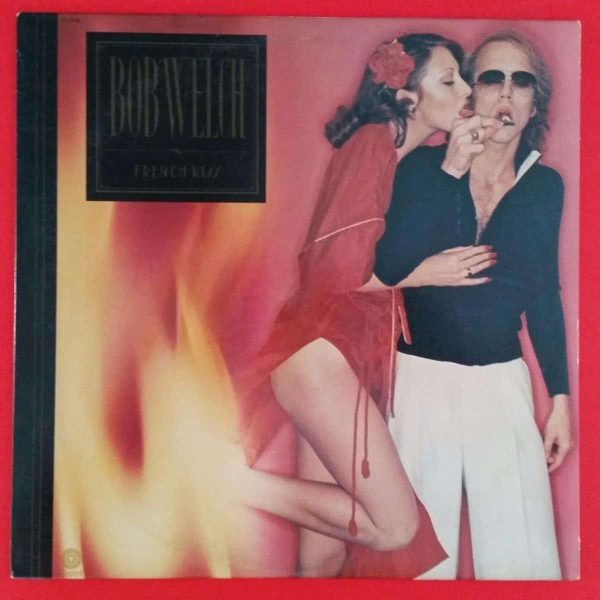
Released from his breakthrough album “French Kiss,” this track showcased Welch’s ability to craft radio-friendly hits that retained artistic integrity, much like he demonstrated on Bob Welch Sentimental Lady, which became his signature song that same year.
Bob Welch Ebony Eyes – Available on Amazon
Get Bob Welch Ebony Eyes (1977) on Vinyl or CD at Amazon
Affiliate Disclosure: I am an Amazon affiliate and if you purchase through any Amazon links on this site I may earn a small commission at no extra charge to you. This helps support classicrockartists.com. Thank you for your support!
Quick Navigation
What is the meaning of Bob Welch Ebony Eyes?
The song celebrates the captivating allure of a mysterious woman with dark eyes who possesses an irresistible, almost supernatural magnetism. Welch uses the metaphor of “ebony eyes” to convey both physical beauty and emotional depth, exploring themes of romantic obsession and the transformative power of attraction that borders on the mystical.
The Vibe: Genre, Mood, and Sound of Bob Welch Ebony Eyes
This track epitomizes the polished, sophisticated sound that dominated FM radio in the late 1970s, combining rock instrumentation with orchestral flourishes.
- Genre: Soft rock, pop rock with orchestral elements
- Mood: Romantic, mysterious, yearning, sophisticated
- Tempo: Mid-tempo (approximately 120 BPM)
- Best For: Late-night drives, romantic evenings, nostalgic listening sessions
- Similar To: 10cc’s “I’m Not in Love,” Andrew Gold’s “Lonely Boy,” Gerry Rafferty’s “Right Down the Line”
Behind the Lyrics: The Story of Bob Welch Ebony Eyes
Bob Welch penned this track during a period of creative liberation following his departure from Fleetwood Mac in late 1974.
After spending five years helping to rebuild the band during its transitional period between the Peter Green blues era and the Buckingham-Nicks commercial juggernaut, Welch struck out on his own to pursue a more pop-oriented direction.
The “French Kiss” album, released in 1977, represented his third solo effort and his first major commercial breakthrough.
According to Bob Welch’s biography, he wrote the song inspired by a chance encounter with a woman whose striking appearance stayed with him long after their brief meeting.
The lyrics paint a portrait of someone who is both alluring and elusive, a theme that resonated with audiences navigating the complex romantic landscape of the disco era.
Welch’s time in Fleetwood Mac had taught him the value of memorable melodies and emotional authenticity, lessons he applied brilliantly to this composition.
The song’s structure follows a classic verse-chorus-bridge format, but the arrangement elevates it beyond standard pop fare.
The opening features a distinctive synthesizer line that immediately establishes the song’s dreamy atmosphere.
Welch’s vocal delivery strikes a perfect balance between yearning and confidence, never tipping into desperation despite the obsessive nature of the lyrics.
The production choices reflected the era’s embrace of studio sophistication, with multiple layers of guitars, keyboards, and strings creating a lush sonic tapestry.
This approach contrasted sharply with the raw blues-rock sound of early Fleetwood Mac tracks like Fleetwood Mac Black Magic Woman, demonstrating how far the band’s alumni had evolved.
The album “French Kiss” was recorded during the same period when his former bandmates were creating “Rumours,” the best-selling album of 1977.
While Welch’s solo work never achieved the same stratospheric success, “Ebony Eyes” proved he could compete on the charts with his former colleagues.
The song’s romantic mystique tapped into the same emotional territory that made Fleetwood Mac’s work so compelling, but with a more polished, radio-friendly sheen.
Technical Corner: The Gear Behind Bob Welch Ebony Eyes
Producer Carter C.C. Collins worked closely with Welch at Wally Heider Studios in Los Angeles to craft the song’s distinctive sound.
Welch played his signature Gibson ES-335 semi-hollow body electric guitar, which provided the warm, singing tone that anchors the track’s melodic foundation.
The opening synthesizer hook was performed on an ARP Odyssey, one of the most popular analog synthesizers of the mid-1970s.
Session drummer Jim Keltner, who had worked with everyone from John Lennon to Steely Dan, provided the steady, understated groove that keeps the song moving without overwhelming the melodic elements.
Bass duties were handled by session ace Bob Glaub, whose Fender Precision Bass work provided a solid foundation without calling attention to itself.
The string arrangement, a crucial element of the song’s lush atmosphere, was scored by veteran arranger Gene Page, who had worked extensively with Barry White and other soul artists.
Page’s orchestration featured a 30-piece string section recorded at Capitol Studios, giving the track a cinematic quality that elevated it above typical rock productions.
The recording utilized 24-track tape technology, allowing for extensive layering and overdubbing that created the song’s dense, immersive sound.
Welch’s lead vocal was recorded through a Neumann U87 microphone, the industry standard for capturing warm, detailed vocal performances.
The backing vocals, featuring Welch’s own multi-tracked harmonies, were carefully arranged to create a choir-like effect during the chorus sections.
Engineer Ken Caillat, who would later work on Fleetwood Mac Tusk, contributed his expertise to achieving the song’s pristine sonic clarity.
The mix emphasized the midrange frequencies, ensuring the song would translate well to AM radio while still sounding rich on FM stations and home stereo systems.
A subtle use of plate reverb on the vocals created a sense of space without making the production sound dated or overly processed.
Legacy and Charts: Why Bob Welch Ebony Eyes Still Matters
The single peaked at number 14 on the Billboard Hot 100 in early 1978, becoming Welch’s second top 20 hit following “Sentimental Lady.”
In Canada, the song performed even better, reaching number 12 on the RPM Top Singles chart.
The track spent 17 weeks on the Billboard Hot 100, demonstrating impressive staying power in a competitive chart environment.
The “French Kiss” album, propelled by this single and “Sentimental Lady,” was certified platinum by the RIAA, selling over one million copies in the United States alone.
While the song didn’t chart in the UK, it received significant airplay on BBC Radio 1 and became a favorite among European soft rock fans.
The track’s success helped establish Welch as a viable solo artist separate from his Fleetwood Mac legacy, though he would never quite escape comparisons to his former band.
Several artists have covered the song over the decades, though none achieved the commercial success of Welch’s original version.
The song has appeared in various television shows and films seeking to evoke the sophisticated soft rock sound of the late 1970s.
Classic rock and soft rock radio stations continue to program the track regularly, ensuring its presence in the cultural consciousness.
The song’s influence can be heard in later soft rock productions by artists like Christopher Cross and Michael McDonald, who embraced similar production aesthetics.
Music critics have retrospectively praised the track as an exemplar of late 1970s studio craftsmanship, when producers and engineers pushed the boundaries of what could be achieved in the recording studio.
The official music video, which you can watch on YouTube, features Welch performing against stylized backdrops that capture the era’s visual aesthetic.
The song remains a staple of 1970s compilation albums and continues to introduce new generations to Welch’s solo work.
Listener’s Note: A Personal Take on Bob Welch Ebony Eyes
When I first heard this on vinyl back in the day, what struck me immediately was how the synthesizer line in the opening bars created an almost hypnotic effect.
That ARP Odyssey hook pulls you into the song’s world before Welch even starts singing.
I remember playing this track late at night with headphones on, and the way the strings swell during the chorus gave me chills.
There’s a moment at about 2:15 where the arrangement drops down to just bass, drums, and Welch’s voice before the full orchestra comes crashing back in.
That dynamic shift is pure studio magic, the kind of production detail that separates good songs from great ones.
Welch’s vocal performance walks a fine line between romantic and obsessive, and he never loses that balance.
The guitar solo, while brief, is perfectly placed and melodically memorable rather than technically flashy.
What I appreciate most about this track is how it captures a specific moment in rock history when artists weren’t afraid to embrace lush, sophisticated arrangements.
This wasn’t punk rock or disco, it was something uniquely its own, a bridge between the guitar-driven rock of the early 1970s and the synth-pop that would dominate the 1980s.
Listening to it now, I’m reminded of why this era of music remains so beloved.
The craftsmanship, the attention to detail, the willingness to let a song breathe and develop, these qualities feel almost quaint in today’s compressed, playlist-driven music landscape.
Every time I drop the needle on this track, I’m transported back to a time when radio played songs like this alongside Fleetwood Mac Never Going Back Again and other sophisticated rock productions.
Affiliate Disclosure: I am an Amazon affiliate and if you purchase through any Amazon links on this site I may earn a small commission at no extra charge to you. This helps support classicrockartists.com and allows me to keep providing deep-dive content on the legends of rock. Thank you for your support!
Collector’s Corner: Own Bob Welch Ebony Eyes on Vinyl or CD
The original “French Kiss” album remains widely available on both vinyl and CD, with several remastered editions offering improved sound quality.
Collectors particularly prize the original 1977 Capitol Records pressing for its warm analog sound and distinctive cover artwork.
Get Bob Welch Ebony Eyes (1977) on Vinyl or CD at Amazon
Frequently Asked Questions About Bob Welch Ebony Eyes
Was Bob Welch still in Fleetwood Mac when he recorded Ebony Eyes?
No, Bob Welch had left Fleetwood Mac in December 1974, nearly three years before recording “Ebony Eyes.”
He departed just before Lindsey Buckingham and Stevie Nicks joined the band, missing out on their massive commercial success with the “Fleetwood Mac” and “Rumours” albums.
However, his solo career flourished in 1977 with the “French Kiss” album, proving he could achieve success independent of the band.
What album is Bob Welch Ebony Eyes on?
The song appears on Bob Welch’s third solo album, “French Kiss,” released in 1977 on Capitol Records.
The album also featured his biggest hit, “Sentimental Lady,” a re-recorded version of a song he originally wrote for Fleetwood Mac’s “Bare Trees” album in 1972.
“French Kiss” became Welch’s most successful solo album, achieving platinum certification.
Did Bob Welch write Ebony Eyes himself?
Yes, Bob Welch wrote “Ebony Eyes” as the sole credited songwriter.
The song showcased his ability to craft commercially appealing material without collaborators, a skill he had developed during his years with Fleetwood Mac.
Welch wrote most of the material on the “French Kiss” album, demonstrating his prolific songwriting abilities during this period.
How did Ebony Eyes perform compared to other Bob Welch songs?
“Ebony Eyes” peaked at number 14 on the Billboard Hot 100, making it Welch’s second-highest charting solo single after “Sentimental Lady,” which reached number 8.
His only other top 40 hit was “Precious Love,” which peaked at number 19 in 1979.
While he never matched the commercial dominance of Fleetwood Mac’s Buckingham-Nicks era, Welch enjoyed a respectable solo career with multiple charting singles and albums.
The success of tracks like this demonstrated that his contributions to Fleetwood Mac’s transitional period, which bridged the gap between Fleetwood Mac Oh Well and the band’s later pop success, were significant and underappreciated.
You Might Also Like
This Christine McVie-led track shares the same sophisticated soft rock production values that made Welch’s solo work so appealing to adult contemporary audiences.
Fleetwood Mac Seven Wonders (1987)
The lush synthesizer arrangements and romantic mystique of this later Fleetwood Mac hit echo the production approach Welch pioneered on his solo recordings.
Lindsey Buckingham’s innovative production techniques on this track represent the evolution of the studio sophistication that Welch helped introduce to Fleetwood Mac’s sound.
Whether you’re rediscovering Bob Welch Ebony Eyes after decades or hearing it for the first time, this track remains a testament to the sophisticated craftsmanship that defined the best of 1970s album-oriented rock.