

Brian Jones: The Visionary Founder of The Rolling Stones
Brian Jones was the brilliant multi-instrumentalist and founding member of the Rolling Stones who defined the aesthetic of a generation.
He served as the original leader and visionary for the group during their formative years in London.
His mastery of obscure instruments helped transform the band from a blues cover outfit into global rock icons.
While Mick Jagger and Keith Richards became the face of the band, the initial spark belonged to the man from Cheltenham.
The story of his life is a complex mixture of musical genius and personal turbulence during the 60s era.
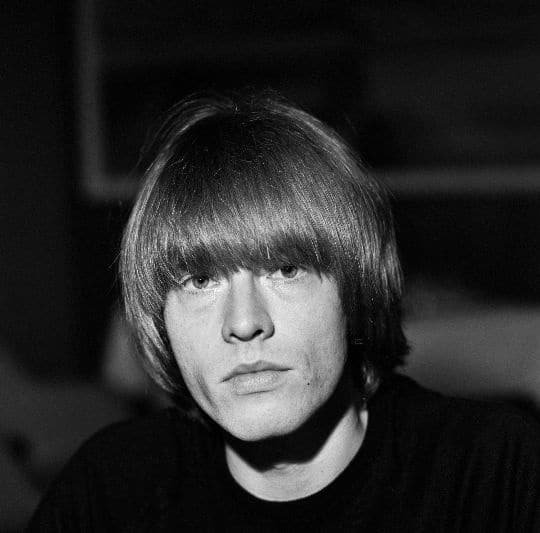
Table of Contents (Click to Expand)
- The Enigmatic Origins of Brian Jones
- Founding the World’s Greatest Rock Band
- The Multi-Instrumental Genius of Brian Jones
- Defining the Sound of a Revolution
- The Tragic Downfall of Brian Jones
- Posthumous Influence and The 27 Club
- The Artistic Evolution of Brian Jones
- Essential Discography
- Frequently Asked Questions
- Final Thoughts on a Rock Legend
The Enigmatic Origins of Brian Jones
Lewis Brian Hopkin Jones was born on February 28, 1942, in Cheltenham, Gloucestershire.
He grew up in a middle class household where music was a constant presence in his daily life.
His parents were both musical and encouraged him to learn the piano at a young age.
However, the rigid structure of classical music did not suit his rebellious nature.
As a teenager, he developed a deep passion for jazz and began playing the saxophone.
He was particularly influenced by the work of Charlie Parker and other bebop legends.
In contrast, his discovery of the blues would eventually change the course of his entire life.
He heard the slide guitar playing of Elmore James and became obsessed with the instrument.
Jones practiced relentlessly until he could mimic the soulful sounds of the Mississippi Delta.
Furthermore, his early struggle with asthma often made him feel like an outsider in his own community.
This sense of isolation fueled his desire to escape to the budding music scene in London.
Founding the World’s Greatest Rock Band
In early 1962, he began performing under the pseudonym Elmo Lewis at various blues clubs.
He often played with Alexis Korner and his pioneering group, Blues Incorporated.
Significantly, it was during this period that he decided to form his own musical ensemble.
He placed an advertisement in Jazz News looking for musicians to join a new rhythm and blues group.
The first to respond were Ian Stewart and eventually the core members of the Rolling Stones that the world would come to know.
Jones chose the name for the band after a track by blues legend Muddy Waters.
He acted as the business manager, booker, and primary creative force during those early months.
The group played their first official gig at the Marquee Club on July 12, 1962.
They quickly gained a reputation for their raw energy and authentic blues sound.
At this stage, he was the undisputed leader who taught the others about the intricacies of the genre.
The Multi-Instrumental Genius of Brian Jones
As the band evolved, his role expanded far beyond playing the electric guitar.
He possessed an uncanny ability to pick up almost any instrument and master it within hours.
This versatility became the secret weapon of the band during their studio sessions.
He famously played the sitar on the hit song Paint It Black, adding a haunting Eastern texture.
Moreover, he utilized the recorder on Ruby Tuesday and the marimba on Under My Thumb.
His contribution to the album The Rolling Stones helped establish their early dominance on the charts.
In contrast to the standard rock arrangements of the time, his arrangements were experimental and bold.
He used the Appalachian dulcimer and the Mellotron to create sounds that defined the psychedelic movement.
Journalists often noted that he was the most musically literate member of the group.
His presence gave the band an edge that separated them from their contemporaries.
Defining the Sound of a Revolution
The mid-sixties marked the creative peak for the original lineup.
They released a string of legendary albums that solidified their place in music history.
He was heavily involved in the production of Beggars Banquet, an album that returned the band to their roots.
His slide guitar work on No Expectations is often cited as one of his finest performances.
However, the internal dynamics of the group were beginning to shift drastically.
The management of Andrew Loog Oldham encouraged the Jagger-Richards songwriting partnership.
This move slowly pushed the founder toward the periphery of the decision-making process.
Despite this, his stylistic influence remained all over their most iconic tracks.
He was the primary contributor to the eerie atmosphere found on Sympathy For The Devil according to many sources.
His golden hair and flamboyant fashion sense made him a quintessential icon of the 60s iconic hits and stories that followed.
The Tragic Downfall of Brian Jones
The late sixties were marked by significant personal and legal struggles for the guitarist.
He faced multiple drug arrests which severely hampered his ability to tour internationally.
His health began to decline rapidly due to substance abuse and chronic respiratory issues.
Furthermore, he suffered a devastating personal blow when his partner, Anita Pallenberg, left him for Keith Richards.
The emotional toll of this betrayal led to increased isolation within the band.
He often missed recording sessions or arrived in a state that made it impossible for him to contribute.
By the time work began on Let It Bleed, his involvement was minimal.
The band eventually decided that they could no longer function with his erratic behavior.
In June 1969, Jagger, Richards, and Charlie Watts visited him at Cotchford Farm to ask him to leave.
He was replaced by the young blues virtuoso Mick Taylor shortly thereafter.
Tragically, just weeks after his departure, he was found dead in his swimming pool on July 3, 1969.
For more details on this period, you can watch Brian Jones Difficult years with The Rolling Stones on YouTube.
Posthumous Influence and The 27 Club
The death of the founder sent shockwaves through the music world and marked the end of an era.
He became the first high-profile member of the tragic 27 Club, a group of musicians who died at that age.
Despite his early passing, his musical fingerprints remained on the band’s work for decades.
During the 70s, the band shifted toward a more guitar-centric rock sound, but they often revisited his experimental spirit.
Albums like Sticky Fingers and Exile On Main St. carried the blues torch he had lit.
His legacy was formally recognized when he was inducted into the Rock and Roll Hall of Fame in 1989.
Even during the 80s and 90s, fans and critics continued to debate his essential role in the band’s success.
Today, he is remembered as a fashion icon and a pioneer of world music integration in rock.
The Artistic Evolution of Brian Jones
His approach to music was always one of constant curiosity and exploration.
He was one of the first Western musicians to record the Master Musicians of Joujouka in Morocco.
This project showed his deep respect for global musical traditions long before it was fashionable.
Significantly, he understood that rock and roll could be more than just three chords and a beat.
His work on the soundtrack for the film A Degree of Murder demonstrated his talent for composition.
While the band continued to release hits like Angie and Miss You, the experimental heart of the band had changed.
The addition of Darryl Jones and later Steve Jordan ensured the rhythm section remained strong in later years.
However, the exotic textures of the early records were uniquely his own contribution.
He remained a student of the blues until the very end of his life.
His life remains a subject of fascination for historians and fans who visit the category/artists/ section of our site.
Essential Discography
- The Rolling Stones (1964) – The debut album that introduced their aggressive blues-rock sound to the world.
- Aftermath (1966) – The first album to feature all original compositions and significant multi-instrumental work by Jones.
- Between the Buttons (1967) – An experimental record showing the band’s foray into baroque pop and psychedelia.
- Their Satanic Majesties Request (1967) – The most psychedelic release in their catalog with heavy use of unusual instruments.
- Beggars Banquet (1968) – A masterpiece that returned them to the blues with iconic slide guitar contributions.
- The Rolling Stones Rock and Roll Circus (1968/1996) – A live project featuring his final filmed performance with the group.
Rolling Stones Albums & Merch: Shop on Amazon
As an Amazon affiliate I make a small commission on any purchases made through this link at no extra cost to you.
Frequently Asked Questions
Why did Brian Jones leave the Rolling Stones?
He was asked to leave due to his increasing drug dependencies and legal issues that prevented the band from touring the United States.
What instruments did he play?
He was a multi-instrumentalist who played guitar, sitar, dulcimer, mellotron, recorder, marimba, and saxophone among others.
Where can I learn more about his life?
You can find a comprehensive biography on his Wikipedia page or read the detailed report in Rolling Stone magazine.
Final Thoughts on a Rock Legend
He was more than just a member of a band; he was the catalyst for a cultural revolution.
His insistence on authenticity helped bring the blues to a mainstream white audience in Britain and America.
While his life was cut short, the music he helped create remains timeless and influential.
Fans can still find his spirit in the grooves of every classic record from the mid-sixties.
He taught the world that rock and roll was a broad canvas for any sound imaginable.
Significantly, the legacy of Brian Jones continues to influence musicians across the globe today.