

Bruce Johnston: The Voice Behind the Beach Boys’ Timeless Harmony
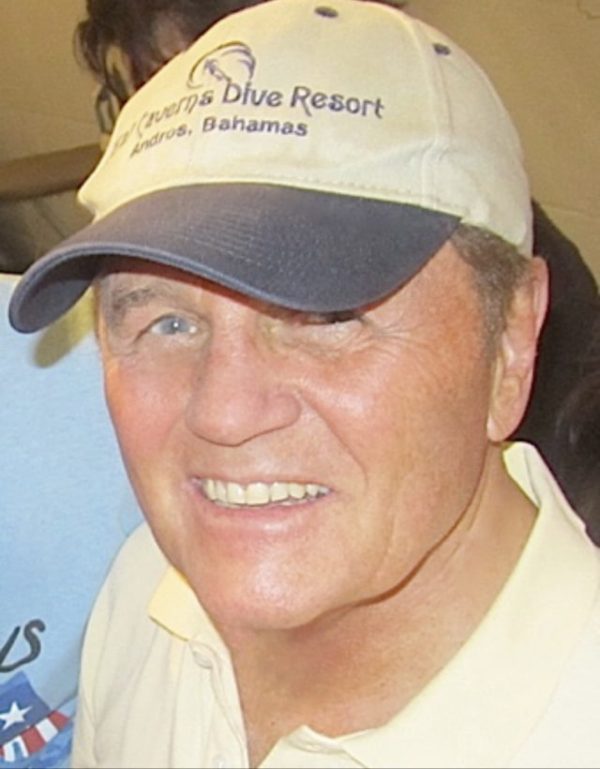
Bruce Johnston is one of the most enduring and underrated figures in the history of American rock music.
Born Benjamin Baldwin on June 27, 1942, in Peoria, Illinois, he was adopted as an infant and raised in the wealthy Los Angeles neighborhoods of Brentwood and Bel-Air.
Few musicians can claim a legacy as rich as Bruce Johnston, a singer, songwriter, producer, and multi-instrumentalist who spent more than six decades as a cornerstone of classic rock history.
From his teenage session work alongside Phil Spector to his Grammy-winning songwriting triumph with “I Write the Songs,” Johnston’s career defies easy summary.
He joined the Beach Boys in 1965 and became the second-longest tenured touring member in the band’s history after Mike Love.
His vocal harmonies, melodic compositions, and tireless stage presence helped keep the California Sound alive for generations of fans worldwide.
Significantly, Johnston is the only Beach Boys member ever to win a Grammy Award for Song of the Year.
In March 2026, at the age of 83, he announced his departure from the band’s touring lineup, closing one chapter and boldly opening another for Bruce Johnston.
📋 Table of Contents
- Early Life and Musical Beginnings
- Bruce & Terry: The First Major Collaboration
- Bruce Johnston and the Beach Boys: The Peak Era
- Departure, Solo Career, and the Grammy Win
- The Revival: Rejoining the Beach Boys
- Recognition and Legacy
- Essential Beach Boys Discography
- Frequently Asked Questions About Bruce Johnston
Early Life and Musical Beginnings
Bruce Johnston’s origin story begins with a remarkable set of circumstances.
His unwed mother gave birth to him at the Florence Crittenton Home in Peoria, Illinois, and three months later, he was adopted by William and Irene Johnston of Chicago.
William Johnston was a senior executive at the Walgreens Drug Store chain, and the family eventually relocated to Los Angeles when the Owl Rexall Drug Company built its new national headquarters there.
Young Bruce grew up in the affluent Brentwood and Bel-Air neighborhoods, attending private school and studying classical piano.
Furthermore, he demonstrated exceptional academic ability, skipping a grade in elementary school and graduating high school a year ahead of his peers.
In high school, Johnston gravitated toward contemporary music and began performing with local bands around Los Angeles.
His early circle included future industry heavyweights Kim Fowley and Phil Spector.
In 1959, at just seventeen years old, Johnston arranged and played piano on Sandy Nelson’s chart smash “Teen Beat,” which reached the Billboard Top Ten.
That same year, he released his first single under his own name and backed artists including Ritchie Valens, the Everly Brothers, and Eddie Cochran.
In 1960, he launched his production career at Del-Fi Records, working with artists like Ron Holden.
By 1962, Johnston was releasing surf rock singles and albums under his own name, including Surfin’ Round the World, establishing himself as a credible artist within the booming California music scene.
One of his early performing gigs was as a member of the surf band the Gamblers, where he began honing his stage instincts.
Bruce & Terry: The First Major Collaboration
By 1963, Bruce Johnston had formed one of the most productive creative partnerships of his early career.
He teamed up with Terry Melcher, the son of actress Doris Day and a gifted producer in his own right.
The pair worked as staff producers at Columbia Records in Hollywood, crafting records with an instinctive ear for commercial pop.
Their first notable production credit came with the Rip Chords, a studio group for whom Johnston and Melcher wrote, arranged, and sang all the vocal parts.
The result was “Hey Little Cobra,” a million-selling car-culture anthem that borrowed the Beach Boys’ layered vocal style.
Johnston and Melcher also recorded under the duo name Bruce & Terry, releasing a series of surf-pop singles that showcased Johnston’s vocal range and knack for melody.
In contrast to the louder garage rock sounds emerging at the time, Bruce & Terry favored lush harmonies and polished production.
Melcher eventually shifted his focus toward producing the Byrds and Paul Revere & the Raiders.
For Johnston, the Bruce & Terry era was a crucial incubation period that sharpened his musicianship, studio instincts, and vocal technique.
It also positioned him perfectly for the opportunity that would define his life: joining the Beach Boys.
Bruce Johnston and the Beach Boys: The Peak Era
On April 9, 1965, Bruce Johnston officially joined the Beach Boys as a touring member.
He replaced Glen Campbell, who had been standing in for co-founder and chief songwriter Brian Wilson, who had made the momentous decision to step away from live performances to focus entirely on studio work.
Johnston’s debut vocal recording with the band appeared on “California Girls” from the 1965 album Summer Days (and Summer Nights!!).
In contrast to a simple stand-in role, Johnston quickly became an indispensable creative contributor.
For contractual reasons, he was not credited on a Beach Boys album cover until Wild Honey in 1967, yet he appeared on the iconic back sleeve of Pet Sounds (1966) as a touring band member.
His contribution to Pet Sounds was significant: Johnston sang backing vocals on six of the album’s thirteen tracks, including “Wouldn’t It Be Nice,” “God Only Knows” (sharing co-lead duties), and “Sloop John B.”
In a now-legendary gesture, Johnston personally flew to London in May 1966 to play Pet Sounds for John Lennon, Paul McCartney, and Keith Moon.
That listening session is widely credited as a direct influence on the Beatles’ subsequent recording of Sgt. Pepper’s Lonely Hearts Club Band.
Furthermore, Johnston contributed backing vocals to sessions for the ambitious Smile project, Wilson’s legendary unfinished follow-up to Pet Sounds.
By 1969, Johnston had evolved from vocalist to songwriter within the band.
His first original composition for the group, an instrumental called “The Nearest Faraway Place,” appeared on the 1969 album 20/20.
The 1970 album Sunflower featured two more Johnston originals: “Tears in the Morning” and “Deirdre,” both showcasing his gift for gentle, orchestrated balladry.
Significantly, 1971’s Surf’s Up album carried his most beloved Beach Boys composition: “Disney Girls (1957).”
The song is a wistful, nostalgic gem that was later recorded by Cass Elliot, Captain & Tennille, Art Garfunkel, Jack Jones, and Doris Day, among others.
Johnston himself cited 1971 as his favorite year of the band’s performing life, noting that their live sets were focused on newer, more adventurous material.
During the 1960s era, Johnston’s presence helped the Beach Boys maintain their extraordinary touring schedule while Wilson reinvented the band’s studio sound.
His vocal ability to replicate and complement Wilson’s parts live was critical to the group’s survival as a performing entity.
In 1967, he also contributed to the outside world, singing on “My World Fell Down,” a minor hit for the Gary Usher-led studio group Sagittarius.
Johnston also championed the band’s landmark 1966 era with genuine passion, recognizing its importance long before critical consensus caught up.
During the early 1970s, internal tensions within the band began to mount.
In 1972, Johnston departed the group under disputed circumstances: band manager Jack Rieley claimed he fired Johnston, while Johnston indicated the decision was his own.
His final contribution to the band in that era was backing vocals on the 1972 track “Marcella.”
The split, however difficult, set the stage for the most remarkable creative achievement of Johnston’s solo years.
Departure, Solo Career, and the Grammy Win
After leaving the Beach Boys in 1972, Bruce Johnston faced the challenge of establishing himself outside the band’s enormous shadow.
He spent the mid-1970s writing, producing, and collaborating with an eclectic range of artists.
In 1977, he provided vocal arrangements and sang backing vocals on Eric Carmen‘s album Boats Against the Current, contributing to the hit single “She Did It.”
He also contributed backing vocals to several recordings for Elton John, including the classic “Don’t Let the Sun Go Down on Me.”
In contrast to an artist retreating from the spotlight, Johnston was quietly working at the center of some of the era’s most significant recordings.
Most memorably, he also contributed Beach Boys-style backing harmonies to Pink Floyd‘s The Wall, most notably on the song “The Show Must Go On,” which Roger Waters specifically composed with those harmonies in mind.
His solo album, Going Public, arrived in 1977 and featured Johnston’s own recordings of “Disney Girls” and “Deirdre,” alongside his powerful original composition “I Write the Songs.”
Johnston had actually written “I Write the Songs” in the mid-1970s while still away from the Beach Boys, originally recording it himself and placing it first with Captain & Tennille in 1975.
When Barry Manilow recorded it later that year, the song soared to number one on the Billboard Hot 100 and became one of the decade’s defining ballads.
At the 1977 Grammy Awards, “I Write the Songs” earned Johnston the Grammy Award for Song of the Year, a distinction that no other Beach Boys member has ever received.
Furthermore, the song has since been recorded by over two hundred artists, including Frank Sinatra, accumulating a worldwide sales figure of approximately twenty-five million copies across singles and albums.
Johnston famously remarked about the Grammy: “How can I get a Grammy for a song I wrote in my car, when the Beach Boys, Brian Wilson, and Mike Love have not won?”
That rare combination of humility and commercial achievement speaks to Johnston’s character throughout his career.
The Revival: Rejoining the Beach Boys
In late 1978, Bruce Johnston was invited back into the Beach Boys fold by Brian Wilson himself.
He co-produced the band’s 1979 album L.A. (Light Album), bringing fresh energy and production focus to a group navigating difficult creative and personal terrain.
Johnston then served as sole producer on the 1980 album Keepin’ the Summer Alive, cementing his role as a central figure in the band’s late-era output.
Throughout the 1980s, Johnston remained a constant presence in the touring lineup as the group continued to pack arenas worldwide.
The band scored an unexpected chart revival when “Kokomo,” featured in the 1988 film Cocktail, hit number one on the Billboard Hot 100.
Johnston was part of that lineup, earning a Grammy nomination for Best Pop Performance by a Duo or Group with Vocal alongside Mike Love and Carl Wilson.
He also appeared on several of Mike Love’s solo albums during the 1990s and 2000s, including Summertime Cruisin’ (2001), Unleash the Love (2017), and 12 Sides of Summer (2019).
Following the passing of Carl Wilson in 1998, Johnston and Mike Love became the two constant fixtures of the Beach Boys touring organization.
For nearly three decades, with the notable exception of the 2012 reunion tour featuring all surviving original members, Johnston was the only non-founding member regularly touring with Love under the Beach Boys name.
The band’s legacy catalog continued to draw massive audiences at festivals, theaters, and arenas around the world.
In 2022, Johnston extended his creative reach into unexpected new territory by co-producing “Here We Go… Again” for The Weeknd’s critically acclaimed album Dawn FM, featuring rapper Tyler, the Creator.
That collaboration demonstrated Johnston’s continued relevance and adaptability as an artist well into his eighties.
In January 2026, Johnston performed his final show as a full-time touring member of the Beach Boys.
On March 4, 2026, he confirmed his departure in a statement to Rolling Stone, framing it not as a retirement but as the beginning of a new creative chapter.
“It’s time for Part Three of my lengthy musical career,” he said. “I can write songs forever, and wait until you hear what’s coming.”
He also announced plans for speaking engagements, developed with actor and longtime Beach Boys associate John Stamos.
Johnston is expected to join the Beach Boys on stage for special occasions, including a July 4th, 2026 Hollywood Bowl performance celebrating America’s 250th birthday.
Fans can follow all upcoming dates through the Beach Boys 2026 tour coverage and the latest Beach Boys 2026 tour dates.
For the latest Beach Boys developments, keep checking the ClassicRockArtists news section and the full tours listings page.
Mike Love paid tribute to Johnston in a statement: “Bruce Johnston is one of the greatest songwriters, vocalists, and keyboardists of our time.”
Love’s full remarks are available via his official Facebook post.
A video statement from Johnston himself was shared publicly, offering fans a personal farewell: Bruce Johnston Leaves The Beach Boys Touring Group.
Recognition and Lasting Legacy
Bruce Johnston’s list of achievements places him among the most decorated figures in the history of the Beach Boys and classic rock as a whole.
He is the only member of the Beach Boys to have won a Grammy Award for Song of the Year.
In 2016, the Beach Boys received the Golden Camera for Lifetime Achievement in the Music International category at Germany’s prestigious Golden Camera Awards.
Johnston retains equal ownership of the band’s ASCAP publishing company, Wilojarston, ensuring his long-term stake in the group’s creative output.
Beyond awards, his influence on popular music runs deep and wide.
His personal promotion of Pet Sounds to John Lennon and Paul McCartney is considered one of the defining moments of 1960s musical exchange.
His song “I Write the Songs” has been covered by over two hundred recording artists and remains one of the most enduring ballads of the twentieth century.
His songwriting for the Beach Boys, including “Disney Girls (1957),” “Tears in the Morning,” and “Deirdre,” expanded the band’s tonal palette beyond the surf and car songs that defined their early identity.
Furthermore, his collaborations with Elton John, Pink Floyd, Eric Carmen, and The Weeknd demonstrate an artistic range that transcended any single era or genre.
Johnston is a Renaissance figure of classic rock: guitarist, bassist, pianist, singer, songwriter, arranger, and producer all in one.
In contrast to many of his peers, he maintained his vocal quality and performing stamina well into his eighties.
The full scope of his contribution to American music is still being understood and appreciated, securing the legacy of Bruce Johnston for decades to come.
Essential Beach Boys Discography
The following albums represent the most essential entries in the Beach Boys catalog, spanning the years when Bruce Johnston helped shape the band’s sound and legacy.
- Pet Sounds (1966) — The band’s masterpiece and one of the most influential albums in rock history, featuring Johnston’s backing vocals on six tracks.
- Endless Summer (1974) — A landmark Capitol Records compilation that reintroduced the Beach Boys to a new generation and hit number one on the Billboard 200.
- Feel Flows: The Sunflower & Surf’s Up Sessions 1969–1971 (2021) — A definitive box set covering the transitional era when Johnston emerged as a songwriter, including “Disney Girls (1957).”
- The Beach Boys’ Christmas Album (1964) — A beloved holiday classic and one of the group’s most enduring seasonal recordings.
- Feel Flows: The Sunflower & Surf’s Up Sessions 1969–1971 (2 x SHM) — The premium Japanese SHM pressing of the acclaimed box set for audiophile collectors.
- Sounds of Summer: The Very Best of The Beach Boys (2003) — The definitive greatest hits collection, with over five million copies sold in the United States alone.
As an Amazon affiliate, I make a small commission on any purchases made through these links at no extra cost to you. I thank you in advance.
For the full Beach Boys catalog, including rare and expanded editions, browse the complete Beach Boys Amazon discography.
Frequently Asked Questions About Bruce Johnston
When did Bruce Johnston join the Beach Boys?
Bruce Johnston joined the Beach Boys on April 9, 1965, initially as a touring member to fill in for Brian Wilson, who had stopped performing live to focus on studio work.
He replaced Glen Campbell, who had himself been temporarily filling Brian’s role on bass and lead vocals.
Johnston’s first vocal recording with the band was on “California Girls” that same year.
What song did Bruce Johnston write that won a Grammy?
Bruce Johnston wrote “I Write the Songs,” which became a number one hit for Barry Manilow and earned Johnston the Grammy Award for Song of the Year in 1977.
The song was originally recorded by Captain & Tennille in 1975 before Manilow’s recording became the iconic version.
Johnston remains the only Beach Boys member ever to win a Grammy for Song of the Year.
Why did Bruce Johnston leave the Beach Boys in 2026?
At the age of 83, Johnston announced in March 2026 that he was stepping away from the Beach Boys touring lineup to focus on songwriting, new studio projects, and speaking engagements.
He emphasized that the move was a creative transition rather than a full retirement, and confirmed plans to appear with the band on special occasions.
His departure came after 61 years of association with the group.
What other artists has Bruce Johnston worked with?
Beyond the Beach Boys, Johnston contributed backing vocals to Elton John’s recordings, sang on Pink Floyd’s The Wall, provided arrangements for Eric Carmen’s Boats Against the Current, and co-produced The Weeknd’s 2022 album Dawn FM.
His song “Disney Girls (1957)” was also covered by Art Garfunkel, Doris Day, Cass Elliot, and many others.
Is Bruce Johnston still performing?
As of 2026, Bruce Johnston has stepped back from full-time touring with the Beach Boys but has indicated he will join the group for select special appearances, including the Hollywood Bowl Fourth of July celebration.
He has expressed strong intentions to continue writing, recording, and performing in a more selective capacity.
The enduring artistry of Bruce Johnston suggests that his musical contributions are far from finished.