

Bruce Palmer stands as one of rock music’s most enigmatic and influential figures.
From his early achievements in the Toronto R&B scene to his peak success with Buffalo Springfield, Bruce Palmer’s journey was a whirlwind of creative brilliance and personal mystery.
Even decades after his passing, this Canadian bassist continues to inspire millions with his fluid, melodic technique and his role in shaping the California folk-rock sound.
His contribution to the low-end frequencies of the 1960s remains a cornerstone for bassists seeking a balance between groove and innovation.
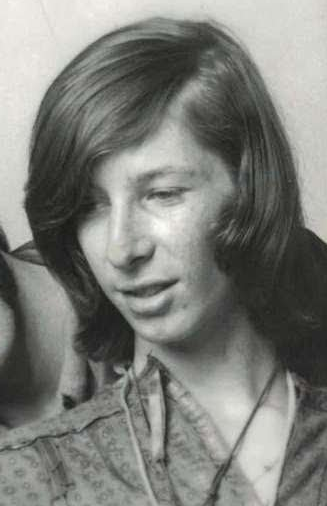
🎸 Early Life and Musical Beginnings
Bruce Palmer was born on September 9, 1946, in Liverpool, Nova Scotia, Canada.
His path to musical greatness began at a young age when he moved to Toronto.
He grew up in a household where music was a constant presence.
By his early teens, Bruce Palmer was already exploring the vibrant local club scene.
He picked up the guitar first but soon realized his true calling was the bass.
The deep, rhythmic pulse of R&B records heavily influenced his early playing style.
He spent countless hours practicing along to Motown and Stax recordings.
This dedication allowed him to develop a unique finger-style technique.
By the time he was 16, he was performing in local bands like The Robbie Lane & The Disciples.
These early professional opportunities sharpened his skills as a reliable sideman.
He eventually joined a group called Jack London & The Sparrows.
This band featured future members of Steppenwolf, showing his early connection to rock royalty.
His reputation as a top-tier bassist grew rapidly within the Canadian music circuit.
Bruce Palmer was known for his quiet intensity and incredible stage presence.
He often played with his back to the audience, focused entirely on the groove.
This mysterious persona became a hallmark of his career in the years to follow.
🎤 The Mynah Birds: A Motown Connection (1966)
In early 1966, Bruce Palmer joined a legendary but short-lived group called The Mynah Birds.
This band is famous for its incredible lineup of future superstars.
The lead singer was none other than Ricky James Matthews, later known as Rick James.
The band also featured a young Canadian guitarist named Neil Young.
The Mynah Birds signed a contract with Motown Records, a rare feat for a rock group.
They recorded several tracks in Detroit that blended soul with folk-rock energy.
Bruce Palmer provided the funky, driving basslines that anchored their sound.
However, the group faced a sudden and dramatic collapse.
Rick James was arrested for being AWOL from the Navy during a recording session.
Motown shelved the recordings, and the band members were left adrift.
Despite the failure, the bond between Bruce Palmer and Neil Young remained strong.
They decided to sell their equipment and buy a black 1953 Pontiac hearse.
They drove this hearse from Toronto all the way to Los Angeles.
Their goal was to find Stephen Stills and start a new band.
This journey is now one of the most famous stories in rock history.
It led directly to the formation of one of the greatest bands of the 60s.
🎵 Buffalo Springfield and the Sunset Strip (1966-1968)
After arriving in Los Angeles, Palmer and Young famously got stuck in traffic on Sunset Boulevard.
By pure chance, they were spotted by Stephen Stills and Richie Furay.
The four musicians, along with drummer Dewey Martin, formed Buffalo Springfield.
Bruce Palmer became the rhythmic heart of the group immediately.
The band quickly became the house band at the Whisky a Go Go.
They were the primary rivals to The Byrds for the title of best American band.
Palmer’s bass playing was unlike anything else on the Sunset Strip at the time.
He used a melodic approach that complemented the three-guitar attack of the band.
His work on the self-titled debut album, Buffalo Springfield, was revolutionary.

You can hear his intricate lines on tracks like “Nowadays Clancy Can’t Even Sing.”
He also played on the iconic protest anthem “For What It’s Worth.“
The song defined a generation and remains a staple of classic rock radio.
However, Bruce Palmer faced significant personal challenges during this peak period.
He was a Canadian citizen working in the United States without a proper visa.
This led to multiple arrests for drug possession and subsequent deportations.
His frequent absences forced the band to use various substitute bassists.
This instability contributed to the eventual tension within the group.
Despite these issues, his musical contributions were irreplaceable.
🚀 Solo Career: The Cycle Is Complete (1971)
After the final breakup of Buffalo Springfield, Bruce Palmer retreated from the spotlight.
He spent time in Canada and briefly joined other musical projects.
In 1971, he released his only solo album, titled “The Cycle Is Complete.”

This album is a masterpiece of psychedelic, improvisational jazz-rock.
It features long, sprawling tracks that showcase his avant-garde sensibilities.
The music is atmospheric and deeply spiritual in nature.
It was not a commercial success at the time of its release.
However, it has since become a cult classic among record collectors.
Critics now praise it as one of the most unique albums of the 70s.
Bruce Palmer did not follow up the album with a traditional solo career.
He preferred to remain a “musician’s musician” rather than a star.
He often collaborated with other artists in low-profile settings.
His focus was always on the purity of the musical expression.
He avoided the trappings of fame that his former bandmates embraced.
This period of his life remains largely shrouded in mystery.
He continued to play bass every day, refining his craft in private.
💿 Buffalo Springfield Again: The Peak Success (1967)
The second album, Buffalo Springfield Again, is widely considered their masterpiece.
Bruce Palmer played on many of the key tracks before his legal troubles intensified.
His bass work on “Mr. Soul” provides a heavy, driving foundation for the guitars.
On “Everydays,” he shows his jazz influences with a sophisticated, walking bassline.
The album showcased a band at the height of its creative powers.
Bruce Palmer was essential to the “What’s That Sound” that the band became known for.
His chemistry with drummer Dewey Martin created a formidable rhythm section.
They were able to shift between folk, country, and hard rock seamlessly.
The album received critical acclaim and solid commercial performance.
It solidified the band’s legacy as innovators of the California sound.
For an in-depth look at this era, read our feature on the Members of Buffalo Springfield.
The success of the album made the band members household names.
Unfortunately, Palmer’s deportation meant he couldn’t always enjoy the fruits of this success.
He was often stuck in Toronto while the band performed on national television.
This separation was difficult for both Palmer and his bandmates.
They often waited for him to return rather than hiring a permanent replacement.
This loyalty speaks volumes about his importance to their collective sound.