

Darryl Jones: The Definitive Biography of the Chicago Bass Legend
Darryl Jones is the powerhouse musician who famously assumed the massive responsibility of providing the low-end groove for the world’s greatest rock band.
Since 1993, he has served as the backbone of the rhythm section, following the departure of the original bassist.
While he may be best known for his long tenure with the members of the Rolling Stones, his musical pedigree began long before he ever shared a stage with Mick Jagger.
His journey from the South Side of Chicago to international stadiums is a masterclass in professional versatility and rhythmic precision.
Furthermore, his career spans collaborations with jazz legends and pop icons that redefined modern music history.
Significantly, he has maintained a reputation as one of the most reliable and technically proficient session musicians in the industry today.
This comprehensive biography explores his rise, his unique playing style, and his lasting impact on the category of artists who define the genre.
Darryl Jones continues to be a driving force in contemporary music and a respected figure among his peers.
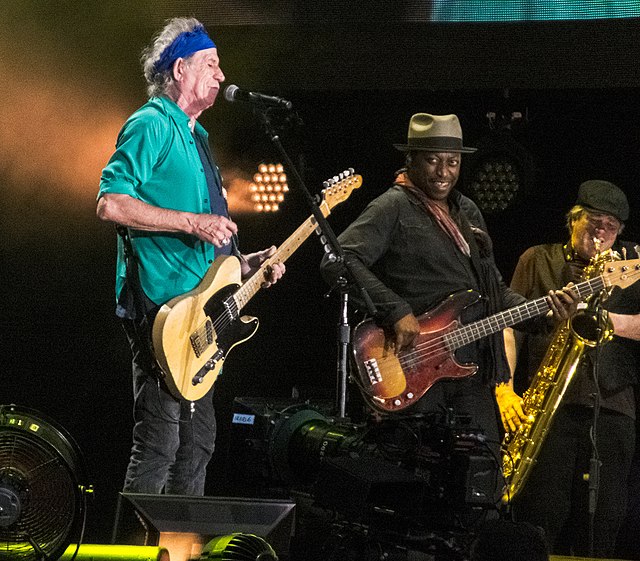
Table of Contents
- Early Life and Foundations of Darryl Jones
- The First Major Band: Miles Davis and the Jazz Roots
- Darryl Jones and the Sting Solo Era
- The Peak Era: Joining The Rolling Stones
- Navigating Career Challenges in the Spotlight
- The Modern Revival of Darryl Jones
- Awards and Global Recognition
- Essential Discography
- Professional Session Work and Highlights
- FAQ: Common Questions About Darryl Jones
Early Life and Foundations of Darryl Jones
Darryl Jones was born on December 11, 1961, in Chicago, Illinois.
His family encouraged his musical pursuits from a very young age.
His father, a drummer, introduced him to the drum kit initially.
However, the young musician soon discovered his true passion for the bass guitar after seeing a neighbor play.
He studied at the American Conservatory of Music to refine his technical skills.
During his formative years, the vibrant Classic Rock scene of the city deeply influenced his developing sound.
He spent his nights playing in local clubs and gaining experience in diverse musical genres.
This local exposure eventually led to a chance meeting with legendary jazz musician Vince Wilburn.
Wilburn recommended him for a high-profile audition that would change his life forever.
By the early 1980s, his reputation as a prodigy in the Chicago scene was firmly established.
He possessed a rare ability to blend funk, jazz, and rock elements into a cohesive style.
In contrast to many peers, his discipline in the studio was as impressive as his live energy.
The First Major Band: Miles Davis and the Jazz Roots
Darryl Jones secured his first major professional gig with the iconic Miles Davis in 1983.
Davis was known for his demanding standards and his eye for emerging talent.
The young bassist debuted on the 1984 album Decoy.
Significantly, this period marked a transition into more electronic and funk-oriented jazz for Davis.
He toured extensively with Davis, performing on stages across the globe.
This experience provided him with a masterclass in improvisation and stage presence.
Furthermore, his work with Davis solidified his standing as a world-class instrumentalist.
He also contributed to the album You’re Under Arrest in 1985.
Working with such a legendary figure required immense focus and creative flexibility.
It was during this time that he learned the importance of “the space between the notes.”
These lessons would eventually define his approach to larger rock productions.
Darryl Jones and the Sting Solo Era
Following his tenure with Davis, Darryl Jones joined Sting for his first solo venture.
Sting was looking to form a band of jazz-trained musicians for a new pop sound.
He played a pivotal role on the 1985 landmark album The Dream of the Blue Turtles.
This collaboration bridged the gap between complex jazz arrangements and mainstream radio success.
His grooving bass lines on tracks like “If You Love Somebody Set Them Free” became instant classics.
The group, which included Branford Marsalis, toured the world to critical acclaim.
During the 80s, this was considered one of the most sophisticated bands in popular music.
He also appeared in the documentary film Bring on the Night.
The film captured the chemistry and technical brilliance of the ensemble.
Significantly, his success with Sting proved he could handle the demands of a major pop tour.
His ability to hold down a groove while leaving room for melody was exceptional.
The Peak Era: Joining The Rolling Stones
The most significant turning point in his career arrived in 1993.
The Rolling Stones were searching for a replacement for longtime bassist Bill Wyman.
He auditioned for the band and immediately impressed Keith Richards and Mick Jagger.
His first studio contribution was on the 1994 album Voodoo Lounge.
This record featured the hit single The Rolling Stones Love is Strong 1994.
His arrival brought a fresh energy to the group during the 90s era.
Over the next three decades, he became an indispensable part of their live performances.
While he is not an official “partner” in the corporate entity, he is the band’s bassist in every practical sense.
He masterfully navigated the band’s extensive catalog, including 60s anthems like The Rolling Stones Paint It Black 1966.
He also provided the driving rhythm for The Rolling Stones Start Me Up 1981 during countless stadium tours.
On stage, he developed a deep musical connection with drummer Charlie Watts.
Their partnership formed the foundation for the band’s legendary “swing.”
He contributed to several studio albums, including The Rolling Stones Goats Head Soup re-releases and new material.
Furthermore, he performed on the album Bridges to Babylon in 1997.
In 2005, he was a key part of the A Bigger Bang sessions and subsequent world tour.
His playing style respects the original recordings while adding a modern robustness.
Significantly, he helped the band maintain their status as the premier live rock act in the world.
He also participated in the recording of Blue & Lonesome in 2016.
This blues-focused project allowed him to return to his roots in Chicago-style music.
Fans can often see his contribution highlighted in concert films like the Rolling Stones IMAX concert film.
He remains a quiet but powerful presence on the right side of the stage.
Navigating Career Challenges in the Spotlight
Maintaining a career at this level of fame presents unique challenges.
One of the primary difficulties was the constant comparison to his predecessor.
He handled this pressure with grace and focused purely on the music.
Furthermore, the rigorous schedule of tours can be taxing on any musician.
He has spoken about the discipline required to stay healthy and creatively sharp over decades.
The passing of Charlie Watts in 2021 was a significant personal and professional blow.
He had to adjust to a new rhythmic partner after nearly 30 years.
In contrast to some rock stars, he has largely avoided the pitfalls of public scandal or addiction.
His focus has remained steadfastly on his craft and his family.
He also manages his own business ventures, including a custom bass guitar line.
Balancing solo ambitions with a high-profile supporting role requires a specific temperament.
He has mastered the art of being essential without seeking the spotlight.
The Modern Revival of Darryl Jones
In recent years, Darryl Jones has seen a resurgence in recognition for his individual artistry.
The release of the 2023 album The Rolling Stones Hackney Diamonds showcased his enduring skill.
This project featured the lead single The Rolling Stones Angry, which hit charts globally.
On this record, he worked closely with drummer Steve Jordan.
Together, they have revitalized the band’s rhythmic foundation for a new generation.
He also continues to work as a highly sought-after session player in the category of news surrounding jazz and rock.
His personal life and career were the subject of a compelling documentary.
The film titled Darryl Jones: In the Blood provides an intimate look at his journey.
It features interviews with the many icons he has supported throughout his life.
Furthermore, he remains active on social media, sharing updates via his Instagram profile.
His commitment to music education and mentorship is a hallmark of his later career.
He often conducts clinics to inspire the next generation of bass players.
Awards and Global Recognition
Darryl Jones has received numerous accolades throughout his distinguished career.
While he often plays a supporting role, his contribution to Grammy-winning albums is undeniable.
He was featured in the Career section of major music encyclopedias for his versatility.
Significantly, his work spans the 60s classics and modern hits alike.
In 2022, he was honored with a Lifetime Achievement Award from the Bass Player Magazine.
Critics frequently cite him as one of the most underrated musicians in rock history.
His ability to switch between intricate jazz fusion and straight-ahead rock is legendary.
Furthermore, he has been recognized by the City of Chicago for his artistic contributions.
He remains a member of a very elite group of musicians who have sustained a 40-year career at the top.
His legacy is defined by a commitment to excellence and a deep love for the groove.
Essential Discography
- Decoy (1984) – His debut with Miles Davis that introduced his funk-influenced jazz style to a global audience.
- The Dream of the Blue Turtles (1985) – The multi-platinum solo debut by Sting featuring intricate and melodic bass work.
- Voodoo Lounge (1994) – His first studio recording with The Rolling Stones, marking the beginning of a thirty-year partnership.
- Bridges to Babylon (1997) – A diverse Stones record that showcased his ability to adapt to modern production styles.
- A Bigger Bang (2005) – A return to a raw rock sound that highlighted his powerful rhythmic connection with Charlie Watts.
- Blue & Lonesome (2016) – A Grammy-winning blues tribute that allowed him to showcase his deep Chicago roots.
- Hackney Diamonds (2023) – The latest Stones masterpiece featuring contemporary hits and fresh collaborations.
As an Amazon affiliate I make a small commission on any purchases made through this link at no extra cost to you. I thank you in advance.
Shop Rolling Stones Albums & Merch on Amazon
Professional Session Work and Highlights
Beyond his famous band roles, he has contributed to albums by Madonna and Eric Clapton.
He performed on the hit song The Rolling Stones Miss You during various live tours.
His discography also includes appearances on the Rolling Stones Black and Blue reissue collections.
Furthermore, his expertise is evident on tracks like Jumping Jack Flash in concert.
He has also collaborated with Joan Armatrading and Buckshot LeFonque.
His versatility remains his greatest professional asset.
FAQ: Common Questions About Darryl Jones
Is Darryl Jones an official member of the Rolling Stones?
Technically, he is a touring and recording member rather than a legal partner in the band’s corporate structure.
Who did Darryl Jones play with before the Stones?
He gained international fame playing for jazz legend Miles Davis and later for Sting’s solo band.
Where is Darryl Jones from?
He was born and raised on the South Side of Chicago, Illinois.
What bass does Darryl Jones use?
He frequently plays his own signature line of A Basses and Lakland guitars.
Did he play on Hackney Diamonds?
Yes, he is the primary bassist on most of the tracks for the 2023 release.
Darryl Jones remains a cornerstone of the world’s greatest rock band and a living legend of the bass guitar.