

Dizzy Reed: The Indispensable Keyboardist of Guns N’ Roses
Dizzy Reed remains the longest-serving member of Guns N’ Roses besides the founding frontman, Axl Rose.
Since his debut during the band’s most ambitious era, he has provided the harmonic foundation for some of the most iconic songs in rock history.
His contribution to the group extends far beyond simple accompaniment, as he brought a sophisticated layer of piano, organ, and synthesizers to their raw sound.
Throughout decades of lineup changes and internal turmoil, his presence has been a constant thread of stability.
He has navigated the highs of stadium tours and the complexities of recording one of the most anticipated albums of all time.
Beyond his work with the Gunners, his musical journey includes solo ventures and collaborations with several legendary hard rock collectives.
Today, he continues to tour globally, cementing his status as a pillar of the 90s rock scene and beyond.
This biography explores the life, challenges, and enduring legacy of the man who became the sonic architect of a generation.
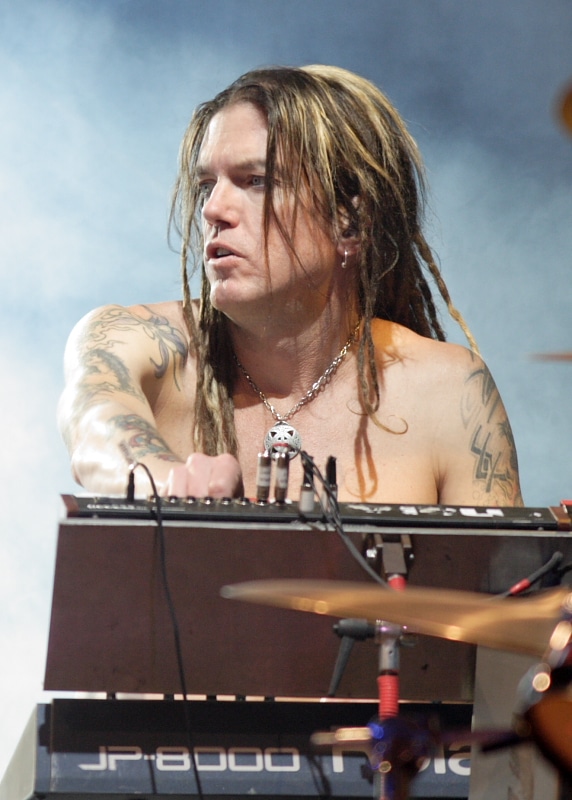
Table of Contents (Click to Expand)
- The Early Life of Dizzy Reed
- First Major Band: The Wild
- The Arrival of Dizzy Reed in Guns N’ Roses
- The Use Your Illusion Peak Era
- Career Challenges and Transitions
- The Revival and Solo Endeavors
- Awards and Recognition
- Essential Dizzy Reed Discography
- Frequently Asked Questions
- The Lasting Impact of a Keyboard Legend
The Early Life of Dizzy Reed
The artist was born Darren Arthur Reed on June 18, 1963, in Hinsdale, Illinois.
He grew up in Colorado, where he began his musical training at a very young age.
His grandmother played a pivotal role in his development by teaching him how to play the piano.
By the time he was a teenager, he was already performing in local bands and honing his skills on various keyboard instruments.
He moved to Los Angeles during the 80s to pursue a career in the booming Sunset Strip music scene.
The young musician worked a variety of odd jobs to support his dream while practicing relentlessly.
His dedication to the craft allowed him to develop a versatile style that blended classical technique with rock aggression.
During this formative period, he became a familiar face in the clubs where many future legends were starting out.
Significant mentors in his early life encouraged him to look beyond traditional roles for a keyboard player in heavy metal.
Consequently, he began experimenting with the Hammond organ, which would later become a signature part of his sound.
First Major Band: The Wild
Before finding global fame, he was a member of a band called The Wild.
This group was a significant part of the Los Angeles hard rock community and helped him establish his reputation.
While playing with The Wild, he crossed paths with the members of a rising band known as Guns N’ Roses.
The two groups often shared rehearsal spaces and social circles in the gritty environment of Hollywood.
He formed a particularly close bond with Axl Rose, who recognized his immense talent and work ethic.
The Wild eventually disbanded, but the connections he made during those years proved to be life-changing.
In fact, Rose had promised him a spot in his band long before the opportunity actually materialized.
Wait times for that invitation were long, as the band was busy touring behind their massive debut, Appetite for Destruction.
During this interim, he continued to play in various projects, including a band called Hairy Lipps.
Eventually, a phone call from Rose in 1990 changed everything, offering him a permanent role in the world’s biggest rock group.
The Arrival of Dizzy Reed in Guns N’ Roses
When Dizzy Reed joined the band, they were at a critical turning point in their creative evolution.
The group wanted to expand their musical palette for their upcoming studio projects.
Initially, some fans and critics were skeptical about adding a keyboardist to a band known for its raw, guitar-driven energy.
However, his ability to integrate seamlessly with the existing members quickly silenced the doubters.
His first recording sessions involved adding layers to the songs that would define the next decade of rock music.
Significantly, he was the first and only member to be added to the official Guns N’ Roses members roster during that period who was not a replacement for a founding member.
He made his live debut with the band at the Rock in Rio 2 festival in January 1991.
Performing in front of hundreds of thousands of people was a trial by fire that he handled with poise.
Furthermore, his presence allowed the band to perform complex ballads that required a grand piano on stage.
This addition was essential for the band to transition from the club sound of the 70s and 80s into a more orchestral rock territory.
The Use Your Illusion Peak Era
The most prolific period of his career began with the simultaneous release of two massive albums.
He contributed extensively to Use Your Illusion I, providing the haunting piano melodies that defined the tracks.
His work on the epic masterpiece November Rain remains one of his most celebrated contributions to date.
On the companion record, Use Your Illusion II, his playing added a sense of drama and scale to the music.
He worked closely in the studio with Slash to ensure the keyboards complemented the intricate guitar solos.
The subsequent world tour lasted for over two years and took the band to every corner of the globe.
During this tour, he also performed backing vocals and percussion, becoming a multi-instrumental asset on stage.
Songs like Estranged showcased his ability to lead a track through various emotional movements.
He also played on the band’s cover of the Paul McCartney classic, Live and Let Die.
Despite the chaos of the tour, his performance remained consistently professional and high-level.
In 1993, he appeared on the covers album The Spaghetti Incident? which showcased the band’s punk influences.
By this time, he had firmly established himself as an integral part of the group’s creative identity.
He was also featured in the groundbreaking music videos that dominated MTV throughout the early nineties.
His image, often seen behind a massive grand piano, became synonymous with the band’s epic visual style.
Career Challenges and Transitions
The mid-1990s brought significant turmoil as the classic lineup of the band began to splinter.
Founding members Izzy Stradlin and Duff McKagan eventually departed, leaving the band’s future in doubt.
He chose to stay by Rose’s side, becoming the only member from the Illusion era to remain in the band continuously.
This period of transition was marked by years of recording sessions that would eventually become the next album.
He contributed to countless demos and worked with a rotating cast of musicians during this long hiatus.
Specifically, he played a major role in the writing and recording of Chinese Democracy, which faced numerous delays.
In contrast to the stadium years, this era was defined by a more experimental and industrial-tinged sound.
He also had to deal with the departure of Matt Sorum, with whom he had shared a strong rhythmic connection.
Through all the legal battles and personnel shifts, his loyalty never wavered.
He remained a vital link between the band’s legendary past and its uncertain future.
The Revival and Solo Endeavors
After years of anticipation, the band returned to the stage with a new lineup in the early 2000s.
He was a central figure in this comeback, often performing extended solos during the live shows.
In 2016, a massive shift occurred when the “Not in This Lifetime” tour was announced.
This tour marked the return of founding members to the fold, and he remained the bridge between all eras.
He participated in the Guns N’ Roses 2025 tour, showing that his stamina is as strong as ever.
Beyond his primary band, he has explored various side projects to express his own musical vision.
He was a member of the hard rock supergroup The Dead Daisies for several years.
In 2018, he released his debut solo album titled Rock ‘n Roll Chose Me.
This record allowed him to showcase his skills as a lead vocalist and primary songwriter.
He has also collaborated with other rock royalty, including Johnny Cash and Motörhead.
Fans can keep up with his latest projects and personal updates via his official Facebook page.
Awards and Recognition
The career of this talented musician has been marked by several significant accolades.
In 2012, he was inducted into the Rock and Roll Hall of Fame as a member of Guns N’ Roses.
This induction recognized his vital role during the band’s global peak in the early nineties.
Furthermore, he has been part of some of the highest-grossing tours in the history of music.
His playing has influenced a generation of keyboardists in the hard rock and heavy metal genres.
Significantly, he is often cited as a key reason for the band’s ability to maintain a lush, orchestral sound live.
His contributions to multi-platinum albums have earned him numerous gold and platinum certifications.
He also remains a popular figure for interviews, sharing insights on his long career in various video features.
His work continues to be a standard for how to integrate keyboards into a guitar-centric band.
The legacy of his recordings ensures his place in the pantheon of rock greats.
Essential Dizzy Reed Discography
This section highlights the most important recordings featuring his distinctive keyboard work.
- Use Your Illusion I (1991): His studio debut with the band featuring the piano-heavy hit Don’t Cry.
- Use Your Illusion II (1991): A massive record containing the Civil Rights anthem Civil War.
- The Spaghetti Incident? (1993): A collection of punk and glam rock covers that benefited from his organ textures.
- Chinese Democracy (2008): The long-awaited album where he served as a primary collaborator and arranger.
- Rock ‘n Roll Chose Me (2018): His first solo effort which demonstrates his range as a musician and singer.
As an Amazon affiliate I make a small commission on any purchases made through this link at no extra cost to you. I thank you in advance.
Check out Guns N’ Roses Albums & Merch on Amazon
Frequently Asked Questions
When did he join the band?
He officially joined the group in 1990 during the early recording stages of the Illusion albums.
What is his most famous song contribution?
He is most famous for his piano work on the power ballad November Rain.
Does he have a solo career?
Yes, he released a solo album in 2018 and has played in several other bands like Hookah Brown.
Is he a member of the Hall of Fame?
He was inducted into the Rock and Roll Hall of Fame in 2012 along with other prominent members.
The Lasting Impact of a Keyboard Legend
His journey from a young piano student in Colorado to a global rock star is a story of persistence.
He has survived the most volatile years of one of music’s most notorious bands.
His ability to adapt to changing musical landscapes has kept him relevant for over thirty years.
Whether playing to a stadium crowd or recording in a quiet studio, his passion for the music is evident.
He remains a fan favorite and a respected peer among the world’s greatest musicians.
As the band prepares for the Guns N’ Roses 2026 tour, he will undoubtedly be there to lead the way.
His story ensures that the legacy of Dizzy Reed will always be central to the history of rock and roll.