

Fleetwood Mac Silver Springs (1997): Rock’s Greatest Lost Song
Fleetwood Mac Silver Springs is one of the most emotionally charged songs in rock history, a breakup anthem Stevie Nicks wrote in 1976 that was stripped from Rumours, buried for two decades, and then detonated on a Warner Bros. sound stage in 1997 in front of 400 witnesses who still talk about what they saw.
The story of this song is inseparable from the story of Fleetwood Mac’s most volatile lineup, a band that turned its members’ romantic wreckage into some of the best-selling music ever recorded.
Twenty years of unfinished business exploded the night Nicks walked to Lindsey Buckingham’s microphone, looked him dead in the eye, and sang, “You’ll never get away from the sound of the woman that loved you.”
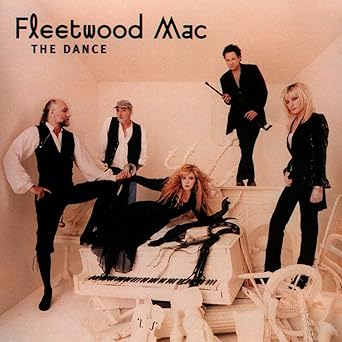
That performance, captured on The Dance, turned a forgotten B-side into a generational touchstone, earning a Grammy nomination and introducing the song to millions who had never heard it in its original form.
What follows is the definitive account of how Fleetwood Mac Silver Springs was created, nearly lost, fought over, and ultimately redeemed on one of the most unforgettable nights in rock and roll.
Affiliate Disclosure: I am an Amazon affiliate and if you purchase through any amazon links on this site i may earn a small commission at no extra charge to you.
Quick Navigation
- What is the meaning of Silver Springs by Fleetwood Mac?
- The Vibe: Genre, Mood, and Search Intent
- Behind the Lyrics: The Story of Silver Springs
- Technical Corner: The Gear Behind Silver Springs
- Legacy and Charts: Why Silver Springs Still Matters
- Listener’s Note: A Personal Take on Silver Springs
- Collector’s Corner
- Frequently Asked Questions About Silver Springs
- You Might Also Like
What is the meaning of Silver Springs by Fleetwood Mac?
“Silver Springs” by Fleetwood Mac is a breakup song written by Stevie Nicks about the end of her relationship with guitarist Lindsey Buckingham.
The lyrics are a direct message to Buckingham: that no matter how far he goes or who he loves, he will never escape the memory of Nicks.
The title comes from a highway sign Nicks saw in Maryland while the band was on the road.
She loved the name’s dreamlike quality and felt it captured the bittersweet feeling of something beautiful that could have been but never was.
The Vibe: Genre, Mood, and Search Intent
“Silver Springs” moves like a slow tide, deceptively gentle at the start and then overwhelming by the finish.
The song sits in a unique space between soft rock and emotional confrontation, never losing its melodic beauty even when Nicks is at her most furious.
- Genre: Soft Rock, Pop Rock, Classic Rock
- Mood: Melancholic, confrontational, bittersweet, cathartic
- Tempo: Slow burn, building to an intense climax
- Best For: Late-night reflection, heartbreak playlists, anyone who has ever had unfinished business with someone they loved
- Similar To: Fleetwood Mac “Go Your Own Way”, Fleetwood Mac “Dreams”
- Fans of Fleetwood Mac also search: “best Fleetwood Mac songs,” “Stevie Nicks breakup songs,” “Fleetwood Mac live performances 1997”
Behind the Lyrics: The Story of Fleetwood Mac Silver Springs
Stevie Nicks wrote “Silver Springs” in 1976, at the height of the creative pressure-cooker that produced Rumours.
She and Lindsey Buckingham had just broken up after years together, and the band was demanding everyone keep working through the pain.
Nicks has said she spotted a highway sign for Silver Spring, Maryland, while the tour bus rolled through the state, and the name hit her immediately.
“I loved the name,” she explained in interviews, describing it as something symbolic of what could have been, the blue-green colors of a dream she and Buckingham never got to finish.
The song was written as part of the Rumours sessions at the Record Plant in Sausalito, California, where the band worked through 1976 in a haze of personal chaos and creative intensity.
Mick Fleetwood and Lindsey Buckingham ultimately cut the song from the album, replacing it with Nicks’ own “I Don’t Want to Know,” a shorter track that fit the vinyl’s runtime better.
According to Mick Fleetwood, the decision came down to space on the record: Rumours was overflowing with material, and something had to go.
Nicks was devastated.
She ran out of the studio into the parking lot and screamed.
Recording engineer Richard Dashut later called it “the best song that never made it to a record album.”
“Silver Springs” was relegated to the B-side of “Go Your Own Way” in late 1976, a bitter irony: Buckingham’s breakup song about Nicks got the A-side, while her response was treated as an afterthought.
The song received some FM radio play and appeared in European Rumours tour setlists, but it essentially vanished for nearly two decades.
In 1990, the wound reopened when Nicks tried to include “Silver Springs” on her solo compilation Timespace and Mick Fleetwood refused, wanting to hold it for a forthcoming Fleetwood Mac box set.
Nicks was furious enough to leave the band over it.
The song finally appeared on the 1992 four-disc box set 25 Years: The Chain, marking its first full album release.
Then came 1997.
The classic lineup reunited for The Dance, and Nicks finally got her night with the song.
She told Rolling Stone that during the six weeks of rehearsals, the performance was never what it became on May 23, 1997, the one show where, as she put it, “I knew we’d bring it out in case it was the last thing we’d ever do.”
Watch the official live video on YouTube and you will see exactly what she means.
Did You Know?
Nicks originally wrote “Silver Springs” as a gift for her mother, Barbara Nicks, who called it her “rainy day song.”
After the 1997 live single became a hit, Barbara Nicks received royalty checks every month for the rest of her life.
“My mom got thousands of dollars every month,” Nicks told People magazine. “So it wasn’t such a bad gift in the long run after all.”
Technical Corner: The Gear Behind Silver Springs
The studio version of “Silver Springs” was recorded in 1976 at the Record Plant in Sausalito, California, produced by the band alongside co-producers Ken Caillat and Richard Dashut.
The instrumental palette is classic late-1970s Fleetwood Mac: Lindsey Buckingham’s layered acoustic and electric guitar work, Christine McVie’s piano anchoring the harmonic foundation, John McVie’s melodic bass lines, and Mick Fleetwood’s characteristically open, room-filling drum sound.
Buckingham was known during the Rumours sessions for his precise fingerpicking technique on acoustic guitar, influenced by his background in folk music, and you can hear that control in the delicate opening of “Silver Springs.”
McVie’s piano on the track is played with a deliberate, measured touch that gives the song its dreamlike opening quality, the sound of something almost still before the emotional current takes hold.
For the 1997 live version on The Dance, the band performed at Warner Bros. Studios in Burbank, California, on May 23, 1997, before an invited audience of just 400 people.
The live recording captures Buckingham on electric guitar, McVie on acoustic piano, John McVie on bass, and Fleetwood on his signature large Ludwig kit.
The live mix, handled by the production team behind The Dance, preserved the song’s natural dynamics rather than compressing it, which is why the final climax, when Nicks screams “never get away” at Buckingham, lands with such physical force.
The production team allowed the ambient sound of the studio to breathe, giving the live recording a presence that goes well beyond a typical concert document.
Legacy and Charts: Why Fleetwood Mac Silver Springs Still Matters
The live version of “Silver Springs” was released as a radio single in the United States on July 22, 1997.
It immediately became the most added song on Adult Alternative, Hot Adult Contemporary, and Adult Contemporary stations, racking up 51 adds in the latter category in its first week, according to Radio and Records.
The single charted at No. 41 on the US Billboard Hot 100 Airplay chart, No. 38 on the Canadian RPM 100 Hit Tracks chart, and No. 96 in the Netherlands.
In 1998, the track received a Grammy nomination for Best Pop Performance by a Duo or Group with Vocals, the only track from The Dance to earn a standalone nomination outside the album itself.
The album it appeared on, The Dance, debuted at No. 1 on the Billboard 200, selling 199,000 copies in its first week and eventually moving over six million copies worldwide, making it the fifth best-selling live album of all time in the United States.
Billboard, in its review of The Dance, wrote that Nicks was at her best on “Silver Springs,” giving the lyrics a depth and worldly feeling that elevated them above the original recording.
Pitchfork later wrote that the song captured the story of how Buckingham and Nicks lost each other more powerfully than any other song in the Mac catalog.
The Guardian ranked it No. 6 on their list of the 30 greatest Fleetwood Mac songs; Paste ranked it No. 2.
The studio version was finally added to a proper album pressing with the 2004 remaster of Rumours, in the sequence where it would have appeared had it not been cut.
More recently, “Silver Springs” found a massive new audience through Daisy Jones and the Six and a wave of viral TikTok posts, proving that the emotional core of the song is fully independent of when you were born.
Tori Amos performed it live during her 2014 and 2017 tours.
Courtney Love covered it at a Fleetwood Mac tribute show in Los Angeles, noting that she started crying while singing it.
Explore More Fleetwood Mac
Read our deep dive on Fleetwood Mac “Rhiannon”, or check out the story behind “Landslide” for more of Nicks’ most personal songwriting.
Listener’s Note: A Personal Take on Silver Springs
The first time I watched the 1997 performance rather than just listened to it, I had to rewind it twice.
There is a moment at around 3:43 where Nicks walks away from her own microphone and heads straight for Buckingham’s, and something shifts in the room that you can feel through a screen.
What she does with her voice in that final section, those repeated “never get away” lines where she builds from a near-whisper into something raw and enormous, is not a performance technique.
It is 20 years of unsaid things finally getting said.
Buckingham’s face in those seconds is remarkable too: he looks directly back at her, uncomfortable and completely unable to look away.
He told Rolling Stone that year, “There is no way you can’t get drawn into the end of that song.”
That is exactly right.
Play the studio version from the 2004 Rumours remaster first, and you will hear a gorgeous, controlled piece of songwriting.
Then watch the live version, and you will understand why this song spent 20 years waiting for exactly this moment to exist.
Affiliate Disclosure: I am an Amazon affiliate and if you purchase through any amazon links on this site I may earn a small commission at no extra charge to you. This helps support classicrockartists.com and allows me to keep providing deep-dive content on the legends of rock. Thank you for your support!
Collector’s Corner: Own Silver Springs on Vinyl or CD
The Dance is the definitive home for “Silver Springs” and one of the most essential live albums in Fleetwood Mac’s catalog.
If you want the studio version in its original context, the 2004 remaster of Rumours places it exactly where it always belonged, between “Songbird” and “The Chain.”
Get Fleetwood Mac – The Dance on Amazon
Browse the Full Fleetwood Mac Discography on Amazon
Frequently Asked Questions About Silver Springs
“Silver Springs” was written entirely by Stevie Nicks in 1976 during the Rumours recording sessions at the Record Plant in Sausalito, California.
Nicks has called it “probably the best song I’ve ever written.”
She wrote it as a direct message to Lindsey Buckingham after their romantic breakup, though the song was also intended as a gift for her mother, Barbara Nicks.
The song was cut from Rumours due to the physical limitations of vinyl: the album was already running long and Mick Fleetwood and Lindsey Buckingham decided to replace it with Nicks’ shorter song “I Don’t Want to Know.”
Nicks was deeply upset by the decision.
The song was demoted to the B-side of the “Go Your Own Way” single, which meant Buckingham’s breakup song about Nicks got the spotlight while her response was treated as filler.
The most celebrated version of “Silver Springs” is the live recording on Fleetwood Mac’s 1997 album The Dance, which was released on August 19, 1997, through Reprise Records.
The studio version was officially added to the remastered edition of Rumours in 2004 as a bonus track, sitting between “Songbird” and “The Chain.”
The song also appeared on the 1992 box set 25 Years: The Chain and Nicks’ 2007 compilation Crystal Visions.
Yes. The live version from The Dance received a Grammy nomination in 1998 for Best Pop Performance by a Duo or Group with Vocals.
It was the only track from the album to receive a standalone Grammy nomination, separate from the album’s own nomination.
The award that year went to Jamiroquai for “Virtual Insanity.”
“Silver Springs” is played in the key of D major.
The song has a slow, flowing tempo of approximately 72 beats per minute and is written in 4/4 time.
Buckingham’s guitar work on the track uses fingerpicking techniques drawn from his folk background, giving the song its clean, delicate melodic quality in the verses.
Yes. Tori Amos performed “Silver Springs” live during her 2014 and 2017 tours, including a tribute version on Nicks’ birthday.
Courtney Love covered it at a Fleetwood Mac tribute show in Los Angeles, saying she started crying while performing it.
The song has also gained significant exposure through the Amazon Prime series Daisy Jones and the Six and through viral social media posts, introducing it to younger audiences who discovered the 1997 performance through streaming and TikTok.
You Might Also Like
Like “Silver Springs,” “The Chain” emerged from the raw emotional wreckage of the Rumours era and remains one of the band’s most powerful statements of collective survival.
Another Stevie Nicks masterwork built on personal loss, “Sara” shares the same slow-building emotional weight and layered vocal delivery that define “Silver Springs.”
Stevie Nicks “Edge of Seventeen”
The raw ferocity Nicks brings to the closing moments of “Silver Springs” finds its closest solo parallel in the rising fury of “Edge of Seventeen.”
Why Fleetwood Mac Silver Springs Changed Music Forever
No song in Fleetwood Mac’s catalog carries a stranger or more complicated history than “Silver Springs.”
Stevie Nicks wrote it as an act of love and defiance, watched it get buried, fought for it for two decades, and then delivered it on one specific night in 1997 with the kind of conviction that you simply cannot plan or manufacture.
The 1997 performance on The Dance is not just a great live recording.
It is a document of two people who loved each other, hurt each other, and then stood five feet apart on a stage and let 400 strangers watch them work through all of it in real time.
That is why the song continues to find new listeners, why it went viral decades after it was recorded, and why it lands differently every time you hear it depending on where you are in your own life.
Fleetwood Mac Silver Springs is the rare song that needed everything to go wrong before it could become exactly what it was always supposed to be.
Ready to hear it the way it was meant to be heard?
Stream or own The Dance, or explore the full Fleetwood Mac greatest hits guide for more essential listening.