

Appetite for Destruction: The Definitive Album Review
Appetite for Destruction is the most explosive debut album in rock history, a record that hit the world in the summer of 1987 and has never stopped burning.
From the first howl of Welcome to the Jungle, this album announces itself with a ferocity that few rock records before or since have matched.
It doesn’t ease you in.
It throws you straight into the deep end of a world that is loud, dangerous, and completely alive.
This is the full story of the album, the band, the songs, and the legacy that has made it one of the most important records ever pressed to vinyl.
Quick Navigation
Appetite for Destruction and the Birth of a Legend
Guns N’ Roses formed in Los Angeles in 1985, rising out of the Sunset Strip with a raw blend of punk aggression and hard rock swagger that no other band in the city was delivering.
The full story of every member of Guns N’ Roses covers the chaotic lineup moves, the personalities, and the chemistry that made the band what it was.
The core recording lineup was Axl Rose on vocals, Slash on lead guitar, Izzy Stradlin on rhythm guitar, Duff McKagan on bass, and Steven Adler on drums.
They signed with Geffen Records and entered the studio with producer Mike Clink, recording primarily at Can Am Recorders in Tarzana, California.
Clink was the right choice for a band this volatile.
He captured the danger without cleaning it up.
The album was released on July 21, 1987.
As documented on Wikipedia’s entry on the record, it debuted at a modest number 182 on the Billboard 200.
Nobody had any idea what was about to happen.
The Band Behind the Record
Axl Rose had a vocal range and emotional intensity that set him apart from every other frontman in hard rock at the time.
He could deliver a street-level snarl in one phrase and shift to a glass-cutting shriek in the next without losing an ounce of conviction.
Slash brought a guitar tone to this album that was simultaneously filthy, warm, and iconic, influenced by the blues but delivered with a rock brutality all his own.
His work across the record, from the opening riff of Welcome to the Jungle to the closing solo on Rocket Queen, is the defining guitar performance of the late 1980s.
The Slash documentary Black Zombie gives deeper insight into the guitarist’s vision and influences during this era.
Izzy Stradlin played the role of the quiet architect.
His rhythm work carried strong echoes of Keith Richards, giving the band a loose, swinging foundation beneath all the noise.
Duff McKagan arrived from Seattle’s punk scene, and his bass lines gave the album a muscular groove that most hard rock records of the period simply lacked.
Steven Adler’s drumming was loose, human, and perfectly suited to this band.
He played like someone who had learned on the street, not in a studio.
Together, they sounded like a city that was equal parts ambition and menace.
Track-by-Track: Every Song on Appetite for Destruction
The album runs twelve tracks and there is not a single filler moment across its 53-minute runtime.
Welcome to the Jungle opens things with one of the most recognizable intros in rock history, a coiling guitar figure that unfolds into a full-throttle attack on the senses.
It’s So Easy follows with a bulldozing, contemptuous groove that sets the album’s unapologetic tone from its first bar.
Nightrain is a hard-driving locomotive of a track, built around cheap wine and late-night Los Angeles living, and it remains one of the tightest songs the band ever recorded.
Out ta Get Me channels the band’s collective sense of paranoia into a raw, blues-soaked punch that keeps the momentum surging.
Mr. Brownstone is the album’s most hypnotic track, a mid-tempo groove with a barely-concealed account of heroin dependency that hit close to home for more than one band member.
Paradise City starts with a gentle, almost pastoral acoustic intro before exploding into one of the most anthemic choruses in hard rock history.
My Michelle is a brutally honest portrait of a real woman in Axl Rose’s life, delivered with a frankness that shocked audiences and remains striking today.
Think About You is the album’s most straightforward rock love song, and it works precisely because the band plays it without irony.
Sweet Child O’ Mine is the commercial and emotional peak of the record, built on one of Slash’s most recognizable guitar figures and supported by Axl Rose’s most vulnerable and direct vocal of the session.
You’re Crazy burns through its runtime at near-punk velocity, showing how much range this band had built into a record that never sounds forced.
Anything Goes is a strutting, Aerosmith-inflected rocker that wears its influences openly and delivers them with confidence.
Rocket Queen closes the album with an eight-minute journey that moves from raw aggression into something genuinely emotional, ending with a hopeful, almost tender coda that stops you in your tracks every single time.
The Singles That Conquered Radio
Appetite for Destruction generated five singles, and every one of them became a rock radio staple that has never left rotation.
Welcome to the Jungle was the first out of the gate in September 1987, but it gained real traction only after MTV began airing the video regularly in late 1987, partly following a push from David Lee Roth.
Sweet Child O’ Mine was the commercial breakthrough, climbing to number one on the Billboard Hot 100 in September 1988, over a year after the album’s release.
That chart peak triggered a full re-evaluation of an album many critics had initially dismissed or ignored.
Paradise City peaked at number five on the Hot 100 and has remained a festival and arena staple for nearly four decades since.
Nightrain and It’s So Easy completed the singles run, ensuring the album had multiple entry points for listeners who discovered it at different moments.
By the summer of 1988, the album had climbed to number one on the Billboard 200, a slow-burn ascent that was almost without precedent in the industry.
Most albums peak in their first few weeks.
This one got bigger over time.
The Original Cover Art Controversy
The album was originally released with a painting by underground artist Robert Williams depicting a robot looming over a woman in a scene that major retailers immediately refused to display.
Geffen Records pulled the original artwork from the standard release and replaced it with the now-iconic cross design, with each skull in the cross representing one of the five band members.
Williams’ painting was retained on the inner sleeve, preserving its place in the album’s history for the fans who looked closely enough to find it.
The controversy generated enormous press coverage.
It reinforced the band’s outlaw identity at a moment when they needed every advantage they could find.
It was the kind of trouble no marketing department could have engineered.
Guns N’ Roses didn’t need to manufacture danger — they brought it with them.
Appetite for Destruction’s Legacy and Record Sales
Appetite for Destruction has sold over 30 million copies worldwide and has been certified 18x Platinum in the United States, making it the best-selling debut album in American chart history.
No debut record by any rock act has come within reach of those numbers in the decades since.
The album hit at a specific cultural moment, when the polished glam metal sound of the Sunset Strip was beginning to wear thin and audiences were hungry for something with more grit and honesty.
Contemporaries like Motley Crue had helped establish the Sunset Strip sound, but Guns N’ Roses arrived with an energy that felt genuinely dangerous rather than theatrical.
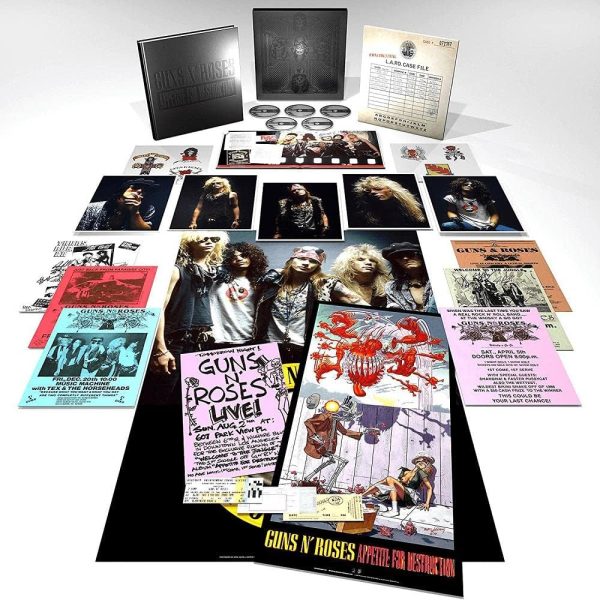
A Super Deluxe Edition was released in 2018 for the album’s 30th anniversary, featuring newly remastered audio, unreleased demo recordings, and previously unheard live material.
It introduced the record to a generation that had only known the studio version, and it reminded longtime fans of just how much material surrounded this record’s creation.
You can stream the full album on YouTube here: Guns N’ Roses: Appetite for Destruction Full Album 1987.
The band followed this record with G N’ R Lies in 1988, then launched into the enormous double-album era with Use Your Illusion I in 1991.
The band has never stopped performing these songs live, and the Guns N’ Roses 2026 tour is bringing this music to yet another new generation of rock fans around the world.
For more deep dives into the decade that produced this record, the 80s iconic hits and stories section covers the era from every angle.
Appetite for Destruction is not simply a great debut album — it is one of the great documents of rock and roll itself, and it will outlast almost everything that surrounds it.
Affiliate Disclosure: I am an Amazon Associate, and if you purchase through any Amazon links on this site, I may earn a small commission at no extra charge to you. It helps keep the lights on here at ClassicRockArtists.com and allows me to keep writing in-depth content on the legends of rock. Thank you for the support.
Browse All Guns N’ Roses Albums and Merch on Amazon
Frequently Asked Questions
When was Appetite for Destruction released?
The album was released on July 21, 1987, on Geffen Records.
How many copies has Appetite for Destruction sold?
It has sold over 30 million copies worldwide.
In the United States alone it holds an 18x Platinum certification, which makes it the best-selling debut album in American history.
Who produced Appetite for Destruction?
The album was produced by Mike Clink alongside the band.
Recording took place primarily at Can Am Recorders in Tarzana, California.
What happened to the original cover art?
The original artwork by Robert Williams was pulled by Geffen after major retailers refused to carry it.
The cross-and-skulls design, with each skull representing a band member, replaced it as the standard cover.
Is there a deluxe edition of the album?
Yes, a Super Deluxe Edition was issued in 2018 for the album’s 30th anniversary.
It included remastered audio, demos, and previously unreleased live recordings from the era.
What are the biggest singles from the album?
Sweet Child O’ Mine reached number one on the Billboard Hot 100 in 1988.
Welcome to the Jungle, Paradise City, Nightrain, and It’s So Easy were also released as singles and remain rock radio classics.