

King Crimson Songs: 15 Essential Tracks That Defined Progressive Rock Forever
King Crimson songs represent the very foundation of progressive rock music. From the apocalyptic fury of “21st Century Schizoid Man” to the devastating beauty of “Starless,” Robert Fripp’s legendary band has created some of the most innovative and influential music in rock history. Since their formation in 1968, King Crimson has continuously reinvented their sound while maintaining an uncompromising artistic vision that has inspired everyone from Yes and Genesis to Tool and Radiohead. This comprehensive guide explores the essential King Crimson songs every music fan needs to experience.
Key Takeaways: King Crimson Songs
- Genre Pioneers: King Crimson invented progressive rock with their 1969 debut album
- Constant Evolution: The band transformed their sound across seven distinct eras
- Essential Tracks: “Starless,” “21st Century Schizoid Man,” and “Epitaph” rank among rock’s greatest achievements
- Lasting Influence: Their music directly influenced metal, alternative rock, and experimental music
- Robert Fripp: The only constant member through 50+ years of groundbreaking music
Experience King Crimson on Vinyl
The definitive way to hear these progressive rock masterpieces is on high-quality vinyl pressings.
Recent remastered editions capture every nuance of Robert Fripp’s legendary guitar work.

Table of Contents −
King Crimson Songs: A Complete Overview
King Crimson emerged from the ashes of psychedelic pop trio Giles, Giles and Fripp in 1968. Guitarist Robert Fripp joined forces with drummer Michael Giles, bassist Greg Lake, multi-instrumentalist Ian McDonald, and lyricist Peter Sinfield to create something the world had never heard before. Their debut performance at Hyde Park in July 1969, opening for The Rolling Stones before 650,000 people, announced the arrival of a revolutionary new sound.
The band’s debut album, In the Court of the Crimson King, released in October 1969, became what Pete Townshend of The Who called “an uncanny masterpiece.” This landmark recording fused jazz, classical music, and heavy rock into dark, dramatic compositions that defined the progressive rock genre. King Crimson songs from this era established templates that countless bands would follow for decades.
What makes King Crimson unique among progressive rock bands is their refusal to repeat themselves. While contemporaries like Yes and Genesis refined and polished their signature sounds, King Crimson continuously reinvented their approach. Robert Fripp, the only constant member across the band’s 50-plus year history, has guided King Crimson through at least seven distinct musical phases, from symphonic rock to jazz fusion to new wave-influenced art rock.
Did You Know?
King Crimson’s name was coined by lyricist Peter Sinfield, who explained that a “crimson king” represents any ruler during whose reign there were “societal rumblings” and “the dark forces of the world.” Robert Fripp has also connected the name to the Arabic phrase “B’il Sabab,” meaning “the man with an aim.”
The 15 Most Essential King Crimson Songs
Ranking King Crimson songs presents a unique challenge because the band’s catalog spans such diverse musical territory. A track from 1969 shares almost nothing sonically with one from 1981, yet both carry the unmistakable King Crimson identity. The following songs represent the absolute essential listening for anyone wanting to understand why King Crimson remains one of the most important bands in rock history.
In the Court of the Crimson King Era (1969)
1. 21st Century Schizoid Man
The opening track of King Crimson’s debut album remains one of the most explosive beginnings to any record in rock history. “21st Century Schizoid Man” announces itself with distorted vocals, a ferocious saxophone line, and Robert Fripp’s proto-metal guitar riff that would influence heavy music for generations.
The song’s middle instrumental section, “Mirrors,” features a Fripp guitar solo that Guitar World later ranked among the top 100 guitar solos of all time. The lyrics, written by Peter Sinfield, offer a scathing critique of the Vietnam War and modern society’s descent into madness. This track alone established King Crimson as something far heavier and more aggressive than their progressive rock peers.
2. Epitaph
“Epitaph” captures something unique among King Crimson songs: pure, devastating emotional power delivered through orchestral rock. Greg Lake’s powerful vocals carry Peter Sinfield’s haunting, prophetic lyrics about nuclear annihilation and the fate of humanity, while Ian McDonald’s Mellotron creates walls of synthetic strings that envelop the listener.
The song builds from quiet, introspective verses to overwhelming crescendos, with Robert Fripp’s delicate acoustic guitar work providing intimate moments of beauty. Many fans consider “Epitaph” the most emotionally affecting King Crimson song ever recorded. Its influence can be heard in everything from progressive metal to post-rock.
3. The Court of the Crimson King
The title track and album closer stands as one of the most ambitious King Crimson songs ever conceived. Ian McDonald and Peter Sinfield co-wrote this epic piece before either had joined the band, and it became the centerpiece of progressive rock’s founding document.
Built around McDonald’s majestic Mellotron arrangements and Lake’s theatrical vocals, the song creates an otherworldly atmosphere that influenced countless progressive and symphonic rock bands. The piece moves through multiple sections, from intimate acoustic passages to grandiose orchestral climaxes, establishing the multi-part suite as a progressive rock staple.
4. I Talk to the Wind
Positioned as a gentle counterpoint to the aggressive “21st Century Schizoid Man,” this ethereal piece showcases King Crimson’s versatility. Ian McDonald’s virtuosic flute playing weaves through the arrangement, while Greg Lake delivers one of his most tender vocal performances.
The song’s folk-influenced beauty demonstrates that King Crimson could master delicate, acoustic-driven material alongside their heavier compositions. This balance between aggression and introspection would become a defining characteristic of King Crimson songs throughout their career.
5. Moonchild
The most experimental track on the debut album, “Moonchild” begins with a beautiful, lullaby-like vocal section before dissolving into an extended improvisation called “The Dream” and “The Illusion.” This experimental approach to composition, featuring abstract soundscapes and collective improvisation, would become increasingly important to King Crimson’s evolution.
The Mid-1970s Trilogy: King Crimson’s Creative Peak
After the original lineup dissolved following their first American tour in January 1970, King Crimson went through several transformations before Robert Fripp assembled what many consider the definitive lineup in 1972. With former Yes drummer Bill Bruford, Family bassist John Wetton, violinist David Cross, and avant-garde percussionist Jamie Muir, King Crimson entered their most creatively intense period.
The albums Larks’ Tongues in Aspic (1973), Starless and Bible Black (1974), and Red (1974) represent King Crimson at their heaviest and most improvisational. These recordings introduced a brutal, metallic edge that would influence bands from Tool to Mastodon decades later.
6. Starless
Many fans and critics consider “Starless” the greatest King Crimson song ever recorded, and possibly one of the finest pieces of progressive rock in existence. The song begins as a haunting ballad, with John Wetton’s vulnerable vocals delivering some of the band’s most emotionally direct lyrics.
After the vocal sections, “Starless” transforms into an extended instrumental passage built around a hypnotic, repetitive theme that gradually intensifies over several minutes. The tension builds relentlessly until the song explodes into a devastating climax that ranks among the most powerful moments in rock music. The way the piece returns to its opening theme in the final moments creates a perfect emotional arc that leaves listeners breathless.
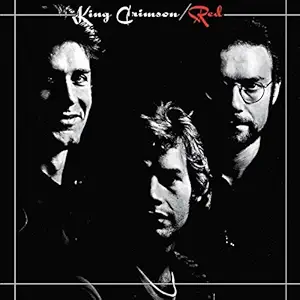
7. Red
The title track of their seventh album stands as one of the heaviest instrumental King Crimson songs ever recorded. A pounding, aggressive piece driven by Fripp’s distorted guitar and Wetton’s thunderous bass, “Red” became a live staple that the band would revisit across multiple lineups.
The track’s influence on heavy music cannot be overstated. Kurt Cobain cited the Red album as a major influence on Nirvana’s “In Utero,” and the song’s combination of technical precision and raw aggression anticipated the progressive metal movement by decades.
8. Fallen Angel
One of the most emotionally charged King Crimson songs, “Fallen Angel” begins with gentle acoustic guitar before John Wetton’s powerful vocals and heavy distorted guitars create an emotionally intense experience. The song remained absent from live performances until 2017, when King Crimson finally performed it in Chicago.
Notably, “Fallen Angel” marks the last appearance of acoustic guitar played by Robert Fripp on a King Crimson studio recording, making it a unique piece in their catalog.
9. One More Red Nightmare
This funky, aggressive track showcases Bill Bruford’s exceptional drumming and features one of the most memorable grooves in King Crimson’s catalog. The song describes the terror of a flight nightmare, with Mel Collins’ saxophone adding a jazz-nightmare quality to the middle section.
Among King Crimson songs, “One More Red Nightmare” stands out for its accessibility and danceable energy, while still maintaining the band’s trademark complexity with odd time signatures and sudden tempo shifts.
10. Providence
A live improvisation recorded on June 30, 1974, in Providence, Rhode Island, this track represents King Crimson at their most experimental. It marks David Cross’s final appearance with King Crimson before he was let go. While divisive among fans, “Providence” demonstrates the band’s improvisational prowess and willingness to include challenging material on their studio albums.
11. Larks’ Tongues in Aspic, Part II and Part III
One of the most technically demanding instrumental suites in progressive rock, “Larks’ Tongues in Aspic” features complex, interlocking guitar and bass patterns that would influence math rock and progressive metal. Part II showcases the telepathic interplay between Fripp, Wetton, and Bruford, creating music that sounds both composed and spontaneous.
Part III, recorded with the 1980s lineup, brought a new wave edge to the suite while maintaining its ferocious intensity. The Absent Lovers live album captures both parts performed during the 1984 tour, offering definitive live versions of these essential King Crimson songs. King Crimson would continue the suite with Part IV on The ConstruKction of Light (2000) and Level Five serving as an unofficial Part V on The Power to Believe (2003).
Complete Guide: King Crimson Red Album Review
The Discipline Era: King Crimson’s New Wave Reinvention (1981-1984)
After a seven-year hiatus, Robert Fripp reformed King Crimson in 1981 with an entirely new sound and lineup. Retaining only drummer Bill Bruford from the 1970s band, Fripp recruited singer-guitarist Adrian Belew from David Bowie and Talking Heads, plus bassist Tony Levin from Peter Gabriel’s band.
This incarnation drew from African polyrhythms, Indonesian gamelan, post-punk, and New York minimalism to create something radically different from classic King Crimson. The resulting albums, Discipline (1981), Beat (1982), and Three of a Perfect Pair (1984), confused some longtime fans but attracted a new audience and influenced alternative rock throughout the 1980s.
12. Frame by Frame
The opening track of the Discipline album announces the new King Crimson sound with interlocking guitar patterns that create hypnotic, rhythmically complex textures. Adrian Belew’s distinctive vocals and Fripp’s precise, gamelan-influenced guitar work established a new template for the band.
“Frame by Frame” demonstrates the influence of Fripp’s Guitar Craft techniques and his interest in interlocking patterns derived from African and Indonesian music. The song became a live favorite and exemplifies the “Discipline” era’s unique approach to rock music.

13. Elephant Talk
Adrian Belew’s playful, quirky songwriting took center stage on “Elephant Talk,” which features his famous guitar sound mimicking elephant calls. The song’s lyrics consist entirely of words related to speaking, showcasing Belew’s creative approach to wordplay.
Tony Levin’s Chapman Stick provides the funky bass line that drives the song, while Fripp’s angular guitar patterns create tension against Belew’s more melodic contributions. The track became one of the most accessible entry points for new listeners discovering 1980s King Crimson.
14. Thela Hun Ginjeet
An anagram of “Heat in the Jungle,” this intense track emerged from Adrian Belew’s frightening experience being mugged at knifepoint in London while recording street sounds for the album. The spoken-word section features Belew’s actual breathless account of the incident, recorded immediately after he returned to the studio.
The song’s interlocking guitar patterns and aggressive energy make it one of the heaviest 1980s King Crimson songs, bridging the band’s 1970s power with their new rhythmic sophistication.
15. Three of a Perfect Pair
The title track of their final 1980s album showcases King Crimson’s ability to write catchy, almost pop-oriented material without sacrificing complexity. The song features one of Adrian Belew’s most memorable vocal melodies alongside the trademark interlocking guitar work.
“Three of a Perfect Pair” represents the culmination of the Discipline-era sound, balancing accessibility with the band’s adventurous spirit. The three distinct mixes of the song that appeared on different pressings demonstrate King Crimson’s perfectionist approach to recording.
Essential King Crimson Albums to Own
While individual King Crimson songs offer extraordinary listening experiences, hearing them in their album context reveals even deeper layers. The following albums represent the essential starting points for anyone building a King Crimson collection.


Why King Crimson Songs Still Matter Today
The influence of King Crimson songs extends far beyond progressive rock. Their debut album established templates for heavy metal, art rock, and experimental music that artists continue to draw from today. Kurt Cobain’s acknowledgment of Red as an influence on Nirvana’s “In Utero” demonstrates how King Crimson’s heavy period anticipated alternative rock.
Tool, one of the most successful progressive metal bands of the modern era, has repeatedly cited King Crimson as a primary influence. Their use of odd time signatures, heavy guitar tones, and extended compositions directly echoes King Crimson’s approach from the 1970s. Bands like Porcupine Tree, Opeth, and Mastodon similarly trace their experimental tendencies back to King Crimson’s willingness to push boundaries.
Beyond direct musical influence, King Crimson demonstrated that rock bands could operate on their own terms without compromise. Robert Fripp’s establishment of Discipline Global Mobile as a musician-owned label in the 1990s pioneered the independent distribution model that many artists now use. His insistence that King Crimson music exists on its own terms, regardless of commercial pressures, set a standard for artistic integrity.
Experience King Crimson Live
While King Crimson concluded their touring activities in 2021, the Beat 2026 Tour featuring former members offers fans a chance to experience this music performed live.
Frequently Asked Questions About King Crimson Songs
What is King Crimson’s most famous song?
“21st Century Schizoid Man” is generally considered King Crimson’s most famous song, thanks to its explosive opening on their landmark 1969 debut album. However, among dedicated fans, “Starless” from the Red album is often cited as their greatest achievement.
What are the best King Crimson songs for beginners?
New listeners should start with “21st Century Schizoid Man,” “Epitaph,” and “The Court of the Crimson King” from their debut, then explore “Starless” and “Red” from their 1974 album. For the 1980s material, “Elephant Talk” and “Frame by Frame” offer accessible entry points.
How many King Crimson albums are there?
King Crimson released 13 studio albums between 1969 and 2003: In the Court of the Crimson King (1969), In the Wake of Poseidon (1970), Lizard (1970), Islands (1971), Larks’ Tongues in Aspic (1973), Starless and Bible Black (1974), Red (1974), Discipline (1981), Beat (1982), Three of a Perfect Pair (1984), THRAK (1995), The ConstruKction of Light (2000), and The Power to Believe (2003).
Why did King Crimson have so many lineup changes?
Robert Fripp’s uncompromising artistic vision and the demanding nature of King Crimson’s music led to frequent lineup changes. Fripp has described King Crimson as “a way of doing things” rather than a fixed band, and he deliberately reformed the group with new musicians whenever the creative vision required fresh perspectives.
What is the longest King Crimson song?
The title suite from “Lizard” (1970) runs over 23 minutes, making it their longest single piece. However, many King Crimson songs exceed 10 minutes, including “Starless” (12:18), “Moonchild” (12:11), and various live improvisations.
Is King Crimson still active?
King Crimson completed their final tour in 2021 after Robert Fripp announced the band would no longer perform live. While the band does not tour, their music remains available, and members continue to perform King Crimson material in other projects like the Beat 2026 Tour.
Why is King Crimson so influential?
King Crimson pioneered progressive rock with their 1969 debut and continued innovating for over 50 years. Their willingness to completely reinvent their sound while maintaining artistic integrity influenced countless bands across progressive rock, heavy metal, alternative rock, and experimental music.
Who wrote most King Crimson songs?
Robert Fripp composed or co-composed most King Crimson songs, with various collaborators contributing across different eras. Ian McDonald co-wrote much of the debut album material, while Adrian Belew contributed significantly to the 1980s and later albums. Lyricists included Peter Sinfield (1969-1971), Richard Palmer-James (1973-1974), and Adrian Belew (1981-2003).
What instruments does Robert Fripp use?
Robert Fripp primarily plays electric guitar, using various Gibson Les Paul models throughout his career. He developed unique techniques including “Frippertronics” (tape loop systems) and later “Soundscapes” (digital looping). Fripp also plays acoustic guitar, Mellotron, and keyboards on various King Crimson recordings.
Where can I stream King Crimson songs?
King Crimson music became available on streaming platforms in 2019 after years of Robert Fripp’s resistance to digital distribution. Their catalog is now available on Spotify, Apple Music, Amazon Music, and other major streaming services. Physical releases remain available through Discipline Global Mobile and major retailers.
Final Thoughts: The Enduring Legacy of King Crimson Songs
King Crimson songs represent some of the most adventurous and influential music ever created within the rock idiom. From the apocalyptic power of “21st Century Schizoid Man” to the heartbreaking beauty of “Starless,” from the polyrhythmic complexity of “Frame by Frame” to the raw aggression of “Red,” this band pushed boundaries that most artists never even approach.
What makes King Crimson truly remarkable is their refusal to rest on their achievements. Every era brought radical reinvention, yet somehow each version of the band remained unmistakably King Crimson. Robert Fripp’s vision of music as a living, evolving art form ensured that King Crimson songs never became museum pieces but remained vital and challenging across five decades.
For new listeners, the journey through King Crimson’s catalog offers endless discoveries. Start with the essential tracks discussed here, then explore the albums in depth. You will find music that challenges, rewards, and ultimately transforms how you hear rock music. King Crimson songs demand attention, but they repay that attention with experiences unlike anything else in music.
Continue Your King Crimson Journey
Explore more in-depth articles about specific King Crimson songs, albums, and band members on ClassicRockArtists.com.