

The title track from Lindsey Buckingham’s second solo album, Lindsey Buckingham Go Insane stands as one of the most innovative and emotionally raw singles of the mid-1980s.
Released during a turbulent period following his departure from Fleetwood Mac, this song showcased Buckingham’s willingness to experiment with production techniques that were years ahead of their time.
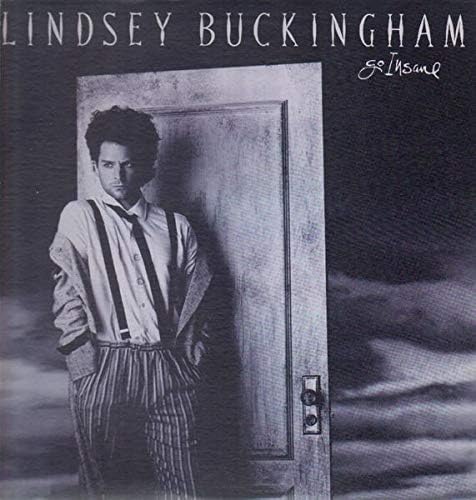
Lindsey Buckingham Go Insane – Available on Amazon
Get Lindsey Buckingham Go Insane (1984) on Vinyl or CD at Amazon
Affiliate Disclosure: I am an Amazon affiliate and if you purchase through any Amazon links on this site I may earn a small commission at no extra charge to you. This helps support classicrockartists.com. Thank you for your support!
Quick Navigation
What is the meaning of Lindsey Buckingham Go Insane?
The song explores the psychological unraveling that occurs when a relationship ends and reality becomes distorted by emotional pain. Buckingham uses the concept of insanity as a metaphor for the disorientation and loss of control that accompanies heartbreak and personal crisis.
The Vibe: Genre, Mood, and Sound of Lindsey Buckingham Go Insane
This track blends art rock with new wave sensibilities, creating an atmospheric soundscape that feels both intimate and expansive.
- Genre: Art Rock / New Wave / Experimental Pop
- Mood: Haunting, introspective, emotionally turbulent, dreamlike
- Tempo: Mid-tempo with a hypnotic, pulsing rhythm
- Best For: Late-night listening, contemplative moments, appreciating innovative 1980s production
- Similar To: Peter Gabriel’s “Red Rain,” David Bowie’s “Ashes to Ashes,” Talk Talk’s atmospheric work
Behind the Lyrics: The Story of Lindsey Buckingham Go Insane
Lindsey Buckingham wrote and recorded this song during one of the most challenging periods of his career.
After leaving Fleetwood Mac in 1981, he retreated to his home studio to work on material that would become his second solo album.
The Go Insane album represented a dramatic departure from the polished pop-rock sound that had defined his work with the band.
The lyrics reflect Buckingham’s state of mind during this period of isolation and creative exploration.
He was processing the end of his long-term relationship with Stevie Nicks and grappling with his identity outside of Fleetwood Mac.
The opening lines, “Two kinds of people in this world / Winners, losers,” establish a stark binary that the song proceeds to deconstruct.
Buckingham deliberately avoided conventional song structure, allowing the piece to unfold in a more organic, stream-of-consciousness manner.
The chorus, with its repeated plea to “go insane,” functions as both a warning and an invitation.
It suggests that surrendering to emotional chaos might be the only honest response to certain life circumstances.
The song’s narrative voice shifts between observer and participant, creating an unsettling ambiguity about who is experiencing the breakdown.
This technique mirrors the disorientation described in the lyrics themselves.
Buckingham has stated in interviews that the album was his most personal work to that point.
He wanted to create something that felt raw and unfiltered, even if it meant alienating listeners who expected radio-friendly pop.
The title track became the album’s lead single, released in July 1984.
Its accompanying music video, directed by Shaun Cassidy, featured surreal imagery that complemented the song’s psychological themes.
The video showed Buckingham in various states of distress, surrounded by symbolic elements like mirrors and shadows.
Technical Corner: The Gear Behind lindsey buckingham go insane
Buckingham recorded the entire Go Insane album at his home studio in Los Angeles, giving him complete creative control.
He served as his own producer, a role he had increasingly embraced during his time with Fleetwood Mac.
The song features Buckingham’s signature fingerpicking guitar style, performed on his beloved Turner Model 1 acoustic guitar.
He layered multiple guitar tracks to create a dense, textured sound that feels both organic and otherworldly.
The drum programming was handled using a LinnDrum machine, which was state-of-the-art technology in 1984.
Buckingham manipulated the drum sounds extensively, applying reverb and delay effects to create an atmospheric quality.
The bass line was performed on a Fender Precision Bass, recorded direct to the mixing console for a clean, punchy tone.
Synthesizer parts were created using a Yamaha DX7, the digital FM synthesizer that defined much of 1980s pop music.
Buckingham used the DX7 to generate the ethereal pad sounds that float throughout the track.
His vocal performance was recorded through a Neumann U87 microphone, capturing every nuance of his delivery.
He employed extensive vocal layering, creating harmonies that blend seamlessly with the instrumental arrangement.
The mix features heavy use of the Lexicon 224 digital reverb, which gives the song its cavernous, dreamlike quality.
Buckingham also experimented with tape manipulation techniques, slowing down and speeding up certain elements to create disorienting effects.
The production approach was deliberately anti-commercial, prioritizing artistic expression over radio-friendly polish.
Engineer Ken Caillat, who had worked on Fleetwood Mac’s Rumours, assisted with some of the technical aspects.
The final mix was mastered by Bob Ludwig at Masterdisk in New York City.
Legacy and Charts: Why Lindsey Buckingham Go Insane Still Matters
Upon its release in July 1984, the single reached number 23 on the Billboard Hot 100 chart.
It performed even better on the Mainstream Rock Tracks chart, where it peaked at number 5.
In Canada, the song climbed to number 18 on the RPM Top Singles chart.
The track had more modest success in the United Kingdom, where it failed to crack the Top 40.
The Go Insane album itself reached number 45 on the Billboard 200, a respectable showing for such an experimental work.
While it didn’t achieve gold certification, the album has gained a cult following among Buckingham’s devoted fans.
Critics at the time were divided, with some praising Buckingham’s artistic ambition and others finding the album too insular.
Rolling Stone magazine gave the album a mixed review, acknowledging its innovation while questioning its accessibility.
The song’s influence can be heard in the work of later alternative rock artists who embraced atmospheric production techniques.
Bands like Radiohead and The National have cited Buckingham’s solo work as an inspiration for their own experimental approaches.
The track has been featured in several television shows and films over the years, introducing it to new generations of listeners.
You can watch the official music video on YouTube, where it continues to accumulate views from curious fans.
Buckingham has performed the song sporadically during his solo tours, often in stripped-down acoustic arrangements.
These live versions highlight the song’s strong melodic foundation beneath its elaborate studio production.
The track remains a favorite among serious Buckingham fans who appreciate his willingness to take creative risks.
It stands as evidence that commercial success and artistic integrity don’t always align, but both have their place in rock history.
Listener’s Note: A Personal Take on Lindsey Buckingham Go Insane
When I first heard this on vinyl in the mid-1980s, I was struck by how different it sounded from anything else on the radio.
The opening moments, with that pulsing drum machine and ethereal guitar, immediately transported me to another headspace.
I remember thinking that Buckingham had created something that felt more like a film score than a pop song.
The moment that always gets me is around the two-minute mark, when the vocal harmonies swell and the guitar becomes almost orchestral.
There’s a vulnerability in Buckingham’s voice that cuts through all the production wizardry.
You can hear him working through something real, not just performing for an audience.
On headphones, the spatial quality of the mix becomes even more apparent.
Sounds seem to move around your head, creating a disorienting effect that perfectly matches the lyrical content.
I’ve always appreciated that Buckingham didn’t compromise his vision to chase another Fleetwood Mac-sized hit.
This song represents an artist at a crossroads, choosing the path less traveled.
It’s the kind of track that reveals new details with each listen, rewarding patience and attention.
For more information about Lindsey Buckingham’s ongoing work, visit his official website.
Affiliate Disclosure: I am an Amazon affiliate and if you purchase through any Amazon links on this site I may earn a small commission at no extra charge to you. This helps support classicrockartists.com and allows me to keep providing deep-dive content on the legends of rock. Thank you for your support!
Collector’s Corner: Own lindsey buckingham go insane on Vinyl or CD
The original vinyl pressing of Go Insane has become a sought-after item among collectors who appreciate Buckingham’s experimental period.
The album has been reissued on CD and is available through various retailers.
Get Lindsey Buckingham Go Insane (1984) on Vinyl or CD at Amazon
Frequently Asked Questions About lindsey buckingham go insane
What year was lindsey buckingham go insane released?
The single was released in July 1984 as the lead track from Buckingham’s second solo album of the same name.
It came three years after his debut solo album, Law and Order.
Did Lindsey Buckingham write go insane about Stevie Nicks?
While Buckingham has never explicitly confirmed this, many fans and critics believe the song reflects his emotional state following the end of his relationship with Nicks.
The album was recorded during a period of isolation after his departure from Fleetwood Mac.
The lyrics deal with themes of lost love and psychological distress that align with that timeline.
What instruments did Lindsey Buckingham play on go insane?
Buckingham played multiple instruments on the track, including acoustic and electric guitars, bass, and keyboards.
He also programmed the drum machine and handled all vocal parts.
This multi-instrumental approach was typical of his solo work during this period.
How did go insane perform on the charts compared to Buckingham’s other solo work?
The song reached number 23 on the Billboard Hot 100, making it one of Buckingham’s more successful solo singles.
However, it didn’t match the success of “Trouble” from his debut album, which peaked at number 9.
The experimental nature of the track likely limited its mainstream appeal.
You Might Also Like
The enduring brilliance of Lindsey Buckingham’s “Go Insane” is its nervous, high-wire energy. Released in 1984, the track saw Buckingham fully embracing the “studio as an instrument” philosophy, layering Fairlight CMI synthesizers and frantic, percussive vocal effects to create a jagged masterpiece that explored the thin line between creative obsession and emotional collapse.
If you are fascinated by Lindsey’s experimental solo work and the complicated relationships that fueled it, you might also like:
The Heart of the Matter: Fleetwood Mac’s “Gypsy”
While “Go Insane” captured the friction of his life in the early 80s, Fleetwood Mac’s “Gypsy” looked back at the beginnings of the journey. It shares that same sense of nostalgia and poetic reflection, serving as a lush, melodic counterpart to the more aggressive, electronic textures Buckingham was exploring on his own.
The Ever-Evolving Members of Fleetwood Mac
The experimental sounds of the 80s were a direct result of the unique individuals within the band pushing each other in new directions. A deep dive into the members of Fleetwood Mac provides the context for how Lindsey’s restless artistry fit—and sometimes collided—with the more traditional rock sensibilities of his bandmates.
The Darker Side of Rock: Members of Black Sabbath
If the “insanity” and emotional intensity of Buckingham’s solo work resonate with you, you may also appreciate the raw, heavy storytelling found in the history of the members of Black Sabbath. Both artists, in their own vastly different ways, used the studio to explore the more unsettling and transformative corners of the human experience.
Plus + Want to follow the trail of 80s power-pop and rock? Check out the evolution of the members of Styx or revisit the high-energy hooks of the members of April Wine.
The haunting atmosphere and innovative production of Lindsey Buckingham Go Insane continue to influence artists who value creative risk-taking over commercial calculation, making it an essential listen for anyone interested in the evolution of 1980s rock music.